Tagged: reviews
Why Play Curtis Markson?
Follow-up: Why not admit it?
Reading Log 9.20.26
I published one of these reading log’s one year ago to the day (does any app not push these vain notifications on us anymore?) and so figured I should go ahead and update you all with another.
****
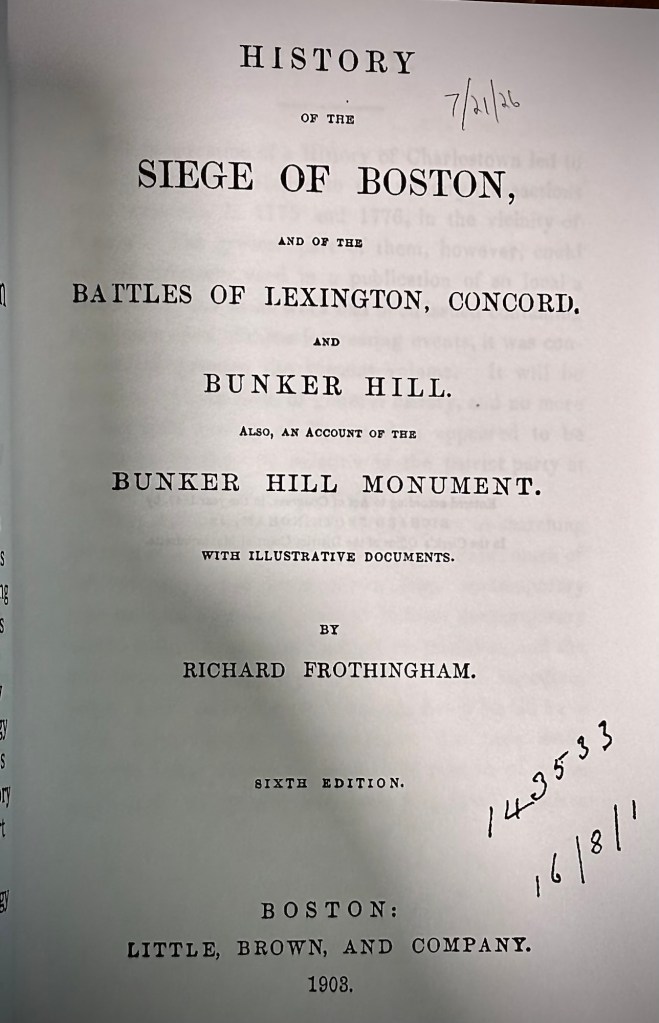
I learned of History of the Siege of Boston… while reading the 5 volume GW biography by Washington Irving that I have mentioned so many times in the last year or so. It did not disappoint. Of special note are the summative statements of the labor behind the ability for the Minute Men to react, and the reporting of eternally interesting minor details of such pivotal events from so long ago. In short, you (a living citizen in these seemingly uniquely polarizing times) will literally be changed after reading this book.
I also want to share another book (set) that I learned of and purchased while reading GW’s biography.
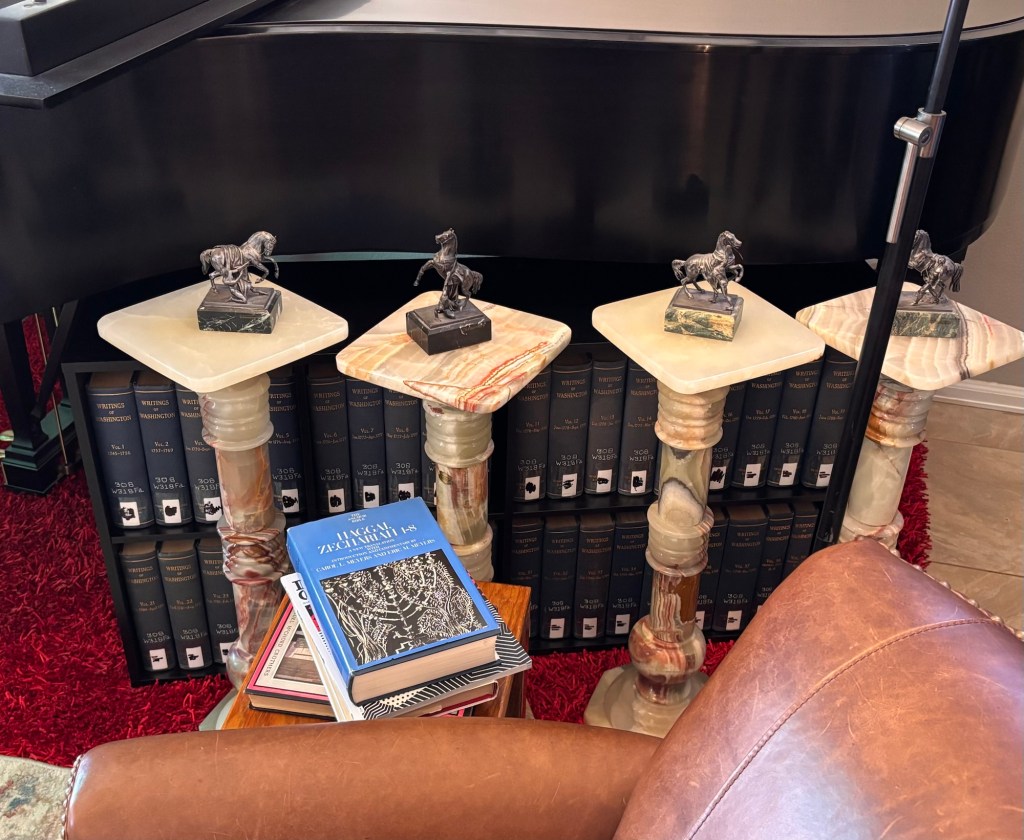
If the format you’re reading this post in doesn’t allow to pinch-zoom, that entire-book-shelf-filling book set is a 39-volume Writings of George Washington collection. Only 3,000 copies were ever printed, not counting upload to the internet. (Ha.) I discovered the set after following the footnote rabbit hole which opened because I was forever curious where Irving got his lengthy quotes of Washington’s correspondence. He, Irving, didn’t even have such a set as this—merely precursors. But I do. And I couldn’t be more proud. I am 30+ pages into volume one and if it takes me 37 years, at the pace of one volume per year (vol 38 and 39 are indexes), it will be the best thing I do for the next 37 years. Just a remarkable set of books.
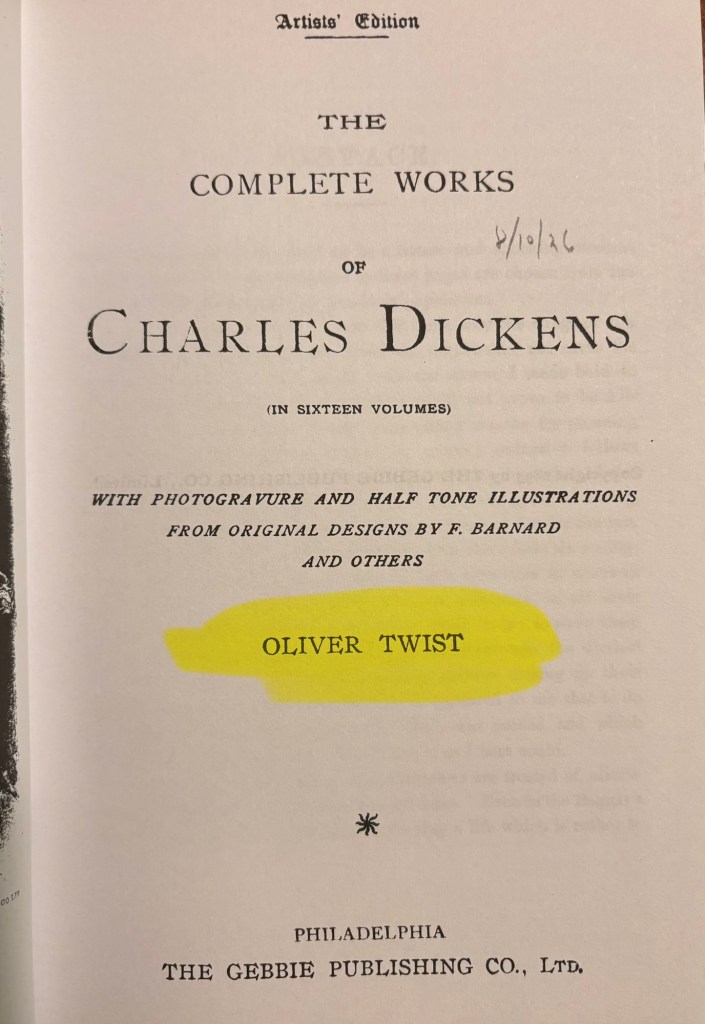
Before Oliver Twist, if you would have asked me about Dickens, I would have said, “Coolest thing is that Dark Knight Rises is essentially a retelling of his Tale of Two Cities.” But now, with Christmas Carol, Tale of Two Cities, Great Expectations, and Oliver Twist under my belt, I have an obviously more well-rounded understanding of him. Oliver is an odd duck, in that Dickens chooses to give the reader the nasty, brutish side of the criminal life, with the hope of deterring young Mark Twains from the dream of the pirate’s life. One basic and nearly insurmountable flaw—in my opinion a constant flaw that educated people reveal—is that the criminal element is portrayed as cunning, strategic, and capable of great perseverance in accomplishing long-term goals. Aside from this flaw, it surely accomplishes its aim. But I ask you, dear reader, when is an educated person (in the true sense of the word) going to tell the plain truth? The truth that criminals are stupid, short-sighted, and incapable of self-control and generally all the virtues? There is more (or less, rather) to criminal action than just willingness to prey on people.
One interesting line from the story that I want to record here for ease-of-retrieval is the following quote about tears, “But tears were not the things to find their way to Mr. Bumble’s soul; his heart was waterproof.”
Compare that to Tolstoy’s similarly remarkable characterization of tears from Anna Karenina (from memory), “As if tears were the lubrication for the machine of human communication…”
Just great writing—both of them. Keep it up!
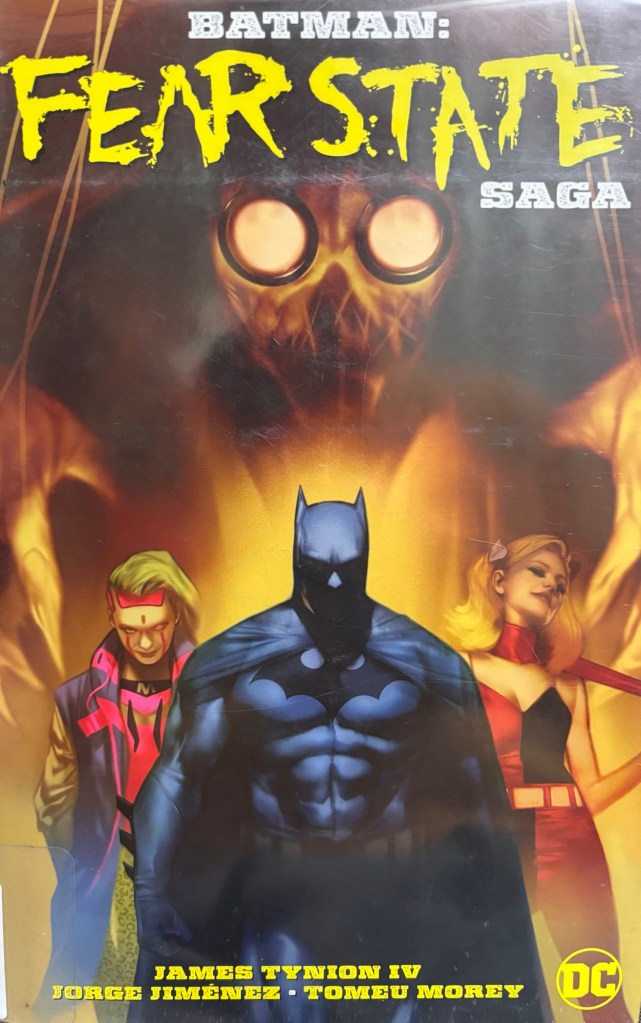
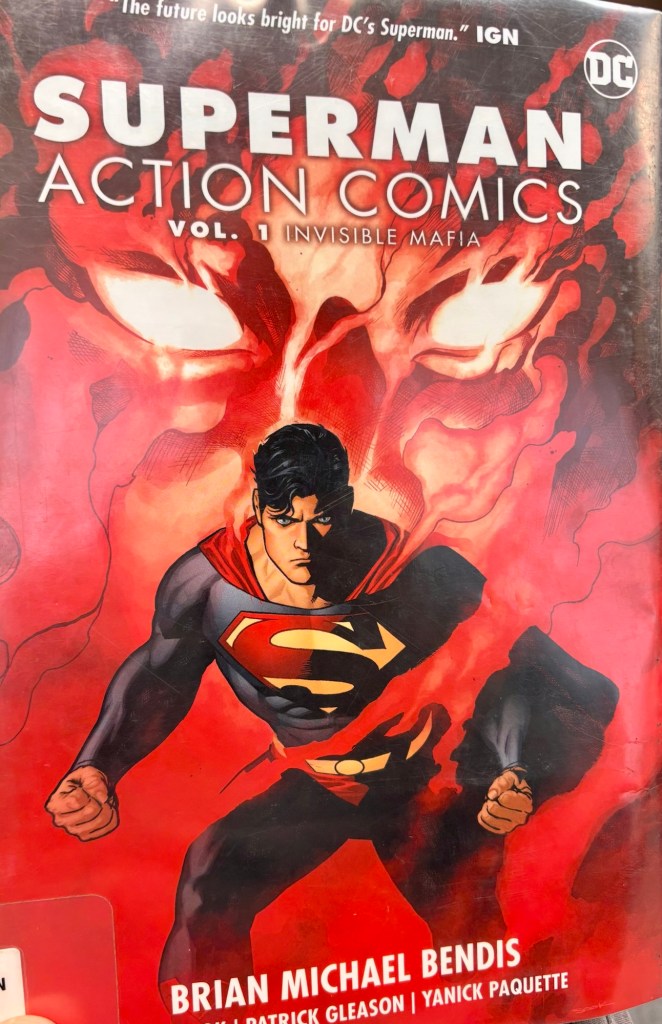
In one of the Deadpool films, the joke is made about the classic superheroes all being virgins. The same criticism has been gravely lobbed at the Avengers/Marvel sagas that have enraptured movie-goers for over a decade now. Suffice it to say that post-2020 comics have completely swung the other way. Now superheroes have sex, and the sidekick women especially, are homosexuals. Great. Just what the world needs. Why does everyone seem to think that all literature was always and only aimed at pushing boundaries? Early comics could have intentionally drawn attention and specifically rebuked social mores of the 50s but this doesn’t mean that every established social boundary is arbitrary. I know, I know. The covers alone should indicate these “aren’t your grandpa’s comic books” but it is disappointing that I have to work so hard to find non-Woke superhero material for my future teenagers to ingest.
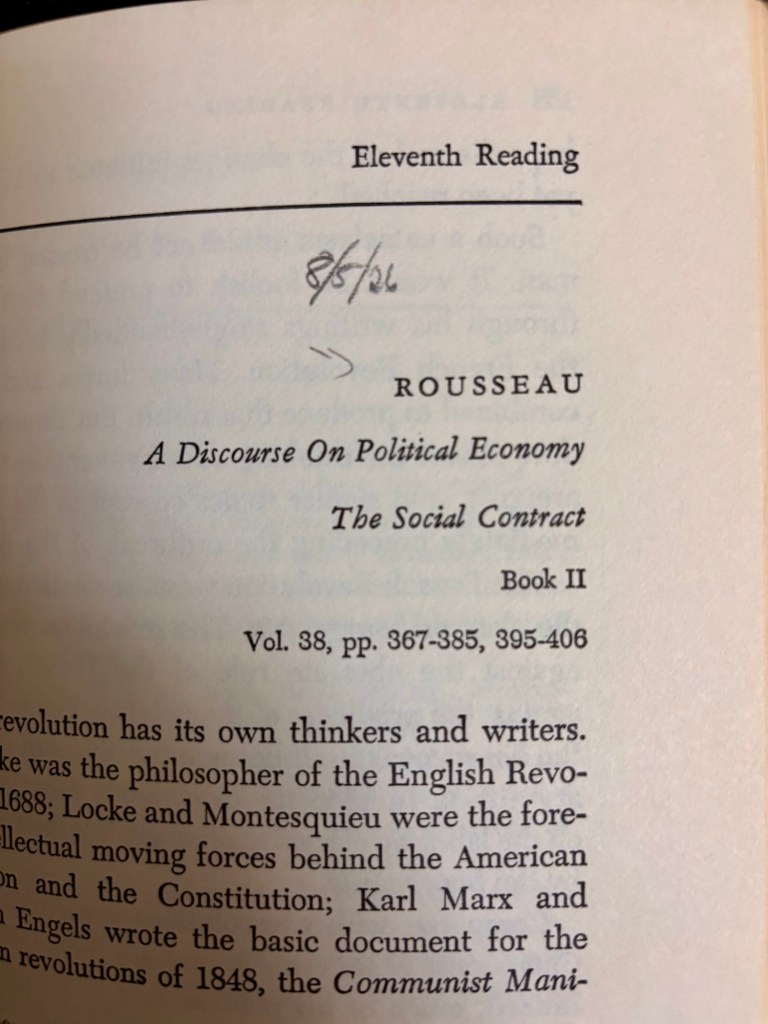
Rousseau is Rousseau. The more I read him, the more times I read him, the more I see the extremes of his philosophy. He is certainly spot on about some things and certainly completely wrong about others. The main trouble is he explicitly states over and over again how he is being entirely consistent but as he can’t state everything at once we need to give him the benefit of the doubt when apparent inconsistencies emerge. Okay, Boomer. On the “should read him” side of the coin, he absolutely destroys the notion of analogously comparing government to a family. This hits home for me because a certain non-Westerner in my life, when questioned, likened her support of a certain thought-to-be autocrat to the way a father leads his family. In other words, it is compelling that Rousseau understood that this particular mistaken analogy is hard-wired in the hearts of men. But I assure you, faithful reader, that my reading Rousseau and the subsequent effect of renewed confidence in the idea that elected officials are facing at a totally different problem than that which confronts fathers, has absolutely no effect whatsoever on the people who want to make that analogy. Want another false analogy? Here it is. Unread books are not analogous to the lasers used in gene-editing.
Reading Log 8.31.2026
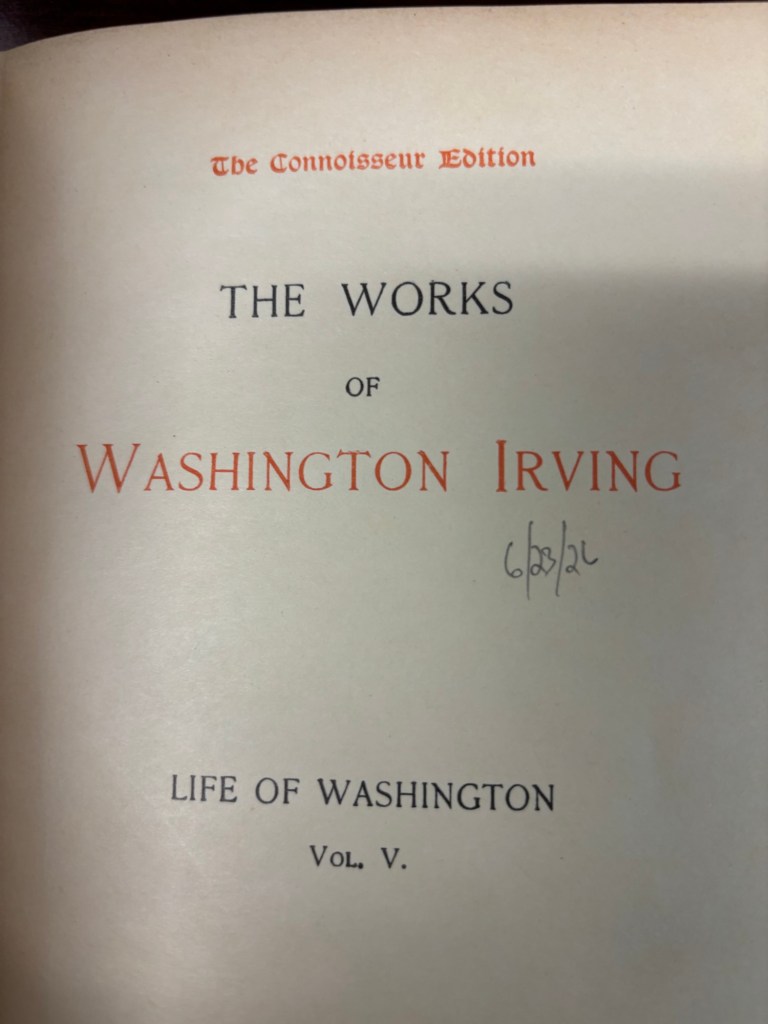

Washington Irving wrote a five-volume biography of George Washington, so this was the final volume. As you guessed, he dies. And it is sad. It is sad because he died for reasons that probably didn’t have to result in death, and it is also sad because he genuinely seems to have longed for a peaceful, leisurely life on Mt Vernon. The most interesting detail in this volume was that after his presidency, after he had made clear that his days as a public servant were over, war seemed inevitable again; and the powers that be were calling him to service once more—and he agreed to saddle the war horse once again.
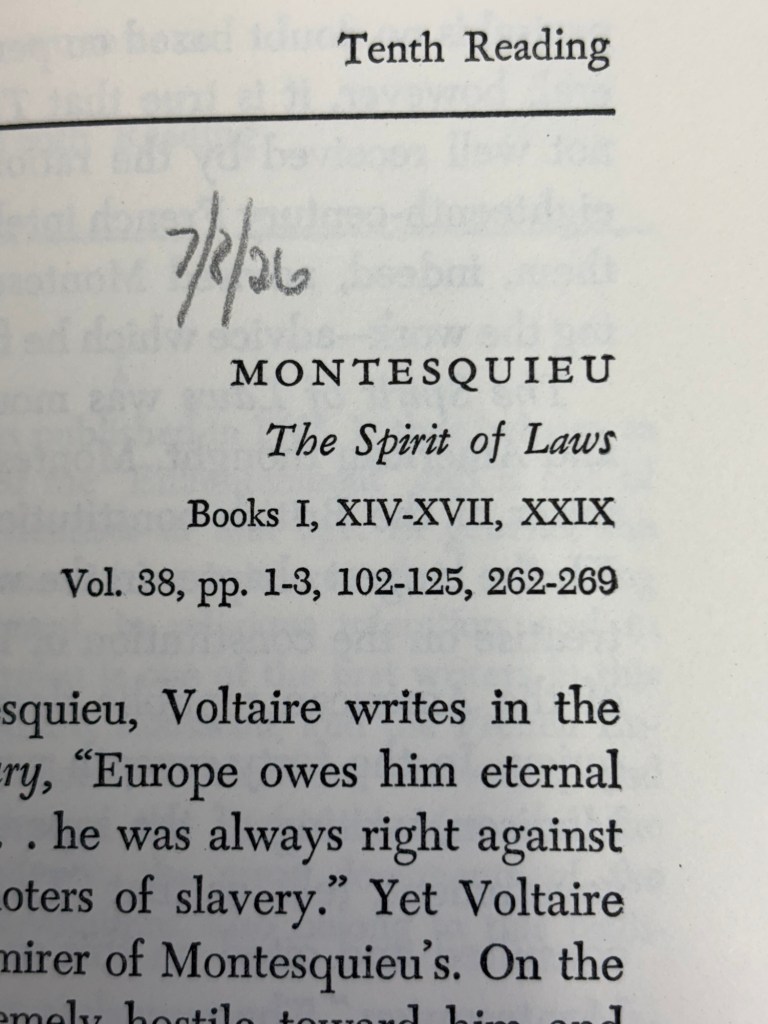
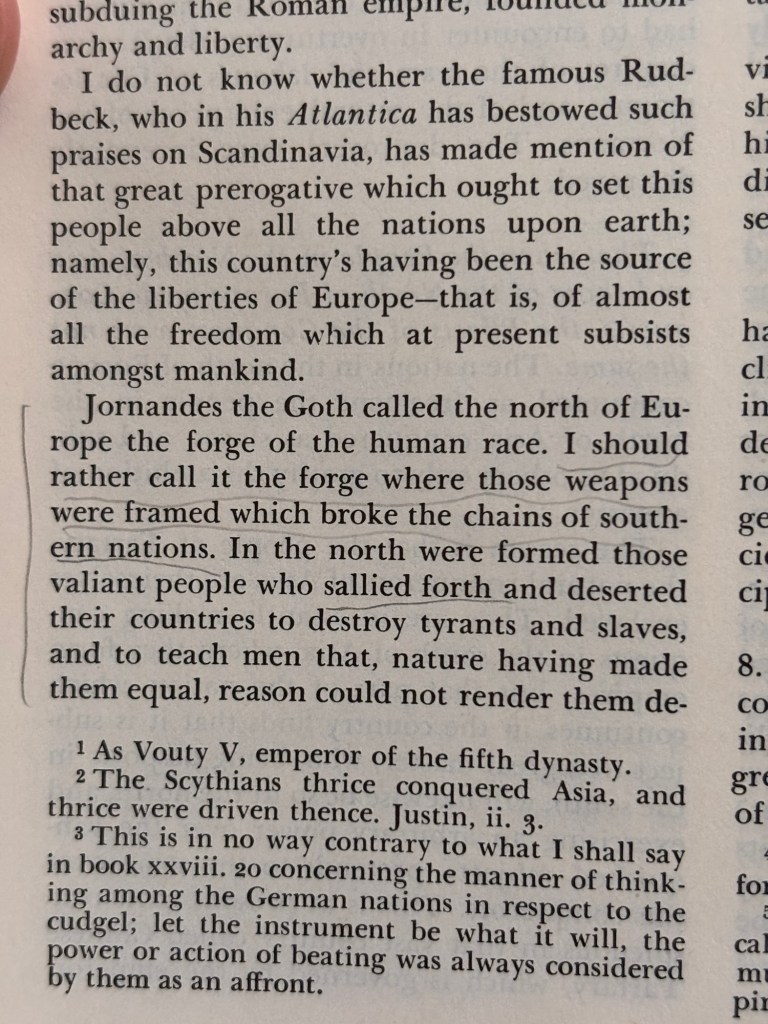
Montesquieu is always engaging. This time a main angle of his approach to Law (capital L) was climate. I don’t know if I’m merely super open to suggestion, or if he makes some genuinely interesting observations, but at the level of ‘the broad strokes’, it seemed to me that as much as I loathed the idea that climate does and should dictate the laws of a country/people, I came to understand that there is merit to the idea. I must also call attention to the particular way in which he framed slavery—via climate again. We hear a lot today about Whites ending worldwide slavery (as opposed to BIPOC folk having any major role in ending worldwide slavery). But that seems to fall on deaf ears, i.e. no one that is ignorant of history wants to hear anything good about Whites. But Montesquieu doesn’t care about white or BIPOC (such a silly division, isn’t it?). Instead he puts it this way:
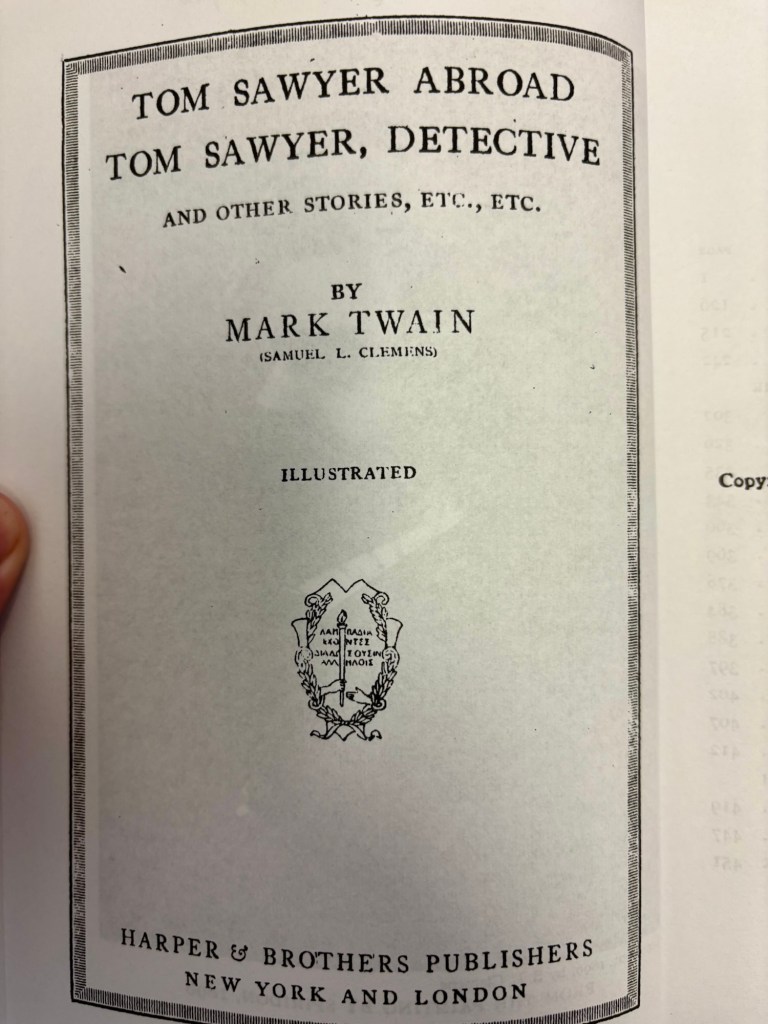
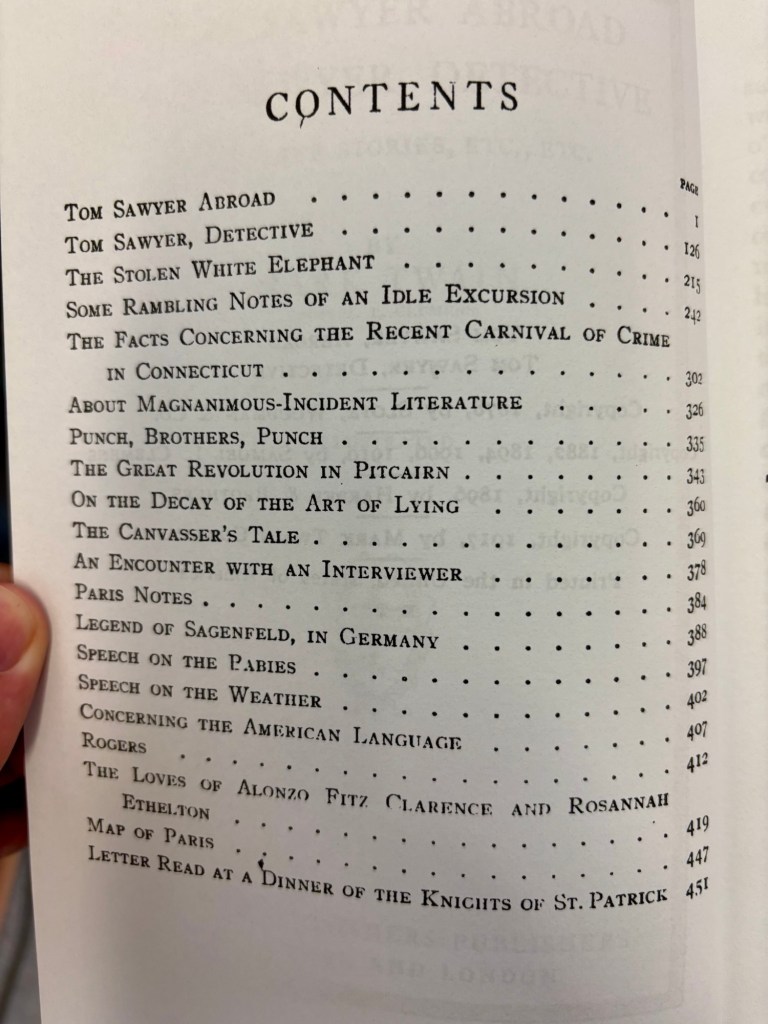
A new biography of Twain has hit the bookstores, as you no doubt are aware. As expected, it highlights all the ways he was Woke and had TDS. A friend even shared with me an article about how Huck Finn is being taught by the few schools that will still touch it, and that article used right-wing censorship to invigorate itself to life. In other words, the article’s author claimed that one of the reasons the book is worthy is the bigoted MAGA or worse Right doesn’t want it taught. What a joke. I mention all this because of one simple fact: Mark Twain is a premier author. Without his writing, not his plain opinions, we would not know or care who he was. So this book and the collection of short stories that follow the main feature, are definitely worth reading. Of special note to those who want a good laugh is On the Decay of the Art of Lying.
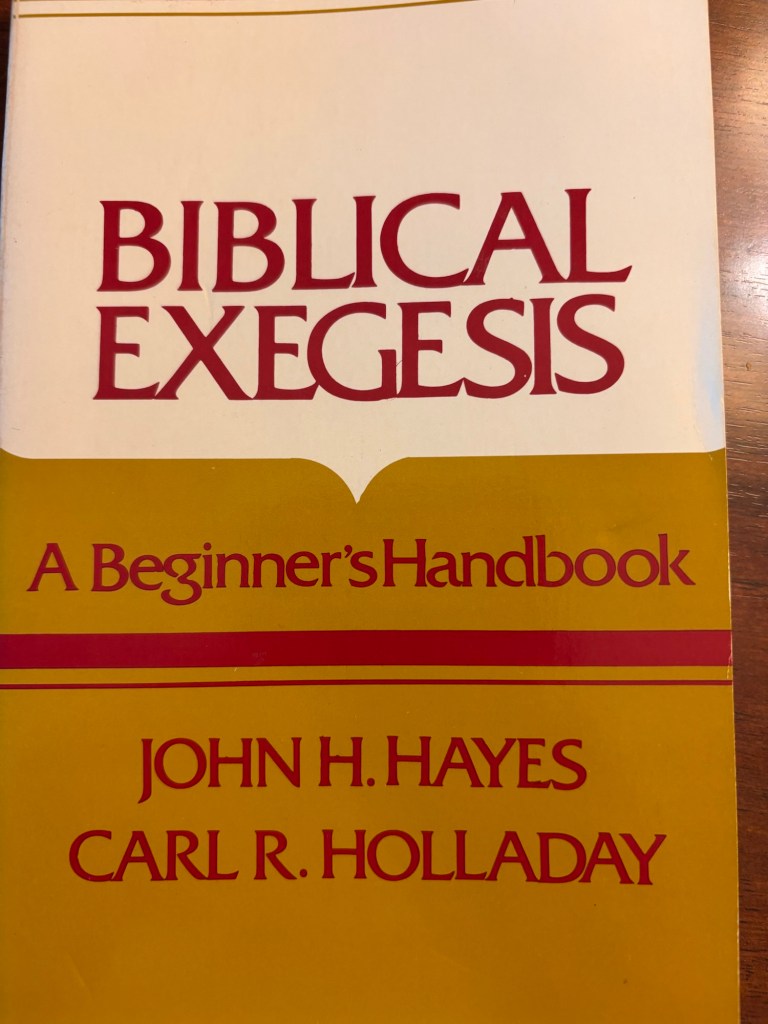
I picked up Biblical Exegesis: A Beginner’s Handbook because I have been reading through the Anchor Bible commentary set. The authors therein casually mention “literary criticism” or “structural criticism” and despite spending three years in seminary, I just wasn’t comfortable with what they meant by these distinctions. Similar to the Five Love Languages, which can be stated in five sentences, this short book could have been monumentally shorter. Here goes. Textual Criticism is the quest for the original wording. We’re talking ancient documents and super in-the-weeds nuances that do not have earth shattering consequences. But it is fun to criticize or look with a critical eye at all there is to see. Historical Criticism is the attempt to accurately place the passage in the context of recorded history. This is in contrast to allegorizing everything in the Bible like is so popular now—-and has been in the past. (“It says, ‘He stooped down.’ Do you hear me? If He ‘stooped down’ back then, He’ll ‘stoop down’ for you today!”) This would be where we discover forgivable discrepancies between the biblical account and other historical accounts of the same events. To be sure, KJV-only types get around these discrepancies by declaring the Bible writer’s to be the accurate accounting–in face of all others. But this is the least of their errors, so don’t lose any sleep on them. Grammatical Criticism is the quest to determine “sense units” after original wording is determined. Easy analogy is “raining cats and dogs”. We can find some people who say, “it is raining dogs and cats” and others might say it correctly, “cats and dogs” but even after we determine the most original wording to the phrase, we need to determine what the heck the sense unit “it is raining cats and dogs” means. Next is Literary Criticism. This is the careful look at the life of the text itself. It has been 2000+ years of these texts passing through time. Consistency is the rule, but not without exception. So scrutinizing the contents of the writing, apart from the historical time period, the grammar, or even the original wording, sometimes provides interesting results. For example, the Anchor Bible book that I am currently reading is called “Haggai Zechariah 1-8”. At first it seemed like maybe the publisher just ran out of time or space, but upon reading the volume, we soon discover that the author believed Haggai-Zechariah 1-8 should be one “bible book” and then “Zechariah 9-14” should be another one. And Literary Criticism is the reason for this opinion. Form Criticism is when we read the Bible with an eye on the “form” we are presented with, such as how we understand a deed to house is going to read completely different than a classified ad about that same house. Tradition Criticism is simply the idea that the story or law or teaching within the passage of scripture was developed. Easy example is the teaching on divorce in the Gospels. In Mark there are no exceptions–divorce is always sin. But in Matthew we find the adultery exception. What did Jesus teach??? Can we ever know? What does it mean that two different authors recorded Jesus differently on the same issue? This is often limited to unverifiable hypothetical-land. The final criticism covered, a course correction to the Tradition Criticism that is concerned with the written passages is Redaction Criticism. Similar to Tradition Criticism, Redaction Criticism scrutinizes the actual written text as it is presented to us. It tries to determine if one text is more original or definitely developed off of a more original source. This would be the source of the well-known idea that Matthew and Luke both had Mark to work from as they wrote their Gospels.
Now you know. And I have easy reference if I get lost again.
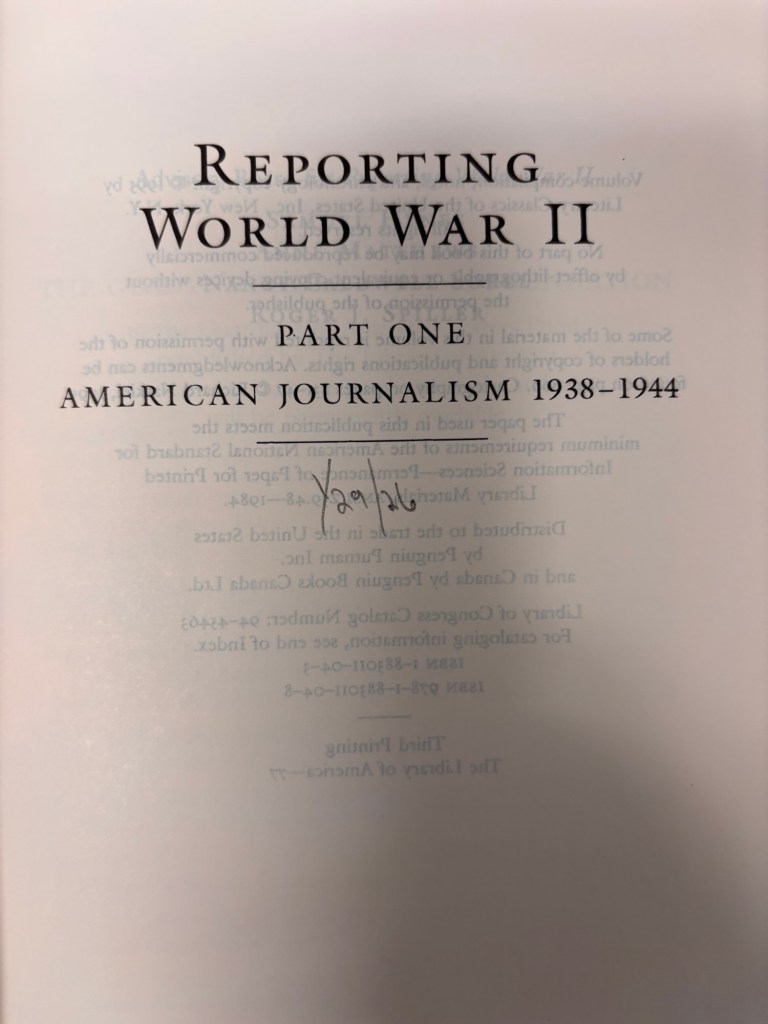
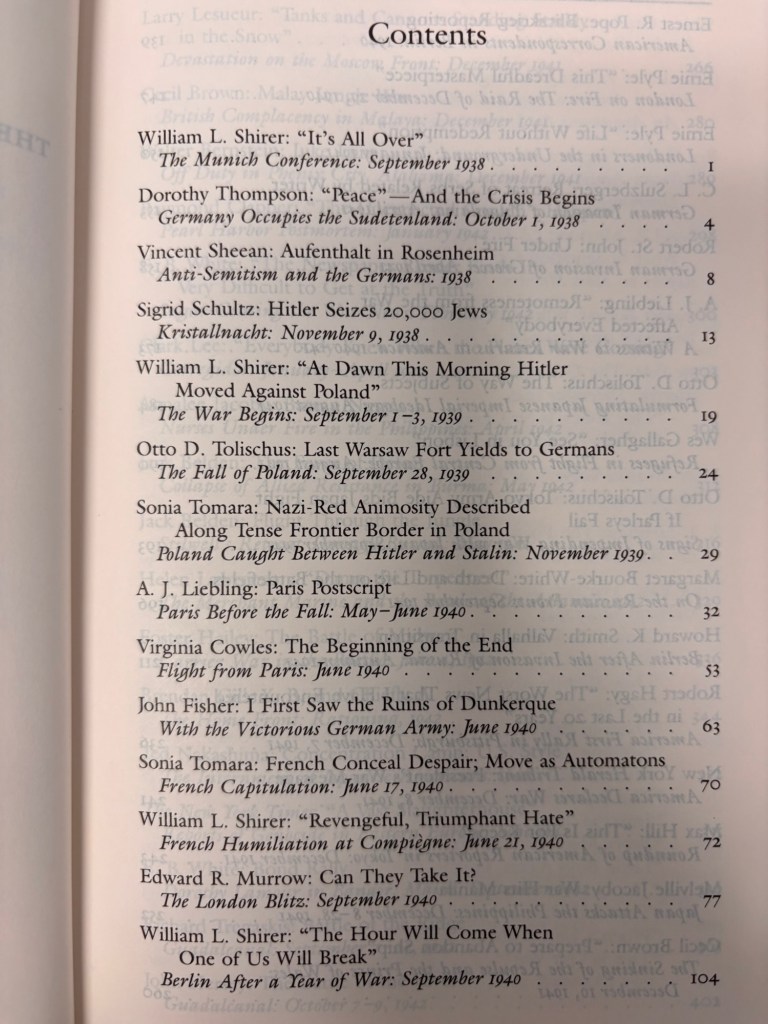
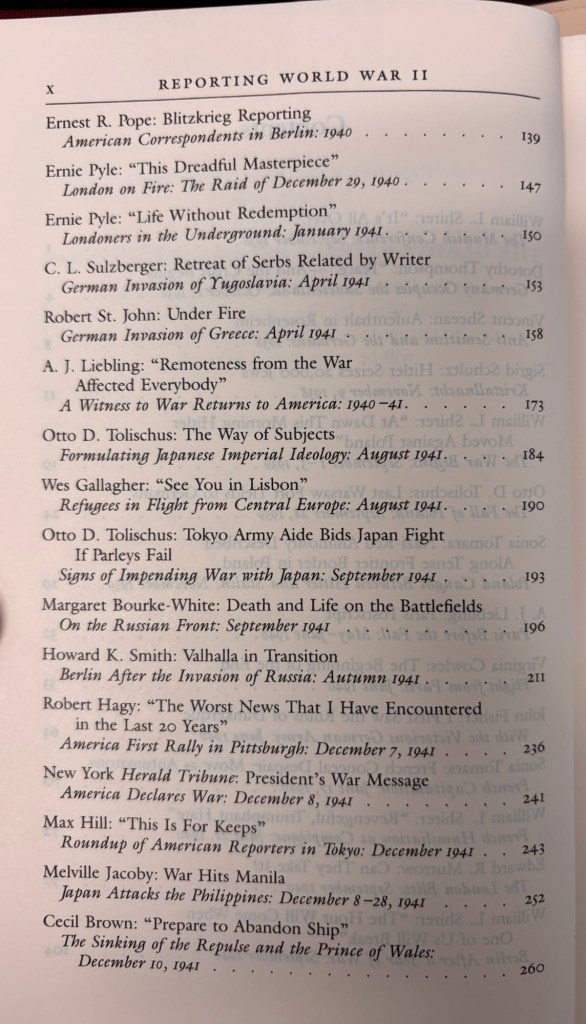
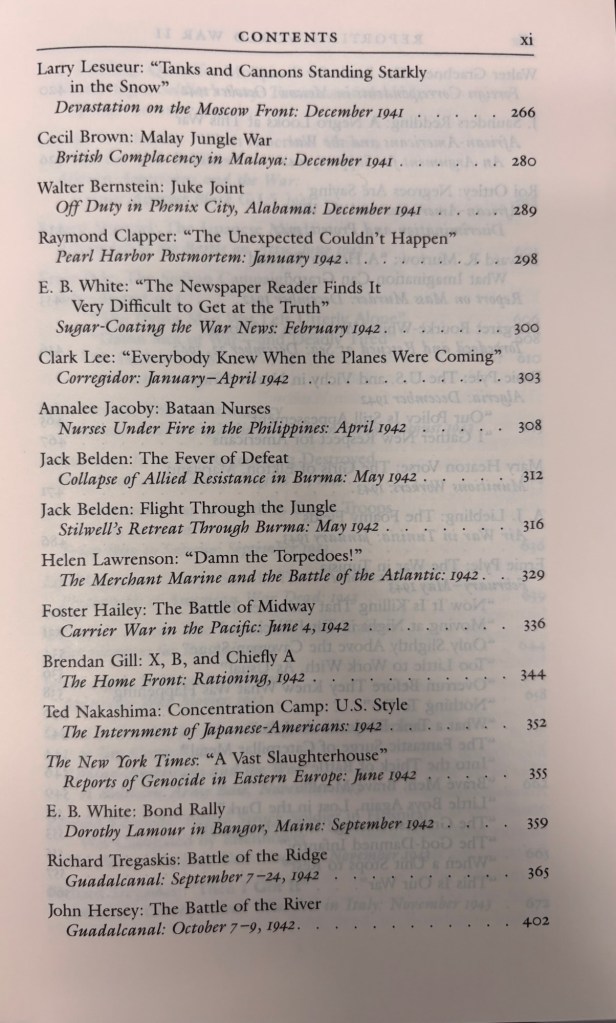
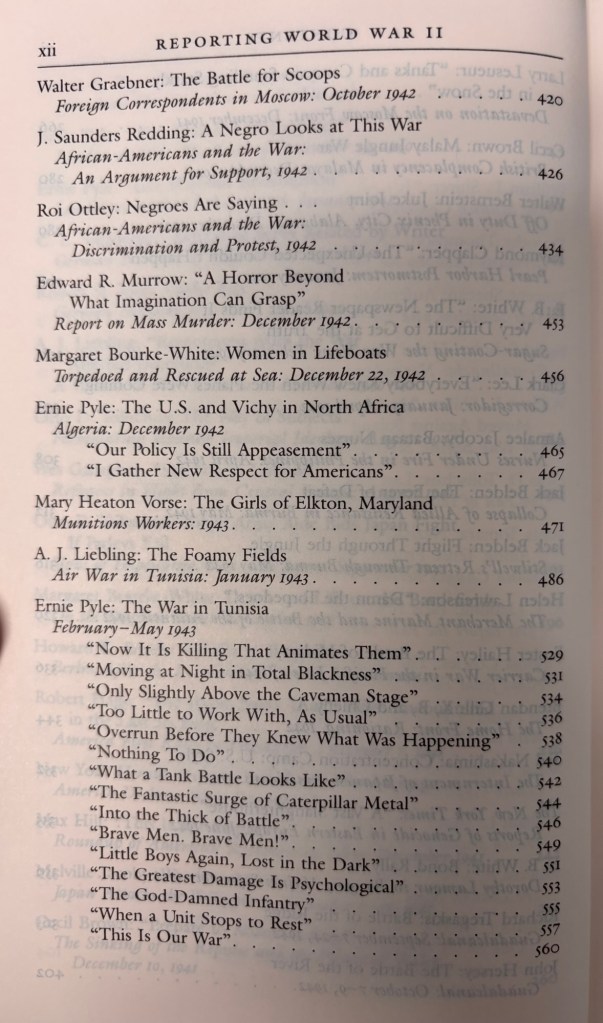
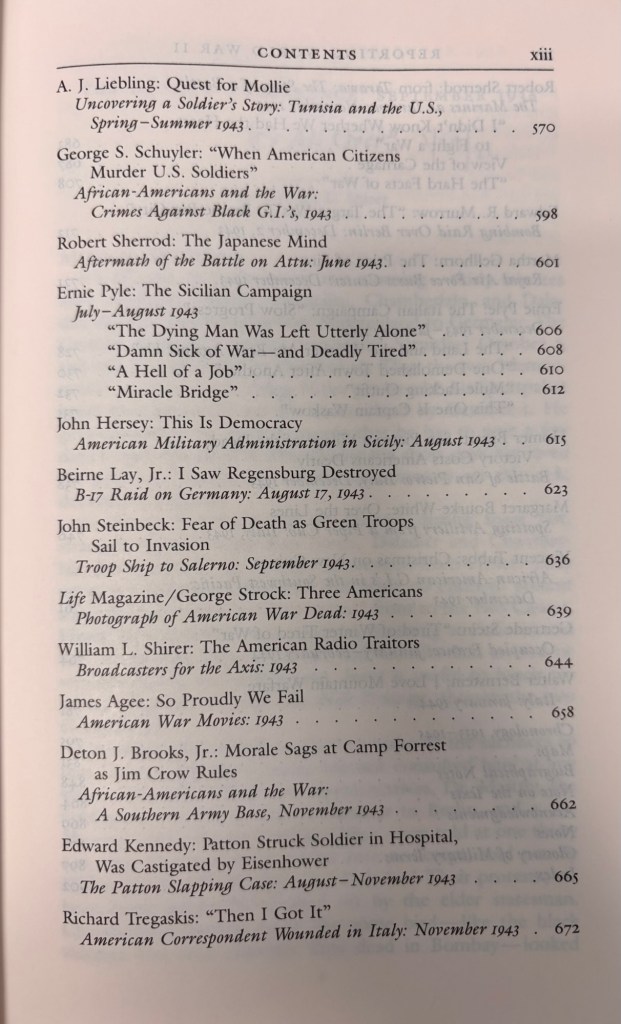
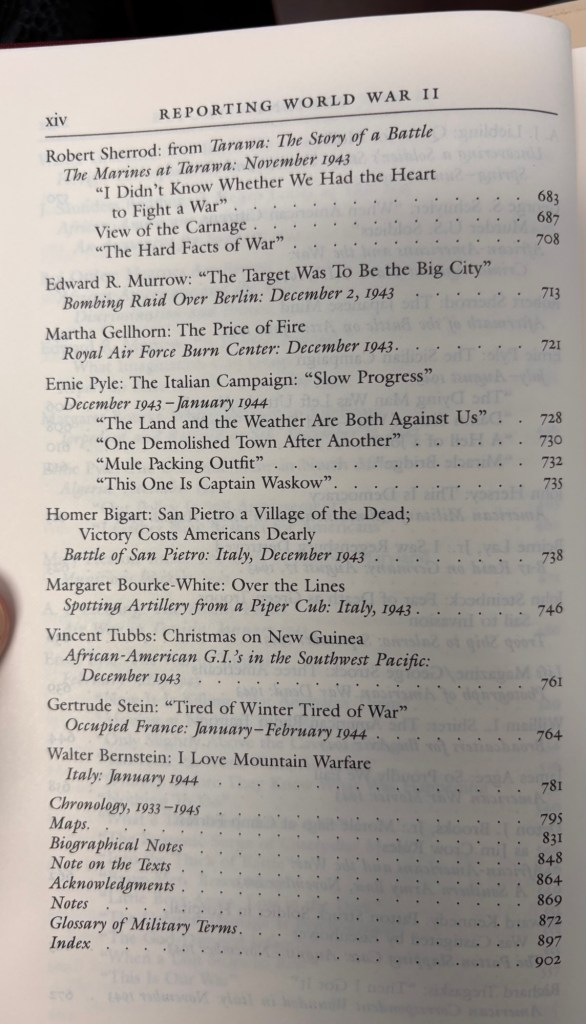
Like Reporting Vietnam before, Library of America’s Reporting World War 2 is definitely “must read” for every American. Just scan all those article titles and ask yourself how many you even knew were perspectives on people’s mind during the war.
Finally, the kids and I finished this 3rd volume of the Little House series. On the Banks of Plum Creek is different that the first three in that by now we understand the plan Mrs. Wilder has in mind. Each book will take place in a fairly unique setting and be describing just about one year of life in that location. The pace, then, is more regular, pleasant, and at times more detailed. These are all beneficial qualities. About the only comment I have for the events of Plum Creek is that I have always, I mean always, thought life would be better when the ups and downs were more immediate in time and place. No concern with the mohammedan destruction of Europe or Dearborn. No toilet paper runs affecting rest areas along I-35. Just do the crops grow, or do the grasshoppers come. If we have to up and move, we up and move. And Plum Creek is necessarily rife with this fantasy life.
The Death of Looney Toons, A Review of Coyote vs. Acme by Dave Green
As I mentioned in the last post, I took the family to Coyote vs. Acme on opening night, this past Friday. To be clear, “the family” means my Ethiopian (US Citizen from Ethiopia) wife and our two young kids, 4 and 6. This was the kids first trip to a movie theater and the main reason for the delay is I won’t take them to anything that even smells Woke/DEI/Commie. Naturally this eliminates nearly everything not produced by Angel Studios or Uwe Boll. And neither of them have made anything I want to show the kids.
When my brother, nephew (18), and I went to Mortal Kombat II, I nearly chuckled audibly as I turned the corner to see the small-ish crowd was comprised of a bunch of men my age. How embarrassing that I expected a regular smorgasbord of folks.
On Friday, the ticket-scanner dude was sure to chuckle when he saw what we were headed to watch what he called, “The funniest movie of the year. You’re going to love it.” I agreeably told him that from what I saw I was thinking that his assessment would prove correct.
This time, as I turned the corner, and probably a bit earlier in the movie-going experience if I’m honest, I was again surprised. There were no kids. There were no children in the theater. Maybe a tween was there. But otherwise, it was old farts like me. Unlike MKII, this time I was a bit perplexed. Why wasn’t this movie becoming the next Nemo?
Watching partly through my eyes, and partly through my wife and children’s eyes, I discovered the reason. Despite my best efforts, despite my every effort the world has gone soft. It is impossible to find comedy in destruction. Anything that is attacked is soon defended—and defended as the most worthy cause ever.
To be clear, the entire storyline of the very funny and enjoyable film is that cartoons do not suffer. The premise is that the same rules that would apply to people do not apply to cartoons. In short, Coyote loses. (Keep in mind, Coyote always loses.) Practically, this means that we can do things to cartoons that we cannot do to people (or animals, plants, oceans, prisoners etc). Sometimes we can even benefit from having tortured, destroyed, blown up, annihilated, dropped, glued, electrocuted, abused, squished, smooshed, and killed cartoons. And, of course, they never actually die. Why? Because they are drawings.
But here in 2026land, the weaker a person is, the stronger. The lamer, the more perfect. The more injured, the most healed. The uglier, the more beautiful. The dumber, the smarter. The more shameful, the more noble. The fatter, the hungrier. And to beat all, the stronger is the meaner. The unfunny result, not that you need to be told, is our drawings have Civil Rights. The failure of Coyote vs. Acme is another birth pang of Civil Rights 2.
In the end, despite Mr. Green telling a whole story, a complete story, and a story which made sense (or as Twain put it–the story “accomplished something and arrived somewhere”), he killed the Looney Toons. Or we killed the Looney Toons. Hard to say.
****
I have to add before I go to press that I see the path forward–not the particulars, but the general way. The Looney Toons need a Frank Miller The Dark Knight Returns treatment. I doubt that I am the individual to do more than espouse hope for such a project. But I mention it in case any true artists reading this are facing writer’s block. I’m picturing, a la Bruce’s fireball ending to the car race opening, an even slicker Bugs Bunny initiating the larger comeback story by–all timed to absolute bangers–battling Elmer Fudd as usual, but this time it’s all modern. Fudd is wearing real hunter’s camouflage patterns. He is using some AR variant (school shooting/mass shooting type)—way too powerful for his intended prey. And then Bugs points out all the problems with Fudd’s myriad decisions, which infuriates Fudd, to the point that Fudd really tries to kill Bugs only to find him—not slipping down a rabbit hole—but becoming some oppressed minority. And it has to be the most spectacular version of the minority. Burka wearing, bruised face Muslim woman. Super fat woman at the convenience store. Liberal, childless professional in remote work with a dog walking into the Teams meeting. I am talking the most obnoxious depiction of our twisted Civil Rights 2 reality. But it must be hilarious to kids. Like all the stereotypes are plainly funny in all the ways that make kids laugh. The kids laugh at the ridiculousness of Hunter Fudd giving up when he sees what kind of rabbit the suave Bugs is at heart (but we know is a disguise). And then you go through all the Looney Toons characters and bend them to contemporary versions of the spirits which gave them a heartbeat in the beginning.
But until and unless this happens, the Looney Toons are toast. Even a fan of this movie knows that.
“What’s In A Name?”, A Brief Review of Masters of the Universe by Travis Knight
To catchup unfaithful readers, and remind faithful readers, my most prescient observations on “movies about toys” include (1) re: Michael Bay’s Transformers, Bay understood how to make a movie based on the way boys play with the Transformer toys, and according to boys’ rules (ie “Crushed! Dead! But wait! He’s back alive!) and (2) re: Ridley Scott’s The Last Duel, Scott’s final duel is the most perfect rendering of what every boy pictures a duel to be.
That said, the opening of Mr. Knight’s Masters of the Universe continues, without plagiarism, the theme Bay hit upon (and resultantly has no concern with imitating Nolan’s TDK motif) and, what’s more, creates, in a way that doesn’t even hint as disrespect towards any child at heart for being a child at heart, the single greatest scene of what it feels like to hold a He-Man toy as a boy.
For that, Mr. Knight and all those involved in the movie are to be applauded, and rousingly so.
The rest of the movie (post Adam’s finding the sword) is perfectly fine. The comedy is real. And the action can be satisfying.
Lastly, and this is difficult to describe (so please do check it out) but the scene in Adam’s boss’s office is frightening in its ease. How can a He-Man movie be more trad than Taylor Sheridan and all other wannabe rebels in this time of Black Helen’s?
Reading Log 7.11.2026
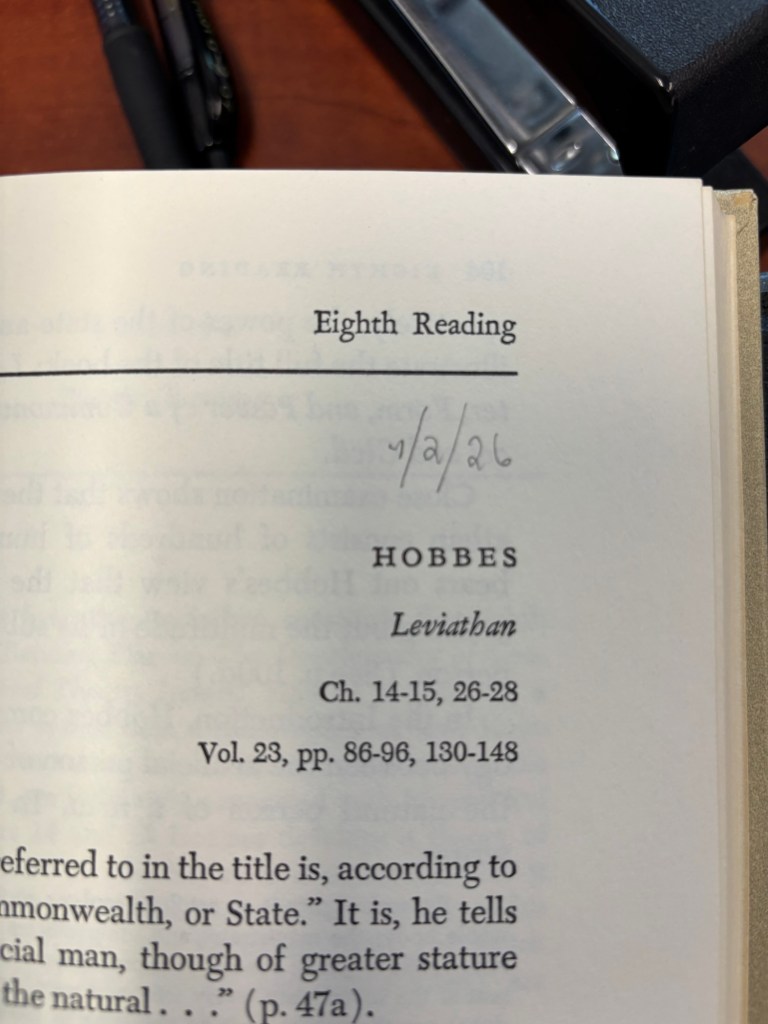
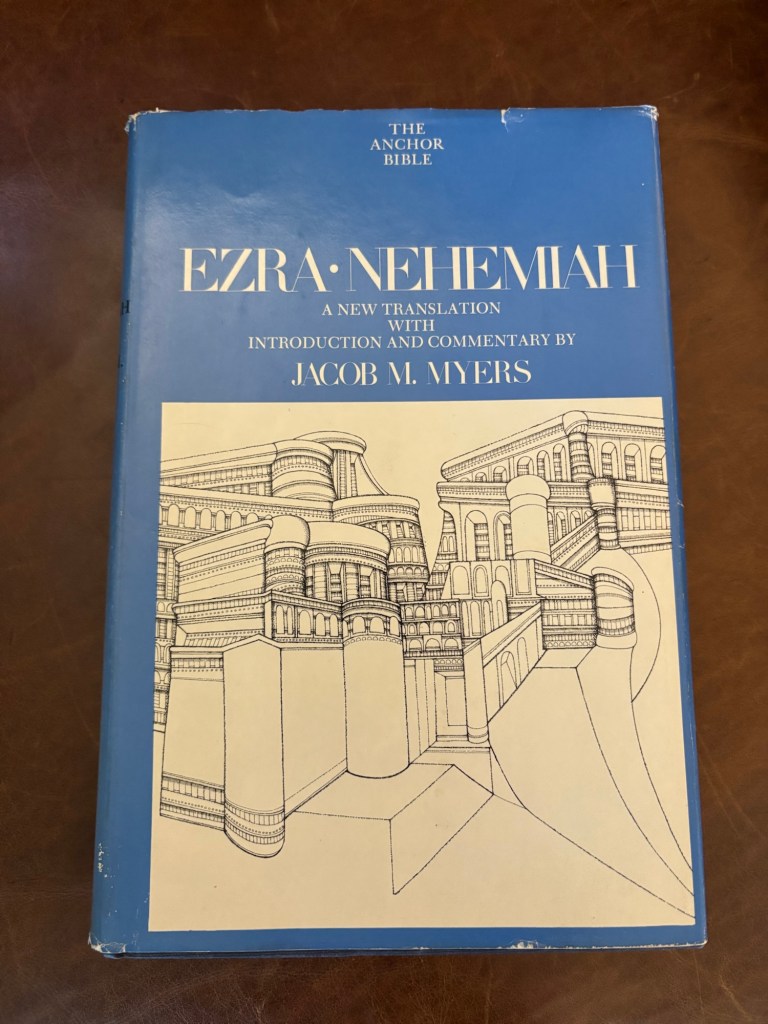


I have said it before and will say it again and again and again. Hobbes’ Leviathan is absolute must-read material. I am rarely more invigorated while reading than when reading Hobbes. I exhort you, brethren, find a copy and make time for it. You will not be disappointed.
A former professor from the seminary reminded me recently that as an alumni, I had access to an online theological library. So I tracked it down and joined, $10 a month. Around the same time as joining, the same professor told me his recommendation for a commentary set for a church—meaning lay people. I had asked his opinion because I wanted to start a library at the church I joined. His recommendation was the NIV Application Commentary, which uses three approaches to each passage and never or rarely mentions any original language issues in a manner that requires training to understand. The three approaches are, “Original Meaning”, “Bridging Contexts”, and “Contemporary Significance”. Anyhow, I do have training in the original languages and I hate reading anything about the Bible in which the author has made the decision for me, preferring instead to read authors who lay out the evidence from which to choose what to think for myself. That’s where the Anchor Bible Commentary set comes in to play. I am certain there are other solid academic commentaries, but Anchor is kind of the gold standard. By way of example, the NIVAC’s 1 Peter volume might include, “Peter wrote…” and the Anchor Bible might write, “The author of 1 Peter wrote…” I prefer to approach the Bible Indiana Jones-style. (Recall—there are no priests!)
Boring details of my life, I know, but while all this was happening, I had started to get anxious about the issue of accuracy in the digital realm. Specifically, I had seen a few examples of how streaming services are latently airing edited versions of beloved entertainment. Long story short, I determined that I did not want to ever be distracted by worry about whether the content I was reading on a screen was original or edited, so I started tracking down a used set of the Anchor Bible commentary volumes. And I found and bought one (not quite complete). Then, lo and behold, I got an email announcing that the online theological library was ending its availability to alumni—at least as accessed outside of a proper library. No real reasons were given, but I was very thankful and felt very wise in my decision to begin to purchase the actual books for my home library.
All that to say this: I have for many years struggled in my attempt to a good habit of daily Bible study. As I have mentioned, I always start with the Bible if I have time to read. But I never loved my plan of just reading it and I also have never enjoyed using a devotional which were always so clearly superficial and kitsch so as to distract me from the intent of Bible study. Around the time of all this purchasing and subscription-cancelling etc. I had been in Ezra and Nehemiah, so I, one day, decided to see what ol’ Anchor said about them. And, boy, was I ignorant. It’s actually fascinating to me how much I had never known. This was part of the reason I began to read them recently anyhow. (Yay me.) Anyhow, the main thing to share here is that 1 and 2 Chronicles and Ezra and Nehemiah are all contemporary to each other. And the date of writing may be as late 150BC (don’t quote me on the date). Also, Haggai and Zechariah are the prophets of that same time. So what’s that? Like 6 books, spread from after 2 Kings to the end of the OT, in the Christian canon’s arrangement. I had known the Jewish canon concluded with (1&) 2 Chronicles, but I hadn’t ever studied the other four books, or committed to memory anything about their dates at the least. I did know that Nehemiah is where the tradition of standing during scripture reading gets it start.
All that said, I am happy to report that I have my new way of daily Bible study. I just read a passage and its “comment”. I have even been able to interest my wife in listening to it as I try to rid believers, one at a time, of the notion that one can gain understanding of the Bible by praying. It just doesn’t work like that.
Onward.
Netflix made a Frankenstein movie. I couldn’t finish it. But then I watched Bride!, as you know. I mentioned this at work to a reader and she asked me if I had read the book. I had not. So here we are. I haven’t researched it entirely, but I get the sense that Shelley (married to the famous writer Percy Bysshe Shelley, and daughter herself to very famous writers) really did invent the “monster” story, which pervades all manner of entertainment to this day. Quickly, I do want to note here that Frankenstein is the name of the creator, not the monster. And, imho, the book itself isn’t that good. But the idea is—obviously. The idea being, what if the creature you bring to life is a devil, not an angel?
Farmer Boy was fun. My main criticism is that a city kid of today really and truly cannot use much of the information which is transmitted and which was conceivably useful to farmers back in the day.
GW continues to be great. He is now President, not exactly by choice. Also interestingly, the state of politics in America back then was so startlingly similar to today, that a new idea has formed in me. This idea being that while everyone who wishes America well can appreciate the “fighter” in Trump, the truth is that we really need a leader who knows how to gain respect of everyone. That is who George Washington was. People were as vehemently opposed in their desires, motivations, and methods as we are today. But when a decision was needed, they all agreed GW was the man for the job. How did he do it? Moral living and pure motivations. How can such a man be formed and found? Imho, by studying GW. And by providence’s intervention.
I can’t explain it, but any time I spend away from Shakespeare causes me to forget how great he is. Luckily, he is so abundantly great that merely reading a line or two is all that I need to fall back in love with him. What a writer. What stories.
Merchant of Venice is in the Great Books of the Western World’s Great Ideas Program guided reading on the topic of “Philosophy of Law and Jurisprudence.” This is because the character agrees to forfeit “a pound of flesh” if he can’t pay back his debt. To generalize this contract, the question Shakespeare raises is, “Can a person use the law to bind himself to commit an unlawful act?” The largest perspective being, “What is the name of the thing which prevents a person from freely entering into a lawful contract which has as one result unlawfulness? If the thing is ‘law’ itself, then where does it get its power, since a man freely made the contract? Doesn’t law come from man?”
In any case, Shakespeare toys with the language and big ideas as if they were nothing. And it is a whole lot of fun to read.
That’s all for today.
For Next Year’s ARC Conference: No More Hedging If You’re a Christian Speaker
I have been listening to a few of the 13-min talks from this year’s Alliance for Responsible Citizenship conference and, as with the past two years’, they are tier one models of conservative perspectives. And yet I cannot deny that when the speakers use the language “America’s past is not perfect” or similar, I shake my head. I hadn’t been able to pinpoint exactly why this phrase, and the concept behind it, bothers me so until just yesterday.
For context, please call to mind that I am reading volume 5 of Washington Irving’s Life of George Washington. Specifically, I am up to his decision to run for reelection. Let’s just say that since his birth and the legendary tree incident, a lot has happened. And after everything I have read, I conclude, “And all of it was the best thing for the future occupants of planet Earth,” full stop.
I know, I know. I can hear you. What about slavery? What about women’s rights? What about civil rights? What about ‘Nam?
Allow me to break some news to you. I am a Christian. Inherent to Christianity is the belief that all men are sinners (“They have all turned aside, altogether they have become worthless; There is no one who does good, not even one.”
Psalm 14:3 LSB) and that no earthly government—though instituted by the Living Triune God himself—is perfect (“Then Yahweh said to Samuel, “Listen to the voice of the people in regard to all that they say to you, for they have not rejected you, but they have rejected Me from being king over them.”
1 Samuel 8:7 LSB and “Be subject for the sake of the Lord to every human institution, whether to a king as the one in authority, or to governors as sent by him for the punishment of evildoers and the praise of those who do good.” 1 Peter 2:13-14 LSB). For me, a Christian, then, to hedge the character or accomplishments of people or governments with some seeming politically correct admission of unpleasant facts, is to betray my beliefs, exchange them, as it were, for someone else’s beliefs—and for what? For likes? For views?
No. That is not right. We can all just speak truth for truth’s sake. Speaking isn’t violence. Everyone knows, by virtue of the content, what we believe anyway as we talk. And the import of the speaker’s content is directly related to the integrity of the message. In short, it is weak when a Christian hedges their claims about men and government. It is weak because the Bible has, amongst many mysteries, essential and clear statements about the nature of man and government. Man is sinful. Government is inadequate.
Conversely, it is the game of the Woke, the Left, and the Commies, among others (hard to leave out the DNC) to believe man is perfect (without evidence) and government is adequate (without evidence). Christian doctrine does not support either.
So, ARC presenters, next year, as you continue to bravely, and at some risk to yourselves and your families, model for us plebes how to live, please step up your integrity on this topic. America wasn’t doing “the best it could while having some original sin”, instead America “is and has always been the beacon of freedom for the entire world”. George Washington didn’t “have faults”, instead GW “played the almost superhuman role of founder of America, played it well, and deserves our continued gratitude and attention”.
The events of the present and future are not improved or sustained by “bending the knee” to those who seek destruction. Time is limited. So use it all to accomplish any speaker’s goal: nourish and flourish.
(Let us pray.)
The Best List of the Top 13 Pieces of Source Material Copied by Avatar 3 that You’ll Ever Enjoy Reading
Growing up in Johnson County, the 30-plex cinema experience was the norm. Nearly every weekend I would look forward to spending my hard-earned money to see the latest best movie. Sadly, this is not the case anymore. Couple spending a lot of time in the Deep South where movies just aren’t the fashion with having a family of my own and there just isn’t time or money to go to the (oftentimes crummy) theaters every week. Add to that the severe reduction in quality of movies today, and there is usually just one movie a year which gets my derrière to the reclining theater seats. Last year it was Superman.
This didn’t mean that I didn’t want to see Avatar: Fire and Ash, it just means that I didn’t want to pay to see it.
Enter the world famous “co-worker’s Disney+ account” however, and I finally got the chance to see it on my own terms.
Here’s how this list is going to work. I took notes, starting about half-way through the movie, of aspects of A:F’n’A which are completely unoriginal. But once the wheels started turning, I also remembered things from earlier scenes and so not everything is chronological. Just the same, the point (besides simple reading pleasure) will reveal itself to savvy readers long before this blog post is finished. Let’s jump in.
1. To begin, the overall story is a simple re-telling of Dances with Wolves. Here again we see the White Man who as a group loves to explore and as an individual has a natural propensity for wanting to learn about PreHistory Man from PreHistory Men. But the collision of pen and paper with cooking-over-open-fires is inescapably destructive, so the life struggle begins. This is a perfectly fine storyline. But we’ve seen it before.
2. As a high point of the movie, the dialogue, nearly in its entirety, is great. That said, there are far too many “bro’s” dropped, and “My Jake’s” lines at the several major “you’re still alive!” reunion moments were uninspiring—as were the battle speeches. But the Colonel’s lines were on point and cathartic throughout. I personally credit the actor. Ever since we met in Tombstone, Stephen Lang just seems like a man who wouldn’t want to be heard saying stupid lines.
3. As I mentioned in my recent podcast recommendation blog, the next place A:F’n’A uses someone else’s source material blatantly is having the PreHistory Man be armed by the bad guy White Men. This is Russia giving Chinese communists weapons throughout the 20th Century; this is America giving the South Vietnamese weapons in the 60s; America-Afghani’s-80s; this is Iranians and Ukrainians wanting America to give them weapons today. Why can’t the PreHistory Man just lead the way in military technology? Or even hold their own?
4. Abraham’s unsuccessful sacrifice of Isaac makes an odd appearance as “Jake Sooly” determines to kill “monkey boy” for fear of some future genocide of the entire Na’vi. Sure, there was no mountain climb, no wood on the back that typified Jesus carrying his cross, and no ram in the bush. But, there was a father raising a knife and ultimately not killing the boy. That’s Abraham and Isaac through and through. (Bible)
5. Deepwater Horizon and Last Breath are two must-see movies, assuming accurate-seeming depictions of mazes of metal tubes and cables are your thing. In A:F’n’A, the White Man has been busy and built a compound which is basically a giant oil rig. Through, above, below, and, most importantly, between all these pipes and cables Mr. Cameron sends his PreHistory dragon riders flying. Star Wars IV is definitely the influence, but my main thought while trying to enjoy the action was, “Is this really all I get during my time on Earth? A repeat of same concept, just with different looking faces and vehicles?”
6. In the “strengths” column, the movie definitely creates men and women as separate beings. Men are men and only men. Women are something totally different. I don’t know that there is one movie which counts as the definitive example of this much-needed reality, but First Blood and Steel Magnolias might call to mind the right idea.
7. Unfortunately for my kids, there is a scene of attempted suicide by a spoiled pre-teen. So they won’t be watching part 3 anytime soon. But what really turns me off is that the messiah half-sister cheers him up by saying, “There’s greatness in you!” Yeah, right. That’s just what I’d want to hear after feeling so low that I don’t want to feel anything anymore. How about just tell me that I’m beautiful after the mirror cracks at my ugliness? No, Mr. Cameron, the answer to suicide is not lying. In any case, source material is What Dreams May Come, and just about every chick flick where a crying female is consoled with superficial platitudes.
8. In the main attempt at a Braveheart battle cry speech, which was so half-arsed that it is disrespectful to the concept, Jake says, “Many arrows can’t be broken!!!!” as he holds real arrows in the air, thus symbolizing what the PreHistory Man surely has concrete knowledge of. Source is, of course, Aesop’s Fables, but movie-wise, the line is so cheesy that it calls to mind Con Air and Cameron Poe’s southern-drawling, “My daddy taught me many hands make light work.”
9. As the White Man’s COO leads the water attack, he showcases absolute command over his forces. This brings to the fore the always intriguing notion of whether mercenaries (private) could ever be better soldiers than military (public) men. Sicario explores this topic, as does Miami Vice, to name a couple. (My own vote is for public servants, obviously. But I agree the jury is out, thus it is a fun debate.)
10. Of course, it goes without saving that despite every effort to offer profound commentary on PreHistory Man’s religions, the entire concept of an all-the-life-of-a-planet fighting some invading force is comprehensively introduced in War of the Worlds.
11. I want to keep this post safe for work, but I need to use a word that may not be. You see, taboo or not, we all know that there exist for many people something called fetishes. Many people have fetishes. These are unreasoned hungers that should never be publicly owned or expressed. Mr. Cameron’s fetish, that apparently no one had the gumption to tell him was his fetish, and was not some compelling, “me too” plot point, is pregnant women engaging in kinetic war. It is disgusting to think about and repulsive to watch. It is also a direct copy of One Battle After Another. (Interestingly, now that I think about it, both of these are BIPOC women to boot. He’s a sick one for sure, I tell ya!)
12. In the same category, “How did that make it into the movie?”, Sully actually says the words “My”, “You”, and “Wingman” in close proximity to each other. Source material anyone? Give me a break.
13. The supposed-to-be epic final, final, final fight scene takes place in stormy weather. It’s not a direct copy of the rain fight of Matrix Revolutions, or the lava fight of Revenge of the Sith, but it is the same—just the same. The main problem I have with Cameron’s copy is those other two movies’ environments were part of the story (a nuclear-cloud covered earth would necessarily result in rain many days, and Obi Wan only caught up to Anakin on Mustafar because that is where Anakin was completing a tasker). In Avatar, the Flux Devil plays no role in the story beyond creating stupendous visuals.
Speaking of visuals, if there is one “skill” Mr. Cameron possesses in an amount greater than anyone else on this planet, it is maintaining clarity in the pinch-zoom. I am a qualified judge of this skill, even more so than all of you, because every morning I peruse a digital copy of the newspaper, the funny papers in particular. (This keeps me sane.) I then screen capture any strips that I believe are worthy of sharing. Sometimes the formatting of the newspaper in the wonky app is frustrating and I have to take a picture of only a small part of the screen and then hope that when it fills the screen the text is still readable. What can I do if it proves to not be legible? I mean, the words are half the point. In any case, you get my point: I know pinch-zooming and Mr. Cameron is tops. Countless are the times he starts far away and rapidly zooms in, and all without losing any fidelity. Good job, Sir!
Finally, Avatar: Fire and Ash did introduce one topic that I had not previously considered. It is this. The only way to turn a mortal enemy into a friend is to save his or her life. On top of this, if we could get the leader of every tribe, clan, country, government, and family—simply put, all the leaders of the world, including future leaders—to fight and stay alive for so long that they each have a chance to return the favor of saving their previously mortal enemy’s life, then I truly believe, after seeing A:F’n’A, world peace would ensue, and endure, as the abstract formula would have been verified by experiment.
Museum Quality TDS, South Park Quality Indoctrination, and Food—My Trip to Rushmore and Crazy Horse
Anyone who has ever visited a custom framing store knows that the easiest upsell in the universe is museum quality glass. For the uninitiated, the glass companies, or whoever, provide this shadow box which holds an item—usually a yellow tassel—behind what appears to be one half of a pane of glass. That’s the gimmick. It appears like there is no glass on one half. But there is. And now you’re hooked. How could you ever cover any framed object with a dirty window?
Naturally, this museum quality glass gets its name from its use in museums—these carefully curated places of unfiltered history. Or at least that’s how I think of museums. Sure, there are going to be words of explanation besides the clear-glass-encased pieces and sure these words will naturally be written with an agenda of some sort. But the objects behind the unseen glass are the real communicators.
Luckily for us, this is still the case with Mt Rushmore. You see, I just took the kids to visit it—A- had learned about it in kindergarten. And all I can say is I am happy to report the museum piece was worth it. Because the description was sorely lacking.
The video presentation, which spent a lot of time on the importance of the right type of rock for such a project, had a line, “Years later, the artist (I can’t recall his name) was asked if there was enough room for another face and he said, ‘No’.”
TDS has infected a national memorial. Firstly, if Trump wants his face on it, he will get it done—and in gold. Secondly, the Left is somehow afraid of this man. What has he done to them besides disagree and name call? It’s incredible to witness their fear.
Oh, and did you know women and minorities helped create Mt Rushmore?
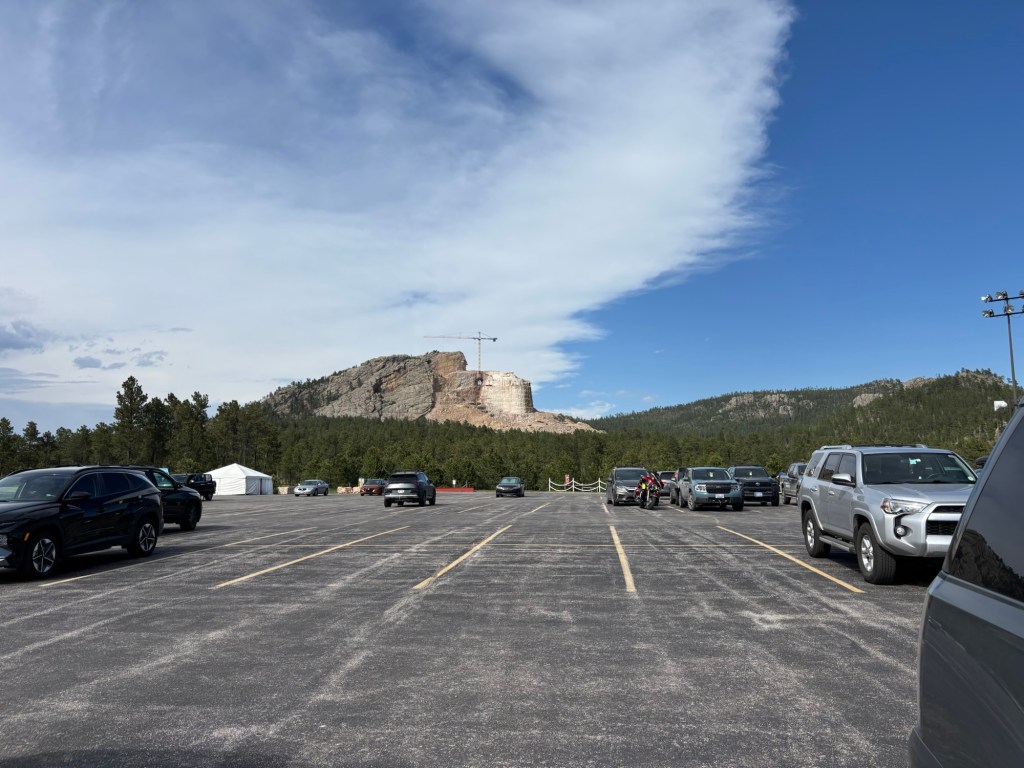
It is impossible—literally you can see both from the road—to not want to go to check out the Johnny-come-lately Indians’ effort while in the Rushmore area. Of course, I mean Crazy Horse.
Unfortunately, for anyone who has ever seen South Park, the experience is uneasy. Rushmore charges $10 to park. And the entire site is built to last—lots of stone and whatever that fake but permanent wood is called that decks can be built out of. Bathrooms are great. Viewing area is great. The whole experience is great.
But the Crazy Horse experience is embarrassing. They have a fee schedule—to include $10(!) to walk up. And a car load is $35. The entire monument (which will be epic at a LOTR level if they ever get smart and finish it) is very far away. Everything about the place is VHS in a world of 4K streaming—and I mean the kind of chasm involved in visiting your distant relatives whose TV/VCR combo unit isn’t flat, let alone do they have two bathrooms.
We watched a video (as recommended) to continue the post-parking lot experience which began with actually handing a just-received physical ticket to a gatekeeper. The movie was informative, and it contained the key flaw to the concept: the belief in adherence to unduly stubborn principles.
Again, back at Rushmore we were informed us that the artist and his son barely touched the mountain—instead they directed the many workers.
Crazy Horse’s artist was the sole worker, at least to start. And from Rushmore’s crew.
Rushmore took 14 years.
Crazy horse is 78 and no horse in sight.
I understand TTP (Trust the Process) and am living proof that it is true. Also, I cannot stress enough how cool the final monument will be. I am also totally fine with the tragic concept behind the project, that of an Indian pointing to where his home was—even though it necessarily carries the false idea that losers were participants in an unfair fight.
Back to the visit, we next perused what there was to peruse and noticed that in only 8 minutes there would be a proper drum and dance performance.
We took our seats and proceeded to listen to a real (looking) lady Indian dressed in real (looking) Indian gear lecture us for 50 minutes of an hour, on how the 600 tribes of Indians were living in perfect harmony, how they forecast Einstein’s E=mc2, and how the word “Sioux” means “snake”.
It was a family affair, we learned. So her 10 year old daughter came out and sang a short Indian song. And then her 19 year old daughter came out and danced two dances, accompanied by iPhone drums (probably not AI song) over loudspeakers, in a dress strung with hundreds of bell-looking things that sounded like kazoos jingling.
I need to emphasize here: I understand totally the concept of “talk before eat”. It is impossible to serve free food and then ask people to stay for a free lecture. Main attractions have to come last, I get it. But the lecture was 5/6ths of the allocated time and rife with inaccuracies—she even pointed out the brains of buffaloes were used to oil the hides.
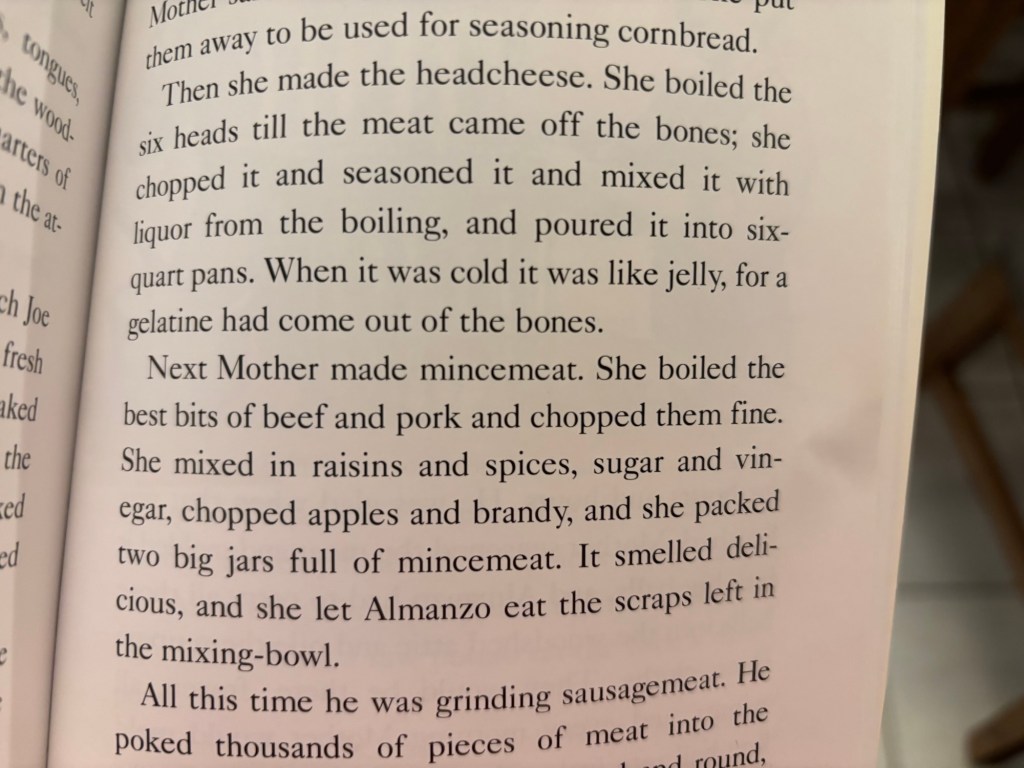
(See Wilder’s settler’s written description of “butchering day” for context.)
Anyhow, after driving away, and while tearing down our campsite the next morning (have I mentioned I am an Eagle Scout and quite literally one of the Last Boy Scouts?), it hit me. These people need to, firstly, tell the truth about how tragic and brutal life was before civilization approached and conquered. Secondly, after starting with the depressing, they need to regain some face and their only way to do that is to highlight proudly (and most welcomed-ly) all the ways the Indian ways influenced and sustains the dominant civilization—like, say, Indian Guides, Boy Scouts, chief, army helicopter titles (blackhawk, kiowa etc).
Lastly, the food at Rushmore is exactly what I imagined food in communist countries is like—terrible. But guess what?! The entire restaurant facility is award winning in its “green”-ness. I mean, consider this. The restaurant which serves terrible food (except the ice cream of course) is award winning: “Feel good about how the preparation and housing of the terrible, and overpriced, food adheres to irrelevant, purpose-less government guidelines.”
This brings me to my concluding advice: the food at Crazy Horse smelled really good—even to a full stomach. So don’t let any of my criticism deter you from seeing both monuments. But skip Rushmore’s restaurant and donate your money to the Crazy Horse food crowd instead of the commies.
Finally, two illustrative pics.

“White Sinners”, A Review of The Bride!, by Maggie Gyllenhaal
Motionless pictures can be art, too. The Bride!, like Sinners, is art for the reason motionless pictures can be art. The trouble, the thing that has everyone ate up, is Ms. Gyllenhaal’s picture is in motion. Hmm.
Lucky for her, the door for this kind of post-post-modern, detached, boundary-less art was opened by Mr. Coogan (and I am sure others). Just the same, I have always heard about some people who are able to be captivated by a single painting for hours. That is the closest this wind-riding-knuckle-dragger-with-a-blog can use in describing how this movie works.
Is The Bride! a reimagining? I have no idea. The interwebs confirm that there is no book by Shelley. Apparently there is an early movie and some other movies and books of the titular concept (Bride of Frankenstein). But I am pretty sure this film is just an original continuation story—and it should have been marketed and reviewed as such.
The most striking part of the movie was the leading lady’s effortless range. I mean she goes from repulsively demonic to irresistibly infatuating in the blink of an eye.
The gore is realistic and nauseating—another instance of “I hope my kids never find out I watched this”.
There are scenes of obvious first wave feminism (…like I know what that distinction means to experts. What I mean by first wave is that some women don’t want to be stay at home moms). But unlike some reviewers, I didn’t see it as proselytizing or advancing an agenda. It’s just a movie, folks. At ease!
On the whole, in addition to Sinners, I place it alongside Joker 2. I would like to give it a second chance now that I know what’s coming. But I am not sure there will prove to be enough time.

