Tagged: Christianity
Reading Log 8.31.2026
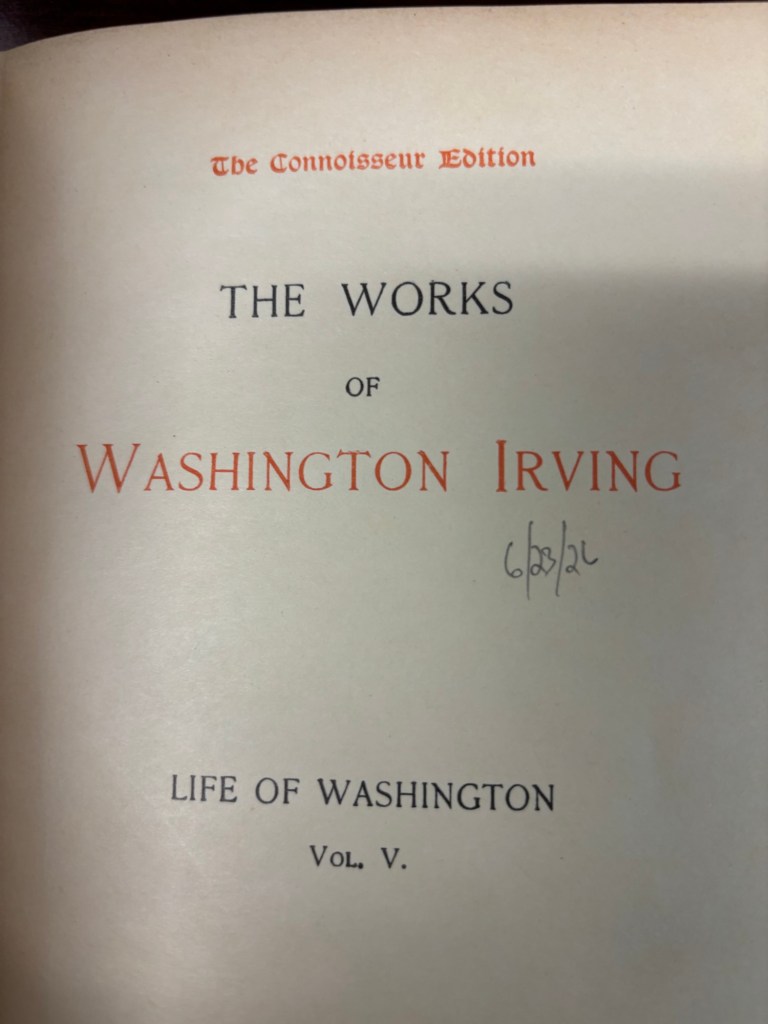

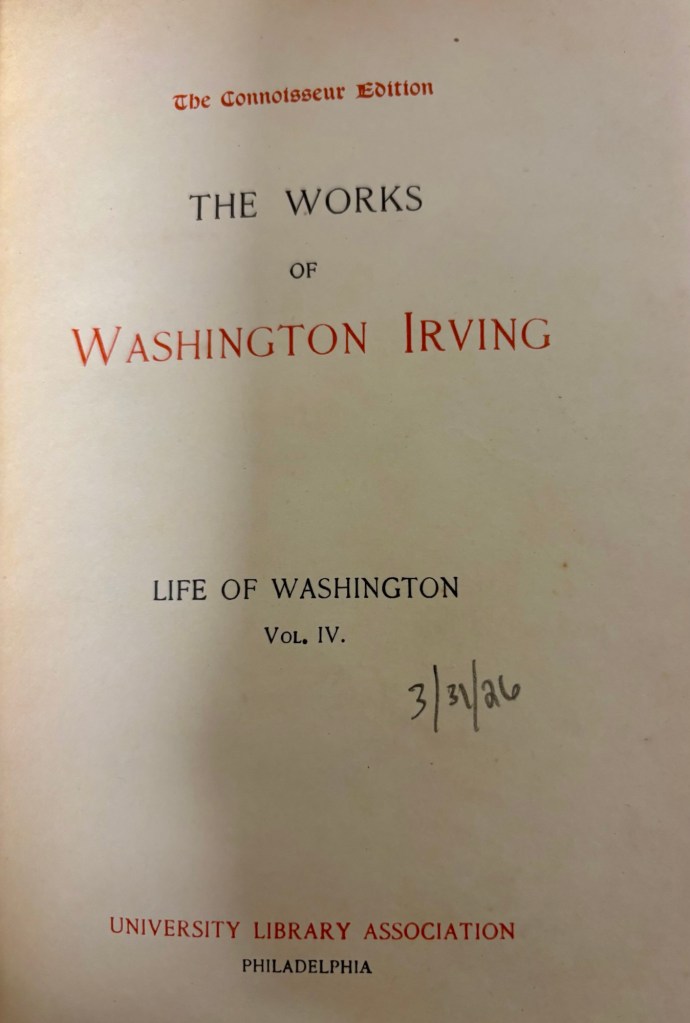
Washington Irving wrote a five-volume biography of George Washington, so this was the final volume. As you guessed, he dies. And it is sad. It is sad because he died for reasons that probably didn’t have to result in death, and it is also sad because he genuinely seems to have longed for a peaceful, leisurely life on Mt Vernon. The most interesting detail in this volume was that after his presidency, after he had made clear that his days as a public servant were over, war seemed inevitable again; and the powers that be were calling him to service once more—and he agreed to saddle the war horse once again.
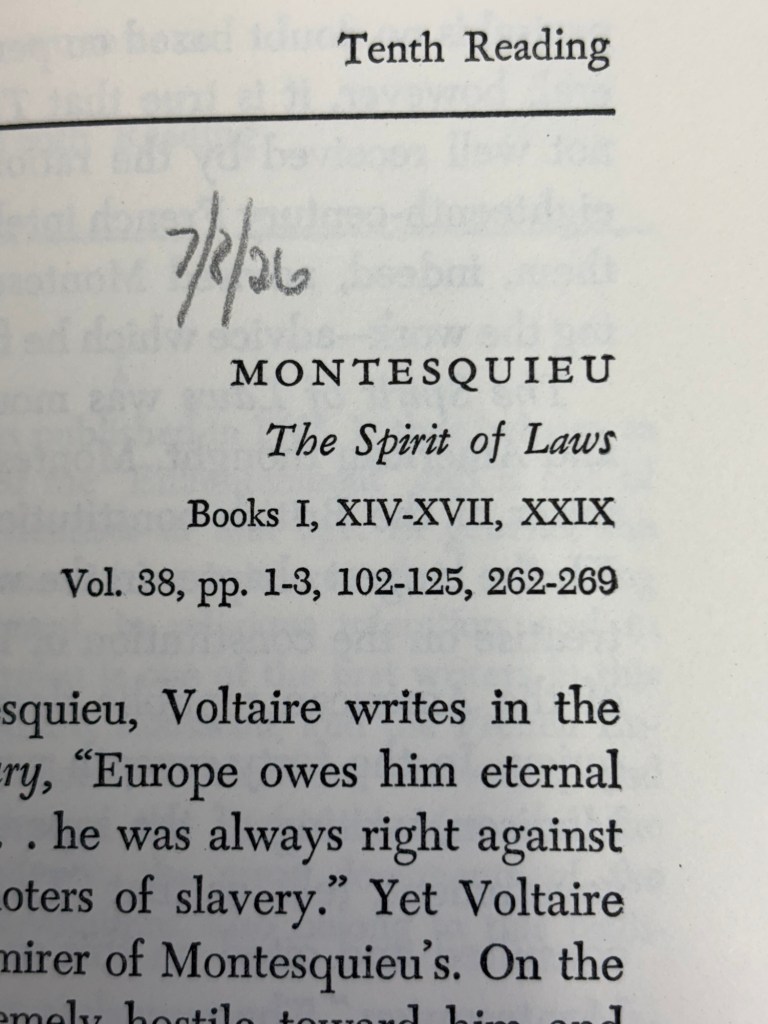
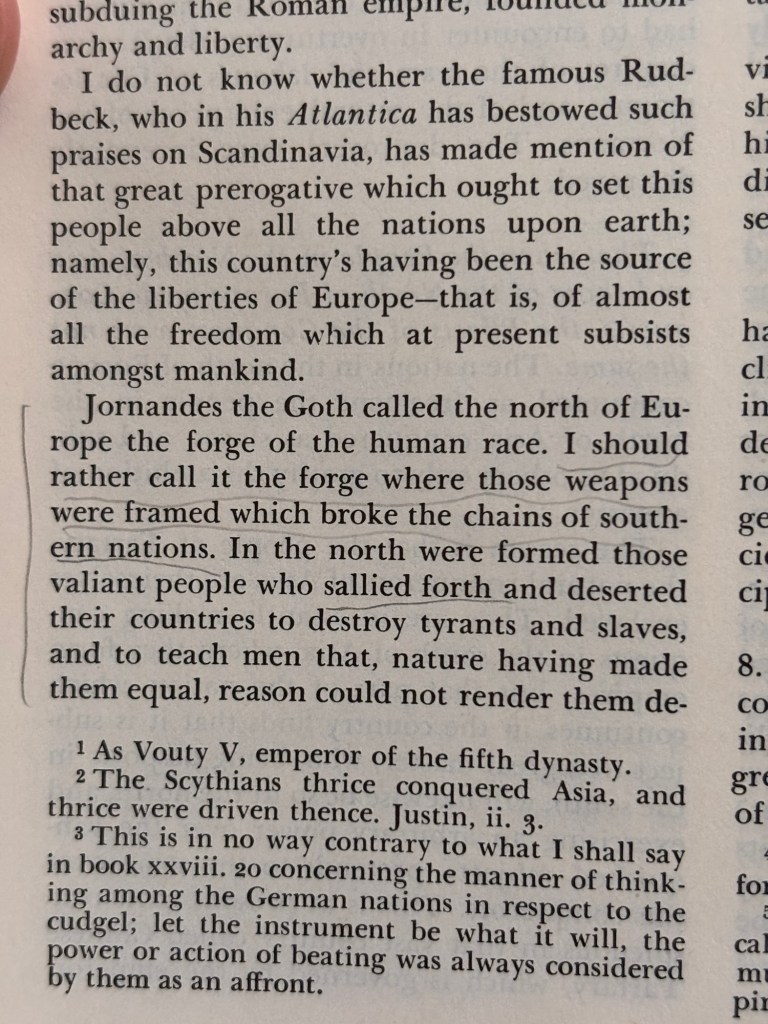
Montesquieu is always engaging. This time a main angle of his approach to Law (capital L) was climate. I don’t know if I’m merely super open to suggestion, or if he makes some genuinely interesting observations, but at the level of ‘the broad strokes’, it seemed to me that as much as I loathed the idea that climate does and should dictate the laws of a country/people, I came to understand that there is merit to the idea. I must also call attention to the particular way in which he framed slavery—via climate again. We hear a lot today about Whites ending worldwide slavery (as opposed to BIPOC folk having any major role in ending worldwide slavery). But that seems to fall on deaf ears, i.e. no one that is ignorant of history wants to hear anything good about Whites. But Montesquieu doesn’t care about white or BIPOC (such a silly division, isn’t it?). Instead he puts it this way:
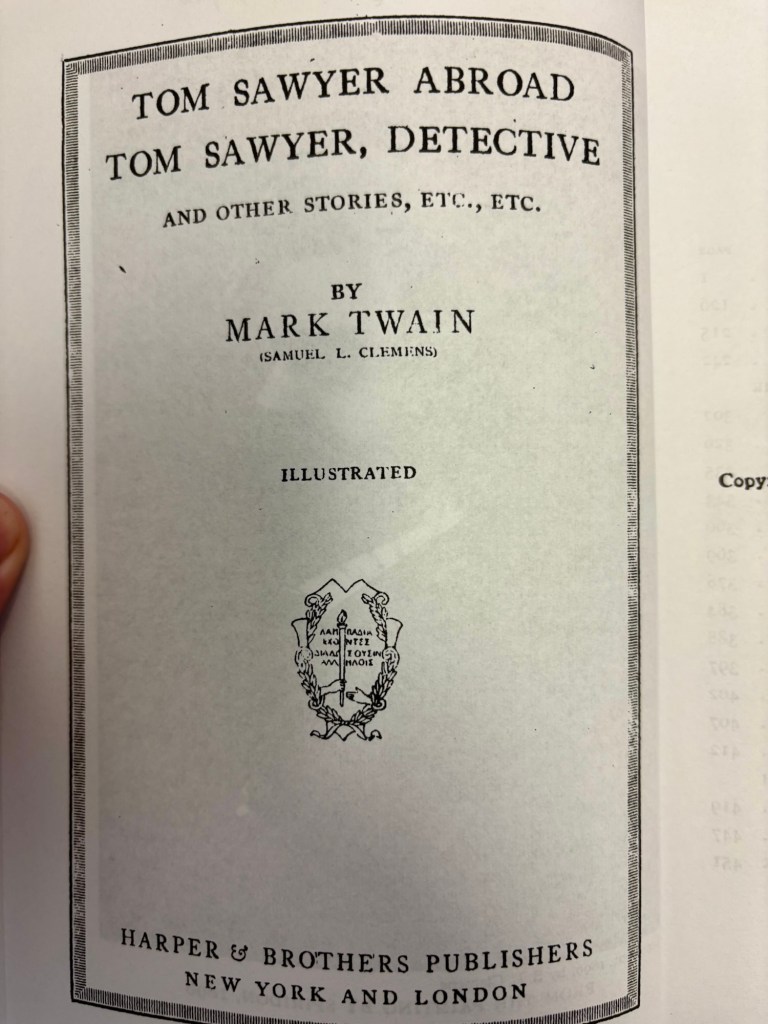
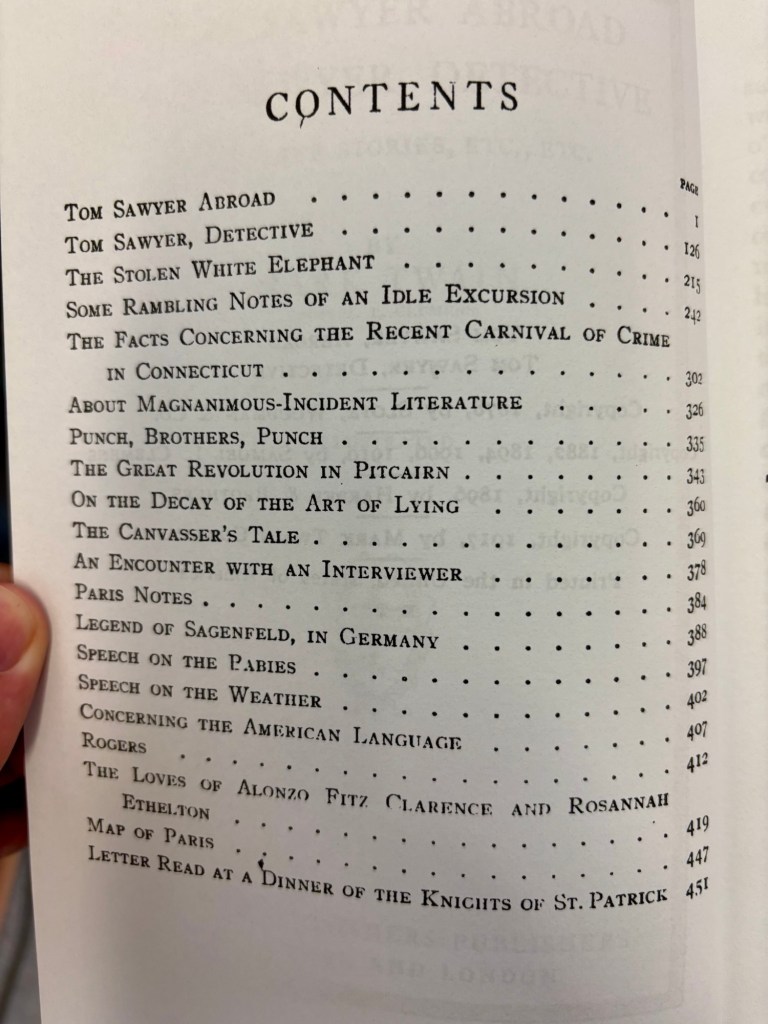
A new biography of Twain has hit the bookstores, as you no doubt are aware. As expected, it highlights all the ways he was Woke and had TDS. A friend even shared with me an article about how Huck Finn is being taught by the few schools that will still touch it, and that article used right-wing censorship to invigorate itself to life. In other words, the article’s author claimed that one of the reasons the book is worthy is the bigoted MAGA or worse Right doesn’t want it taught. What a joke. I mention all this because of one simple fact: Mark Twain is a premier author. Without his writing, not his plain opinions, we would not know or care who he was. So this book and the collection of short stories that follow the main feature, are definitely worth reading. Of special note to those who want a good laugh is On the Decay of the Art of Lying.
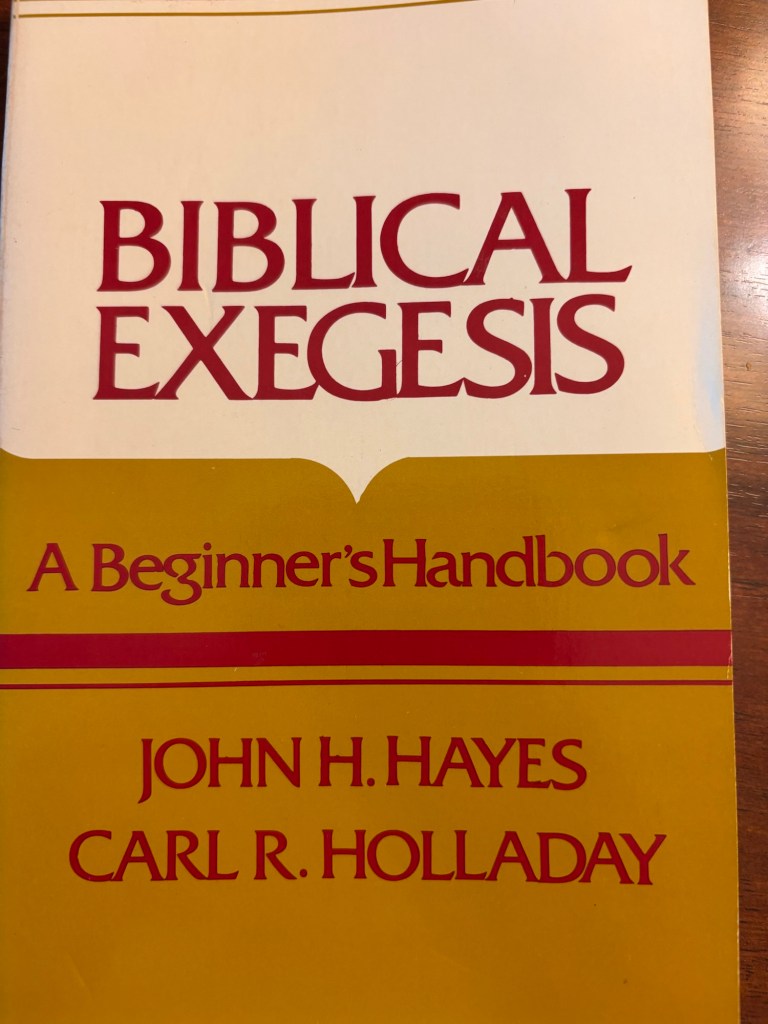
I picked up Biblical Exegesis: A Beginner’s Handbook because I have been reading through the Anchor Bible commentary set. The authors therein casually mention “literary criticism” or “structural criticism” and despite spending three years in seminary, I just wasn’t comfortable with what they meant by these distinctions. Similar to the Five Love Languages, which can be stated in five sentences, this short book could have been monumentally shorter. Here goes. Textual Criticism is the quest for the original wording. We’re talking ancient documents and super in-the-weeds nuances that do not have earth shattering consequences. But it is fun to criticize or look with a critical eye at all there is to see. Historical Criticism is the attempt to accurately place the passage in the context of recorded history. This is in contrast to allegorizing everything in the Bible like is so popular now—-and has been in the past. (“It says, ‘He stooped down.’ Do you hear me? If He ‘stooped down’ back then, He’ll ‘stoop down’ for you today!”) This would be where we discover forgivable discrepancies between the biblical account and other historical accounts of the same events. To be sure, KJV-only types get around these discrepancies by declaring the Bible writer’s to be the accurate accounting–in face of all others. But this is the least of their errors, so don’t lose any sleep on them. Grammatical Criticism is the quest to determine “sense units” after original wording is determined. Easy analogy is “raining cats and dogs”. We can find some people who say, “it is raining dogs and cats” and others might say it correctly, “cats and dogs” but even after we determine the most original wording to the phrase, we need to determine what the heck the sense unit “it is raining cats and dogs” means. Next is Literary Criticism. This is the careful look at the life of the text itself. It has been 2000+ years of these texts passing through time. Consistency is the rule, but not without exception. So scrutinizing the contents of the writing, apart from the historical time period, the grammar, or even the original wording, sometimes provides interesting results. For example, the Anchor Bible book that I am currently reading is called “Haggai Zechariah 1-8”. At first it seemed like maybe the publisher just ran out of time or space, but upon reading the volume, we soon discover that the author believed Haggai-Zechariah 1-8 should be one “bible book” and then “Zechariah 9-14” should be another one. And Literary Criticism is the reason for this opinion. Form Criticism is when we read the Bible with an eye on the “form” we are presented with, such as how we understand a deed to house is going to read completely different than a classified ad about that same house. Tradition Criticism is simply the idea that the story or law or teaching within the passage of scripture was developed. Easy example is the teaching on divorce in the Gospels. In Mark there are no exceptions–divorce is always sin. But in Matthew we find the adultery exception. What did Jesus teach??? Can we ever know? What does it mean that two different authors recorded Jesus differently on the same issue? This is often limited to unverifiable hypothetical-land. The final criticism covered, a course correction to the Tradition Criticism that is concerned with the written passages is Redaction Criticism. Similar to Tradition Criticism, Redaction Criticism scrutinizes the actual written text as it is presented to us. It tries to determine if one text is more original or definitely developed off of a more original source. This would be the source of the well-known idea that Matthew and Luke both had Mark to work from as they wrote their Gospels.
Now you know. And I have easy reference if I get lost again.
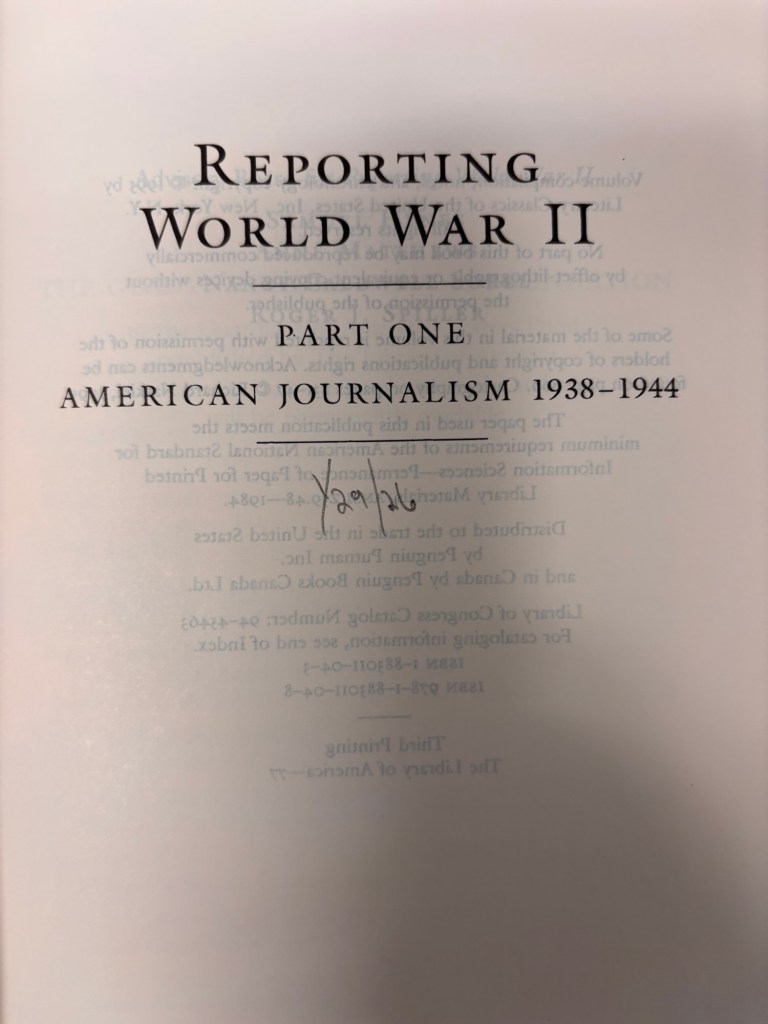
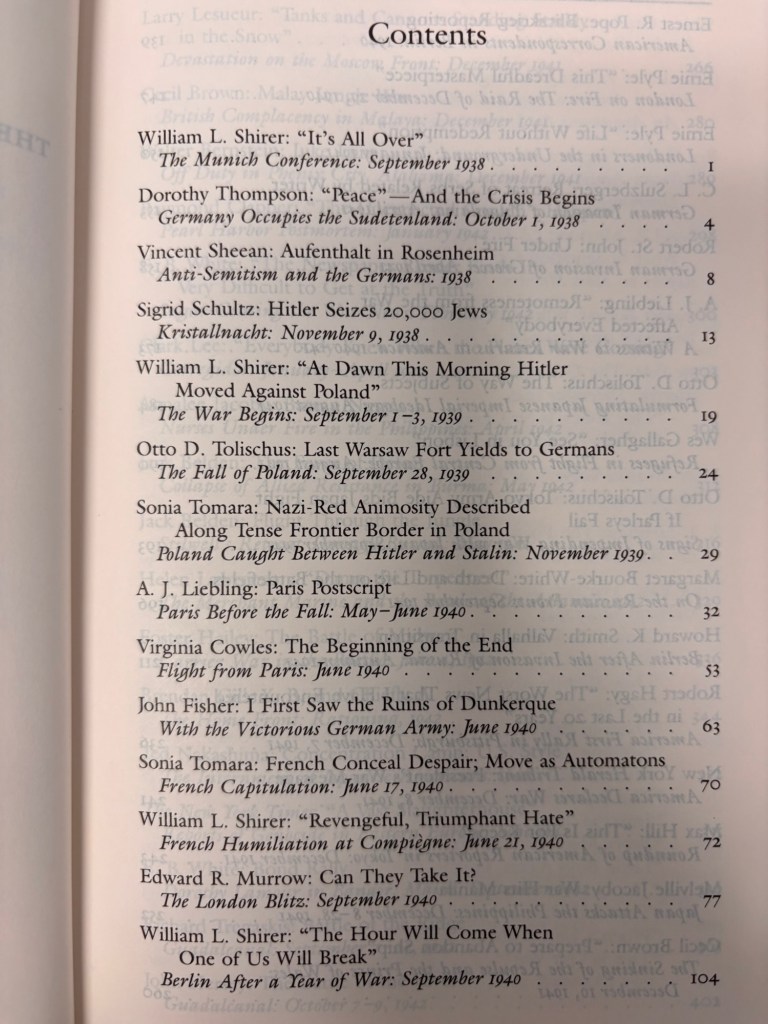
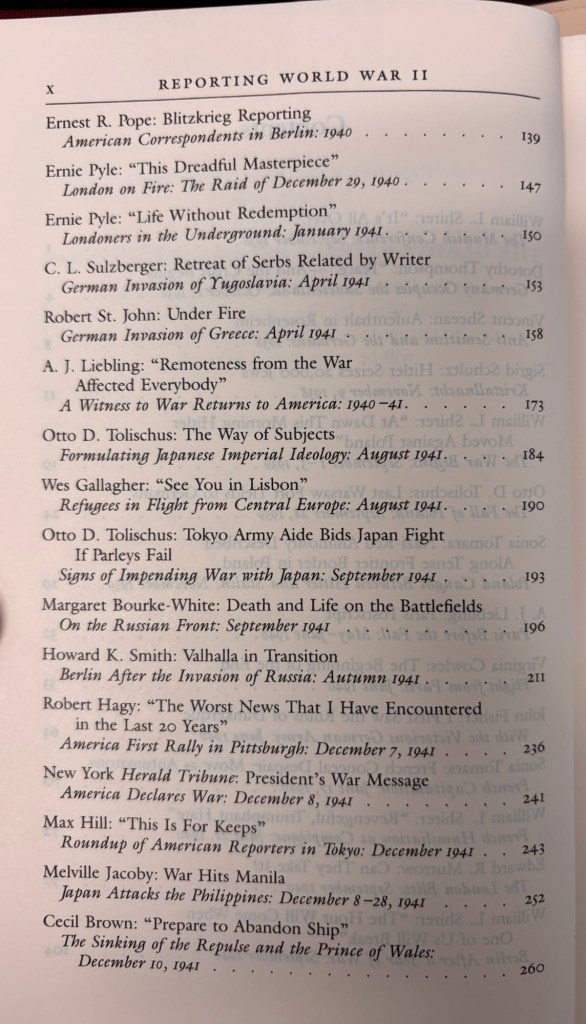
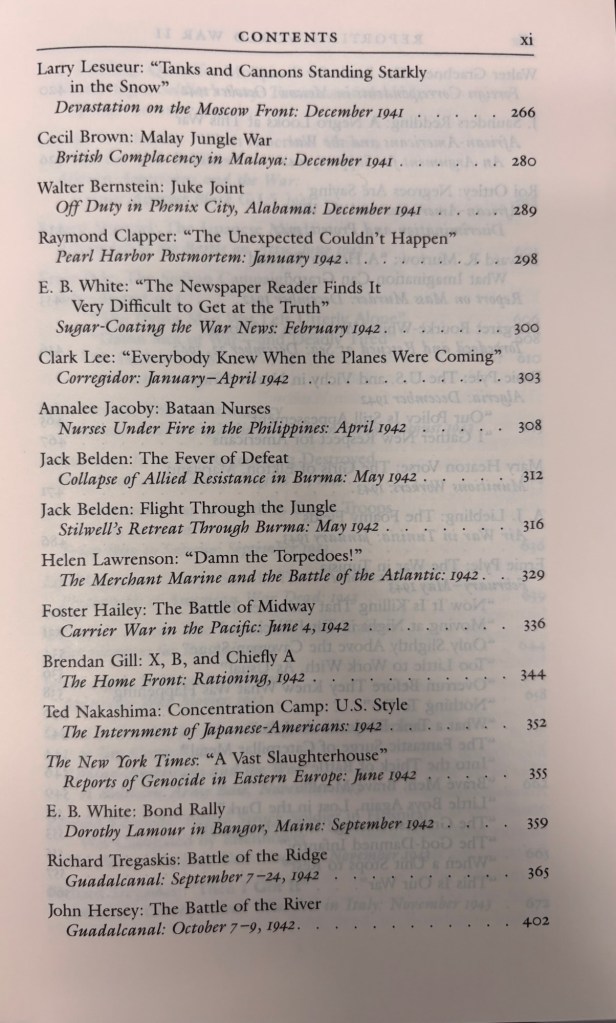
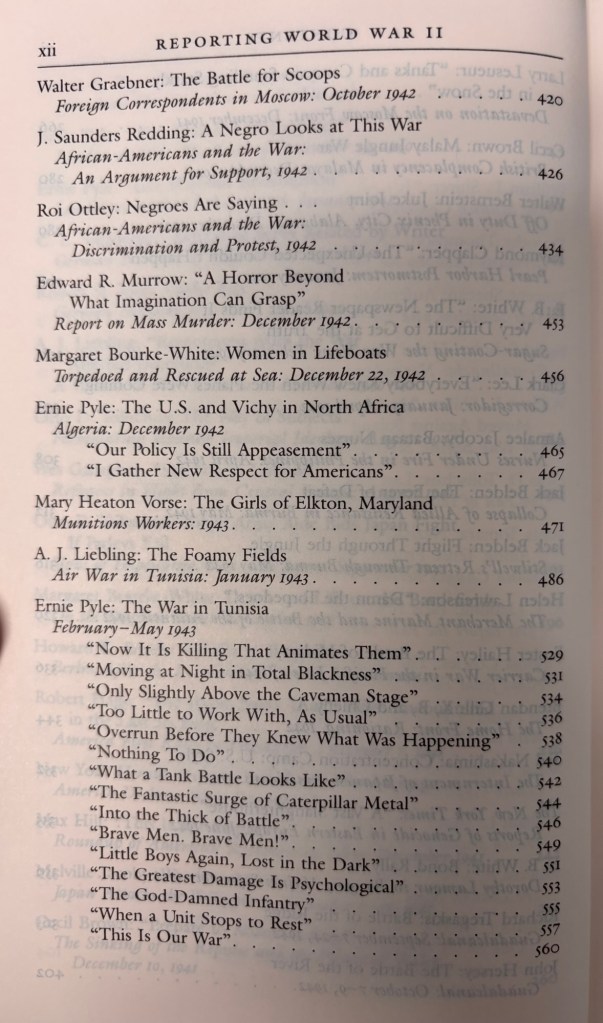
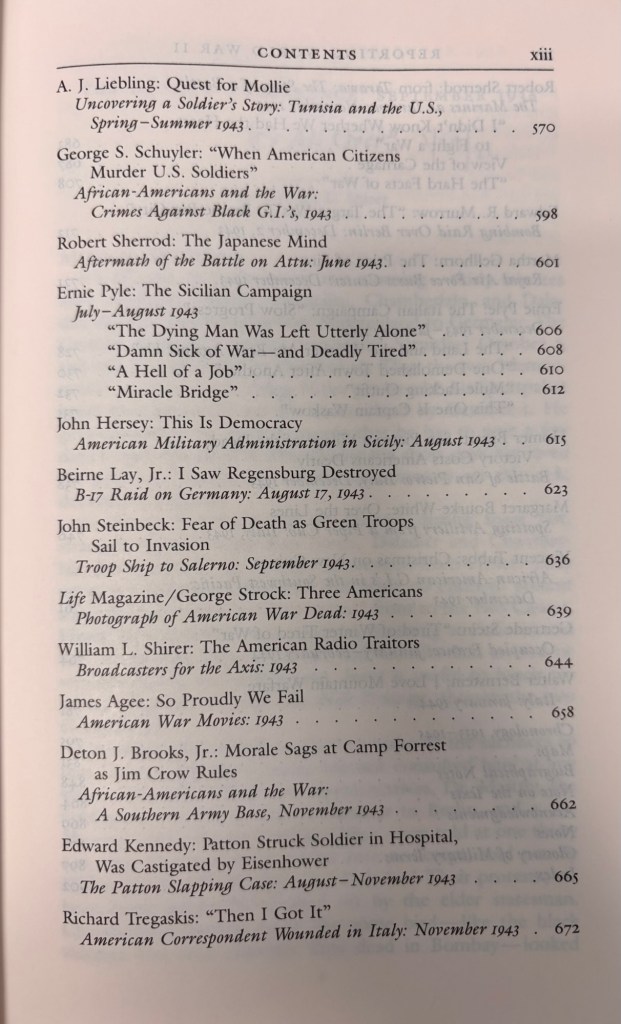
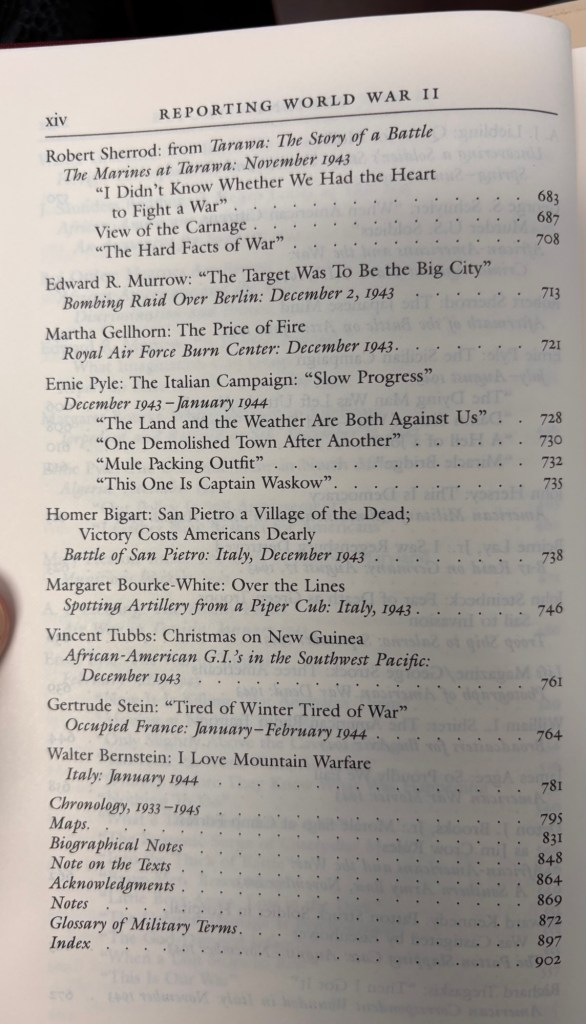
Like Reporting Vietnam before, Library of America’s Reporting World War 2 is definitely “must read” for every American. Just scan all those article titles and ask yourself how many you even knew were perspectives on people’s mind during the war.
Finally, the kids and I finished this 3rd volume of the Little House series. On the Banks of Plum Creek is different that the first three in that by now we understand the plan Mrs. Wilder has in mind. Each book will take place in a fairly unique setting and be describing just about one year of life in that location. The pace, then, is more regular, pleasant, and at times more detailed. These are all beneficial qualities. About the only comment I have for the events of Plum Creek is that I have always, I mean always, thought life would be better when the ups and downs were more immediate in time and place. No concern with the mohammedan destruction of Europe or Dearborn. No toilet paper runs affecting rest areas along I-35. Just do the crops grow, or do the grasshoppers come. If we have to up and move, we up and move. And Plum Creek is necessarily rife with this fantasy life.
No Yes
Any person who engages ancient languages with curiosity soon discovers that the word “yes” isn’t available. For me, it was in studying Biblical Hebrew that I came across this fact. Seriously, look up the word “yes” in your OT concordance and then search the Hebrew (or Aramaic) word behind any “yes” you find. The semantic domain will be “right” “true” “honest”, but not what we mean or do with “yes”.
You’ll find the interwebs and AI’s explain that “yes” is a late development due to its “conceptual abstractness”. Okay, Boomer.
How does it work then, I wondered? How could people ask and answer questions without such a simple word?
Then, today, it occurred to me.
And, as you’ll see, I cannot commend enough to study the Bible through the lens of children talking—if you’re undertaking the task as a native English speaker in 2026.
So I ask my daughter, 6 yrs old, “Did A- go to school with you yesterday?” (See where I’m going?)
My daughter replies, not with “Yes” or “No”, but how? She replies, “Sometimes A- goes to school with us.” Or whatever similar seeming method to withstand interrogation.
And the engagements with my kids (and Ethiopian family members—who incidentally tell me they do have “yes” in their native tongue, but which I have come to believe cannot possibly be what we mean by “yes”) are always like this. I ask a yes or no question, and they answer without yes or no.
It’s all clear now.
I can actually calm down. To me, I am doing them a favor with a yes or no question. But from their perspective, they don’t have an option with which to reply other than narrative answers.
Kinda fascinating, if frustrating.
You’re welcome.
Some Thoughts About Dearborn After Light Review of Last Night’s Events
-In his infamous documentary Pumping Iron, Arnold has a conversation with Lou which discusses whether it is better to be the king of the hill (defending from all comers) or the singularly focused threat on the way up. America is obviously the king of the hill. With this status comes threats and enemies and trolls and jokers etc. Islam needs to be relegated to the myth section of the bookstore, but I am not sure of the path to make that happen.
-In recap: a bunch of (in the case of Dearborn, presumably legal) immigrants outbred and then outvoted natives. At face value, I have no issue with this.
-If we believe the mohammedans lie at will (we do believe they lie and they do lie), I am not sure that talking with them is the answer.
-If my above recap is correct, one path would be to move to Dearborn or any other similar towns and out politic them. But that seems like a weird goal to have and a weird life to lead. Most people simply move for better jobs, not a crusade.
-In my recent readings on Vietnam, the Civil Rights Movement, and the Revolutionary War before them, I am struck by how turbulent the times and events were. And yet here we are.
Note on Christian’s “Science Proves God” Excitability
I recently read Erwin Schrödinger’s essay called, “Heredity and the Quantum Theory”. In it he uses the word “code” to describe parts of his overall point. He may have meant simply something encoded, like the way Morse code works. But it still called to mind the latest great excitement among smart conservatives who stop short of making Gospel Proclamation the basis of their platform. That excitement being the response to the discovery that the human genome is a code.
Why do they get excited? Well, code means programmer and we suddenly find ourselves back in Aquinas’ watchmaker world.
The trouble is, Hume destroyed the “watchmaker” apologetic. (In short, there need to be two “watches” in order for there to be a watch—nobody finds one gadget and declares it was made. Instead, they know one gadget was made and when they find a second ((or more) similar gadget, by analogy, they are confident to assert it was made. The point is, says Hume, there is one “gadget” ((the known universe)) that we have “found”. And so the debate over whether it was made or not cannot possibly be solved by analogy.)
Anyhow, the excitement is unfounded for a larger reason. In a word, that reason is “revelation”. All the truths of the Bible’s writings are declared or asserted to be revealed truths; that is, men reporting and recording what Yahweh or Jesus or the Holy Spirit communicated to us mortals. Don’t ask me how I know as if I have some special insight—it is the authors themselves who assert this. It isn’t mystical; it is their actual claim. You can read it for yourself!
The Biblical canon is closed—yes? But let’s say it isn’t.
Are we going to say that the additional material should be rooted in the quantification of material evidence? 66 writings formed from revelation from the God himself, but the next are from the images (objective measurements) of creation, as taken by devices only created thousands of years into the advent of mankind? No. And you agree with me deep down already.
How do I know?
Because, like me, you look around and likewise see the sheer lunacy of people’s claims about God.
And you know that the Bible is, and must remain, a limiting factor on human power. Yes, the God of Moses, the God of Abraham before him, and the Godman Jesus is really real. Yes, he selected and used a small number of men over a large period of time to communicate himself to us. And, yes, the communication has ceased. The canon is closed. Unless you want to open it by asserting the claim that God is using you to communicate to mankind something new and inherently contradictory to the other 66 writings.
This is what is meant by the canon is closed. Anything matching the canon has already been said. Anything not matching is inherently not canonical.
The Bible writers claimed to be divinely appointed to pass a message from God to mankind, to you and me. It is a bold claim. It is not what scientists claim.
We are well served to not conflate the two.
One “Either/Or” in a Field which often Demands “Both/And”
The variety of Christian denominations—even those which claim Biblical Authority—demands explanation.
Either (A) prayer helps interpret scripture, and the many denominations are mostly led by false teachers who didn’t pray the right prayer or to the right god, OR (B) prayer doesn’t help interpret scripture, and the many denominations are the result of the many methods of interpreting scripture.
My vote is (B). Besides the inherent loneliness within (A), it is illogical. Words (whether inspired or not) have meaning and the meanings are derived at by the same method, regardless of one’s prayer life.
To be clear: even if you are not a believer, a Christian, I believe you can come to understand the meaning of the most unintelligible visions and oracles the Bible writer’s provided. The “meaning” does not compel one to action.
The “compelling” is where the mystery lies.
Reading Log 7.11.2026
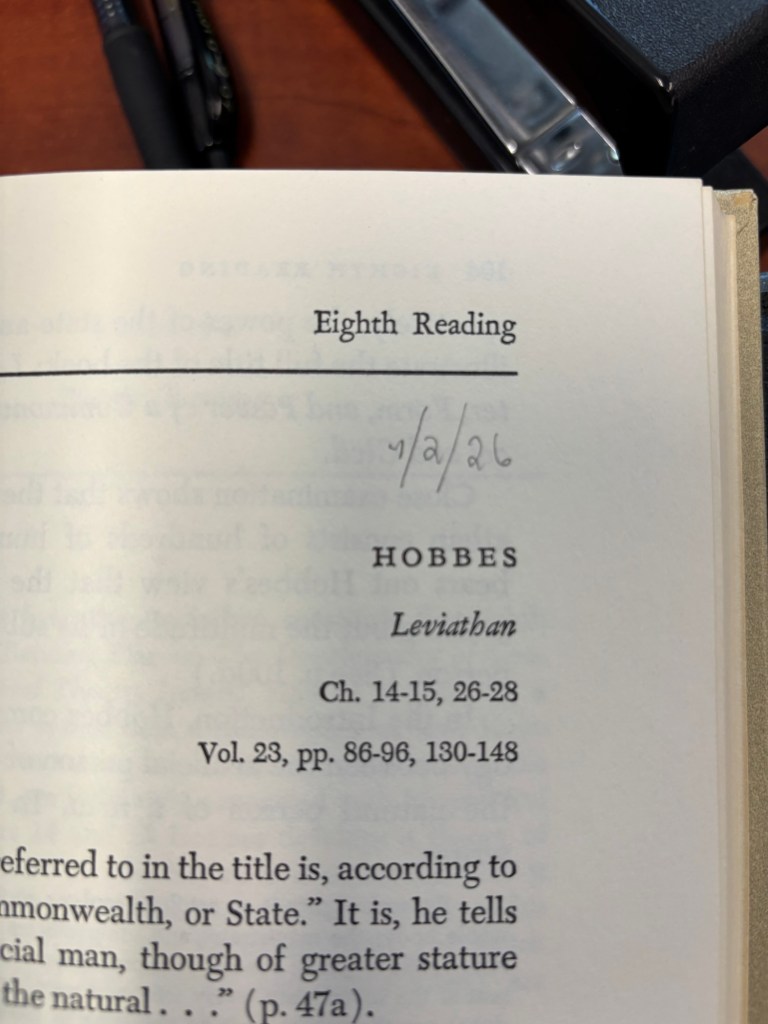


I have said it before and will say it again and again and again. Hobbes’ Leviathan is absolute must-read material. I am rarely more invigorated while reading than when reading Hobbes. I exhort you, brethren, find a copy and make time for it. You will not be disappointed.
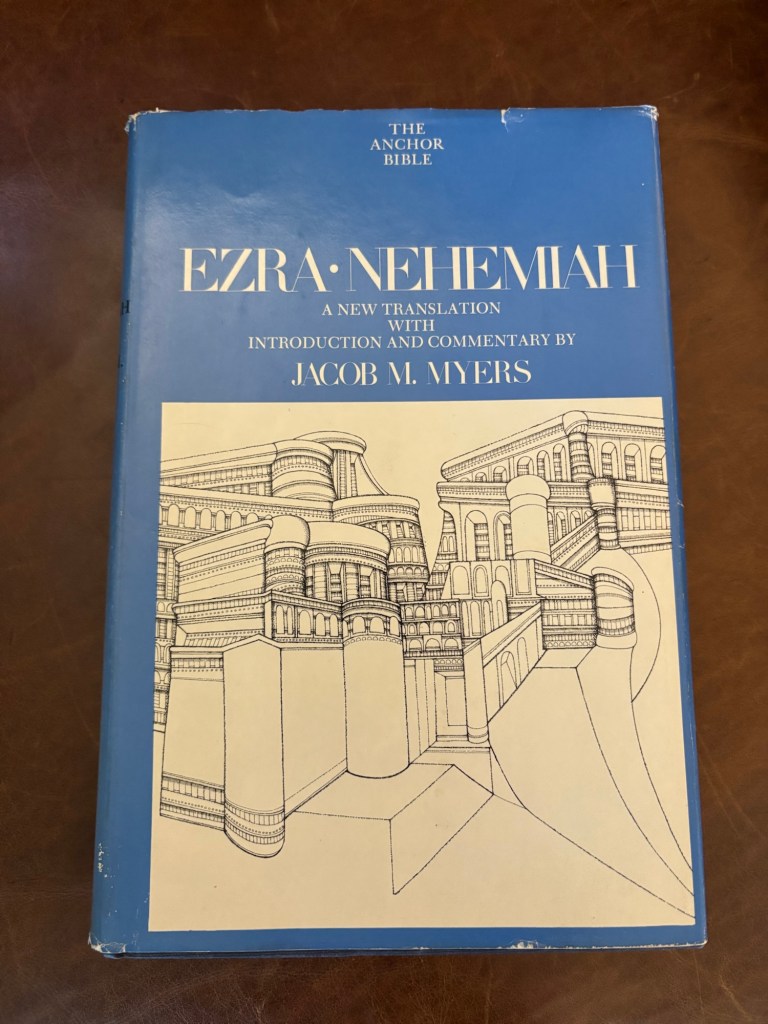
A former professor from the seminary reminded me recently that as an alumni, I had access to an online theological library. So I tracked it down and joined, $10 a month. Around the same time as joining, the same professor told me his recommendation for a commentary set for a church—meaning lay people. I had asked his opinion because I wanted to start a library at the church I joined. His recommendation was the NIV Application Commentary, which uses three approaches to each passage and never or rarely mentions any original language issues in a manner that requires training to understand. The three approaches are, “Original Meaning”, “Bridging Contexts”, and “Contemporary Significance”. Anyhow, I do have training in the original languages and I hate reading anything about the Bible in which the author has made the decision for me, preferring instead to read authors who lay out the evidence from which to choose what to think for myself. That’s where the Anchor Bible Commentary set comes in to play. I am certain there are other solid academic commentaries, but Anchor is kind of the gold standard. By way of example, the NIVAC’s 1 Peter volume might include, “Peter wrote…” and the Anchor Bible might write, “The author of 1 Peter wrote…” I prefer to approach the Bible Indiana Jones-style. (Recall—there are no priests!)
Boring details of my life, I know, but while all this was happening, I had started to get anxious about the issue of accuracy in the digital realm. Specifically, I had seen a few examples of how streaming services are latently airing edited versions of beloved entertainment. Long story short, I determined that I did not want to ever be distracted by worry about whether the content I was reading on a screen was original or edited, so I started tracking down a used set of the Anchor Bible commentary volumes. And I found and bought one (not quite complete). Then, lo and behold, I got an email announcing that the online theological library was ending its availability to alumni—at least as accessed outside of a proper library. No real reasons were given, but I was very thankful and felt very wise in my decision to begin to purchase the actual books for my home library.
All that to say this: I have for many years struggled in my attempt to a good habit of daily Bible study. As I have mentioned, I always start with the Bible if I have time to read. But I never loved my plan of just reading it and I also have never enjoyed using a devotional which were always so clearly superficial and kitsch so as to distract me from the intent of Bible study. Around the time of all this purchasing and subscription-cancelling etc. I had been in Ezra and Nehemiah, so I, one day, decided to see what ol’ Anchor said about them. And, boy, was I ignorant. It’s actually fascinating to me how much I had never known. This was part of the reason I began to read them recently anyhow. (Yay me.) Anyhow, the main thing to share here is that 1 and 2 Chronicles and Ezra and Nehemiah are all contemporary to each other. And the date of writing may be as late 150BC (don’t quote me on the date). Also, Haggai and Zechariah are the prophets of that same time. So what’s that? Like 6 books, spread from after 2 Kings to the end of the OT, in the Christian canon’s arrangement. I had known the Jewish canon concluded with (1&) 2 Chronicles, but I hadn’t ever studied the other four books, or committed to memory anything about their dates at the least. I did know that Nehemiah is where the tradition of standing during scripture reading gets it start.
All that said, I am happy to report that I have my new way of daily Bible study. I just read a passage and its “comment”. I have even been able to interest my wife in listening to it as I try to rid believers, one at a time, of the notion that one can gain understanding of the Bible by praying. It just doesn’t work like that.
Onward.
Netflix made a Frankenstein movie. I couldn’t finish it. But then I watched Bride!, as you know. I mentioned this at work to a reader and she asked me if I had read the book. I had not. So here we are. I haven’t researched it entirely, but I get the sense that Shelley (married to the famous writer Percy Bysshe Shelley, and daughter herself to very famous writers) really did invent the “monster” story, which pervades all manner of entertainment to this day. Quickly, I do want to note here that Frankenstein is the name of the creator, not the monster. And, imho, the book itself isn’t that good. But the idea is—obviously. The idea being, what if the creature you bring to life is a devil, not an angel?
Farmer Boy was fun. My main criticism is that a city kid of today really and truly cannot use much of the information which is transmitted and which was conceivably useful to farmers back in the day.
GW continues to be great. He is now President, not exactly by choice. Also interestingly, the state of politics in America back then was so startlingly similar to today, that a new idea has formed in me. This idea being that while everyone who wishes America well can appreciate the “fighter” in Trump, the truth is that we really need a leader who knows how to gain respect of everyone. That is who George Washington was. People were as vehemently opposed in their desires, motivations, and methods as we are today. But when a decision was needed, they all agreed GW was the man for the job. How did he do it? Moral living and pure motivations. How can such a man be formed and found? Imho, by studying GW. And by providence’s intervention.
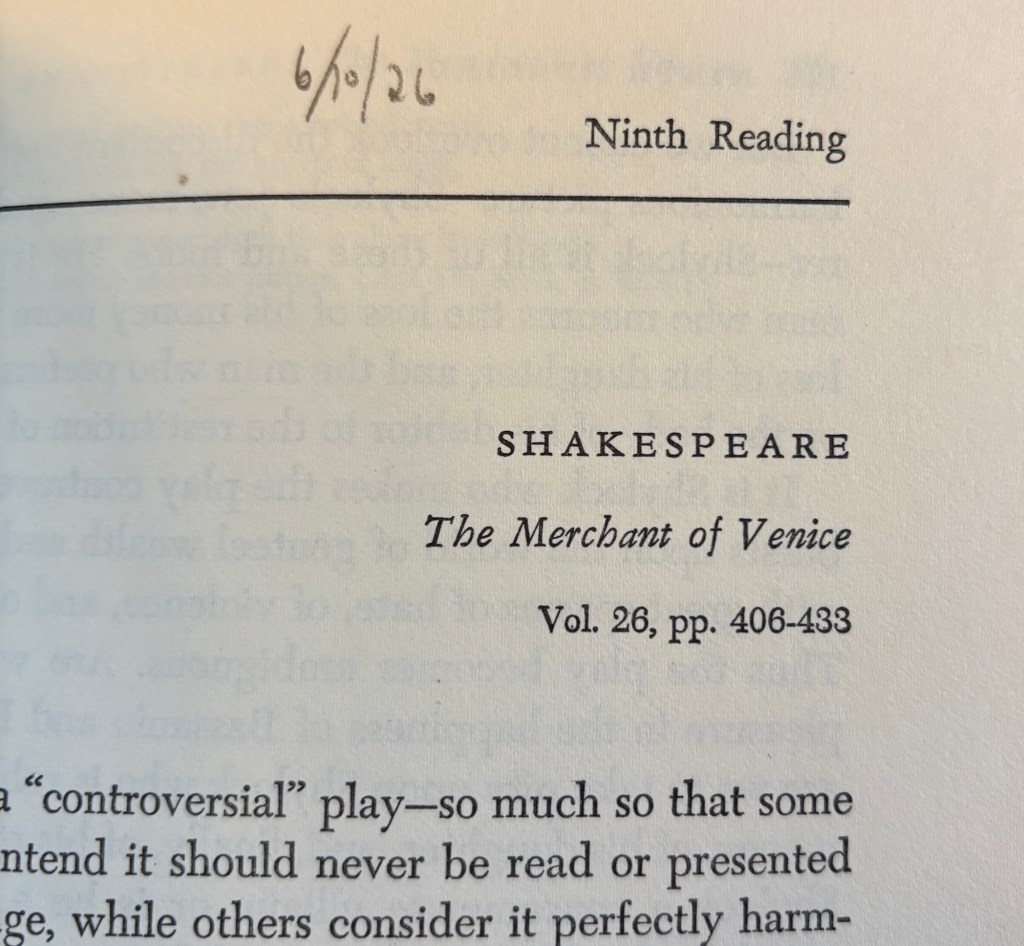
I can’t explain it, but any time I spend away from Shakespeare causes me to forget how great he is. Luckily, he is so abundantly great that merely reading a line or two is all that I need to fall back in love with him. What a writer. What stories.
Merchant of Venice is in the Great Books of the Western World’s Great Ideas Program guided reading on the topic of “Philosophy of Law and Jurisprudence.” This is because the character agrees to forfeit “a pound of flesh” if he can’t pay back his debt. To generalize this contract, the question Shakespeare raises is, “Can a person use the law to bind himself to commit an unlawful act?” The largest perspective being, “What is the name of the thing which prevents a person from freely entering into a lawful contract which has as one result unlawfulness? If the thing is ‘law’ itself, then where does it get its power, since a man freely made the contract? Doesn’t law come from man?”
In any case, Shakespeare toys with the language and big ideas as if they were nothing. And it is a whole lot of fun to read.
That’s all for today.
For Next Year’s ARC Conference: No More Hedging If You’re a Christian Speaker
I have been listening to a few of the 13-min talks from this year’s Alliance for Responsible Citizenship conference and, as with the past two years’, they are tier one models of conservative perspectives. And yet I cannot deny that when the speakers use the language “America’s past is not perfect” or similar, I shake my head. I hadn’t been able to pinpoint exactly why this phrase, and the concept behind it, bothers me so until just yesterday.
For context, please call to mind that I am reading volume 5 of Washington Irving’s Life of George Washington. Specifically, I am up to his decision to run for reelection. Let’s just say that since his birth and the legendary tree incident, a lot has happened. And after everything I have read, I conclude, “And all of it was the best thing for the future occupants of planet Earth,” full stop.
I know, I know. I can hear you. What about slavery? What about women’s rights? What about civil rights? What about ‘Nam?
Allow me to break some news to you. I am a Christian. Inherent to Christianity is the belief that all men are sinners (“They have all turned aside, altogether they have become worthless; There is no one who does good, not even one.”
Psalm 14:3 LSB) and that no earthly government—though instituted by the Living Triune God himself—is perfect (“Then Yahweh said to Samuel, “Listen to the voice of the people in regard to all that they say to you, for they have not rejected you, but they have rejected Me from being king over them.”
1 Samuel 8:7 LSB and “Be subject for the sake of the Lord to every human institution, whether to a king as the one in authority, or to governors as sent by him for the punishment of evildoers and the praise of those who do good.” 1 Peter 2:13-14 LSB). For me, a Christian, then, to hedge the character or accomplishments of people or governments with some seeming politically correct admission of unpleasant facts, is to betray my beliefs, exchange them, as it were, for someone else’s beliefs—and for what? For likes? For views?
No. That is not right. We can all just speak truth for truth’s sake. Speaking isn’t violence. Everyone knows, by virtue of the content, what we believe anyway as we talk. And the import of the speaker’s content is directly related to the integrity of the message. In short, it is weak when a Christian hedges their claims about men and government. It is weak because the Bible has, amongst many mysteries, essential and clear statements about the nature of man and government. Man is sinful. Government is inadequate.
Conversely, it is the game of the Woke, the Left, and the Commies, among others (hard to leave out the DNC) to believe man is perfect (without evidence) and government is adequate (without evidence). Christian doctrine does not support either.
So, ARC presenters, next year, as you continue to bravely, and at some risk to yourselves and your families, model for us plebes how to live, please step up your integrity on this topic. America wasn’t doing “the best it could while having some original sin”, instead America “is and has always been the beacon of freedom for the entire world”. George Washington didn’t “have faults”, instead GW “played the almost superhuman role of founder of America, played it well, and deserves our continued gratitude and attention”.
The events of the present and future are not improved or sustained by “bending the knee” to those who seek destruction. Time is limited. So use it all to accomplish any speaker’s goal: nourish and flourish.
(Let us pray.)
Review of the Christian Nationalist (haha) Stage Musical, “Finding America”
I have a friend who, in short, helped shuttle the worried BIPOC migrants around Minneapolis during last winter’s Surge. He loved PTA’s One Battle After Another. And we had a few conversations exploring the Talerico-style interpretation of Jesus.
That friend is to whom I texted pictures of the auditorium. This was the screen.
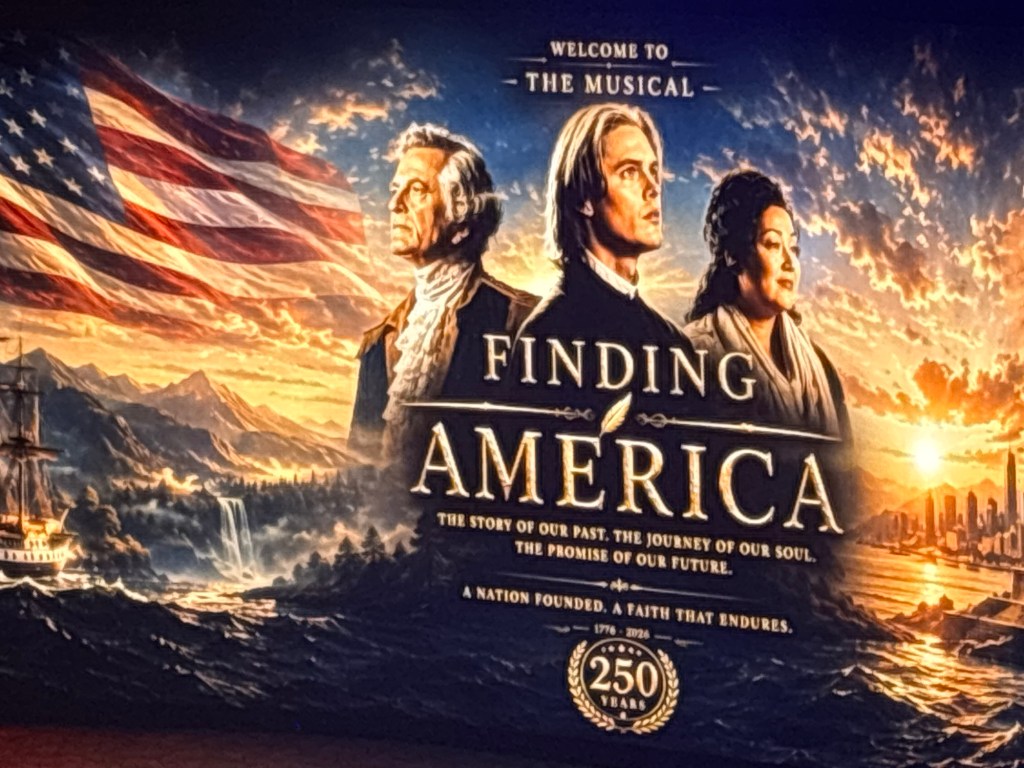
We bantered back and forth for a minute about how different this crowd likely was from the No Kings rally in San Francisco that his trip there had randomly allowed him to witness. My main point was despite all expectations, my room was pretty diverse (mostly due to international crowd), whereas the No Kings crowd is almost exclusively white (and not internationally relevant).
I put the phone away and sat back, unsure of what to expect.
Afterwords, I sent him the following notes, accompanied by the program/scene descriptions.
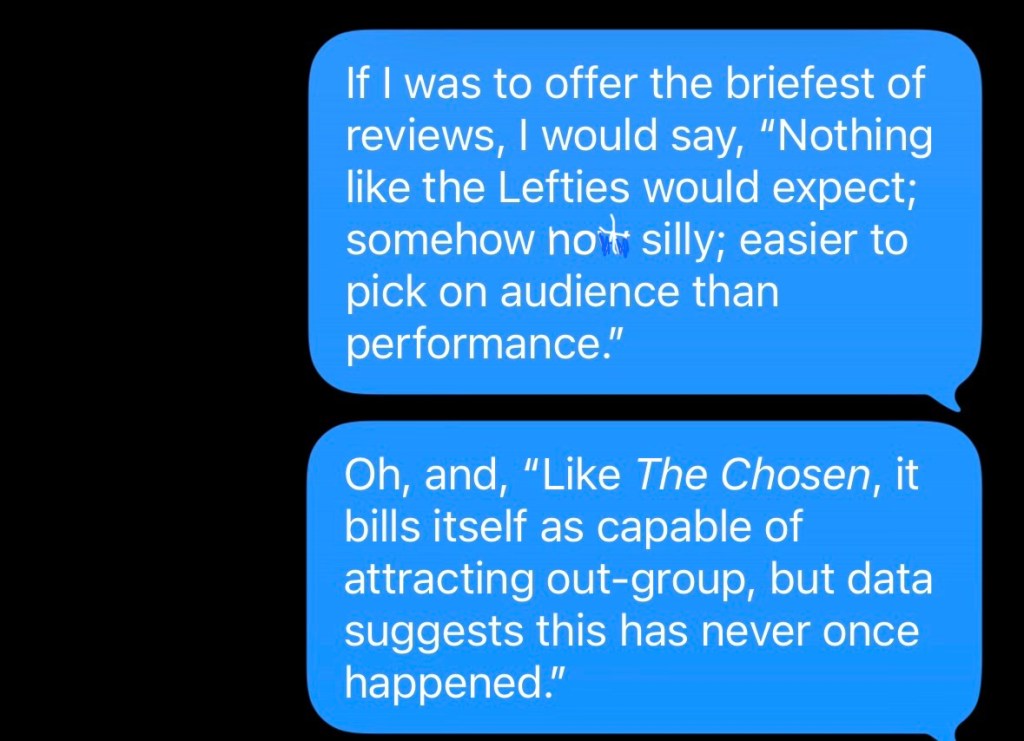
Here, I want to take a moment to flesh these observations out a bit.
“Nothing like the Lefties would expect”
I like to believe that I am very sensitive and in touch with the passing scene. In other words, I don’t need communists’ help to notice the group or subgroup known as “Christian Nationalists.”
The difference (besides the fact that I am no longer hell bound, Glory Hallelujah!) between the Lefties and me, however, is I will bravely enter the CN’s den. And guess what? The Lefties have it all wrong. The main problem with their imaginations is that white supremacy has no part in Christian Nationalism.
Again, white supremacy is certainly a reality for some folks, no different than Christian Nationalism is real. But the two are not linked. Here’s how I know. Ever since I married an immigrant from Ethiopia, I have dreaded the experience of being around “whites”. You know who I mean. Those people who need to compensate for something by making a point to come over and chat. I know who they are because I am the same person I have always been—and they never showed interest. But now that there is some manner of compensatory atonement available, they are chatty Kathy. Again, I don’t avoid these moments, but I dread them.
But here’s the point: among these Christian Nationalists, we were totally ignored. Ignored by Hindustan-ians (Dot not feather), Europeans, Africans, Asians, etc. The group was legitimately diverse.
“Somehow Not Silly”
Anytime adults play-act as GW and William Tyndale and pilgrims and settlers and Indians (feather not dot) and colonial Blacks anymore, I totally expect silliness. And I know this is the result of the Left’s influence on me. And yet this Stage Musical was somehow not silly. My gut says that it was because even these Christian Nationalists are very aware of the criticism the Left has launched at overly romantic portrayals of colonialism and colonial times in America. So the script just avoids landmines.
I also commented to my wife (who had spent a couple days earlier in the week at the Family Camp and was the reason we went yesterday) that sometimes the phrase “loosely based on true events” is used. And that in this case, the “looseness was so loose that it would be difficult to say they even were making historical claims that could be verified or found wanting.” But I am on Vol 5. of GW’s biography and can comfortably feel the thematic relationship to history. In short, the musical definitely claimed “historical accuracy” but not completeness. And in this, it succeeded.
I’d be remiss if I didn’t comment on the whole Christian part of the lesson. Does it take more than one Indian Christian, more than one Black Christian to teach us that Jesus died for all? No, no it does not. I can’t make their decision for them, no different than I can make your decision for you.
“Easier to pick on audience than the performance.”
I have young kids. The effect this has on me is that I enjoy the idea of dressing or acting more loudly than my “quiet professionals”, special operations trained self would otherwise allow. I don’t wear an American flag as clothing, but I do like being around people who do. And I might get there someday.
Just the same, it is merely fun to me. And it bedazzles even me. Are these people serious? Or just having likewise fun? I can’t always tell. But again, the performance was so polished that it would be difficult to mock. And this was not the case regarding certain stars and bars bedecked citizens.
“Attracting Out Group”
I would include more links etc, but the website bills the show for today and yesterday only. And this is part of my issue with this idea of these uber Christian events (Chosen being most well-known, ergo most egregiously guilty) as evangelism. How would a non-believer even know about these things? And I am number one movie-fan and music-fan on earth when it comes to flatly admitting the best of secular music/movies/shows is generally incomparably more appealing than religious attempts. There is just something missing in Christian attempts at entertainment. I would say it is the fear of impurity. But whatever it is, the whole idea that Finding America or Chosen is on par with Broadway and Hollywood or even “close enough” is laughable to me.
Hear me clearly: in evangelism the goal is to faithfully proclaim the Gospel of Jesus Christ, the same one the Bible writers do. This includes your actions too.
Final Thought
I like talking and contemplating politics. I love America. I fully believe American-led, Western Civilization is unique and a great boon for the inhabitants of planet Earth. And this belief is the result of great study and wide experience among different cultures and conditions. I went to the musical because our other plans here in tinderbox Colorado were cancelled and I wanted the kids to see Christian Nationalists for what they were. I would go again because it is fun to be around people who like life—not for a history lesson or to learn from it. That’s what books are for.
Oh. Final, final thought. Did my kids do anything to indicate they have a brain? Good question. Yes. The performance opened with some GW revolutionary war scenes, and when they switched to the Christian/church history stuff, unprompted, A- (5.87 yr old) turned to me (after declaring that she thought it must be night outside because it was so dark inside) and said, “Now they’re talking about Jesus.”
That’s all I could ask of a person. Discernment.
The Value of Communicating Waters Cannot Be Understated
In reading Vol 4 of Washington Irving’s Life of George Washington (taken together with my memories of Africa’s chapter in Conquests and Cultures by Thomas Sowell) I cannot help but walk away with the thought that it cannot be overstated how valuable waterways which can be navigated by large ships are.
If you need an easy to remember, due to superlatives, summary of the history of life on planet Earth (how has it unfolded), as told by winners, it is this: victory has come to those people who were interested in communicating aloud with the most people, the most frequently, and who were able to command the waters which communicated the heaviest amounts of goods, the farthest distances, at the fastest speeds.
In short, open-minded, talkative, and good-listening entrepreneurs on the banks of waterways of significant depth and breadth hold the keys to the Kingdom of Earth.
Thuck-Y-Dideez
I first heard of Thucydides in college. This would have been 2001-ish. We weren’t studying him, but the professor needed to make a point and used the classic “Athens-open, Sparta-closed” historian to do so. Along the way, the professor interlaced a story about how a student came to him complaining about the reading and pronounced thoo-sih-di-deez: Thuck-Y-Dideez.
Funny stuff.
I do not know what the Thucydides Trap is, but I want to post an informed guess before I google it. What did Xi mean when he used the phrase?
Before I reveal my surmise, I want to add here that a chinaman using a western anecdote is real evidence that America and the West are already winning the war with China. And rightly so, since we’re obviously the more relevant civilization.
Okay. That said. What is the “Thucydides Trap” that we hope to avoid?
War.
(Wish me luck in my AI-ing for confirmation/information.)

