Tagged: education
Helicopters Don’t Suck (Here’s How You Know)
(This post is about the small plane taking out the police helicopter. Reminder: I am a professional helicopter pilot. As in, I support my life and family by working as a full-time helicopter pilot.)
There is a tremendous, near-unanimous outcry within YT comments about how the helicopter is at fault for ”sucking” the small plane into itself. This is the most ludicrous concept I can imagine. To agree with me, you do not have to be an aviation expert, an atmospheric science expert, or an adult even. You just need a memory.
Exhibit A: How many movie scenes have you watched where people exit a running helicopter and simply walk away? They are much lighter than a plane. Why didn’t they get sucked into the helicopter? (Answer: Because helicopters don’t suck people into them.) More pointedly, military helicopters infil and exfil troops all day and night, all around the globe, while running at 100%, on the ground, in a hover, and troops even skydive out of them, and no one gets sucked back in. I have even unloaded one of the rubber boats out of the back of my helicopter and neither the boat nor the dudes got sucked up into the helicopter. Moreover, we have all of us watched a helicopter hoist operation succeed. We see the man descend on a cable to go pick up someone stranded on a rooftop or in the water and then we watch as they ascend back up into the welcoming arms of another crew-member. No one, not even the initially empty cable gets sucked into the helicopter.
Exhibit B: How could this helicopter suction threat be so real and yet so ineffectual for so long? Where are all the other instances of helicopters just vortexing the shit out of everything around them for the past, I don’t know, 85 years?
Exhibit C: Helicopters fly formation with each other uneventfully. To include hover taxing around. In the Air Force we would typically fly around 50 feet from each other. Sometimes closer (whether by accident or for a specific reason) and no aircraft get sucked into each other.
Exhibit D: When people watch a helicopter spool-up its rotors from nearby (often holding their phones up for what they fear may be their last chance at capturing footage of yours truly in action) they take a bracing step back to prevent them from falling backwards, not a bracing step forward to prevent them from getting sucked into the helicopter. And they don’t worry about the phone being yanked from their light grip.
How stupid are we? We are so stupid that we proudly and adamantly declare that a helicopter sucks planes into itself.
And why? Because we saw it for ourselves, on a tiny screen.
The real truth is we saw the movie Wizard of Oz, Twister, Twisters or some other CGI footage of a tornado which showed the whole world being sucked into a tornado, and then we saw the footage of the collision on our tiny screen. We then concluded that the same vortex of suction occurred in both the movie and the footage.
But guess what? Real tornados do not suck items into themselves either. Again, you don’t have to have any special talent or training to know this. Don’t believe me? Search for videos of tornado footage. You will not find any footage of a tornado sucking objects into itself. Why not? Because tornados don’t happen the way Hollywood portrays them. Items are flung. They are tossed about. They are bent, broken, and destroyed. But they are not sucked up into some swirling, acute, airborne flushing toilet spiral.
To be clear: if we want to suggest that there is an “outside”, a “wall”, and an “inside” of a tornado (which is an atmospheric misnomer already) the flying debris does not move from the outside into the inside.
Okay. I’m done. We’re idiots. And getting worse.
Just Stop. Stop Saying (and Believing) “AI Got It Wrong”
Every time that someone says or types “AI got it wrong” all we know is that person does not know what AI is.
So, let’s all remember Mark Twain’s admonition, “It is be to keep your mouth closed and let people think you are a fool, than to open it and remove all doubt.”
(To be clear, AI is a substantively different way of computing. It is not a person. It does not think. It is not bound by morality. It does not have a soul or free will. It is not ever right. And it is not ever wrong.)
Reading Log 7.11.2026
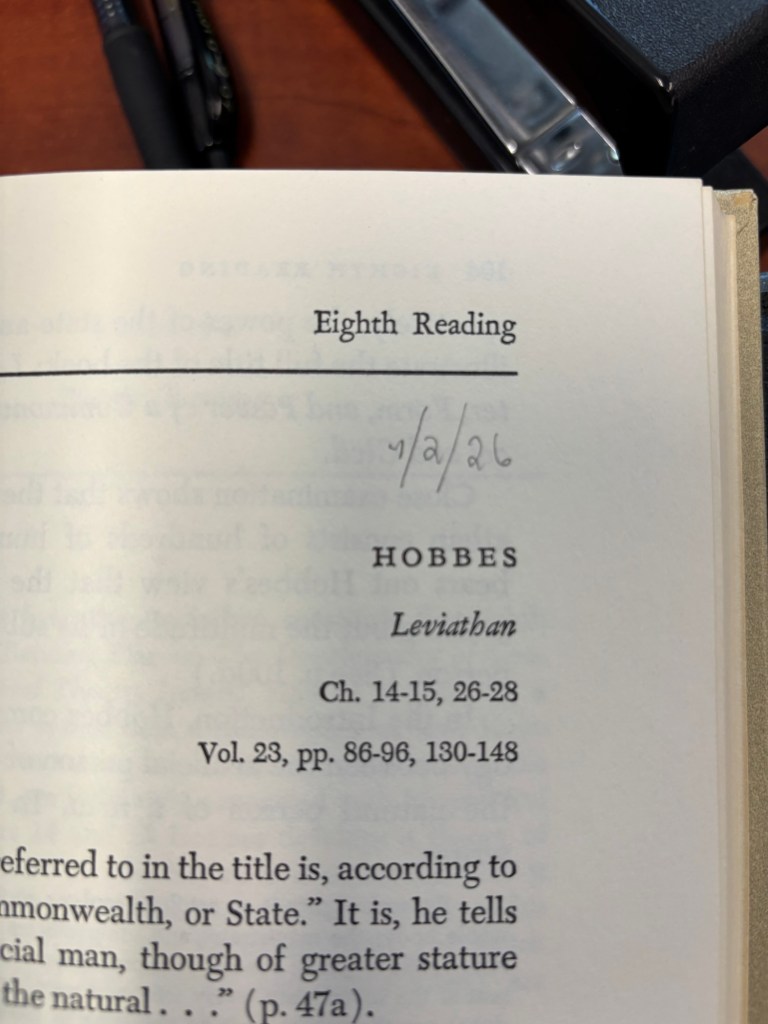


I have said it before and will say it again and again and again. Hobbes’ Leviathan is absolute must-read material. I am rarely more invigorated while reading than when reading Hobbes. I exhort you, brethren, find a copy and make time for it. You will not be disappointed.
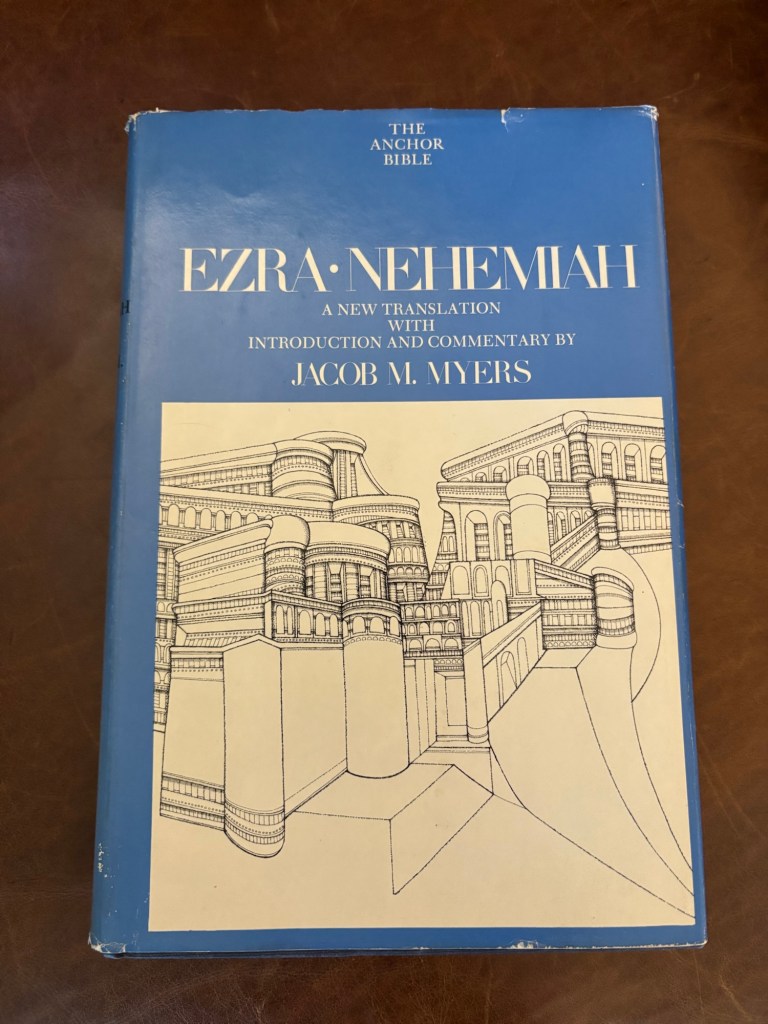
A former professor from the seminary reminded me recently that as an alumni, I had access to an online theological library. So I tracked it down and joined, $10 a month. Around the same time as joining, the same professor told me his recommendation for a commentary set for a church—meaning lay people. I had asked his opinion because I wanted to start a library at the church I joined. His recommendation was the NIV Application Commentary, which uses three approaches to each passage and never or rarely mentions any original language issues in a manner that requires training to understand. The three approaches are, “Original Meaning”, “Bridging Contexts”, and “Contemporary Significance”. Anyhow, I do have training in the original languages and I hate reading anything about the Bible in which the author has made the decision for me, preferring instead to read authors who lay out the evidence from which to choose what to think for myself. That’s where the Anchor Bible Commentary set comes in to play. I am certain there are other solid academic commentaries, but Anchor is kind of the gold standard. By way of example, the NIVAC’s 1 Peter volume might include, “Peter wrote…” and the Anchor Bible might write, “The author of 1 Peter wrote…” I prefer to approach the Bible Indiana Jones-style. (Recall—there are no priests!)
Boring details of my life, I know, but while all this was happening, I had started to get anxious about the issue of accuracy in the digital realm. Specifically, I had seen a few examples of how streaming services are latently airing edited versions of beloved entertainment. Long story short, I determined that I did not want to ever be distracted by worry about whether the content I was reading on a screen was original or edited, so I started tracking down a used set of the Anchor Bible commentary volumes. And I found and bought one (not quite complete). Then, lo and behold, I got an email announcing that the online theological library was ending its availability to alumni—at least as accessed outside of a proper library. No real reasons were given, but I was very thankful and felt very wise in my decision to begin to purchase the actual books for my home library.
All that to say this: I have for many years struggled in my attempt to a good habit of daily Bible study. As I have mentioned, I always start with the Bible if I have time to read. But I never loved my plan of just reading it and I also have never enjoyed using a devotional which were always so clearly superficial and kitsch so as to distract me from the intent of Bible study. Around the time of all this purchasing and subscription-cancelling etc. I had been in Ezra and Nehemiah, so I, one day, decided to see what ol’ Anchor said about them. And, boy, was I ignorant. It’s actually fascinating to me how much I had never known. This was part of the reason I began to read them recently anyhow. (Yay me.) Anyhow, the main thing to share here is that 1 and 2 Chronicles and Ezra and Nehemiah are all contemporary to each other. And the date of writing may be as late 150BC (don’t quote me on the date). Also, Haggai and Zechariah are the prophets of that same time. So what’s that? Like 6 books, spread from after 2 Kings to the end of the OT, in the Christian canon’s arrangement. I had known the Jewish canon concluded with (1&) 2 Chronicles, but I hadn’t ever studied the other four books, or committed to memory anything about their dates at the least. I did know that Nehemiah is where the tradition of standing during scripture reading gets it start.
All that said, I am happy to report that I have my new way of daily Bible study. I just read a passage and its “comment”. I have even been able to interest my wife in listening to it as I try to rid believers, one at a time, of the notion that one can gain understanding of the Bible by praying. It just doesn’t work like that.
Onward.
Netflix made a Frankenstein movie. I couldn’t finish it. But then I watched Bride!, as you know. I mentioned this at work to a reader and she asked me if I had read the book. I had not. So here we are. I haven’t researched it entirely, but I get the sense that Shelley (married to the famous writer Percy Bysshe Shelley, and daughter herself to very famous writers) really did invent the “monster” story, which pervades all manner of entertainment to this day. Quickly, I do want to note here that Frankenstein is the name of the creator, not the monster. And, imho, the book itself isn’t that good. But the idea is—obviously. The idea being, what if the creature you bring to life is a devil, not an angel?
Farmer Boy was fun. My main criticism is that a city kid of today really and truly cannot use much of the information which is transmitted and which was conceivably useful to farmers back in the day.
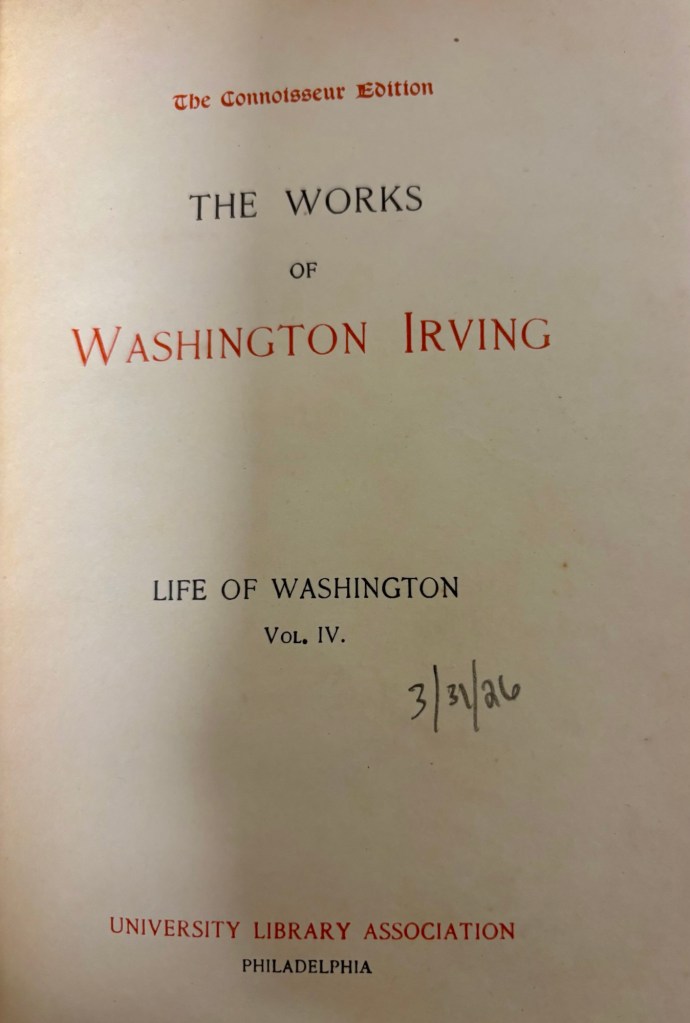
GW continues to be great. He is now President, not exactly by choice. Also interestingly, the state of politics in America back then was so startlingly similar to today, that a new idea has formed in me. This idea being that while everyone who wishes America well can appreciate the “fighter” in Trump, the truth is that we really need a leader who knows how to gain respect of everyone. That is who George Washington was. People were as vehemently opposed in their desires, motivations, and methods as we are today. But when a decision was needed, they all agreed GW was the man for the job. How did he do it? Moral living and pure motivations. How can such a man be formed and found? Imho, by studying GW. And by providence’s intervention.
I can’t explain it, but any time I spend away from Shakespeare causes me to forget how great he is. Luckily, he is so abundantly great that merely reading a line or two is all that I need to fall back in love with him. What a writer. What stories.
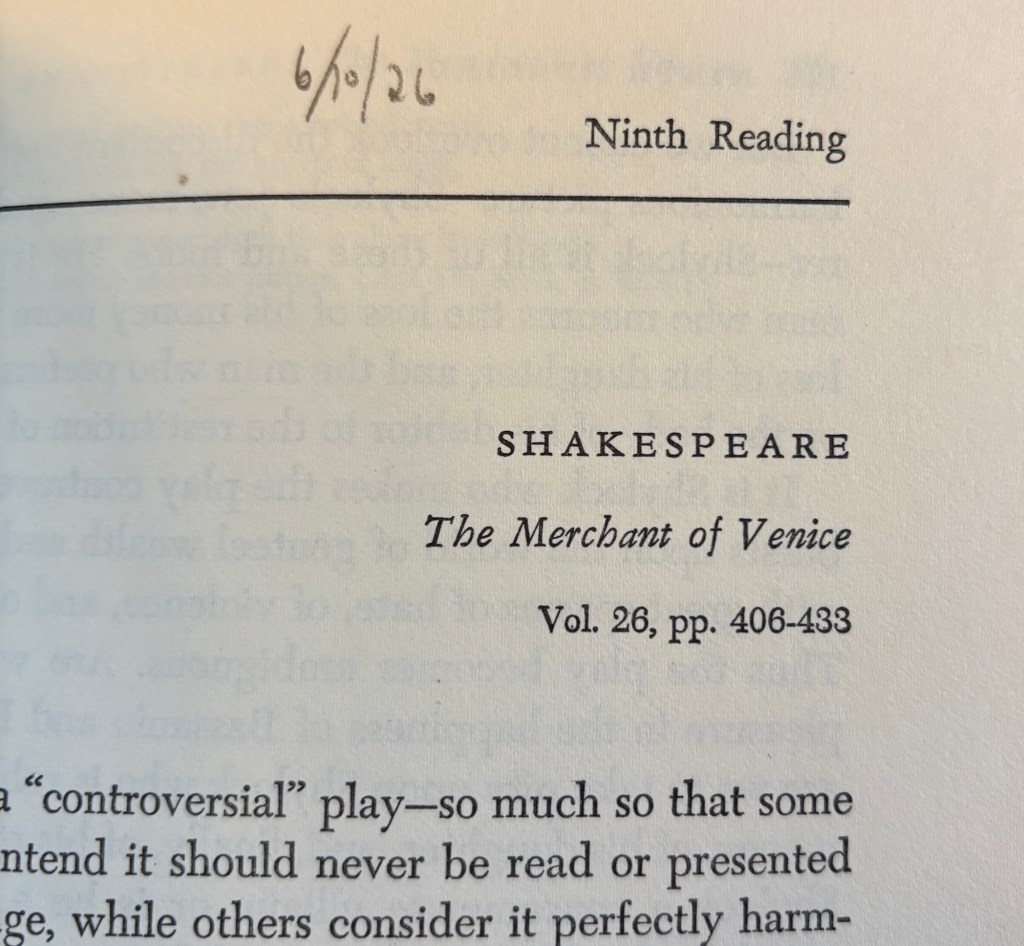
Merchant of Venice is in the Great Books of the Western World’s Great Ideas Program guided reading on the topic of “Philosophy of Law and Jurisprudence.” This is because the character agrees to forfeit “a pound of flesh” if he can’t pay back his debt. To generalize this contract, the question Shakespeare raises is, “Can a person use the law to bind himself to commit an unlawful act?” The largest perspective being, “What is the name of the thing which prevents a person from freely entering into a lawful contract which has as one result unlawfulness? If the thing is ‘law’ itself, then where does it get its power, since a man freely made the contract? Doesn’t law come from man?”
In any case, Shakespeare toys with the language and big ideas as if they were nothing. And it is a whole lot of fun to read.
That’s all for today.
The Value of Communicating Waters Cannot Be Understated
In reading Vol 4 of Washington Irving’s Life of George Washington (taken together with my memories of Africa’s chapter in Conquests and Cultures by Thomas Sowell) I cannot help but walk away with the thought that it cannot be overstated how valuable waterways which can be navigated by large ships are.
If you need an easy to remember, due to superlatives, summary of the history of life on planet Earth (how has it unfolded), as told by winners, it is this: victory has come to those people who were interested in communicating aloud with the most people, the most frequently, and who were able to command the waters which communicated the heaviest amounts of goods, the farthest distances, at the fastest speeds.
In short, open-minded, talkative, and good-listening entrepreneurs on the banks of waterways of significant depth and breadth hold the keys to the Kingdom of Earth.
Poverty Can Be Immoral
As I see it, there are two, maybe three, ways to live in poverty.
Firstly, you can be grateful for what you have. This would be the Biblical and wise posture.
Secondly, you could (though I can’t think of anyone like this) remain neutral or ambivalent towards your condition. Asking for nothing more, expecting nothing more, and receiving nothing more. Again, this doesn’t seem to be a real posture, but I am not willing to rule it out.
Thirdly, you can believe that your impoverished condition is somehow not your fault. The flip side of this posture being that you believe you deserve and are worth more material good than you currently possess. This posture, then, is immoral poverty. It is immoral, not merely because it is unbiblical, but because it is rooted in untruth. Put plainly, you will not find an immorally poor individual who isn’t living a life of wild lies. Lies permeate their life like wetness permeates water. They are soaked in lies.
(Take a breath.)
Faithful Reader: Do not mistake the above for useful information. It is trivial observation based on this morning’s fight with my lying wife. Also indicative that the observation is useless is the following: There is nothing that can be done with these people. Their immorality is complete and airtight. They live within a perfectly logical netherworld. There is no prayer available to us that isn’t already floating to the heavens. There is no god capable of changing their behavior, capable of rescue. There is no help to be found on the mountains for this problem.
How does one live alongside such people? It can only be accomplished through exceedingly particular, nuanced, and ultimately discrete analysis of cause and effect.
That, then, is your wisdom for this Choosday, as Twain’s Jim utters it—which calls to mind another big assist: books.
Did You Know the Victorian Era had a Fad Called “Table Turning”?
It’s true. I first read about it in the Gateway to the Great Books volume on Natural Science.
The renowned physicists of the era actually referenced, with tremendous disdain, the nonsense on their way to explaining how the physical world follows seemingly iron law.
But don’t take my word for it. Just search it up. Victorian era table-turning.
(You’re tired. It’s late. What does this have to do with anything, you ask? Well, it just should be counted as proof positive that there are no bounds to our ability to try to fool each other and to be fooled by each other. There are no extraterrestrial life forms, folks—only terrestrial suckers.)
Launch Window Opens at 4:24pm Mountain Time. (5:24 Central, 6:24 New York, 3:24 West Coast)
Every headline about the launch should read similarly. Why they don’t is beyond me.
https://www.youtube.com/live/Tf_UjBMIzNo?si=AXWTenlbe36P1fpe
That’s the official NASA link.
Here’s some fun broadcasters I found.
https://www.youtube.com/live/Jm8wRjD3xVA?si=ARNLEuSsio3GoBKE
On the Ignorant’s Religion
I’m going to keep this short for today. But I need to jot down some thoughts for future reference.
For a long time now the question, “What precisely does the general claim, ‘religion is accepted and believed more readily by ignorant people’ mean?” has plagued me. My approach to answering the question has been to study the history, chronologically and conceptually, of math with an eye for what are the non-math-ers (“I’m not good at math” adherents) actually doing with their mind throughout life. Simultaneously, I have also been digging deep into what the more ignorant “Christians” believe.
Two conclusions:
Firstly, I now define math as the unbounded study of absolute obedience.
Secondly, the ignorant “believers” can hardly be called such. Part of the very definition of “ignorance”, I am convinced, is an absolute freedom of word use. For the ignorant, there is no truth. There is no consistency. There is no coherence. There is no alignment, no integrity. The ignorant cannot possibly be labeled as religious or even holding a worldview at all. The ignorant are quite literally sheep, being led astray by who knows what, for who knows how long, before another thoughtless route is taken.
In short, the problem of religion is not that it somehow exists as some inherent trait or behavior of the ignorant. The problem of religion is ignorance. Put inversely, if you find yourself to be religious, your main task is education. And, similar to math, education requires consistency, coherence, and obedience. Most of all, education requires truth.
Self-Imposed Curfew
Just jotting a few thoughts on topic of Minnesota.
- For people acclimated to the cold, IE Minnesotans, Dakotans, Montanans, etc, standing outside in the cold is not an indicator of anything. (For Somalis, on the other hand, standing outside in the cold reveals them to be stupid.)
- I happen to have watched videos of officer involved shootings before the last couple weeks. They are never “clear cut” or have some obvious flow or escalate linearly. Hollywood et al should not be relied on for how an officer-involved shooting should look or feel. Go look up other videos and see for yourself. They are all utter chaos. That’s why law enforcement exists in the first place.
- My visceral reaction to this morning’s shooting is “These dumb motherfuckers (meaning the lefty whites) just normalized ICE-involved shootings. It now feels just like school shootings. ‘Another one? When will people learn?’”
- I want the Law (meaning all people who act as our Law, legislature, executives, and enforcement) to know I support them, not the protesters. I think the best way I can do this is stay inside, not counter-protest etc. Let the morons and rabble who only want destruction self-identify and be the only ones out on the streets. That will make it easier for the Law to do their job.
We, The “Idiot Savants”

One delightful aspect that accompanies the hobby of reading that I did not expect when I began to read could best be called “following my whims”. In my case, I wanted to be a bit methodical, so I began with a couple sets of liberal education type books (AKA classical education), filled with essays by great and influential writers. (Keep in mind, this “began with” is after master’s level coursework, age 35ish). The editors of these sets would have pleasant introductions which included “for more on this topic” recommendations. And ebay supplied the steady-stream of follow-on books at minimal cost.
Math History is my main “whim” of late. This is because I have a belief that “there is no math in the Bible” and want to be able to explain the importance of my claim eloquently.
After you read Math History for long enough, to the point of being half-way through the first of four volumes of The World of Mathematics, you find essays on “Idiot Savants”.
Here I want to say I have provided enough information to not need to explain what “Idiot Savants” are, but to be clear, we are talking about people—a very, very few in number—who can perform, say, 10 digit by 10 digit multiplication problems in their head. The interesting part is that this ability has no apparent correlation to life skills or general wisdom or even other talents, professional or otherwise. IE, most jarring, even these “Idiot Savants” can be not good at math in the complete sense. In a word, to modern man, they are perplexing. Just what exactly is their “skill” or “talent”?
The above picture of the plate is something I took in a downtown toy store, one of the last holdouts of its kind, in my city. There are a couple of problems with it; can you spot them?
- If a kid can’t eat, a kid can’t read.
- If a kid can’t put food in his mouth, a kid isn’t hungry.
- Eating does not require plates.
- If a kid can’t distinguish plate from table (as manifested by their inability to keep the food on the plate and off the table), then they certainly aren’t able to distinguish individual sections within one (1) plate.
- Some forks, especially kid-sized, have three prongs.
- Lastly, and this may be picky, but if you’re going to put dinosaurs on a baby plate, I think the least you could do is label them with their names, followed by phonetic spelling. How else will the child learn?!
Faithful Readers, there is a big world out there. If your world is small, in other words, if you feel like you’re really close to finally being fully tooled and comfortable at, this, our problem-riddled life, then I challenge you to consider if you are, in fact, an idiot.

