Tagged: Blogging
The National Security Difference Between Obama and Trump is Stark
As I contemplate Obama’s position that alleged Somali nationals who have served fraudulently in Congress are immune due to their position, I cannot refrain from making this titular observation.
We knew nothing about Obama before he was elected. Consequently, we are constantly surprised to learn what he believes.
Trump was so well-known, in the reputation-sense, before he was elected, that we are constantly only reminded about what he believes.
Lesson (not that it needs stating): Determine before voting whether you prefer security or insecurity in government.
“Risk Averse: Explanation Ruins” A Review of Digger
Digger is no danger zone. It is safe. It is tepid. It literally explains itself.
There’s a moment early in the movie when all my criticism of TC’s approach to his recent tidal wave of interviews and promotional panels was reckoned. That was nice.
There are probably lots of lessons for future filmmakers in Digger. Good for them.
But we are kidding ourselves if we don’t plainly confess that for all the talk about the rewards of taking risks and pushing oneself past barriers in life, this movie takes no risks. The fancy-named director didn’t take any risks. TC didn’t take any risks—after all, he’s just play acting.
Reading Log 9.20.26
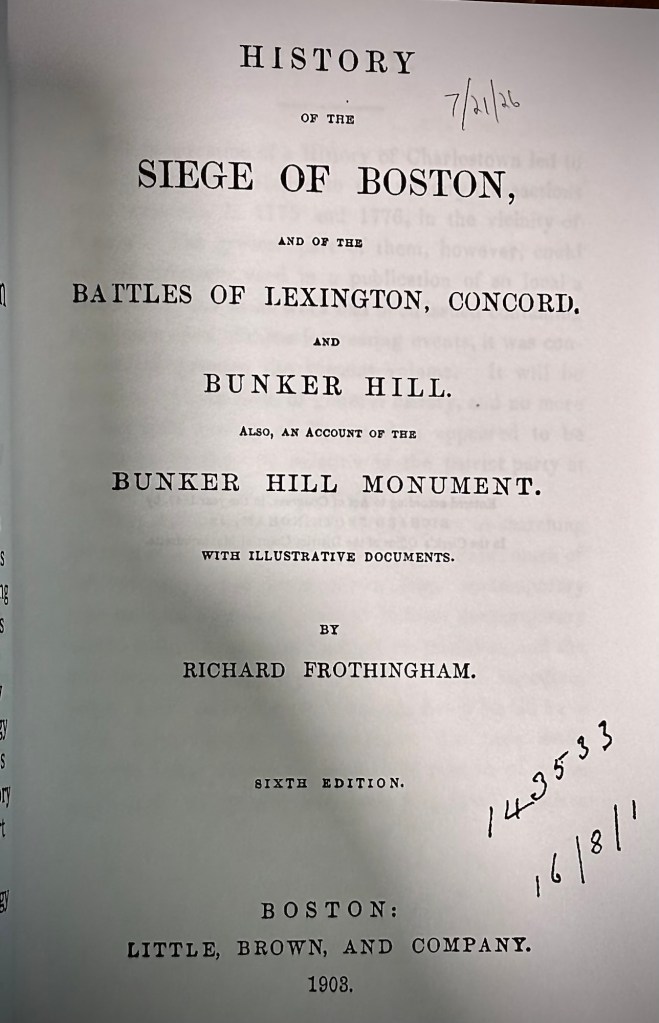
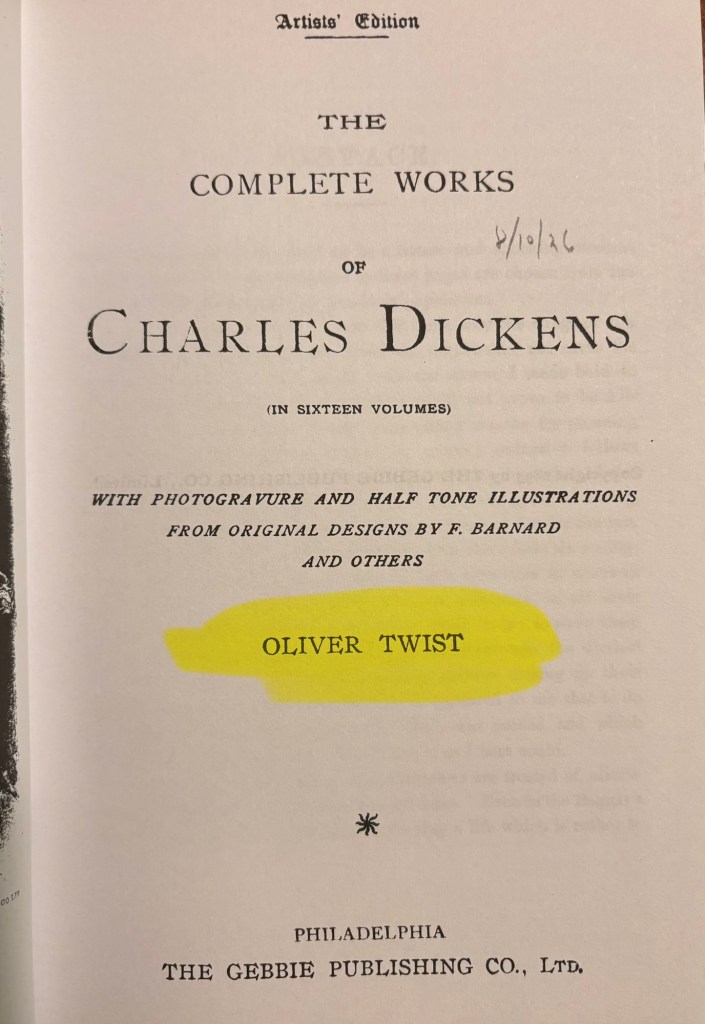
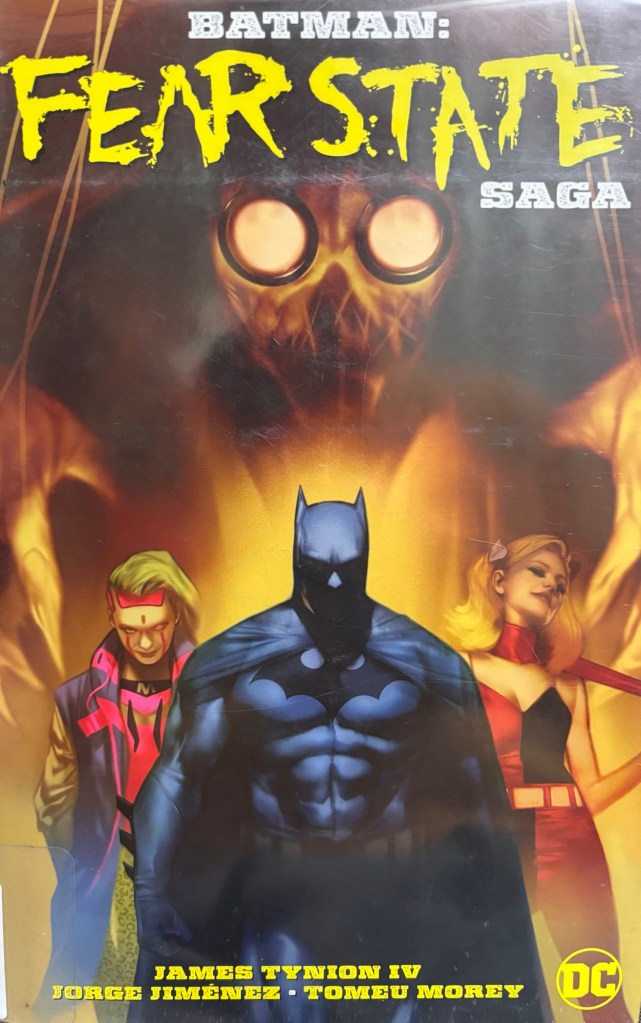
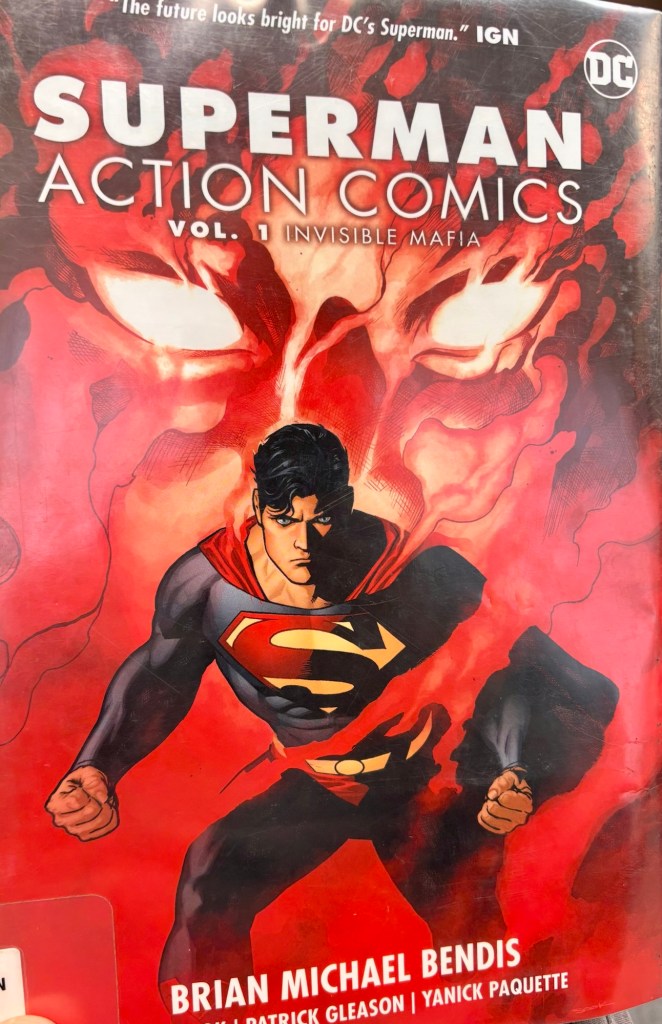
I published one of these reading log’s one year ago to the day (does any app not push these vain notifications on us anymore?) and so figured I should go ahead and update you all with another.
****
I learned of History of the Siege of Boston… while reading the 5 volume GW biography by Washington Irving that I have mentioned so many times in the last year or so. It did not disappoint. Of special note are the summative statements of the labor behind the ability for the Minute Men to react, and the reporting of eternally interesting minor details of such pivotal events from so long ago. In short, you (a living citizen in these seemingly uniquely polarizing times) will literally be changed after reading this book.
I also want to share another book (set) that I learned of and purchased while reading GW’s biography.

If the format you’re reading this post in doesn’t allow to pinch-zoom, that entire-book-shelf-filling book set is a 39-volume Writings of George Washington collection. Only 3,000 copies were ever printed, not counting upload to the internet. (Ha.) I discovered the set after following the footnote rabbit hole which opened because I was forever curious where Irving got his lengthy quotes of Washington’s correspondence. He, Irving, didn’t even have such a set as this—merely precursors. But I do. And I couldn’t be more proud. I am 30+ pages into volume one and if it takes me 37 years, at the pace of one volume per year (vol 38 and 39 are indexes), it will be the best thing I do for the next 37 years. Just a remarkable set of books.
Before Oliver Twist, if you would have asked me about Dickens, I would have said, “Coolest thing is that Dark Knight Rises is essentially a retelling of his Tale of Two Cities.” But now, with Christmas Carol, Tale of Two Cities, Great Expectations, and Oliver Twist under my belt, I have an obviously more well-rounded understanding of him. Oliver is an odd duck, in that Dickens chooses to give the reader the nasty, brutish side of the criminal life, with the hope of deterring young Mark Twains from the dream of the pirate’s life. One basic and nearly insurmountable flaw—in my opinion a constant flaw that educated people reveal—is that the criminal element is portrayed as cunning, strategic, and capable of great perseverance in accomplishing long-term goals. Aside from this flaw, it surely accomplishes its aim. But I ask you, dear reader, when is an educated person (in the true sense of the word) going to tell the plain truth? The truth that criminals are stupid, short-sighted, and incapable of self-control and generally all the virtues? There is more (or less, rather) to criminal action than just willingness to prey on people.
One interesting line from the story that I want to record here for ease-of-retrieval is the following quote about tears, “But tears were not the things to find their way to Mr. Bumble’s soul; his heart was waterproof.”
Compare that to Tolstoy’s similarly remarkable characterization of tears from Anna Karenina (from memory), “As if tears were the lubrication for the machine of human communication…”
Just great writing—both of them. Keep it up!
In one of the Deadpool films, the joke is made about the classic superheroes all being virgins. The same criticism has been gravely lobbed at the Avengers/Marvel sagas that have enraptured movie-goers for over a decade now. Suffice it to say that post-2020 comics have completely swung the other way. Now superheroes have sex, and the sidekick women especially, are homosexuals. Great. Just what the world needs. Why does everyone seem to think that all literature was always and only aimed at pushing boundaries? Early comics could have intentionally drawn attention and specifically rebuked social mores of the 50s but this doesn’t mean that every established social boundary is arbitrary. I know, I know. The covers alone should indicate these “aren’t your grandpa’s comic books” but it is disappointing that I have to work so hard to find non-Woke superhero material for my future teenagers to ingest.
Rousseau is Rousseau. The more I read him, the more times I read him, the more I see the extremes of his philosophy. He is certainly spot on about some things and certainly completely wrong about others. The main trouble is he explicitly states over and over again how he is being entirely consistent but as he can’t state everything at once we need to give him the benefit of the doubt when apparent inconsistencies emerge. Okay, Boomer. On the “should read him” side of the coin, he absolutely destroys the notion of analogously comparing government to a family. This hits home for me because a certain non-Westerner in my life, when questioned, likened her support of a certain thought-to-be autocrat to the way a father leads his family. In other words, it is compelling that Rousseau understood that this particular mistaken analogy is hard-wired in the hearts of men. But I assure you, faithful reader, that my reading Rousseau and the subsequent effect of renewed confidence in the idea that elected officials are facing at a totally different problem than that which confronts fathers, has absolutely no effect whatsoever on the people who want to make that analogy. Want another false analogy? Here it is. Unread books are not analogous to the lasers used in gene-editing.
Helicopters Don’t Suck (Here’s How You Know)
(This post is about the small plane taking out the police helicopter. Reminder: I am a professional helicopter pilot. As in, I support my life and family by working as a full-time helicopter pilot.)
There is a tremendous, near-unanimous outcry within YT comments about how the helicopter is at fault for ”sucking” the small plane into itself. This is the most ludicrous concept I can imagine. To agree with me, you do not have to be an aviation expert, an atmospheric science expert, or an adult even. You just need a memory.
Exhibit A: How many movie scenes have you watched where people exit a running helicopter and simply walk away? They are much lighter than a plane. Why didn’t they get sucked into the helicopter? (Answer: Because helicopters don’t suck people into them.) More pointedly, military helicopters infil and exfil troops all day and night, all around the globe, while running at 100%, on the ground, in a hover, and troops even skydive out of them, and no one gets sucked back in. I have even unloaded one of the rubber boats out of the back of my helicopter and neither the boat nor the dudes got sucked up into the helicopter. Moreover, we have all of us watched a helicopter hoist operation succeed. We see the man descend on a cable to go pick up someone stranded on a rooftop or in the water and then we watch as they ascend back up into the welcoming arms of another crew-member. No one, not even the initially empty cable gets sucked into the helicopter.
Exhibit B: How could this helicopter suction threat be so real and yet so ineffectual for so long? Where are all the other instances of helicopters just vortexing the shit out of everything around them for the past, I don’t know, 85 years?
Exhibit C: Helicopters fly formation with each other uneventfully. To include hover taxing around. In the Air Force we would typically fly around 50 feet from each other. Sometimes closer (whether by accident or for a specific reason) and no aircraft get sucked into each other.
Exhibit D: When people watch a helicopter spool-up its rotors from nearby (often holding their phones up for what they fear may be their last chance at capturing footage of yours truly in action) they take a bracing step back to prevent them from falling backwards, not a bracing step forward to prevent them from getting sucked into the helicopter. And they don’t worry about the phone being yanked from their light grip.
How stupid are we? We are so stupid that we proudly and adamantly declare that a helicopter sucks planes into itself.
And why? Because we saw it for ourselves, on a tiny screen.
The real truth is we saw the movie Wizard of Oz, Twister, Twisters or some other CGI footage of a tornado which showed the whole world being sucked into a tornado, and then we saw the footage of the collision on our tiny screen. We then concluded that the same vortex of suction occurred in both the movie and the footage.
But guess what? Real tornados do not suck items into themselves either. Again, you don’t have to have any special talent or training to know this. Don’t believe me? Search for videos of tornado footage. You will not find any footage of a tornado sucking objects into itself. Why not? Because tornados don’t happen the way Hollywood portrays them. Items are flung. They are tossed about. They are bent, broken, and destroyed. But they are not sucked up into some swirling, acute, airborne flushing toilet spiral.
To be clear: if we want to suggest that there is an “outside”, a “wall”, and an “inside” of a tornado (which is an atmospheric misnomer already) the flying debris does not move from the outside into the inside.
Okay. I’m done. We’re idiots. And getting worse.
Another (if novel) Way to Handle Moon-Landing-Deniers
One datapoint these morons use to support their claim is the infamous “Where’s the stars?” picture.
How to respond with all available rhetorical tools firing on all cylinders?
“The same place they are during daylight hours, for precisely—I mean precisely—the same reason. Get a clue, jackass!”
Reading Log 8.31.2026
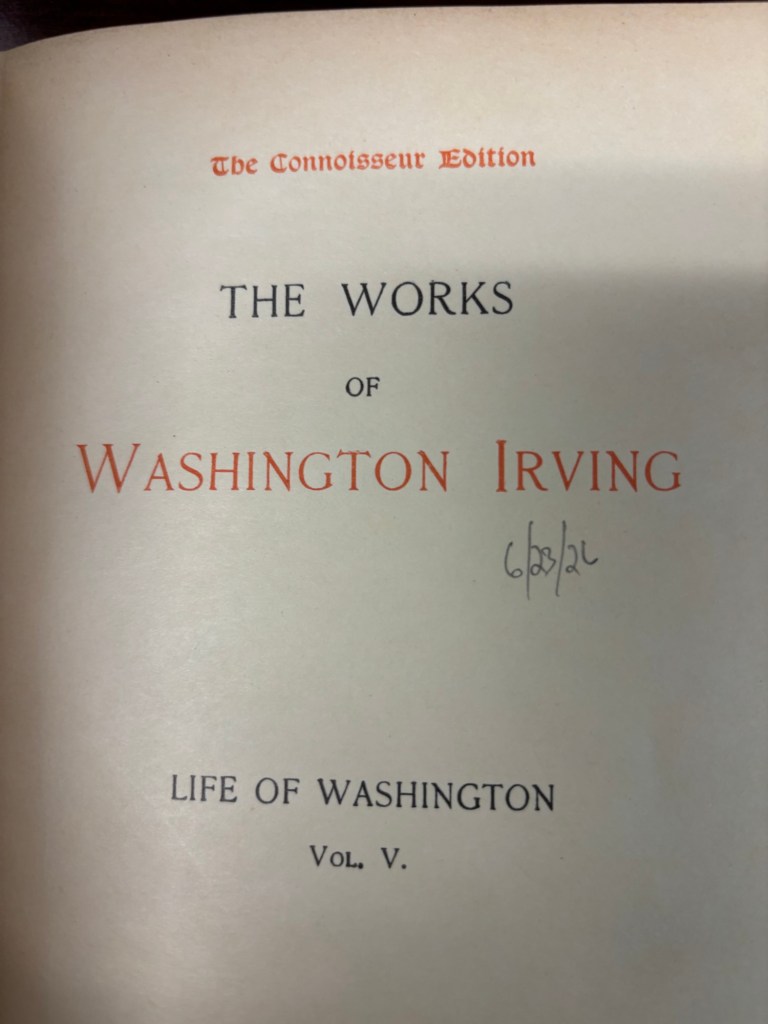

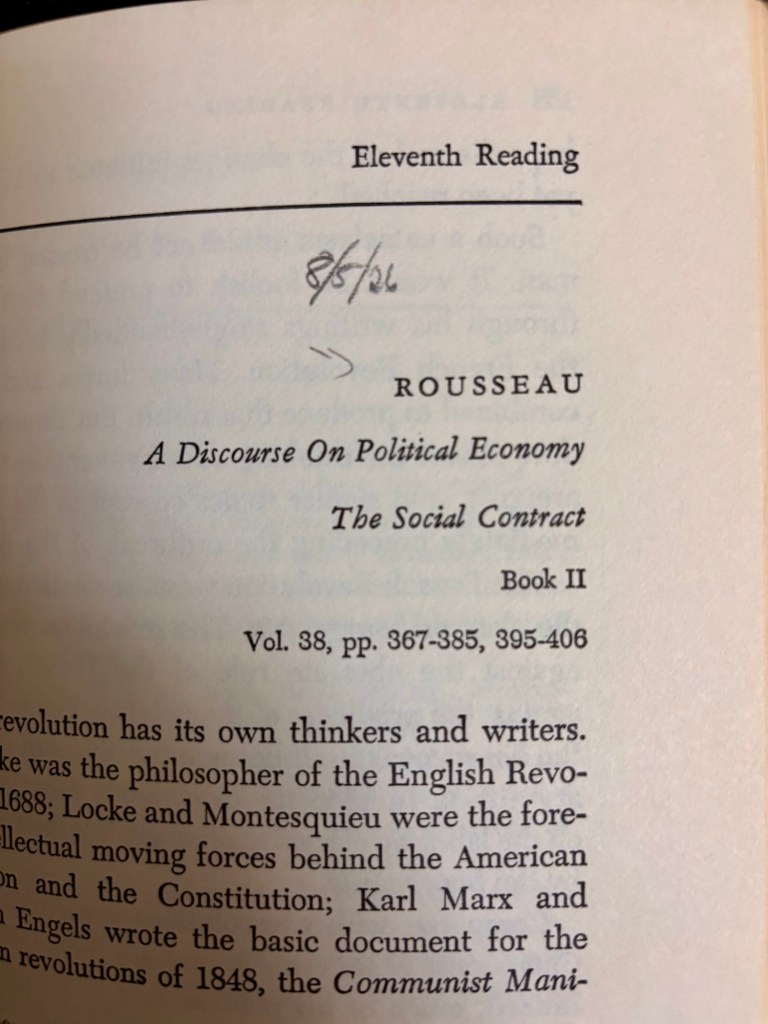
Washington Irving wrote a five-volume biography of George Washington, so this was the final volume. As you guessed, he dies. And it is sad. It is sad because he died for reasons that probably didn’t have to result in death, and it is also sad because he genuinely seems to have longed for a peaceful, leisurely life on Mt Vernon. The most interesting detail in this volume was that after his presidency, after he had made clear that his days as a public servant were over, war seemed inevitable again; and the powers that be were calling him to service once more—and he agreed to saddle the war horse once again.
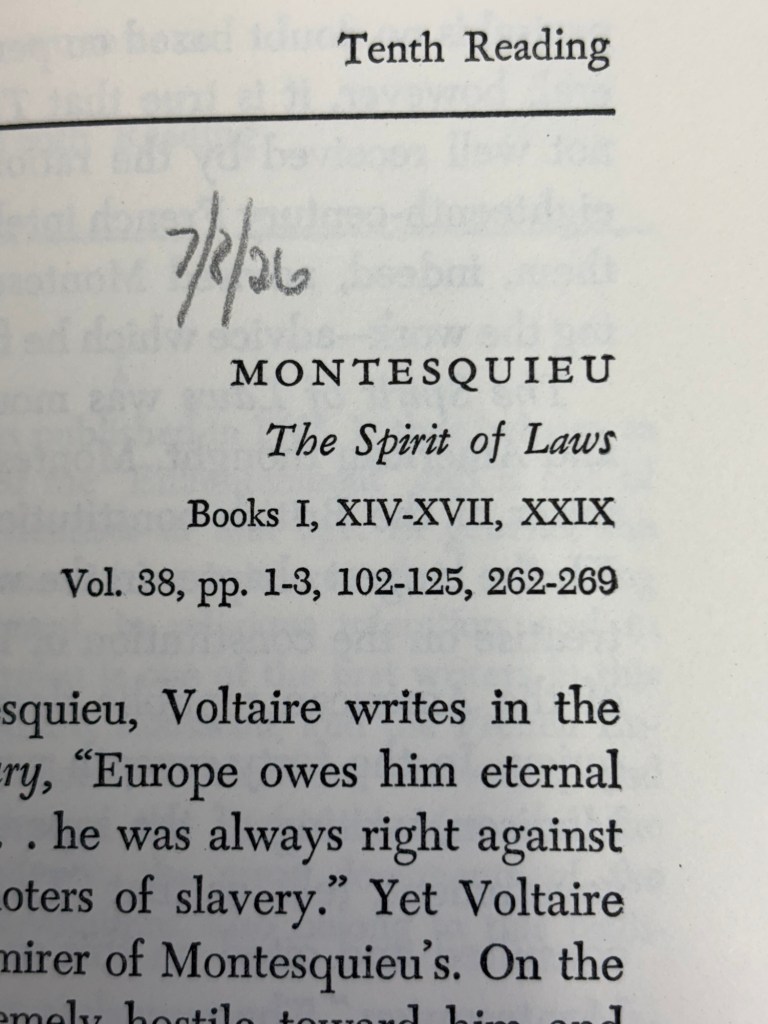
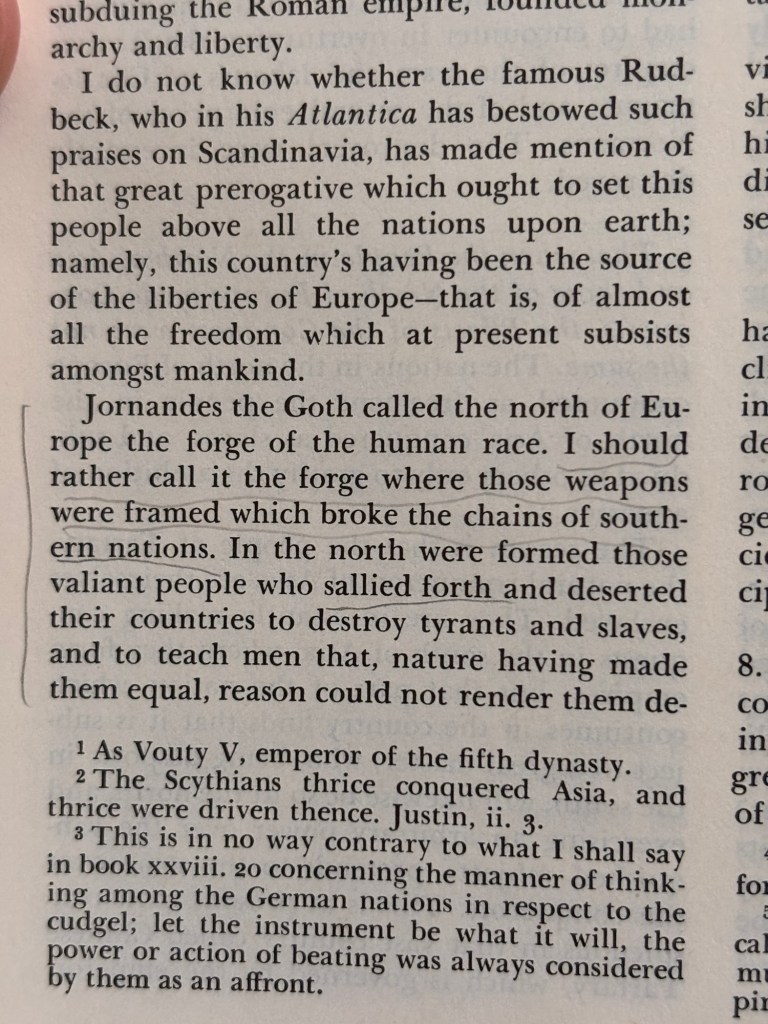
Montesquieu is always engaging. This time a main angle of his approach to Law (capital L) was climate. I don’t know if I’m merely super open to suggestion, or if he makes some genuinely interesting observations, but at the level of ‘the broad strokes’, it seemed to me that as much as I loathed the idea that climate does and should dictate the laws of a country/people, I came to understand that there is merit to the idea. I must also call attention to the particular way in which he framed slavery—via climate again. We hear a lot today about Whites ending worldwide slavery (as opposed to BIPOC folk having any major role in ending worldwide slavery). But that seems to fall on deaf ears, i.e. no one that is ignorant of history wants to hear anything good about Whites. But Montesquieu doesn’t care about white or BIPOC (such a silly division, isn’t it?). Instead he puts it this way:
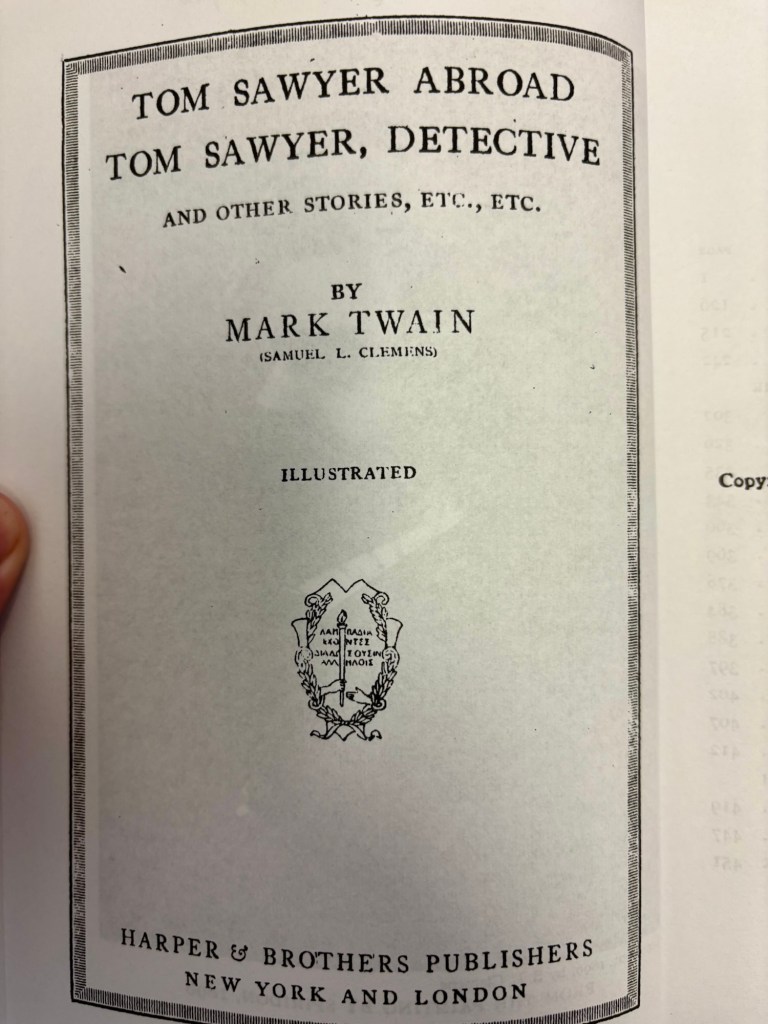
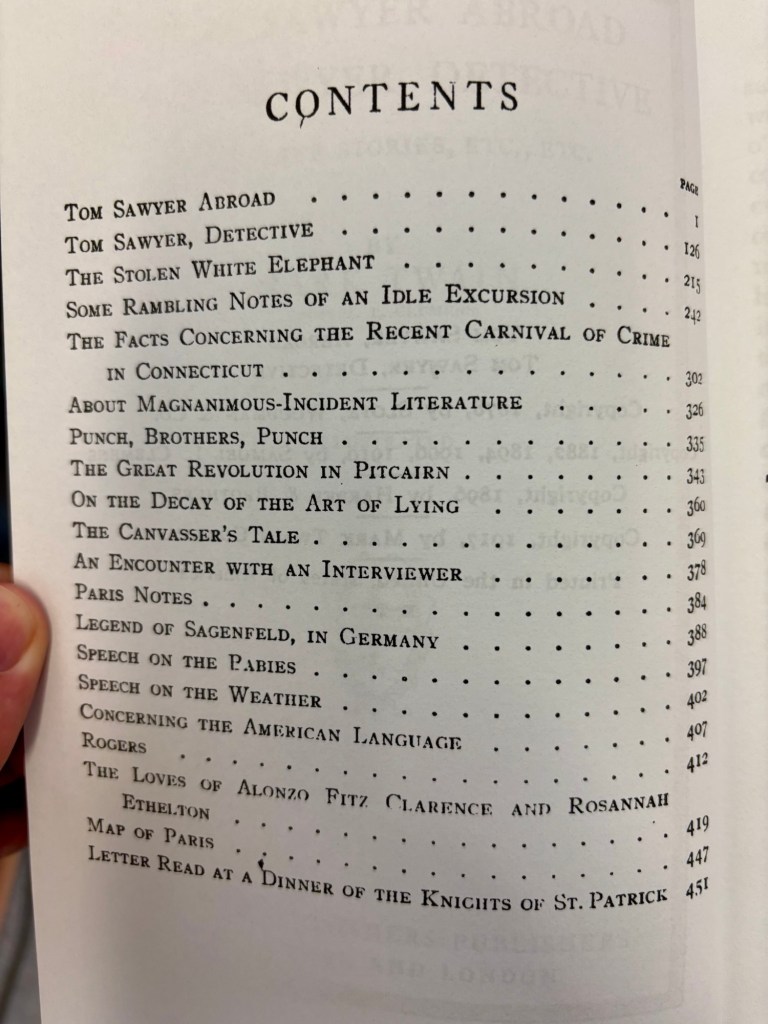
A new biography of Twain has hit the bookstores, as you no doubt are aware. As expected, it highlights all the ways he was Woke and had TDS. A friend even shared with me an article about how Huck Finn is being taught by the few schools that will still touch it, and that article used right-wing censorship to invigorate itself to life. In other words, the article’s author claimed that one of the reasons the book is worthy is the bigoted MAGA or worse Right doesn’t want it taught. What a joke. I mention all this because of one simple fact: Mark Twain is a premier author. Without his writing, not his plain opinions, we would not know or care who he was. So this book and the collection of short stories that follow the main feature, are definitely worth reading. Of special note to those who want a good laugh is On the Decay of the Art of Lying.
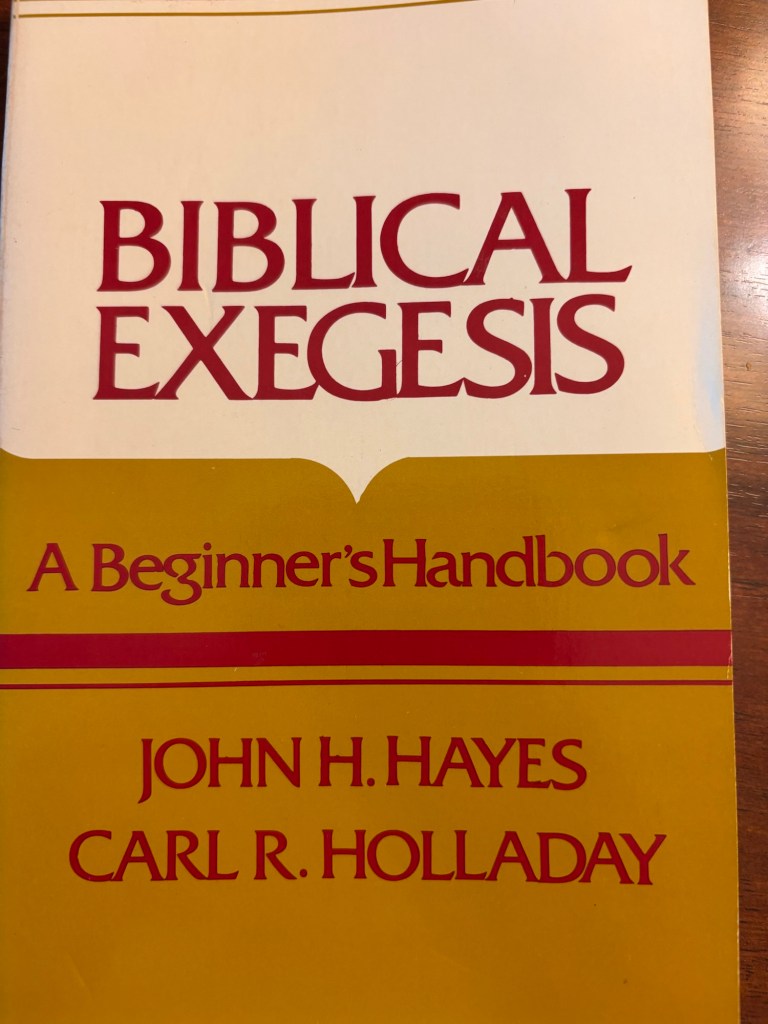
I picked up Biblical Exegesis: A Beginner’s Handbook because I have been reading through the Anchor Bible commentary set. The authors therein casually mention “literary criticism” or “structural criticism” and despite spending three years in seminary, I just wasn’t comfortable with what they meant by these distinctions. Similar to the Five Love Languages, which can be stated in five sentences, this short book could have been monumentally shorter. Here goes. Textual Criticism is the quest for the original wording. We’re talking ancient documents and super in-the-weeds nuances that do not have earth shattering consequences. But it is fun to criticize or look with a critical eye at all there is to see. Historical Criticism is the attempt to accurately place the passage in the context of recorded history. This is in contrast to allegorizing everything in the Bible like is so popular now—-and has been in the past. (“It says, ‘He stooped down.’ Do you hear me? If He ‘stooped down’ back then, He’ll ‘stoop down’ for you today!”) This would be where we discover forgivable discrepancies between the biblical account and other historical accounts of the same events. To be sure, KJV-only types get around these discrepancies by declaring the Bible writer’s to be the accurate accounting–in face of all others. But this is the least of their errors, so don’t lose any sleep on them. Grammatical Criticism is the quest to determine “sense units” after original wording is determined. Easy analogy is “raining cats and dogs”. We can find some people who say, “it is raining dogs and cats” and others might say it correctly, “cats and dogs” but even after we determine the most original wording to the phrase, we need to determine what the heck the sense unit “it is raining cats and dogs” means. Next is Literary Criticism. This is the careful look at the life of the text itself. It has been 2000+ years of these texts passing through time. Consistency is the rule, but not without exception. So scrutinizing the contents of the writing, apart from the historical time period, the grammar, or even the original wording, sometimes provides interesting results. For example, the Anchor Bible book that I am currently reading is called “Haggai Zechariah 1-8”. At first it seemed like maybe the publisher just ran out of time or space, but upon reading the volume, we soon discover that the author believed Haggai-Zechariah 1-8 should be one “bible book” and then “Zechariah 9-14” should be another one. And Literary Criticism is the reason for this opinion. Form Criticism is when we read the Bible with an eye on the “form” we are presented with, such as how we understand a deed to house is going to read completely different than a classified ad about that same house. Tradition Criticism is simply the idea that the story or law or teaching within the passage of scripture was developed. Easy example is the teaching on divorce in the Gospels. In Mark there are no exceptions–divorce is always sin. But in Matthew we find the adultery exception. What did Jesus teach??? Can we ever know? What does it mean that two different authors recorded Jesus differently on the same issue? This is often limited to unverifiable hypothetical-land. The final criticism covered, a course correction to the Tradition Criticism that is concerned with the written passages is Redaction Criticism. Similar to Tradition Criticism, Redaction Criticism scrutinizes the actual written text as it is presented to us. It tries to determine if one text is more original or definitely developed off of a more original source. This would be the source of the well-known idea that Matthew and Luke both had Mark to work from as they wrote their Gospels.
Now you know. And I have easy reference if I get lost again.
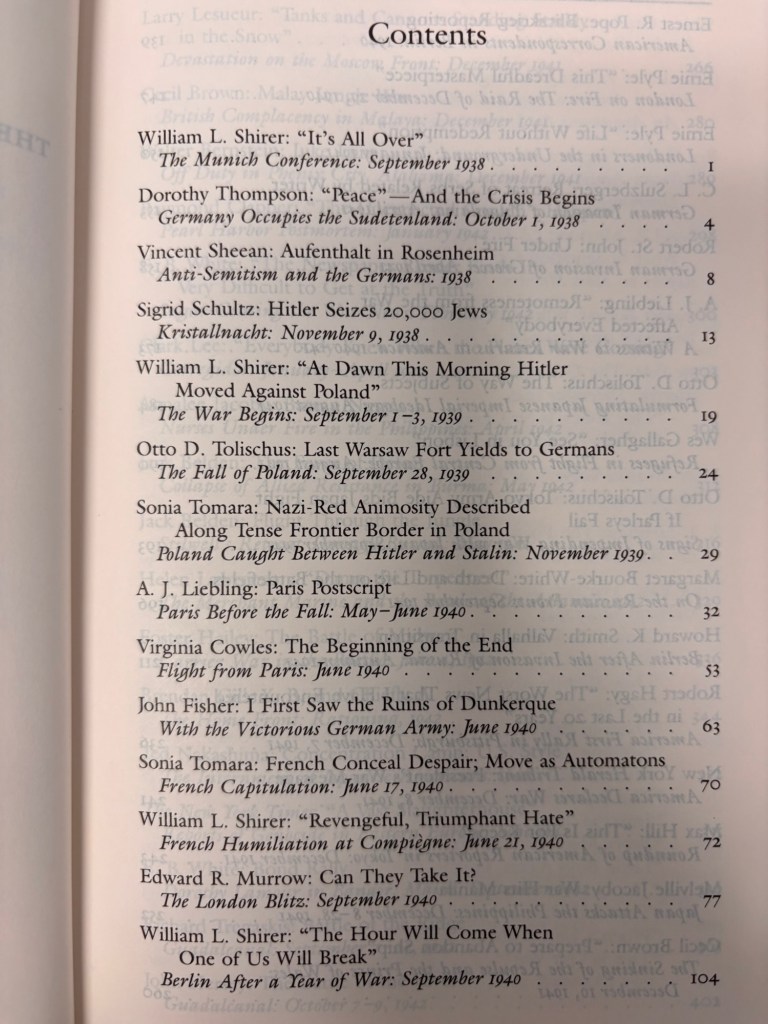
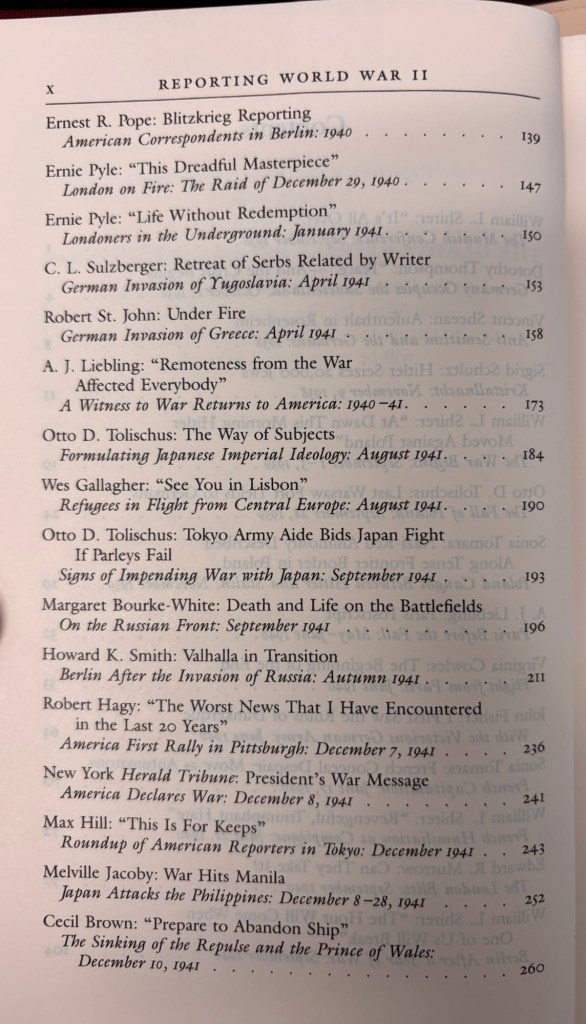
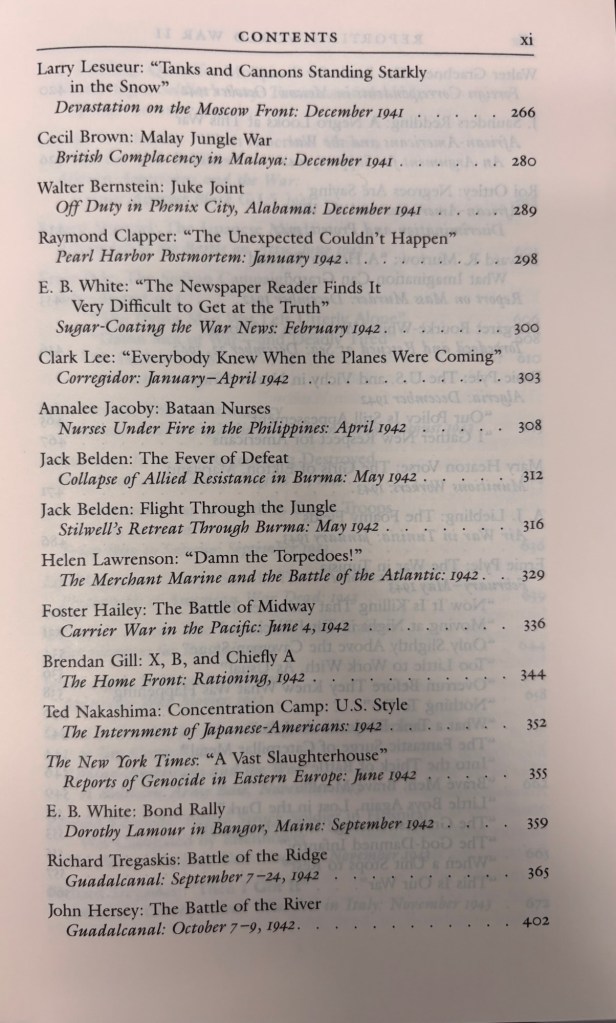
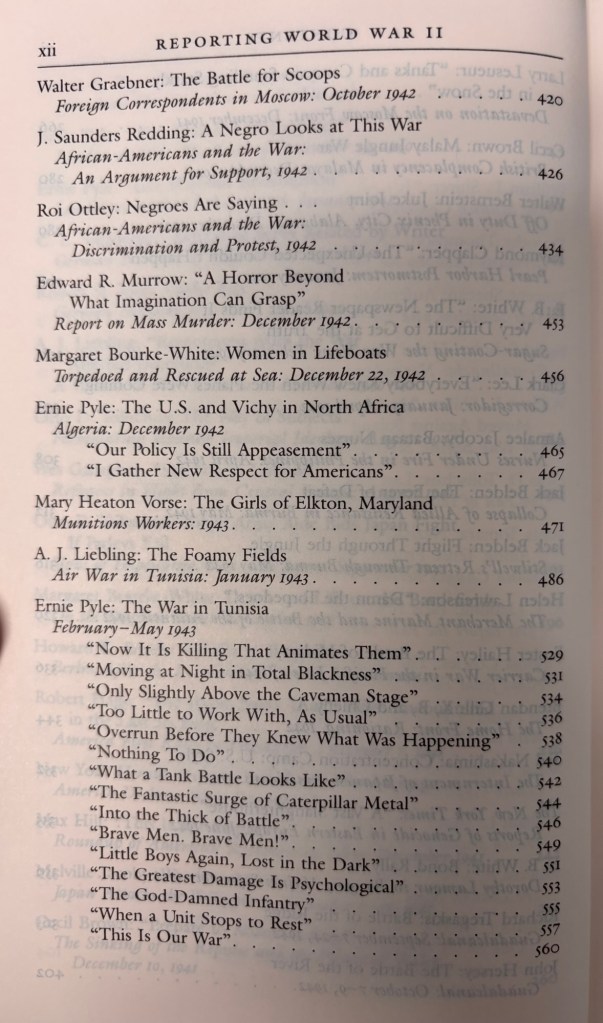
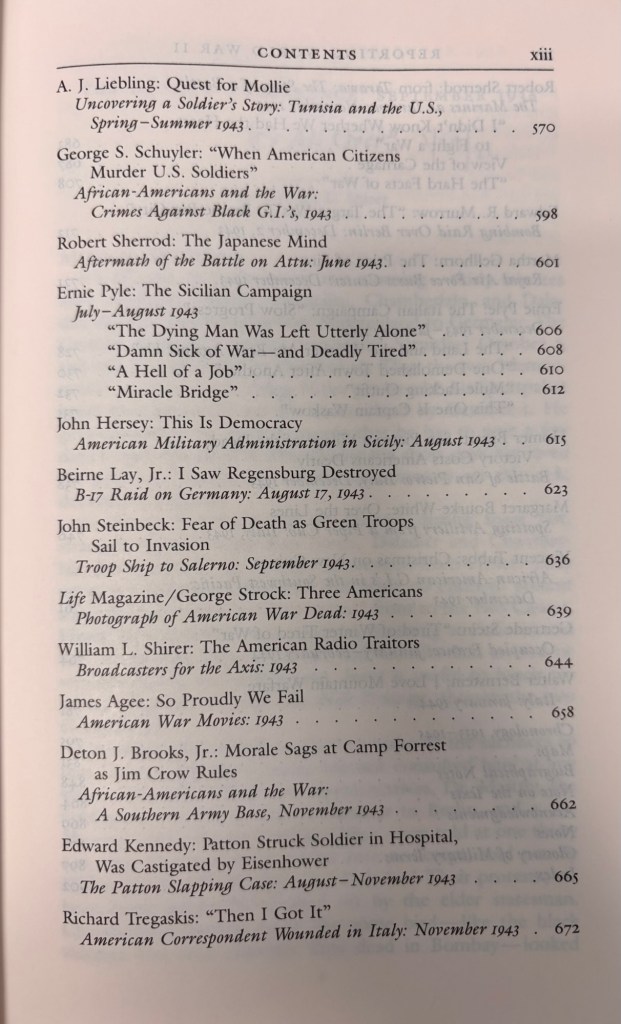
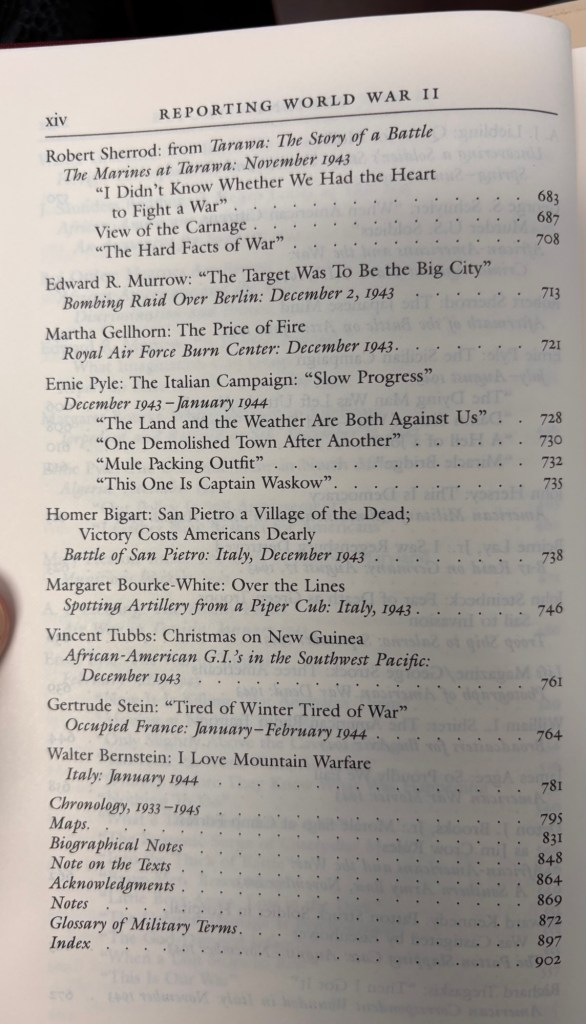
Like Reporting Vietnam before, Library of America’s Reporting World War 2 is definitely “must read” for every American. Just scan all those article titles and ask yourself how many you even knew were perspectives on people’s mind during the war.
Finally, the kids and I finished this 3rd volume of the Little House series. On the Banks of Plum Creek is different that the first three in that by now we understand the plan Mrs. Wilder has in mind. Each book will take place in a fairly unique setting and be describing just about one year of life in that location. The pace, then, is more regular, pleasant, and at times more detailed. These are all beneficial qualities. About the only comment I have for the events of Plum Creek is that I have always, I mean always, thought life would be better when the ups and downs were more immediate in time and place. No concern with the mohammedan destruction of Europe or Dearborn. No toilet paper runs affecting rest areas along I-35. Just do the crops grow, or do the grasshoppers come. If we have to up and move, we up and move. And Plum Creek is necessarily rife with this fantasy life.
The Death of Looney Toons, A Review of Coyote vs. Acme by Dave Green
As I mentioned in the last post, I took the family to Coyote vs. Acme on opening night, this past Friday. To be clear, “the family” means my Ethiopian (US Citizen from Ethiopia) wife and our two young kids, 4 and 6. This was the kids first trip to a movie theater and the main reason for the delay is I won’t take them to anything that even smells Woke/DEI/Commie. Naturally this eliminates nearly everything not produced by Angel Studios or Uwe Boll. And neither of them have made anything I want to show the kids.
When my brother, nephew (18), and I went to Mortal Kombat II, I nearly chuckled audibly as I turned the corner to see the small-ish crowd was comprised of a bunch of men my age. How embarrassing that I expected a regular smorgasbord of folks.
On Friday, the ticket-scanner dude was sure to chuckle when he saw what we were headed to watch what he called, “The funniest movie of the year. You’re going to love it.” I agreeably told him that from what I saw I was thinking that his assessment would prove correct.
This time, as I turned the corner, and probably a bit earlier in the movie-going experience if I’m honest, I was again surprised. There were no kids. There were no children in the theater. Maybe a tween was there. But otherwise, it was old farts like me. Unlike MKII, this time I was a bit perplexed. Why wasn’t this movie becoming the next Nemo?
Watching partly through my eyes, and partly through my wife and children’s eyes, I discovered the reason. Despite my best efforts, despite my every effort the world has gone soft. It is impossible to find comedy in destruction. Anything that is attacked is soon defended—and defended as the most worthy cause ever.
To be clear, the entire storyline of the very funny and enjoyable film is that cartoons do not suffer. The premise is that the same rules that would apply to people do not apply to cartoons. In short, Coyote loses. (Keep in mind, Coyote always loses.) Practically, this means that we can do things to cartoons that we cannot do to people (or animals, plants, oceans, prisoners etc). Sometimes we can even benefit from having tortured, destroyed, blown up, annihilated, dropped, glued, electrocuted, abused, squished, smooshed, and killed cartoons. And, of course, they never actually die. Why? Because they are drawings.
But here in 2026land, the weaker a person is, the stronger. The lamer, the more perfect. The more injured, the most healed. The uglier, the more beautiful. The dumber, the smarter. The more shameful, the more noble. The fatter, the hungrier. And to beat all, the stronger is the meaner. The unfunny result, not that you need to be told, is our drawings have Civil Rights. The failure of Coyote vs. Acme is another birth pang of Civil Rights 2.
In the end, despite Mr. Green telling a whole story, a complete story, and a story which made sense (or as Twain put it–the story “accomplished something and arrived somewhere”), he killed the Looney Toons. Or we killed the Looney Toons. Hard to say.
****
I have to add before I go to press that I see the path forward–not the particulars, but the general way. The Looney Toons need a Frank Miller The Dark Knight Returns treatment. I doubt that I am the individual to do more than espouse hope for such a project. But I mention it in case any true artists reading this are facing writer’s block. I’m picturing, a la Bruce’s fireball ending to the car race opening, an even slicker Bugs Bunny initiating the larger comeback story by–all timed to absolute bangers–battling Elmer Fudd as usual, but this time it’s all modern. Fudd is wearing real hunter’s camouflage patterns. He is using some AR variant (school shooting/mass shooting type)—way too powerful for his intended prey. And then Bugs points out all the problems with Fudd’s myriad decisions, which infuriates Fudd, to the point that Fudd really tries to kill Bugs only to find him—not slipping down a rabbit hole—but becoming some oppressed minority. And it has to be the most spectacular version of the minority. Burka wearing, bruised face Muslim woman. Super fat woman at the convenience store. Liberal, childless professional in remote work with a dog walking into the Teams meeting. I am talking the most obnoxious depiction of our twisted Civil Rights 2 reality. But it must be hilarious to kids. Like all the stereotypes are plainly funny in all the ways that make kids laugh. The kids laugh at the ridiculousness of Hunter Fudd giving up when he sees what kind of rabbit the suave Bugs is at heart (but we know is a disguise). And then you go through all the Looney Toons characters and bend them to contemporary versions of the spirits which gave them a heartbeat in the beginning.
But until and unless this happens, the Looney Toons are toast. Even a fan of this movie knows that.
No Kids But Mine
Coyote vs. Acme is starting in 1 min. There are no kids in but mine the theater.
No Yes
Any person who engages ancient languages with curiosity soon discovers that the word “yes” isn’t available. For me, it was in studying Biblical Hebrew that I came across this fact. Seriously, look up the word “yes” in your OT concordance and then search the Hebrew (or Aramaic) word behind any “yes” you find. The semantic domain will be “right” “true” “honest”, but not what we mean or do with “yes”.
You’ll find the interwebs and AI’s explain that “yes” is a late development due to its “conceptual abstractness”. Okay, Boomer.
How does it work then, I wondered? How could people ask and answer questions without such a simple word?
Then, today, it occurred to me.
And, as you’ll see, I cannot commend enough to study the Bible through the lens of children talking—if you’re undertaking the task as a native English speaker in 2026.
So I ask my daughter, 6 yrs old, “Did A- go to school with you yesterday?” (See where I’m going?)
My daughter replies, not with “Yes” or “No”, but how? She replies, “Sometimes A- goes to school with us.” Or whatever similar seeming method to withstand interrogation.
And the engagements with my kids (and Ethiopian family members—who incidentally tell me they do have “yes” in their native tongue, but which I have come to believe cannot possibly be what we mean by “yes”) are always like this. I ask a yes or no question, and they answer without yes or no.
It’s all clear now.
I can actually calm down. To me, I am doing them a favor with a yes or no question. But from their perspective, they don’t have an option with which to reply other than narrative answers.
Kinda fascinating, if frustrating.
You’re welcome.
Some Thoughts About Dearborn After Light Review of Last Night’s Events
-In his infamous documentary Pumping Iron, Arnold has a conversation with Lou which discusses whether it is better to be the king of the hill (defending from all comers) or the singularly focused threat on the way up. America is obviously the king of the hill. With this status comes threats and enemies and trolls and jokers etc. Islam needs to be relegated to the myth section of the bookstore, but I am not sure of the path to make that happen.
-In recap: a bunch of (in the case of Dearborn, presumably legal) immigrants outbred and then outvoted natives. At face value, I have no issue with this.
-If we believe the mohammedans lie at will (we do believe they lie and they do lie), I am not sure that talking with them is the answer.
-If my above recap is correct, one path would be to move to Dearborn or any other similar towns and out politic them. But that seems like a weird goal to have and a weird life to lead. Most people simply move for better jobs, not a crusade.
-In my recent readings on Vietnam, the Civil Rights Movement, and the Revolutionary War before them, I am struck by how turbulent the times and events were. And yet here we are.

