Tagged: books
Reading Log 9.20.26
I published one of these reading log’s one year ago to the day (does any app not push these vain notifications on us anymore?) and so figured I should go ahead and update you all with another.
****
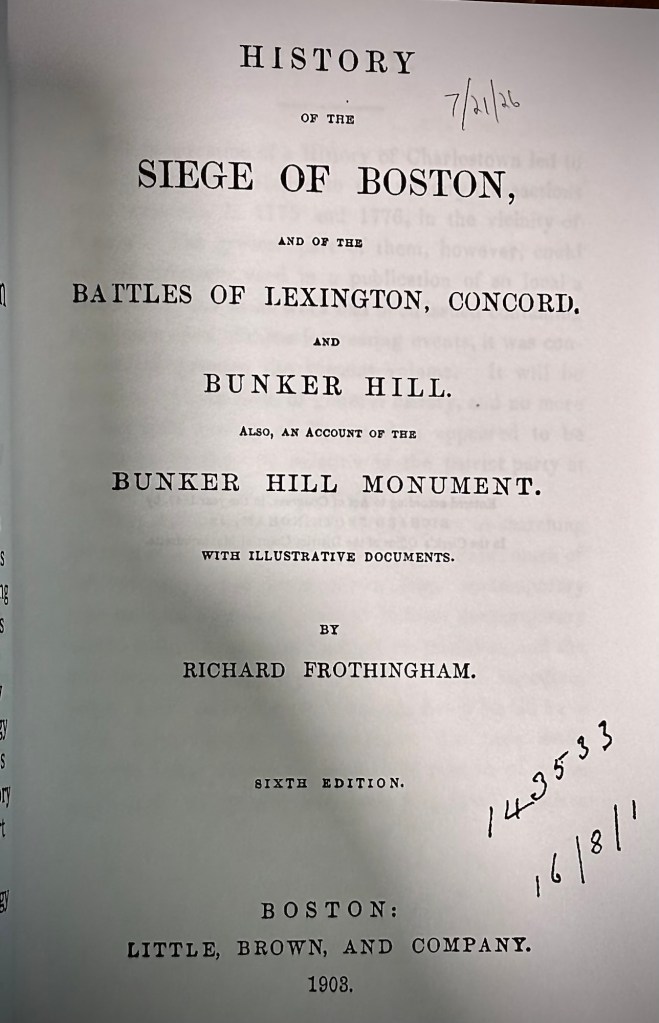
I learned of History of the Siege of Boston… while reading the 5 volume GW biography by Washington Irving that I have mentioned so many times in the last year or so. It did not disappoint. Of special note are the summative statements of the labor behind the ability for the Minute Men to react, and the reporting of eternally interesting minor details of such pivotal events from so long ago. In short, you (a living citizen in these seemingly uniquely polarizing times) will literally be changed after reading this book.
I also want to share another book (set) that I learned of and purchased while reading GW’s biography.
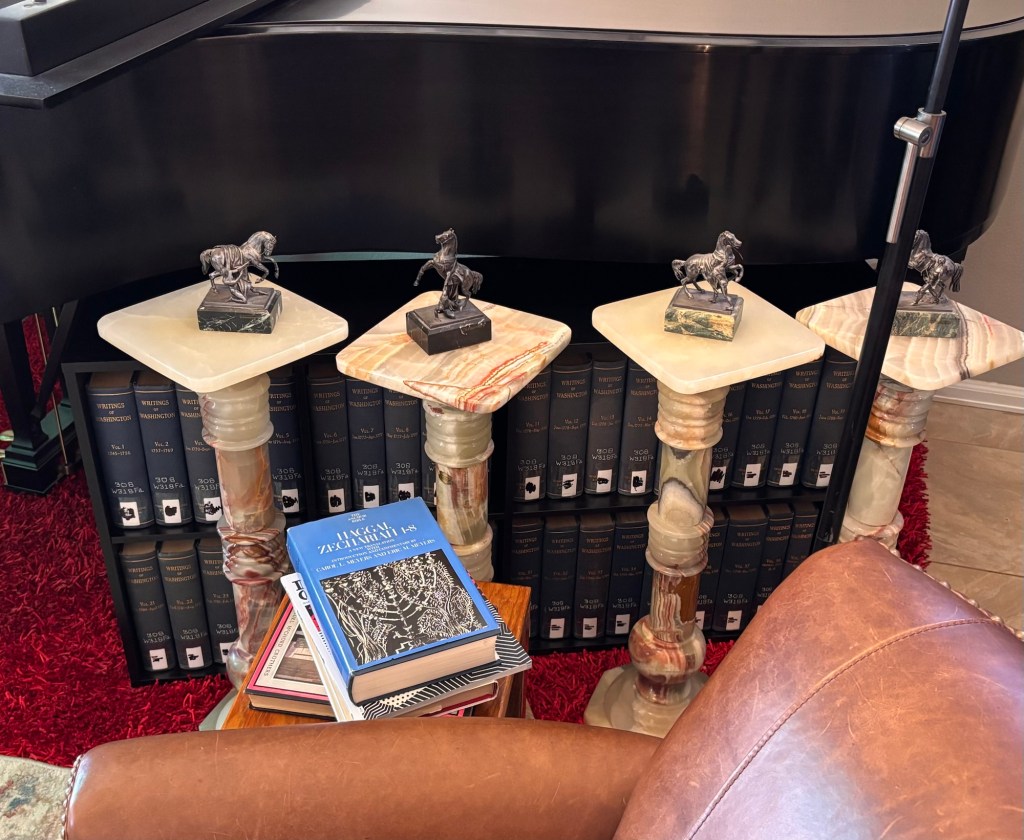
If the format you’re reading this post in doesn’t allow to pinch-zoom, that entire-book-shelf-filling book set is a 39-volume Writings of George Washington collection. Only 3,000 copies were ever printed, not counting upload to the internet. (Ha.) I discovered the set after following the footnote rabbit hole which opened because I was forever curious where Irving got his lengthy quotes of Washington’s correspondence. He, Irving, didn’t even have such a set as this—merely precursors. But I do. And I couldn’t be more proud. I am 30+ pages into volume one and if it takes me 37 years, at the pace of one volume per year (vol 38 and 39 are indexes), it will be the best thing I do for the next 37 years. Just a remarkable set of books.
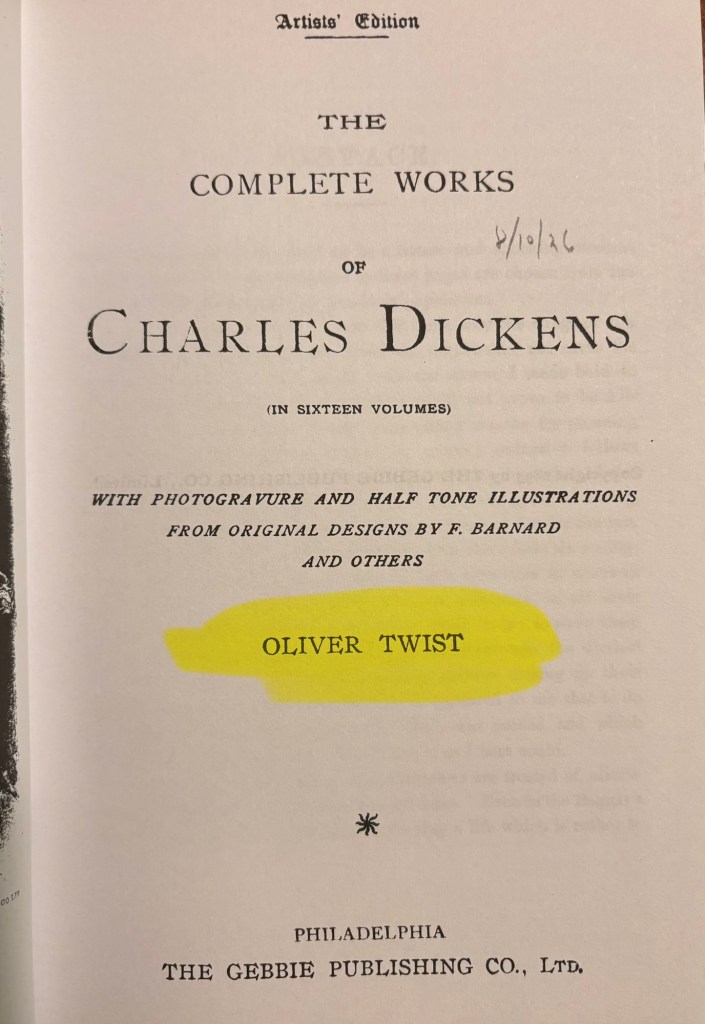
Before Oliver Twist, if you would have asked me about Dickens, I would have said, “Coolest thing is that Dark Knight Rises is essentially a retelling of his Tale of Two Cities.” But now, with Christmas Carol, Tale of Two Cities, Great Expectations, and Oliver Twist under my belt, I have an obviously more well-rounded understanding of him. Oliver is an odd duck, in that Dickens chooses to give the reader the nasty, brutish side of the criminal life, with the hope of deterring young Mark Twains from the dream of the pirate’s life. One basic and nearly insurmountable flaw—in my opinion a constant flaw that educated people reveal—is that the criminal element is portrayed as cunning, strategic, and capable of great perseverance in accomplishing long-term goals. Aside from this flaw, it surely accomplishes its aim. But I ask you, dear reader, when is an educated person (in the true sense of the word) going to tell the plain truth? The truth that criminals are stupid, short-sighted, and incapable of self-control and generally all the virtues? There is more (or less, rather) to criminal action than just willingness to prey on people.
One interesting line from the story that I want to record here for ease-of-retrieval is the following quote about tears, “But tears were not the things to find their way to Mr. Bumble’s soul; his heart was waterproof.”
Compare that to Tolstoy’s similarly remarkable characterization of tears from Anna Karenina (from memory), “As if tears were the lubrication for the machine of human communication…”
Just great writing—both of them. Keep it up!
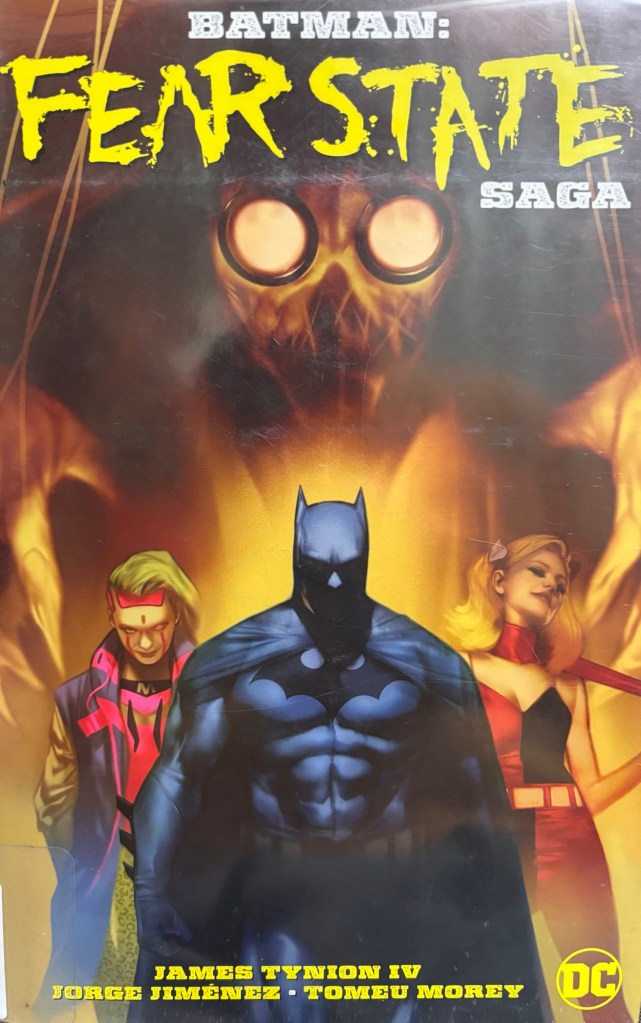
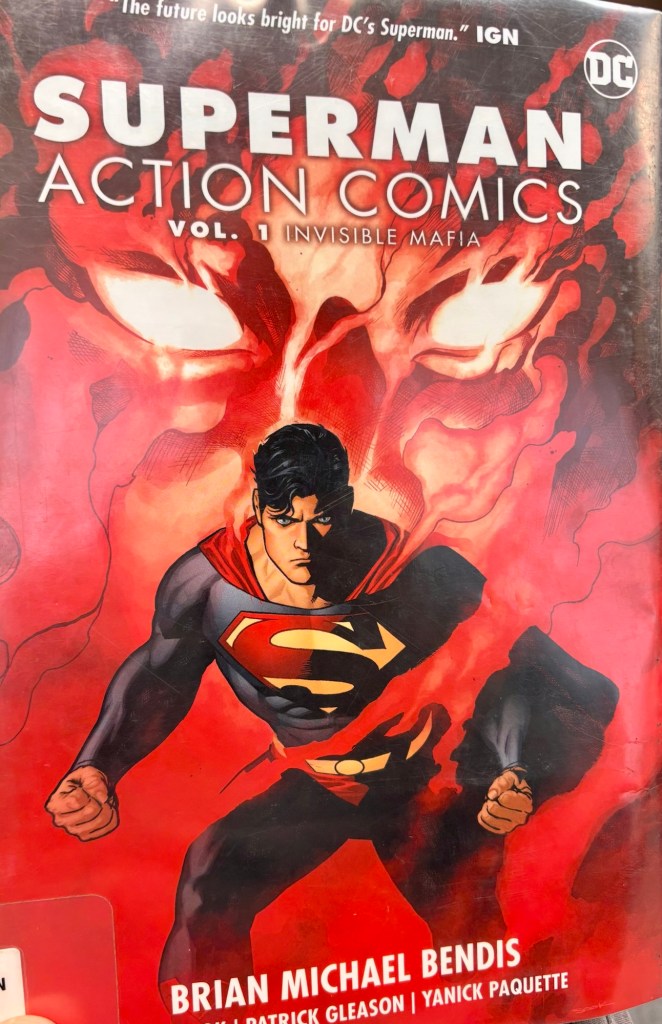
In one of the Deadpool films, the joke is made about the classic superheroes all being virgins. The same criticism has been gravely lobbed at the Avengers/Marvel sagas that have enraptured movie-goers for over a decade now. Suffice it to say that post-2020 comics have completely swung the other way. Now superheroes have sex, and the sidekick women especially, are homosexuals. Great. Just what the world needs. Why does everyone seem to think that all literature was always and only aimed at pushing boundaries? Early comics could have intentionally drawn attention and specifically rebuked social mores of the 50s but this doesn’t mean that every established social boundary is arbitrary. I know, I know. The covers alone should indicate these “aren’t your grandpa’s comic books” but it is disappointing that I have to work so hard to find non-Woke superhero material for my future teenagers to ingest.
Rousseau is Rousseau. The more I read him, the more times I read him, the more I see the extremes of his philosophy. He is certainly spot on about some things and certainly completely wrong about others. The main trouble is he explicitly states over and over again how he is being entirely consistent but as he can’t state everything at once we need to give him the benefit of the doubt when apparent inconsistencies emerge. Okay, Boomer. On the “should read him” side of the coin, he absolutely destroys the notion of analogously comparing government to a family. This hits home for me because a certain non-Westerner in my life, when questioned, likened her support of a certain thought-to-be autocrat to the way a father leads his family. In other words, it is compelling that Rousseau understood that this particular mistaken analogy is hard-wired in the hearts of men. But I assure you, faithful reader, that my reading Rousseau and the subsequent effect of renewed confidence in the idea that elected officials are facing at a totally different problem than that which confronts fathers, has absolutely no effect whatsoever on the people who want to make that analogy. Want another false analogy? Here it is. Unread books are not analogous to the lasers used in gene-editing.
Point of Clarification from One Closer to the Revolution
Washington Irving, in his 5 volume biography of GW, mentioned a book called “History of the Siege of Boston, and the Battles of Lexington, Concord, and Bunker Hill; Also, an Account of the Bunker Hill Monument; with Illustrative Documents” by Richard Frothingham.
For the historians, I am not a comparative history scholar. So take it easy on me if other historians disagree with Frothingham. Just the same, I cannot imagine anyone providing evidence to discount the sentiments in the following paragraph.
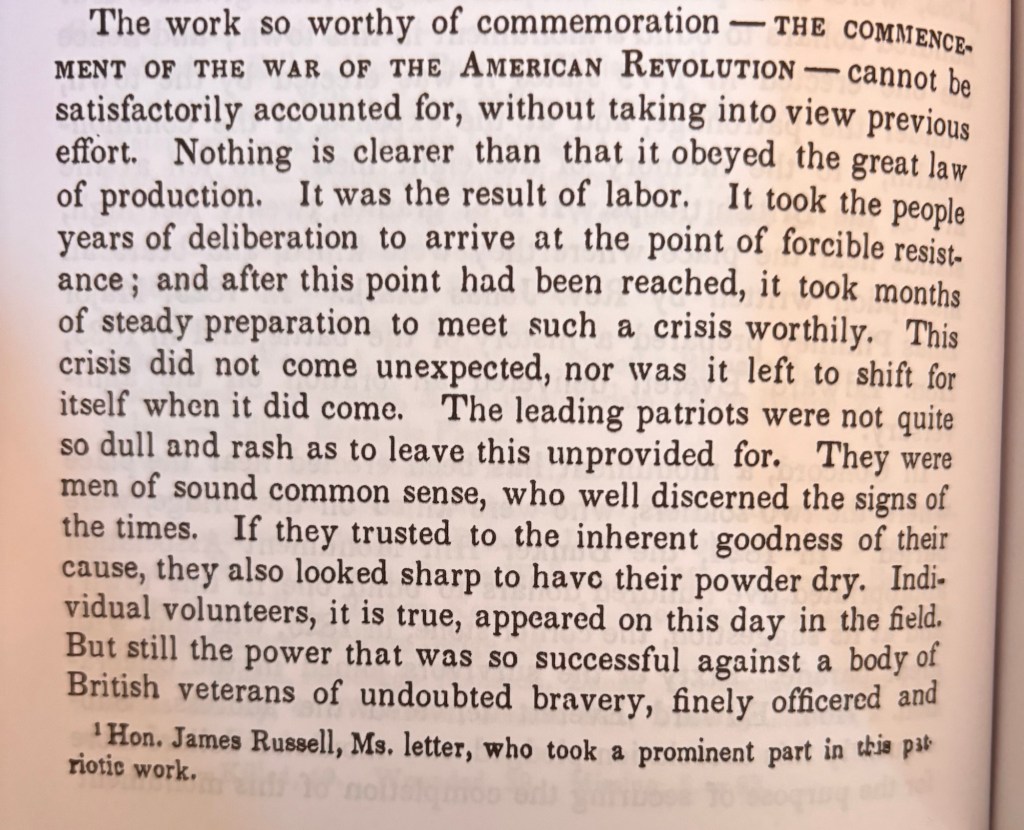
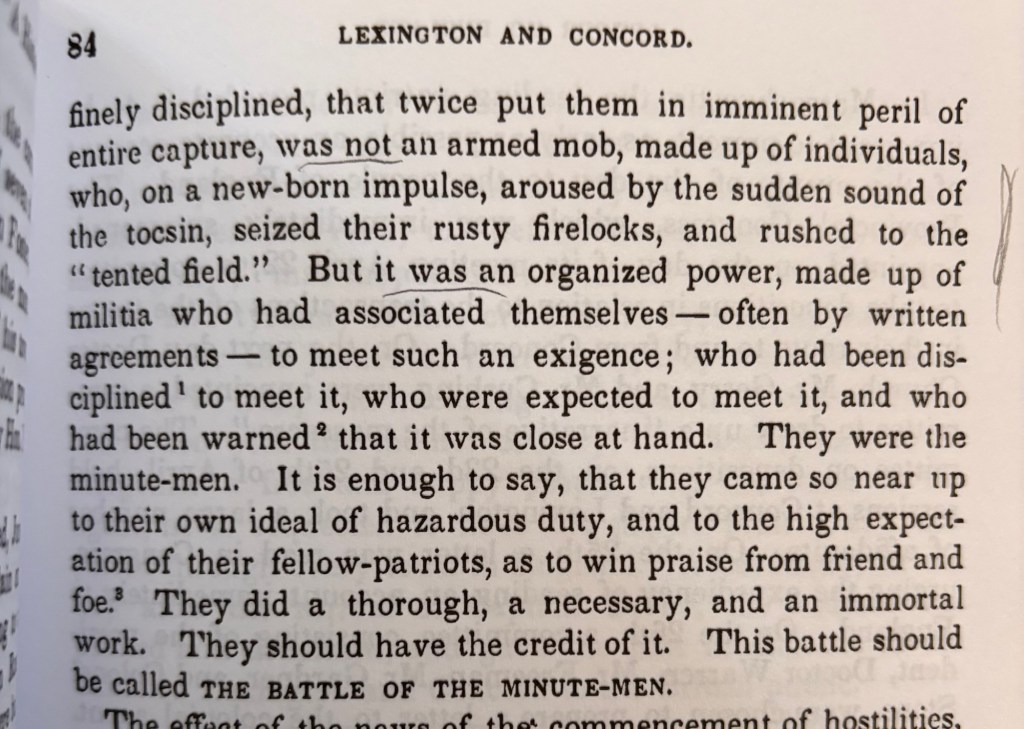
To the modern patriots: I am not sure there is a parallel behavior available to us. What say you? All the militia groups I ever hear tell of seem legitimately illegitimate. And I have to admit I trust the military. The stories of Mohammedans becoming cops causes concern. But I think we have time. What say you? Am I burying my head in the sand? Is there a modern minute-men worth joining?
In sum, my point in sharing is to make sure we teach the right history to our kiddos. With or without membership in any gun-toting club, we can all do this.
Concluding Remarks of Washington Irving
Pay special attention to the final paragraph. This book was written in 1859, but Lord Brougham’s quote was 1839.


And they want to tear down statues. And we let them. I’m not saying the statues must stay as if by divine decree; I am merely stating that this Lord Brougham hit the nail on the head. Wisdom and virtue will not be found in a people who do not honor Washington. This was and is self-evident. So read up! And remind others when they drift!
Reading Log 7.11.2026
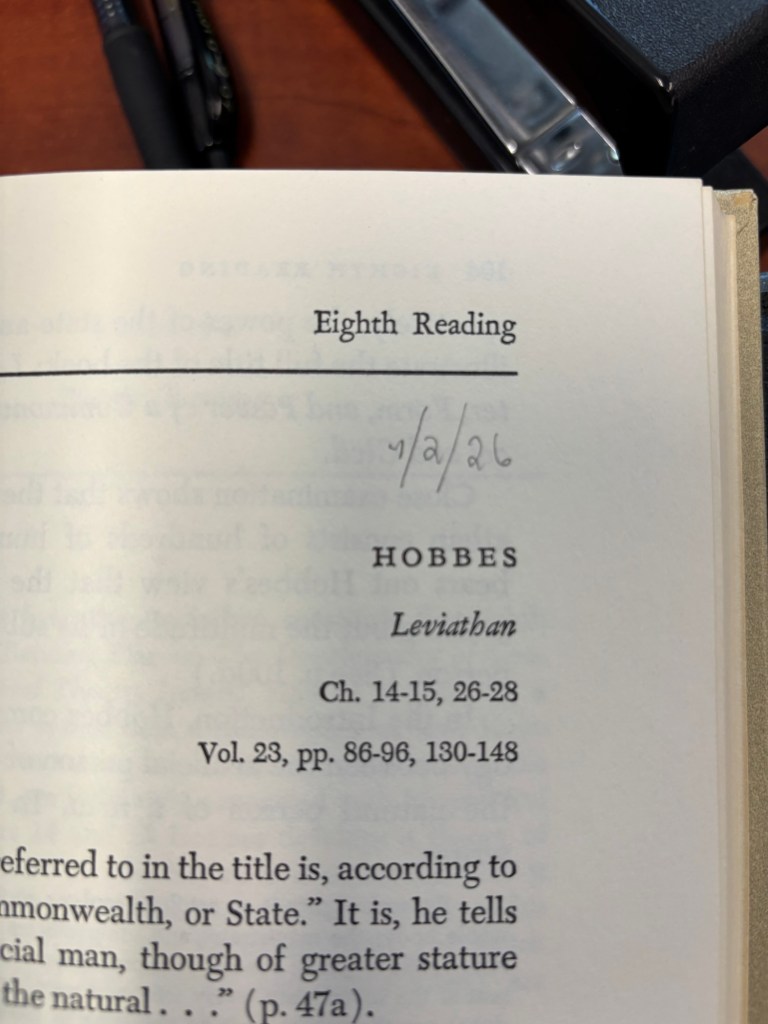


I have said it before and will say it again and again and again. Hobbes’ Leviathan is absolute must-read material. I am rarely more invigorated while reading than when reading Hobbes. I exhort you, brethren, find a copy and make time for it. You will not be disappointed.
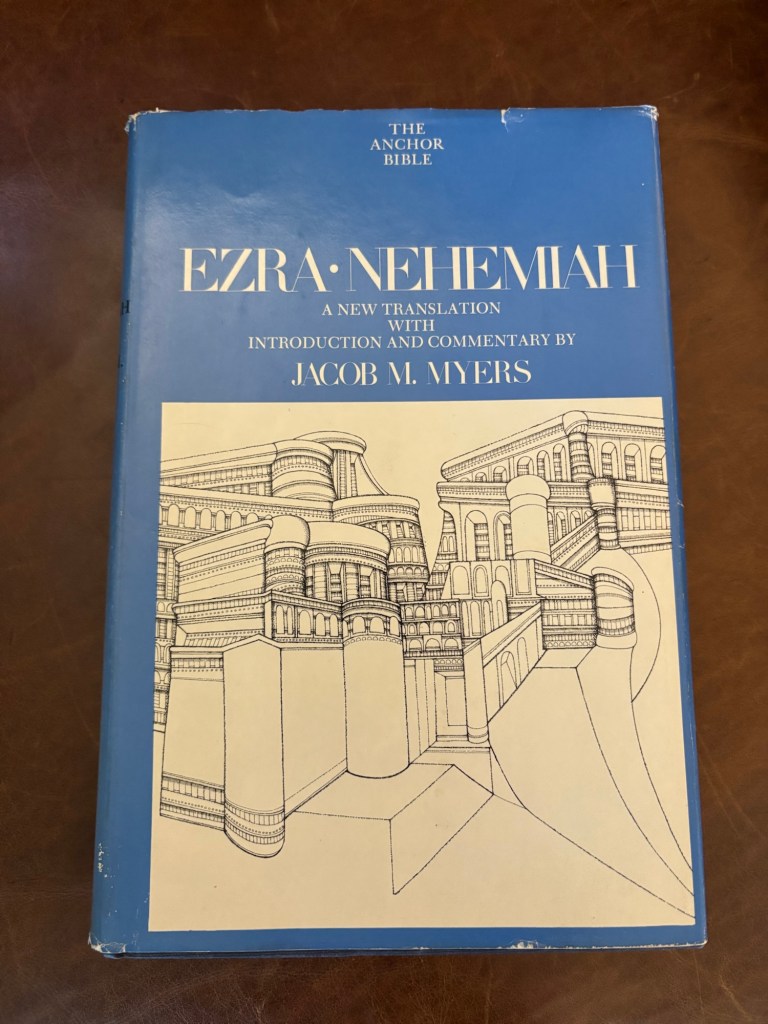
A former professor from the seminary reminded me recently that as an alumni, I had access to an online theological library. So I tracked it down and joined, $10 a month. Around the same time as joining, the same professor told me his recommendation for a commentary set for a church—meaning lay people. I had asked his opinion because I wanted to start a library at the church I joined. His recommendation was the NIV Application Commentary, which uses three approaches to each passage and never or rarely mentions any original language issues in a manner that requires training to understand. The three approaches are, “Original Meaning”, “Bridging Contexts”, and “Contemporary Significance”. Anyhow, I do have training in the original languages and I hate reading anything about the Bible in which the author has made the decision for me, preferring instead to read authors who lay out the evidence from which to choose what to think for myself. That’s where the Anchor Bible Commentary set comes in to play. I am certain there are other solid academic commentaries, but Anchor is kind of the gold standard. By way of example, the NIVAC’s 1 Peter volume might include, “Peter wrote…” and the Anchor Bible might write, “The author of 1 Peter wrote…” I prefer to approach the Bible Indiana Jones-style. (Recall—there are no priests!)
Boring details of my life, I know, but while all this was happening, I had started to get anxious about the issue of accuracy in the digital realm. Specifically, I had seen a few examples of how streaming services are latently airing edited versions of beloved entertainment. Long story short, I determined that I did not want to ever be distracted by worry about whether the content I was reading on a screen was original or edited, so I started tracking down a used set of the Anchor Bible commentary volumes. And I found and bought one (not quite complete). Then, lo and behold, I got an email announcing that the online theological library was ending its availability to alumni—at least as accessed outside of a proper library. No real reasons were given, but I was very thankful and felt very wise in my decision to begin to purchase the actual books for my home library.
All that to say this: I have for many years struggled in my attempt to a good habit of daily Bible study. As I have mentioned, I always start with the Bible if I have time to read. But I never loved my plan of just reading it and I also have never enjoyed using a devotional which were always so clearly superficial and kitsch so as to distract me from the intent of Bible study. Around the time of all this purchasing and subscription-cancelling etc. I had been in Ezra and Nehemiah, so I, one day, decided to see what ol’ Anchor said about them. And, boy, was I ignorant. It’s actually fascinating to me how much I had never known. This was part of the reason I began to read them recently anyhow. (Yay me.) Anyhow, the main thing to share here is that 1 and 2 Chronicles and Ezra and Nehemiah are all contemporary to each other. And the date of writing may be as late 150BC (don’t quote me on the date). Also, Haggai and Zechariah are the prophets of that same time. So what’s that? Like 6 books, spread from after 2 Kings to the end of the OT, in the Christian canon’s arrangement. I had known the Jewish canon concluded with (1&) 2 Chronicles, but I hadn’t ever studied the other four books, or committed to memory anything about their dates at the least. I did know that Nehemiah is where the tradition of standing during scripture reading gets it start.
All that said, I am happy to report that I have my new way of daily Bible study. I just read a passage and its “comment”. I have even been able to interest my wife in listening to it as I try to rid believers, one at a time, of the notion that one can gain understanding of the Bible by praying. It just doesn’t work like that.
Onward.
Netflix made a Frankenstein movie. I couldn’t finish it. But then I watched Bride!, as you know. I mentioned this at work to a reader and she asked me if I had read the book. I had not. So here we are. I haven’t researched it entirely, but I get the sense that Shelley (married to the famous writer Percy Bysshe Shelley, and daughter herself to very famous writers) really did invent the “monster” story, which pervades all manner of entertainment to this day. Quickly, I do want to note here that Frankenstein is the name of the creator, not the monster. And, imho, the book itself isn’t that good. But the idea is—obviously. The idea being, what if the creature you bring to life is a devil, not an angel?
Farmer Boy was fun. My main criticism is that a city kid of today really and truly cannot use much of the information which is transmitted and which was conceivably useful to farmers back in the day.
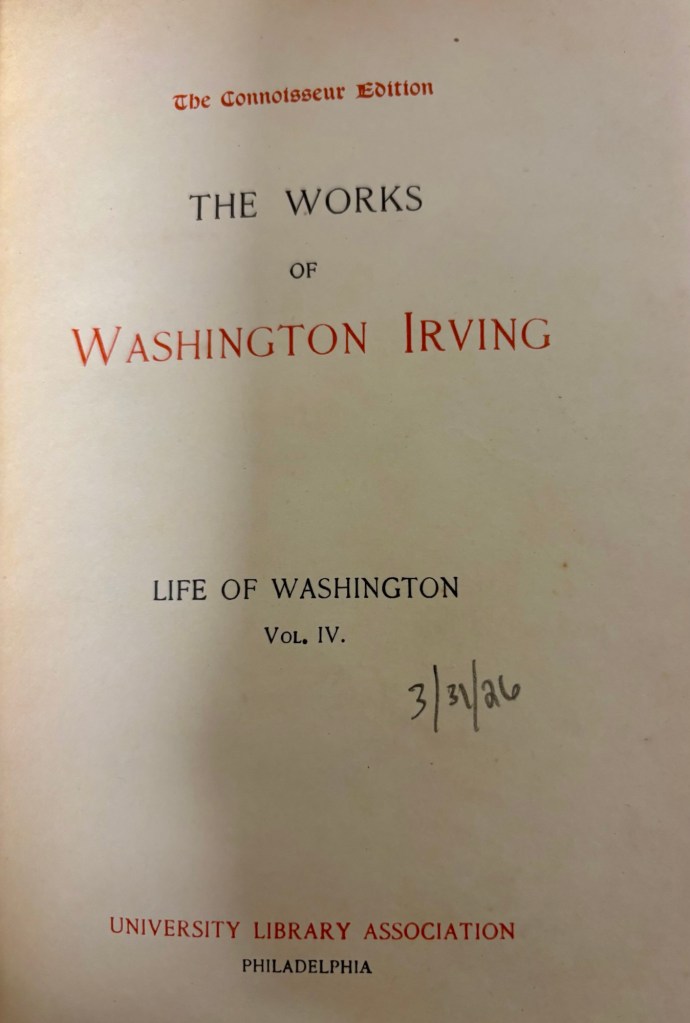
GW continues to be great. He is now President, not exactly by choice. Also interestingly, the state of politics in America back then was so startlingly similar to today, that a new idea has formed in me. This idea being that while everyone who wishes America well can appreciate the “fighter” in Trump, the truth is that we really need a leader who knows how to gain respect of everyone. That is who George Washington was. People were as vehemently opposed in their desires, motivations, and methods as we are today. But when a decision was needed, they all agreed GW was the man for the job. How did he do it? Moral living and pure motivations. How can such a man be formed and found? Imho, by studying GW. And by providence’s intervention.
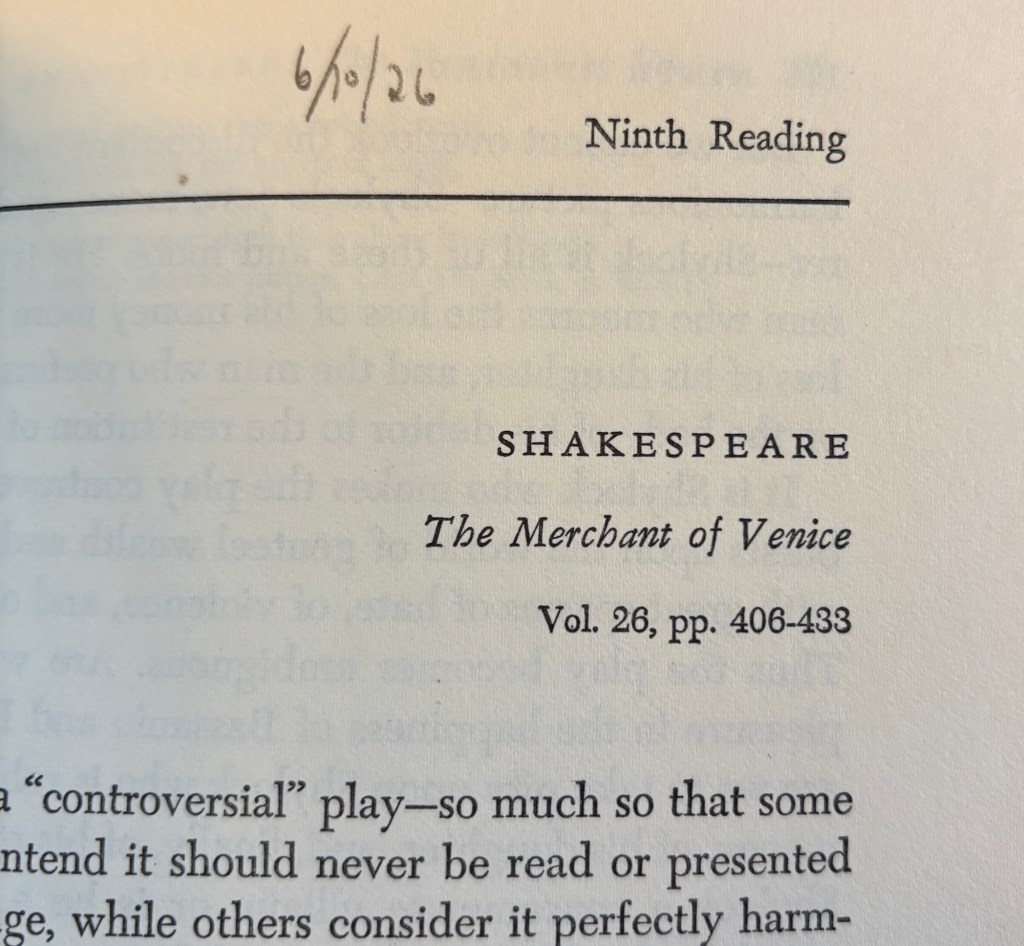
I can’t explain it, but any time I spend away from Shakespeare causes me to forget how great he is. Luckily, he is so abundantly great that merely reading a line or two is all that I need to fall back in love with him. What a writer. What stories.
Merchant of Venice is in the Great Books of the Western World’s Great Ideas Program guided reading on the topic of “Philosophy of Law and Jurisprudence.” This is because the character agrees to forfeit “a pound of flesh” if he can’t pay back his debt. To generalize this contract, the question Shakespeare raises is, “Can a person use the law to bind himself to commit an unlawful act?” The largest perspective being, “What is the name of the thing which prevents a person from freely entering into a lawful contract which has as one result unlawfulness? If the thing is ‘law’ itself, then where does it get its power, since a man freely made the contract? Doesn’t law come from man?”
In any case, Shakespeare toys with the language and big ideas as if they were nothing. And it is a whole lot of fun to read.
That’s all for today.
Literate vs Illiterate Love According to Hollywood
I recently rewatched The English Patient. (You should too.)
I also am looking forward to seeing Avatar’s latest installment, but refuse to pay.
Today I want to draw attention to the way Hollywood handles the constantly interesting problem (to literates) of illiteracy still existing on the Earth.
In EP, she says, “I wanted to meet the man who could write such a long paper with so few adjectives.” Any man who could write that paper would know instantly that she was his for the taking.
In Avatar, there is an assertion (“I see you”), which is context dependent. Men can say it to men in greeting, but it can also mean, “I want to have babies with you.” Here’s the second meaning’s scene.
Question to ponder: Are they actually communicating the same idea?
Follow-up for “this-is-difficult camp”: Are they even able to communicate the same idea, as in, can illiterate people actually “see as far/much/deep” (metaphorically) as the literate?
Enjoy!
One Teeny, Tiny Flaw
I remember catching my mom in a bookstore aisle, kind of tucked away once. The book she was reading was self-help for “control freaks”. Understand, then, that she was the control freak in our family, and my sense of the encounter was that she was embarrassed that her son had seen that maybe she didn’t want to be.
I barely need to repeat the following, but for the unfaithful readers, please accept without question that my wife isn’t in love with yours truly anymore.
Books actually play a pivotal role in the drama, albeit in an unpredictable way. One of her main complaints to me, about my way of life, is that all my book reading does not lead to more money.
For my part, one of my main “asks” of her is that she stop reading the latest Christian bestselling “health and wealth” sermon transcripts masquerading as books. And truthfully, I don’t care that she reads them, but I would like her to read, at least some of the time, real books—not “The Secret” part 73. I mean even pulp fiction or Louis L’Amour or whatever is flying off the grocery store shelves these days.
This last time home, I saw an unfamiliar book stacked upon her bible called something like, “How to Live With A Manipulative Husband”.
Do you see the problem, folks? It’s easy to miss, so I understand if you don’t.
As for me, I am seriously considering putting out a best seller for us husbands. What do you say?
The title will be, “How to Smarten Up Your Wife AND Get Her to Stop Buying Crap.” Or maybe, “How to Make Your Wife Understand That She Doesn’t Need Makeup and Wigs Just Because All Other Women Wear Them.”
This might need to be a series, actually.
Another could be, “How to Live with a Woman Who, as It Turns Out, Is an Immature Child Who Lacks the Ability to Reason.”
Then there could be one on, “When Your Wife Married You, But Listens to Every Other Human Being Who Has Ever Uttered Speech Sounds Instead.”
The capstone, and I mean Fifty Shades of Grey success, will, of course, be, “How to Actually Get Your Wife to Stop Complaining and Be Happy.”
Men of the blogosphere, I’ve got you pegged as less than 10% of my readership. But what say you? Would you pay to unlock these secrets?
Reading Log 4.17.2026
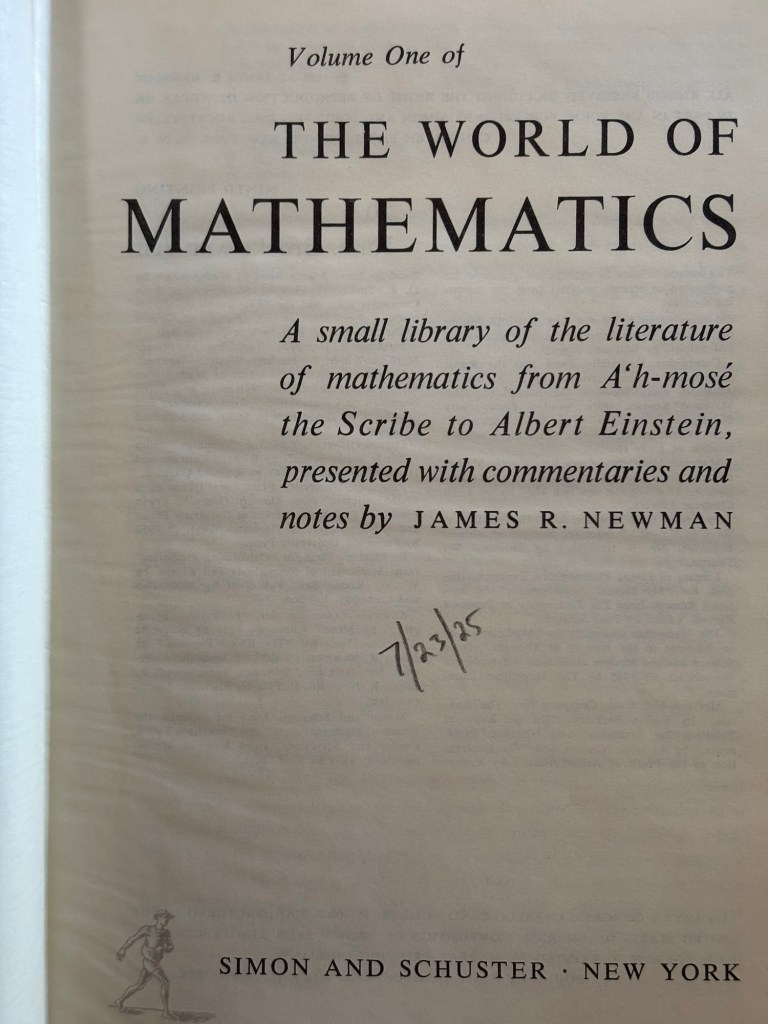
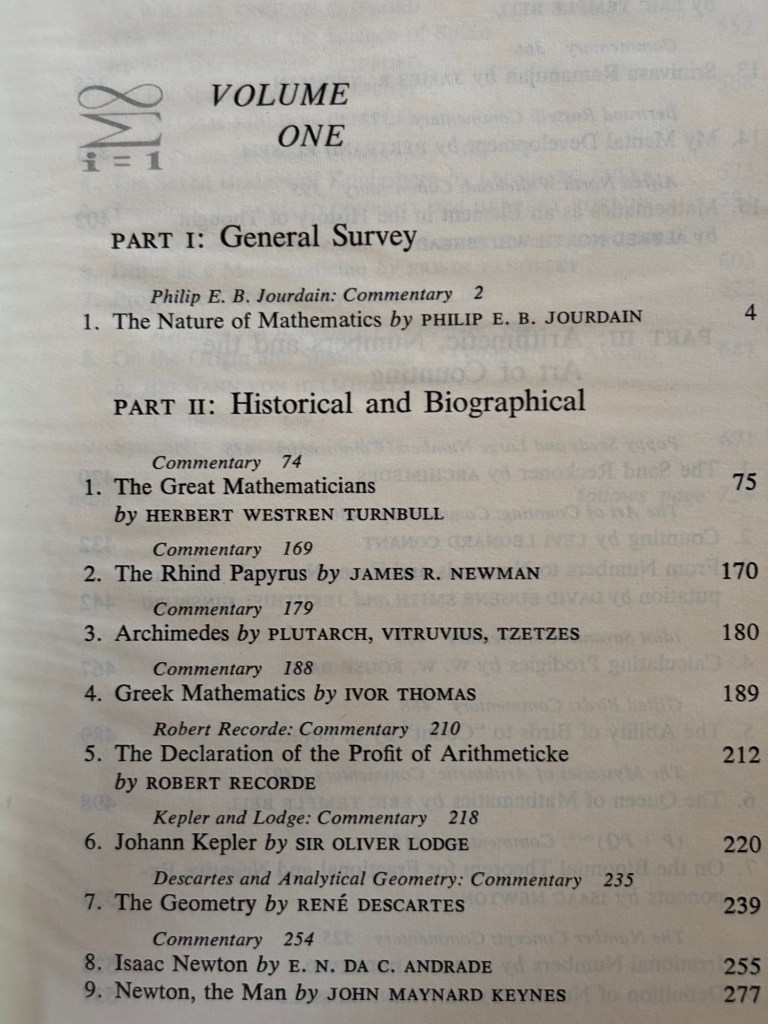
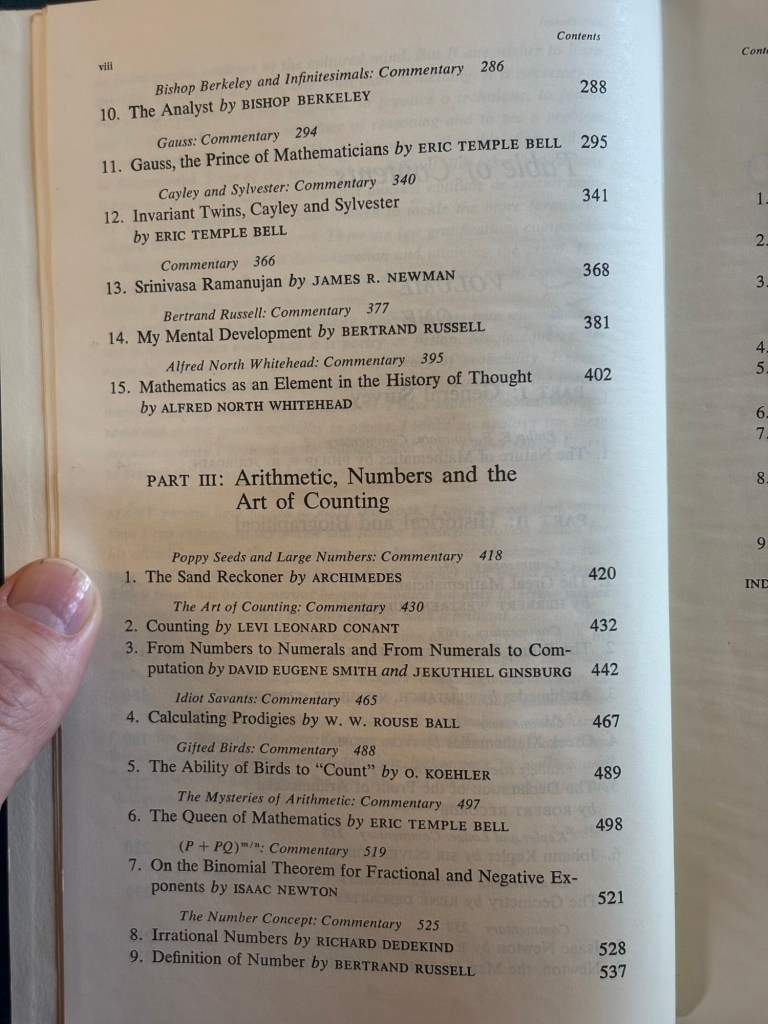
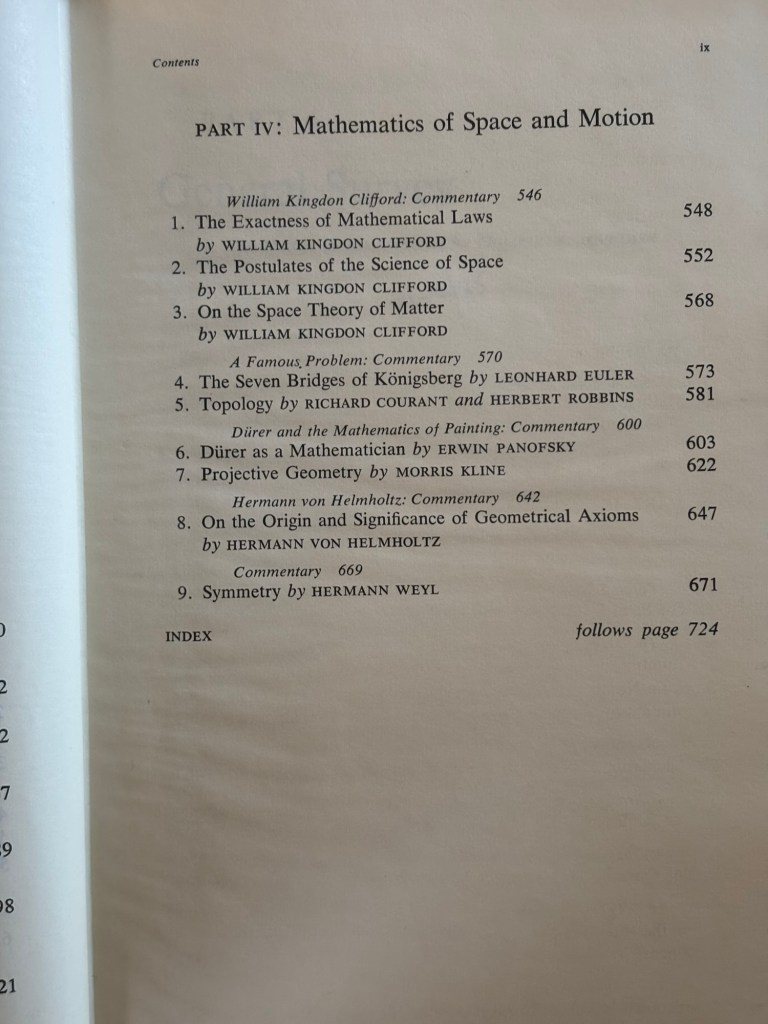
As the influencers and their adoring trolls say these days, “Don’t sleep on those math essay titles!” This is the first volume of a four volume set on the World of Mathematics and I wanted to include the contents so that you can see for yourself just how far-reaching mathematics is. I especially call your attention to an essay near the end on “Mathematics in Painting”.
You see, years ago I stumbled upon the notion that not every math idea has always been around. Specifically, even the seemingly simple concept of the number zero is relatively new. As I explored and validated this notion, I came to read that even our literate ancestors had silly ideas about the size of the sun, some notable philosophers of old speculating that it is only twelve inches in diameter.
This wildly wrong guess called to my mind the fact that early art lacked what we call perspective. The curious question came to mind, “What exactly are we talking about here? When people saw paintings of nature or portraits of people, which we now would never suggest look anything like the landscape or person, did they think, ‘Nailed it!’?”
More pointedly, we can still do this today when we see a kid draw a terrible portrait of someone and it almost physically hurts to ask the kid the simple question, “Do you really think that scribbling looks like me?”
What gives? I wondered. Did their eyes work differently? Do my children’s eyes work differently.
Well, before ever starting this four volume set, I had speculated that the increase in art’s ability to capture life accurately was probably somehow related to the increase in mathematical knowledge. I said to myself that the obvious increase of both was not coincidental.
Long story short: it’s not just somehow related. It was mathematicians who moonlighted as artists (or vice versa) who, with their unique abilities, developed perspective in art!
****
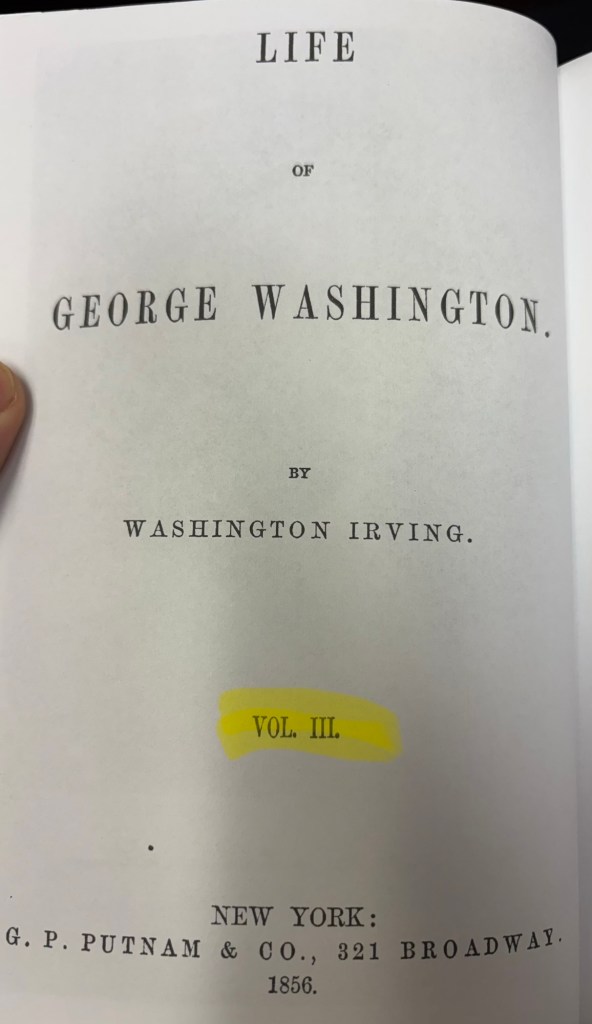
Upon starting Volume 3 of GW, I learned that it was actually a five volume biography by Mr. Irving that I had begun. Luckily eBay exists and I was able to track down the final two volumes before they vanished forever. I also have picked up a post-Revolutionary War map from which to teach my children (and any houseguests) the striking fact of how small a part of America was even involved in our infamous Independence-giving war.
****
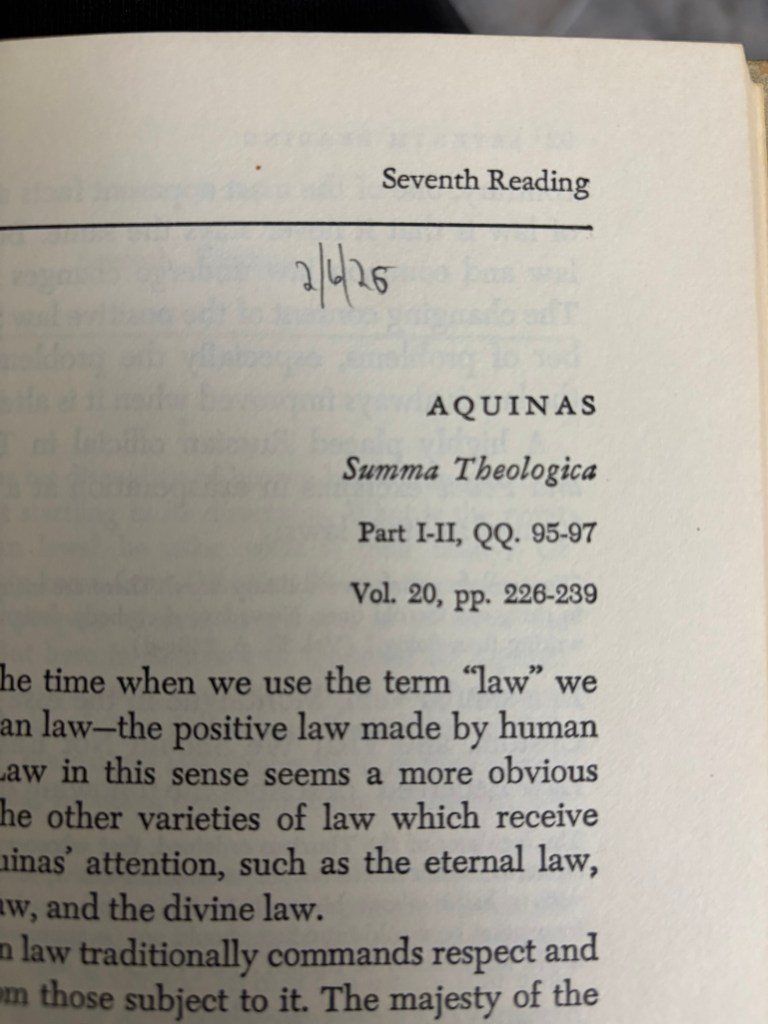
Aquinas is simply the most methodical writer you will ever come across. You owe it to yourself to peruse at least one chapter.
****
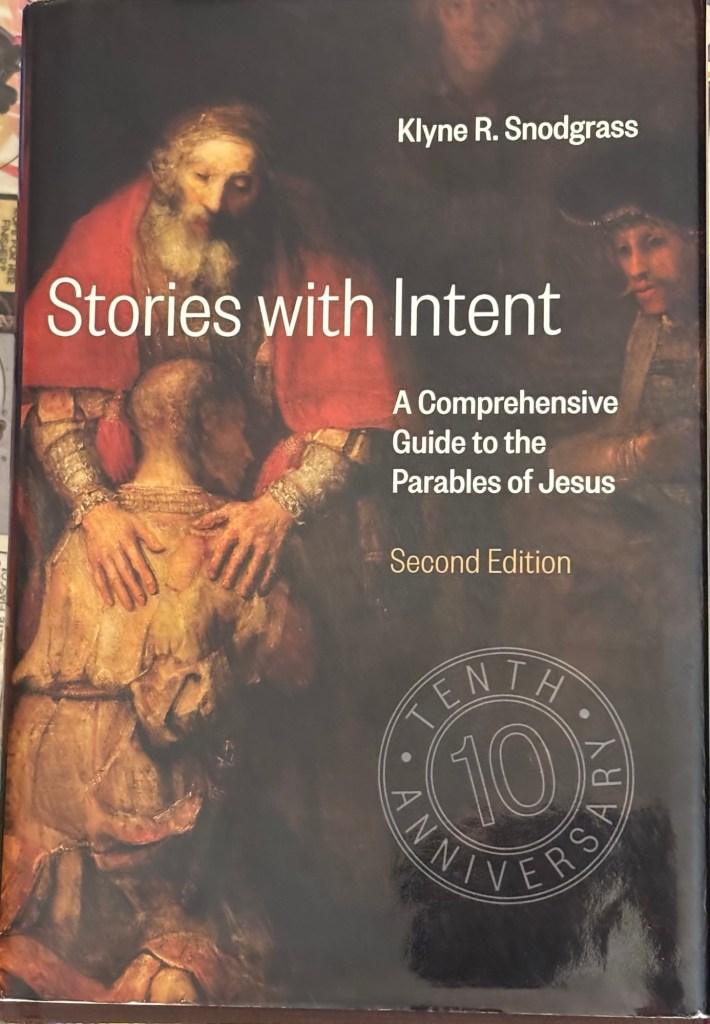
Snodgrass is someone I learned about while reading Meier’s fifth volume of his Marginal Jew series (also on Jesus’ parables). Suffice it to say, I now have a decent depth to my understanding of Jesus’ parables. All I can offer in brief is, “Please do not loft an opinion or interpretation of a parable’s meaning until you read at least one book on them.” Either Meier or Snodgrass is a fine place to start. (Blomberg too.)
****
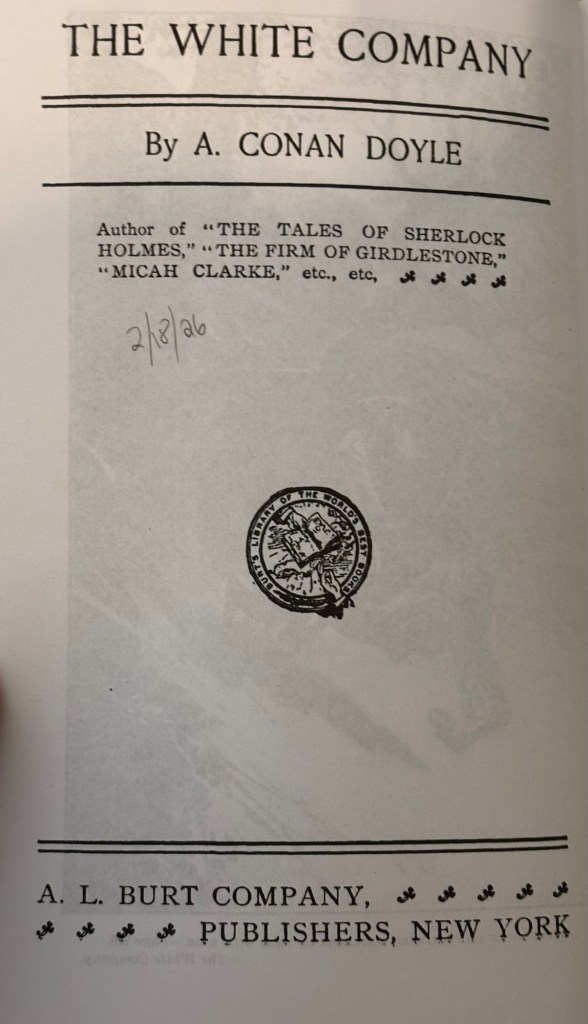
Sherlock Holmes author Sir Doyle wrote a fun little classic knights-in-shining-armor adventure tale in The White Company. Best part is a reminder that once we did things for glory. And it also has some super funny banter among knights.
****
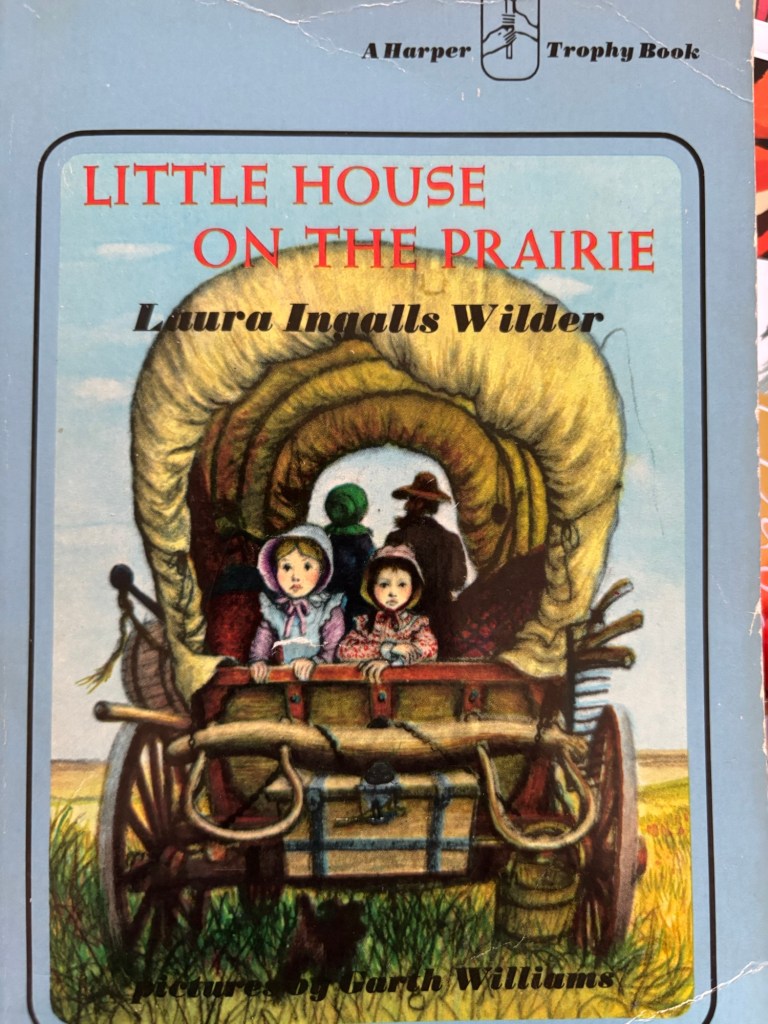
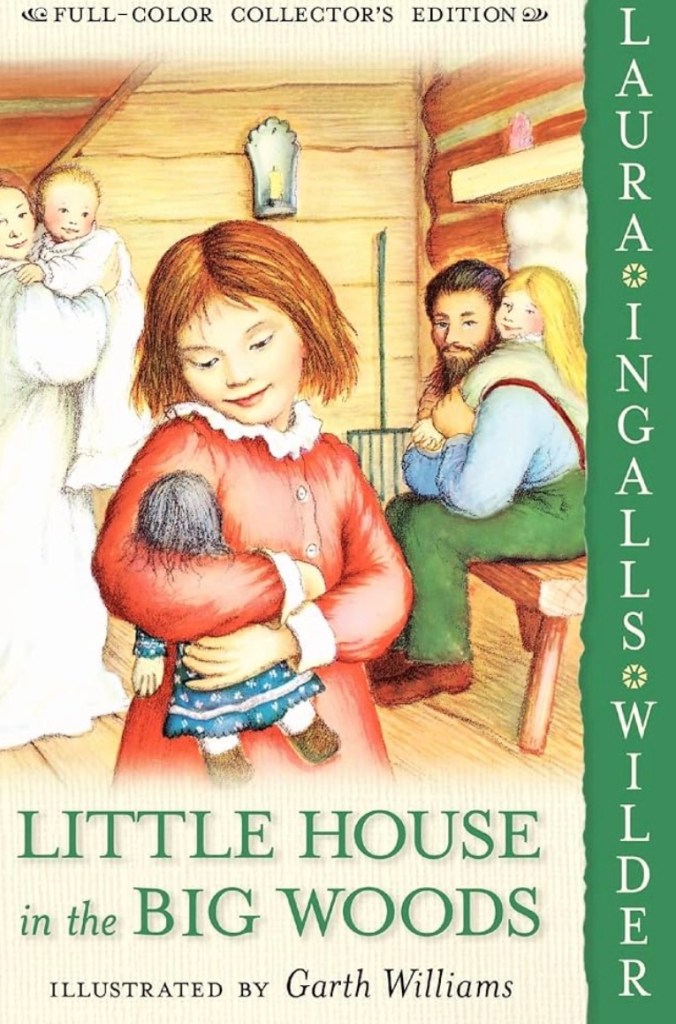
And for fun (and more simply to be forthright) I have included the two bedtime story books I have recently completed with my children. These two have a few great moments apiece, but in moving to Farmer Boy, I have to say FB seems to have a much more compelling plot, what with the whole new teacher being the friend of previous teacher who was essentially murdered.
My sister had the yellow colored box set of these on her shelf all my childhood. I stared and stared and thought they were for girls only—like there was no way a boy could enjoy them. Ha. So stupid.
One Thought on Mathematicians
As I keep working through James Newman’s four volume The World of Mathematics, I cannot help but conclude that my previously held notion “nurture matters (in “nature vs nurture” sense) in the development of mathematical ability” is entirely mistaken.
New question: In what other corners of the mind might nurture not matter?
Reading Log 2.6.2026
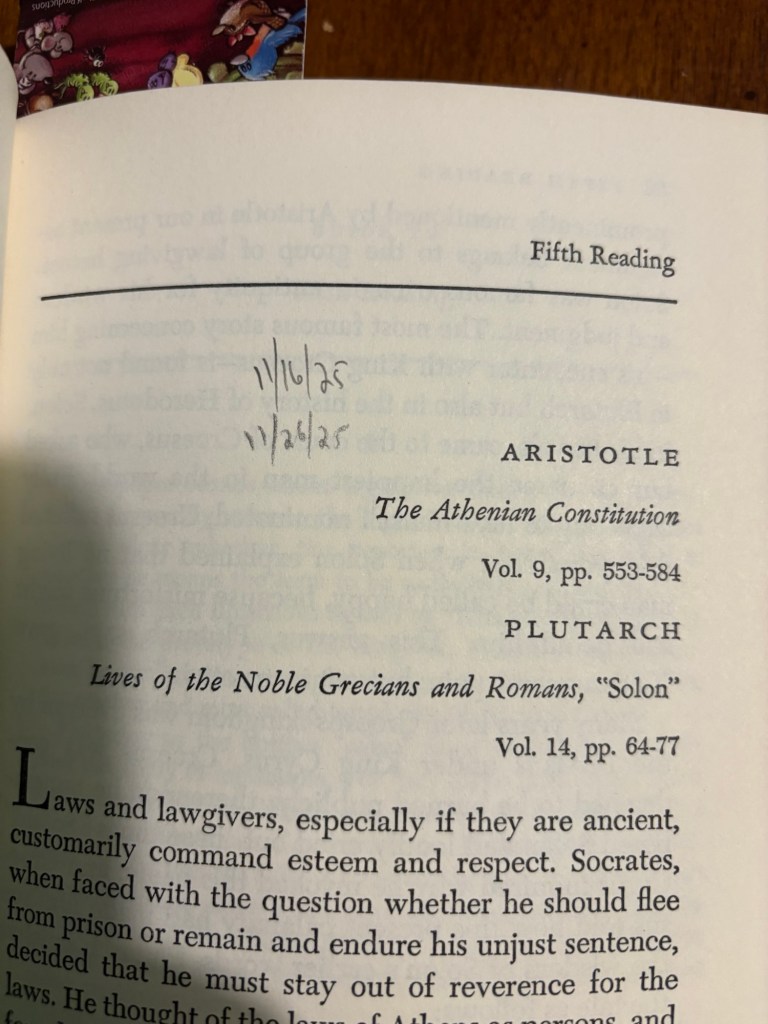
The reason Aristotle should be read and will be rewarding is simple enjoyment of compare/contrast of methods. He also forces you to abandon juhhhhst about every preconception about government and politics you currently hold.
****
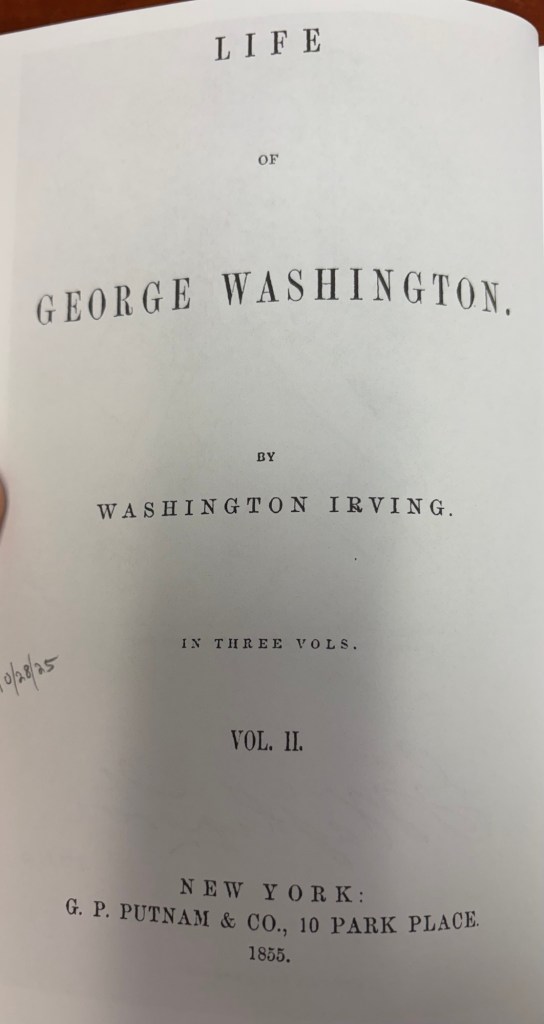
GW never disappoints. What a life. I confess that sometimes my mind wanders as the descriptions of all the various messages being sent to and between all the many forts and camps are given. At the same time, what an exciting job, no? Perfect for a young man wishing to prove his worth, I say. What task of today compares with, “Your countryman’s lives depend on you successfully carrying this message through the forest undetected. Can you do it?”?
****
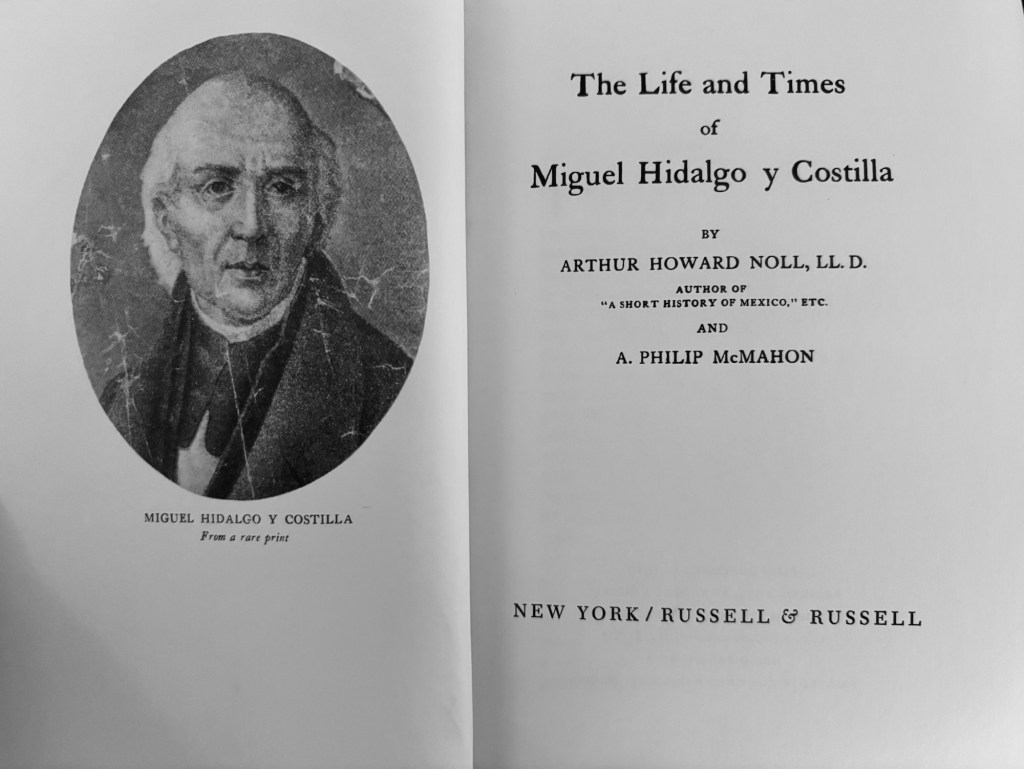
After I discovered Miguel Hidalgo y Costilla, after I found a portrait, and after I framed it behind museum quality glass and hung it on my wall, I realized that I didn’t really know much about him or his role in Mexico’s independence. There’s a brief entry in my 1910 Britannica set. And then there’s this book. Suffice it to say, now I do. In short, and probably fortunately, the word “legend” has to be applied. New Spain and the caste system it operated within simply didn’t have an established habit of written record. Another difficulty that can really only be appreciated if you read GW and Hidalgo simultaneously, is the scale of the geography upon which events unfolded. New Spain (future Mexico) was enormous, whereas GW was focused on New York and Long Island and a few other relatively minuscule locations along the Atlantic coast. In the end, however, for both legendary and historically verifiable reasons, Hidalgo does belong among the six men on my wall. Oh, and you’ll never guess the nickname he got after college. So go! Read and learn! (Even the internet won’t help you.)
****
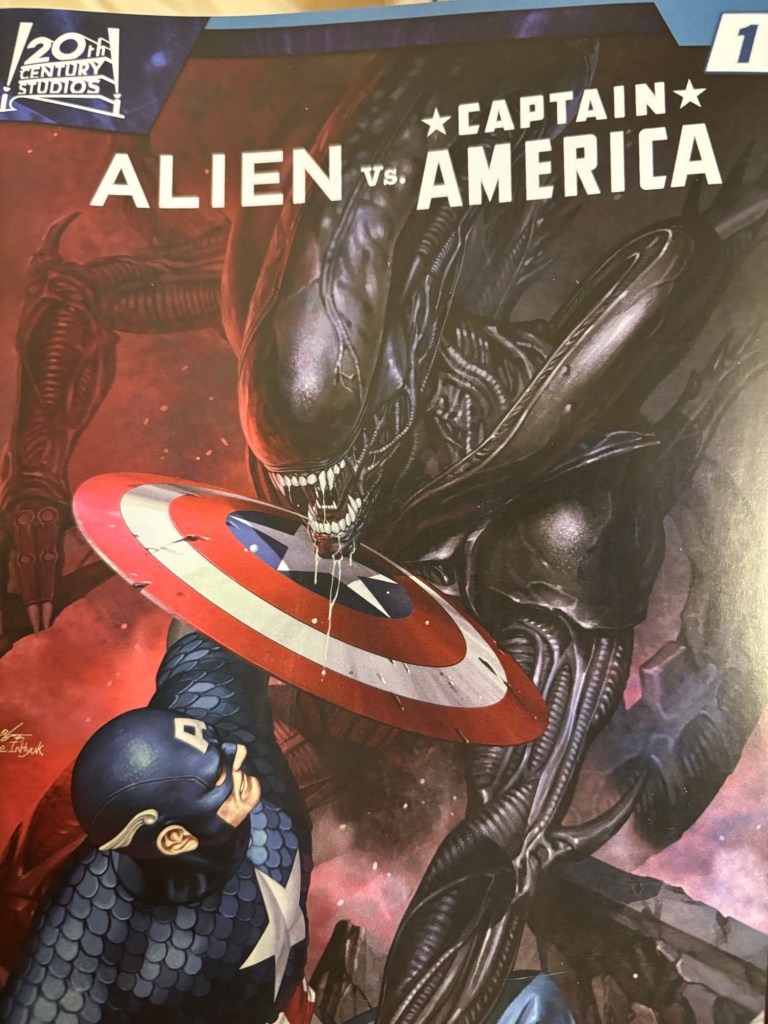
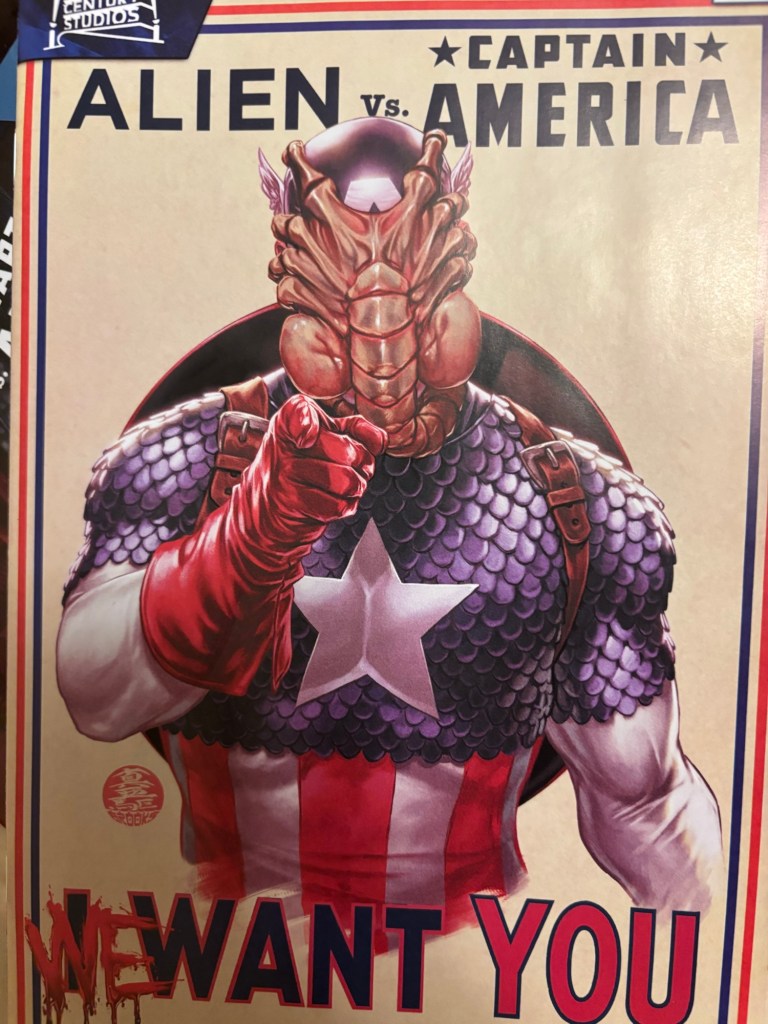
How could I, American hero that I am, not like Alien vs Captain America? Just look at those covers. Rest assured, they do not disappoint.
****
Isaac Newton leads the way for humans—overall. But Aquinas leads the way for methodical writing. This man’s rigid adherence to a method is otherworldly. I won’t say it is commendable, because I am too interested in creative writing. But when I hear people talk and it is utter unfocused confusion, the easy fix is to show them Aquinas.
****
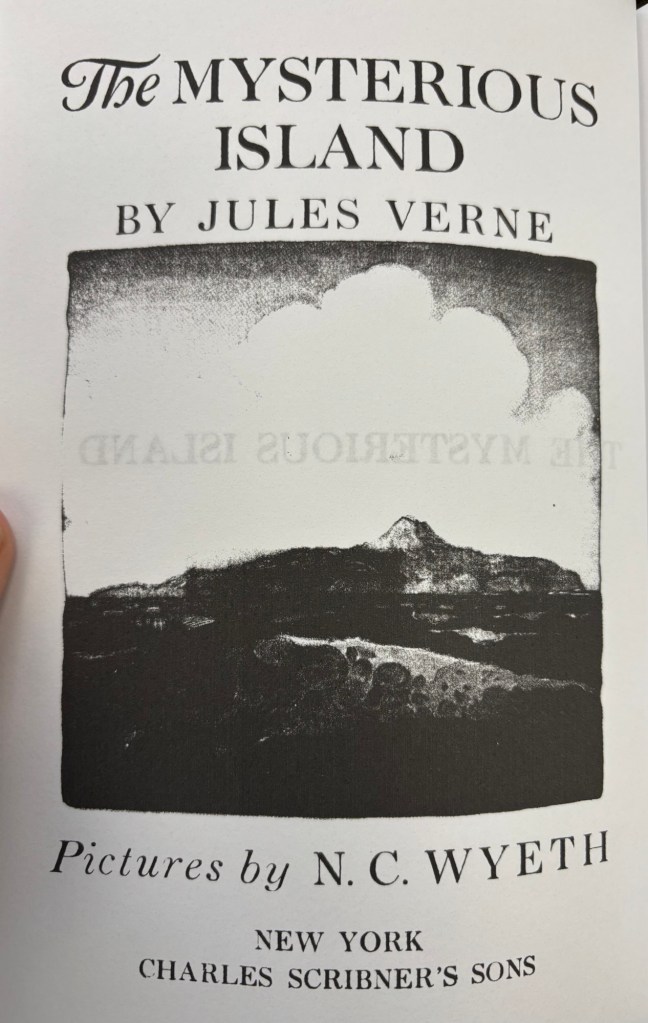
I knew Twenty Thousand Leagues Under the Sea. (Read it too.) I did not know about The Mysterious Island. It is fun. A few chapters in and I found myself thinking, “Wait a minute! This is just a genre-establishing sci-fi version of Robinson Crusoe and Swiss Family Robinson.” Then it seemed like it was literally in the next chapter’s opening that Verne, or the narrator, detailed as much and offered a decide-for-yourself-whether-it’s-a meaningful distinction. In any case, compelling start, second act slowed a bit, but the third finished strong. It isn’t a must read. But if you have interest, it won’t disappoint.
Reading Log 12.18.2025

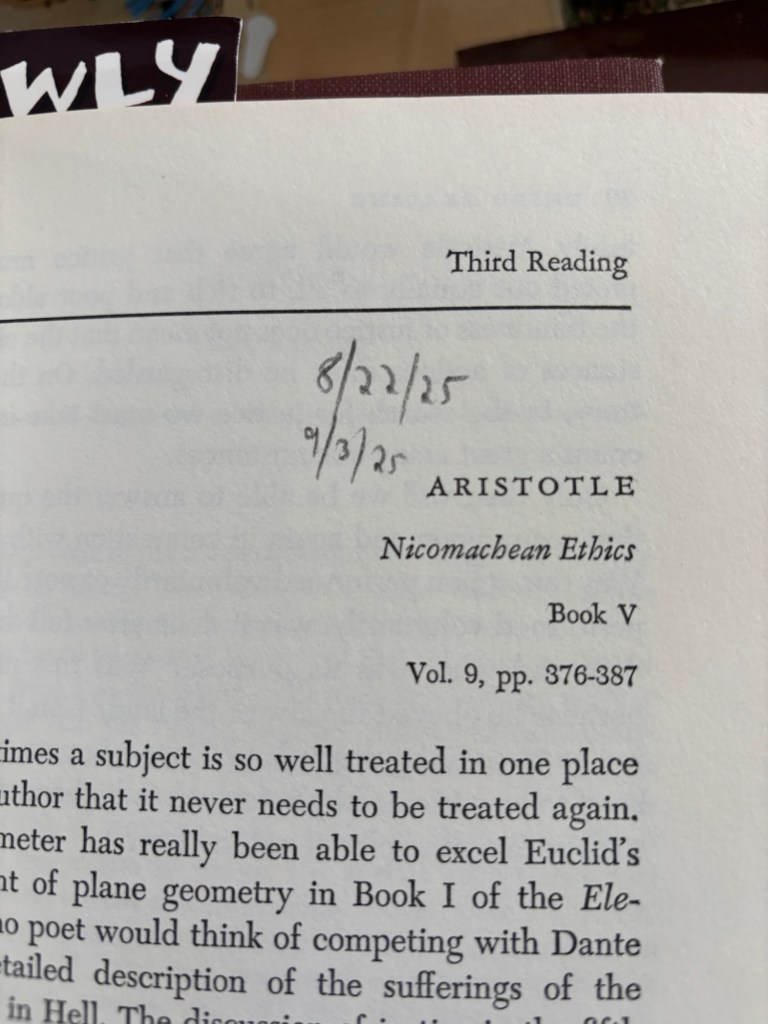
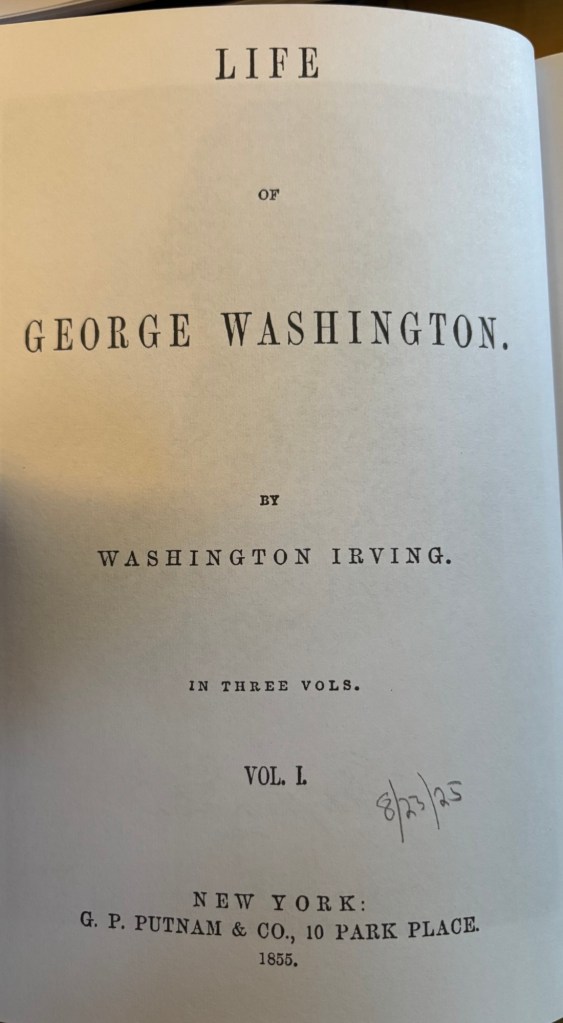
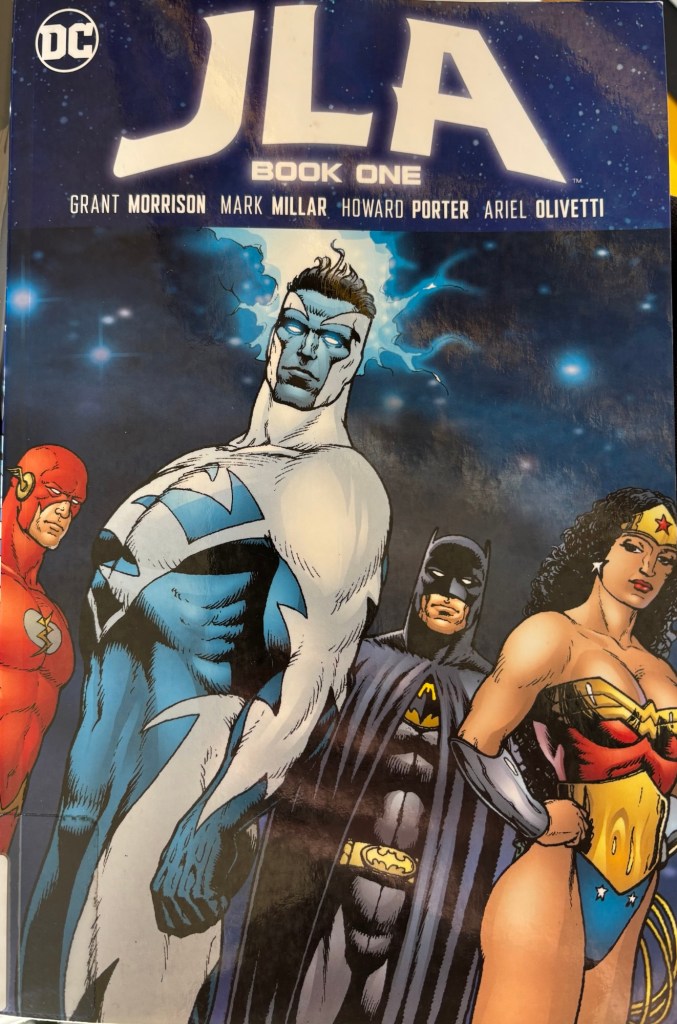
It’s been since September 20th that I posted an updated reading log. These six make it seem like I barely made time for my hobby. I can’t explain it, but except for last hitch, I have been reading as normal.
****
George MacDonald is just fantastic. And any book that includes dialect spelling is fantastic. So be sure to check out his Heather and Snow.
****
The Aristotle Nichomachean Ethics section was exceedingly worthy. Most importantly, the name (Nichomachean) derives either from Aristotle’s father or son. I say Aristotle wrote down what his father taught him. Be that as it may, the lucidity of the ethics are remarkable. Here’s one example for ya. You know how we always hear the BIPOC and BIPOC-infatuated leaders talking about “equity” these days? They throw out some idea like “equity, not equality”, right? Then they proceed to explain the most unequal thing in the most confusing way, right?
Well Aristotle (or his dad) used the word equity in the following way. He said there is the universal law, say, “Do not steal.” Then there is the nuances of the law, to include all the particulars, like, stealing a lot is obviously different than stealing a little. Aristotle (or his dad) uses the word equity to describe the nuanced consequences of the application of the law. In other words, the difference between going to jail and simply giving the stolen good back to the owner was equity. My example is correct in principle, not particulars. No matter how fine the law cuts it, there is gray in between—this is equity to Aristotle.
Here I don’t mean to applaud the idea of equity in Nichomachean Ethics, but to draw out for you that over two thousand years ago one man wrote clearly and it appears the best we can do today is worse.
****
Does everyone understand that George Washington was British? Did you know that Mount Vernon was so-named because George’s older brother, Lawrence, served in the British Fleet under one Admiral Vernon whom he so loved that he named his property after him? Has everyone slept outside in the cold with savages nearby, allies mostly, but likely enemies too? As holy writ declares, “We are but dust,” compared to this great man. You could read and re-read Washington Irving’s biography and never be worse for it.
****
I found this 600 page Justice League America collection of comics at the library. The series came out in the 97-98 time period. They were fun. Who doesn’t love the dynamic between Batman and Superman? And now I know more about Martian Manhunter too. The end of Justice League Snyder Cut always bothered me. But not anymore.
****
How many times do I have to write about the moooslims? One more I guess. That’s what the Song of Roland is about. French Christian Knights vs saracens. I read the long epic poem, supposedly a first of its kind—its kind being nationalistic or patriotic poem—in two days. I go so deep when I read that I don’t recommend this to anyone similarly talented. I mean, for a day or two, I thought I saw everywhere the mooslims were invading our lands.
****
What can I say about finishing the two volume Reporting Vietnam set? Couple things. First, the French had colonies in Vietnam before WW2. (Maybe earlier too.) But the point is that France took such a beating in WW2, geographically situated as they were, that the Allies decided to help them rebuild after the war. That is where America enters Vietnam—what is so wrong about helping French rebuild their colonies?
Second, during WW2, Ho Chi Minh gained power because he wanted all the foreigners out—Japan and France (later America etc). It will be forever debated if he was a communist at heart or just used communism as a timely tool.
Third, I used to think it cool to baldly state, “We lost Vietnam.” I remember even daring my helicopter instructor pilot who fought heroically in Vietnam to admit it, which he did unreservedly, probably for the millionth time to POS’s like me. I will never say this or allow someone else to say it ever again. The US did not lose Vietnam. The South Vietnamese lost. We fought, we left. We did not lose. Losing a war is terrible. Never lose a war. Anyone who says anything to me about America that sounds like they want it to lose a war now gets verbally reprimanded at the highest socially acceptable level. Every person alive should want their country to win any war it engages, at nearly any cost, rather than suffer loss. We did not lose Vietnam.
In addition to having the above new things to say about ‘Nam, I want to share two images that now adorn my house. First, this hangs in my garage.

My gentle wife took days to notice and when she did, she asked, “Isn’t that a bad word?” in reference to the kids growing up with it in view. What a great question. How would you answer her?
Secondly, this is now the backdrop to my beloved piano.

I teach the kids to repeat after me, clockwise from the top, right first, then left, “Nelson (Nelson), Robert (Robert), Miguel (Miguel), Ho (Ho), George (George), Ghandi (Ghandi).” And I ask you, what do these men have in common? Why would I, Eagle Scout, USAF Pilot, Baptist, and Thanksgiving-and-Christmas-working first responder have Ho Chi Minh on my wall, my mind, and my children’s minds?
Hint: the key to life on earth as an American is the Vietnam War. There’s a reason for the current confusion. And it has nothing to do with events of the day or what you consume daily; it has everything to do with what you have never read. Both the reason you have never read it (or been required to—nothing conspiracy theory here—just general shame and incompetent teachers) and the history you will discover upon reading it are relevant.

