Tagged: Writing
Beneta, A Review of The Accountant by Gavin O’Conner
Which is it? Do people with “autism” save the day Greta-style? Or do people with “autism” save the day, Ben Affleck style?
A co-worker recommended the film, casually, saying, “He plays someone with autism well.”
I will say this about the film. It held my attention. And it tied a nice bow, leaving very few, if any, plot points unresolved.
And yet. Who cares if someone, for tons of money, can convincingly not make eye-contact and recite lines methodically?
The real question for those in the “autism-as-superpower” camp, is can an “autistic” person act like a normal person? IE, Greta cannot be a Hollywood A-Lister. Shouldn’t that mean something?
(To be clear: No, my child, autism is not cool or a superpower or a much needed solution to the human’s dilemma on earth.)
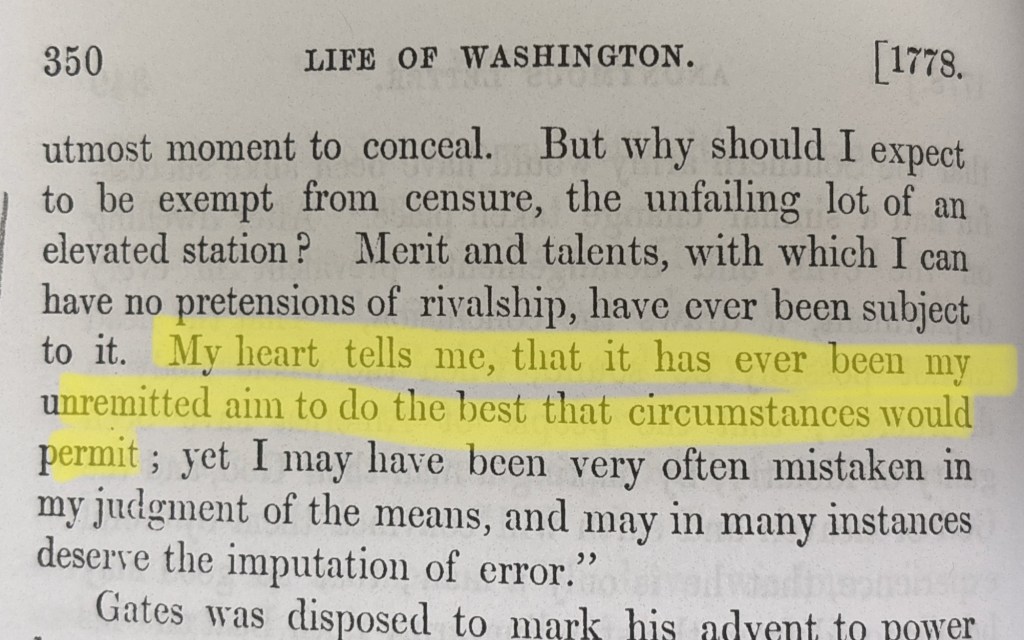
GW Quote From Which To Draw Motivation
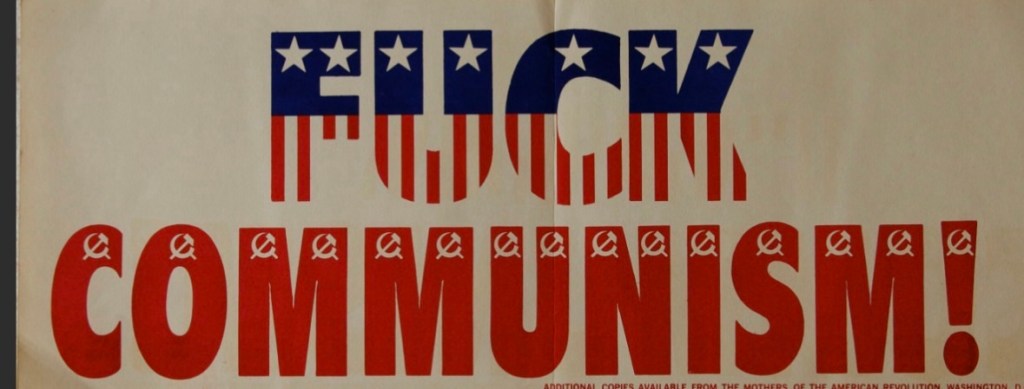
Words Are Not the Issue
When Jesus resurrected, many things changed. One such change is this: Words stopped being the issue.
Turn with me to Matthew 21:15 and notice how the adults are described as indignant about what essentially mindless children are uttering or repeating.
Have you ever heard a child say a bad word in innocence?
The other day, before I knew what happened, five year old A- started running through the consonants matched to “-ucky”.
“Bucky”
“Ducky”
“Mucky”
“Sucky”
“Tucky”
Wait for it…
“Fucky”
Now when this happened, redeemed by the blood sinner that I am, I did not worry that my child just communicated with darkness or the nether realms or evil spirits. I did not worry that her soul somehow switched from innocent to ruined. No. And why not?
Because Christians do not believe that words actually matter. Is this stance of us Christian’s supernatural? I think so. But I am not certain. It seems to me that anyone can understand my point, and yet very few do.
We live in a world where all sides seem to want to dictate specific phrasing and word use. The examples are too numerous to state.
The point is: you’re all wrong.
You’re all like the adults in Matthew who were indignant that some children joined in the shouting as Jesus road into town. Get some self control, I say! It isn’t the words, like, it isn’t the actual English (or any language) utterance that matters. It is the meaning and understanding that matters.
A quantifiable moron saying, “Make America Great Again” or “Black Lives Matter” does not somehow raise their intelligence or wisdom level as a result of joining a chorus. Give me a break!
The Word (And Idea) “Incompatible” Is Impotent. Please Stop Using It.
The single most important political issue of our day is removing Islam from the USA and the West in general (if not removing it from the face of the earth, vis-a-vis all the gods and religions that currently make up the “myth” section of libraries and bookstores, Zeus, Ares etc).
I freely confess that it is difficult to tell how things are going. Once the algorithm knows what you’re interested in, the entire world seems to revolve around that content. But I have been paying close attention to Islam’s spread since 2015ish and recently even the major players have been echoing the above position of mine.
The trending strategy, which I believe is totally uncoordinated, seems to be, “We use the word ‘incompatible’ because it is neutral.”
That is a powerless strategy. Don’t get me wrong, any strategy that works is fine by me. But there is something to be said for truly stating the case.
The case against Islam: Islam is stupid.
Many other religions, not all, are likewise stupid. But the obvious difference in their adherent’s twin categories of (1) assimilation and (2) non-calls for jihad make these other religions relatively harmless.
Just the same, the problem is not that Islam is incompatible with the West or the USA. The problem is, at face value, Islam is stupid. The god of the Bible, not Yahweh, not Jesus, not the Holy Spirit, did not show up to anyone in a cave and issue a new law that canceled the current law.
How do I know? Because it’s a stupid idea!
Did the Israelite god have a grand plan to send his son as a man-god to die? And if so, is that good news? Yes and yes.
How do I know? Because it is a brilliant idea!
Do you see how you feel right now? Even when I write it, I find this description of “Christianity is brilliant” to be repulsive. For some reason, to admit that something we want to believe (I can have eternal life in the best sense of the word “life”) is something brilliant just doesn’t land. As if there is something inherently stupid about “life” and something inherently bad about “brilliant” ideas.
And yet, to be clear: to admit biblical Christianity (originalist/orthodox/not-Talirico-progressive-style) is brilliant does not mean it was invented. Brilliant just means brilliant. And stupid means stupid.
And Islam is stupid. America, on the other hand, is on the leading edge of the most brilliant civilization mankind has developed to date. And brilliant civilizations do not welcome stupid ideas, especially one as stupid as Islam.
Why Is AI So Slow?
Anyone else having this problem?
I’m sitting here, trying to illustrate Genesis, chapter 37, exactly as my well-informed mind’s eye sees the scenes, and after I finally input the prompt, it’s like the time-space universe reverts back to 1996 and dial-up.
What gives?
Seriously, when I want 18th century BC grain sheaves to bow, and in the style of Gustave Doré, I want it now! And I don’t have time to waste.
What gives?
How can AI be sped up?
Anyone know?
Is anyone working on the problem?
Anyone?
Bueller?
SBVI (Speech for the Blind or Vision Impaired), A Review of Nuremberg, by James Vanderbilt
There used to be an option to turn on CC (closed captions). Now, that is pretty much always on by default. But for the deaf or hard of hearing, there is a new option called SDH, which is all that CC is, but also includes text descriptions like “intense music” or “dog barking” or “door slams”, if the sounds are off camera but deemed important to the story.
Well, I just turned off Mr. Vanderbilt’s Nuremberg, after a mere twenty minutes. Why? Because the script was terrible. In a word, the dialogue ran on as I had enabled some option to enhance a movie for people who are blind or vision impaired (SBVI).
In other words, the movie would show a man riding on a train, and then one character would say to another, “I am sitting here on this moving train, on a seat.”
Just terrible. What a waste. That I made it twenty minutes is embarrassing. First scene of some weird AI looking smoke blowing around behind abandoned cars was when I could tell it wasn’t for me. Oh well. Mortal Kombat II is only two months away!
In War, Winning Matters
On repeat, we’ll soon hear incessant debate, masquerading as reporting, about who has war powers and whether “orange man bad” has lost his mind in a way that is impeachable etc.
That’s expected.
But never for one moment lose track of what matters: in war, winning matters. Not the future, not principles, but winning. And here is how we know that we’re winning: no American cities are being attacked.
Once American cities are receiving fire, the winning-losing continuum becomes slightly broader.
But until then, there is nothing to get your panties in a twist about.
On the Ignorant’s Religion
I’m going to keep this short for today. But I need to jot down some thoughts for future reference.
For a long time now the question, “What precisely does the general claim, ‘religion is accepted and believed more readily by ignorant people’ mean?” has plagued me. My approach to answering the question has been to study the history, chronologically and conceptually, of math with an eye for what are the non-math-ers (“I’m not good at math” adherents) actually doing with their mind throughout life. Simultaneously, I have also been digging deep into what the more ignorant “Christians” believe.
Two conclusions:
Firstly, I now define math as the unbounded study of absolute obedience.
Secondly, the ignorant “believers” can hardly be called such. Part of the very definition of “ignorance”, I am convinced, is an absolute freedom of word use. For the ignorant, there is no truth. There is no consistency. There is no coherence. There is no alignment, no integrity. The ignorant cannot possibly be labeled as religious or even holding a worldview at all. The ignorant are quite literally sheep, being led astray by who knows what, for who knows how long, before another thoughtless route is taken.
In short, the problem of religion is not that it somehow exists as some inherent trait or behavior of the ignorant. The problem of religion is ignorance. Put inversely, if you find yourself to be religious, your main task is education. And, similar to math, education requires consistency, coherence, and obedience. Most of all, education requires truth.
I’m Getting Hot This Winter
The power company sent a letter informing me of my newfound power to save money.
Oh joy! Tell me more!
The method?
When I need to see, turn off the lights.
When I need to cook, turn off the stove, turn off the oven.
When I need to do laundry, turn off the washer and dryer.
When I need to shower, turn off the water.
Get it? Isn’t it brilliant? I bet they had their monkeys working ‘round the clock to develop that one.
What next? Restaurants saving me money, putting the power in my hands by charging less between 9:01 and 9:02, both AM and PM? What a deal!
Gas stations down the road from each other now give dramatic discounts immediately after you fill up at the competition, ‘Just bring your receipt!’? Count me in!
Trash companies now let me save by skipping my house for five years straight and then it’s only a fraction of the cost for one big pickup? Let’s go!
I have no idea how much “energy” should cost. Or food. Or fuel. Or trash removal. But I do know that I know best, and with pinpoint accuracy, absolute certainty, and perfect timing, exactly what I need, why I need it, and when I need it—not you.
Reading Log 2.6.2026
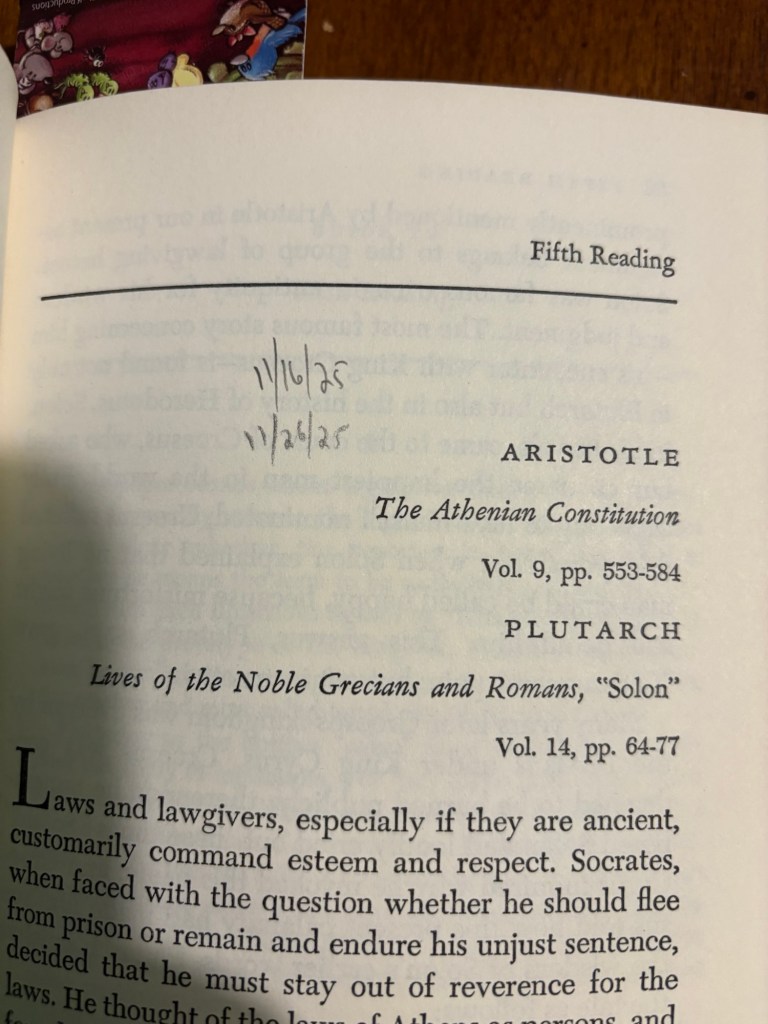

The reason Aristotle should be read and will be rewarding is simple enjoyment of compare/contrast of methods. He also forces you to abandon juhhhhst about every preconception about government and politics you currently hold.
****
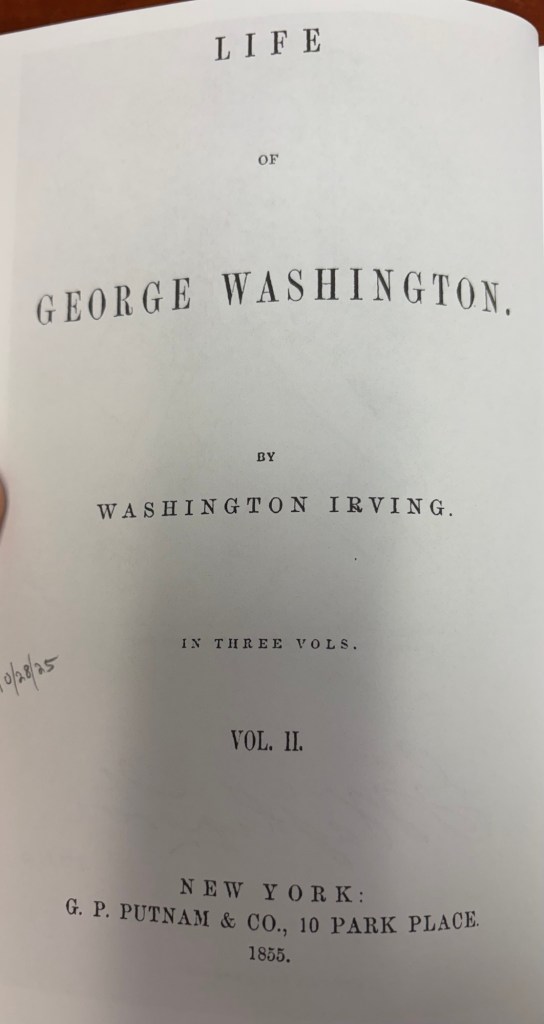
GW never disappoints. What a life. I confess that sometimes my mind wanders as the descriptions of all the various messages being sent to and between all the many forts and camps are given. At the same time, what an exciting job, no? Perfect for a young man wishing to prove his worth, I say. What task of today compares with, “Your countryman’s lives depend on you successfully carrying this message through the forest undetected. Can you do it?”?
****
After I discovered Miguel Hidalgo y Costilla, after I found a portrait, and after I framed it behind museum quality glass and hung it on my wall, I realized that I didn’t really know much about him or his role in Mexico’s independence. There’s a brief entry in my 1910 Britannica set. And then there’s this book. Suffice it to say, now I do. In short, and probably fortunately, the word “legend” has to be applied. New Spain and the caste system it operated within simply didn’t have an established habit of written record. Another difficulty that can really only be appreciated if you read GW and Hidalgo simultaneously, is the scale of the geography upon which events unfolded. New Spain (future Mexico) was enormous, whereas GW was focused on New York and Long Island and a few other relatively minuscule locations along the Atlantic coast. In the end, however, for both legendary and historically verifiable reasons, Hidalgo does belong among the six men on my wall. Oh, and you’ll never guess the nickname he got after college. So go! Read and learn! (Even the internet won’t help you.)
****
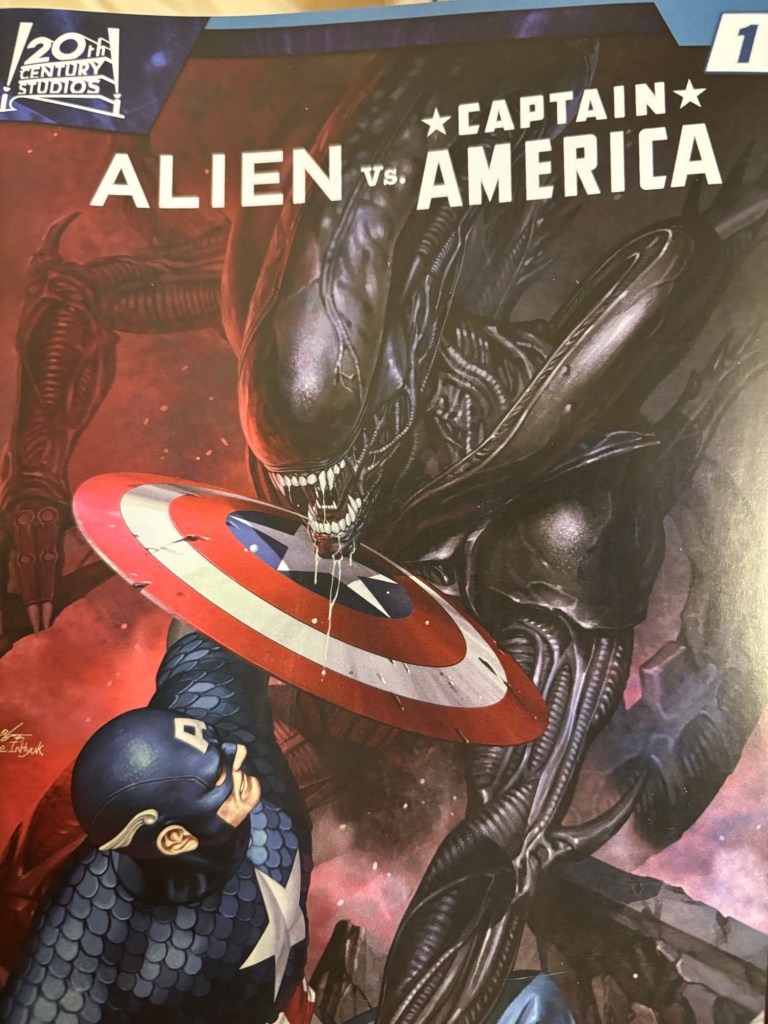
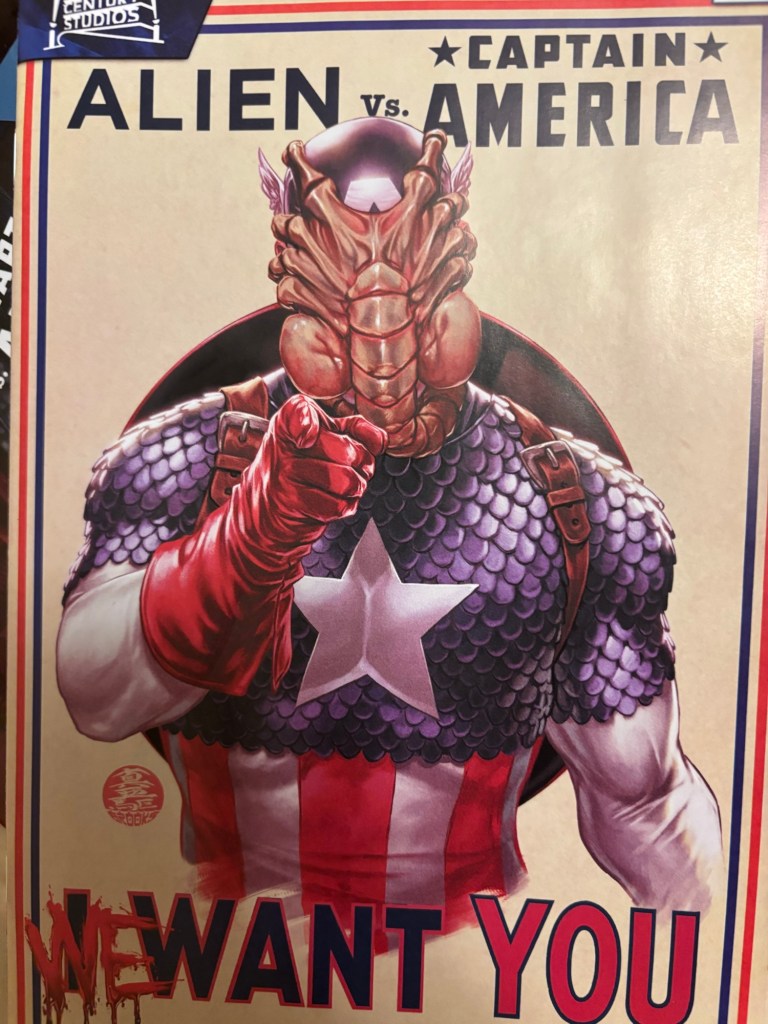
How could I, American hero that I am, not like Alien vs Captain America? Just look at those covers. Rest assured, they do not disappoint.
****
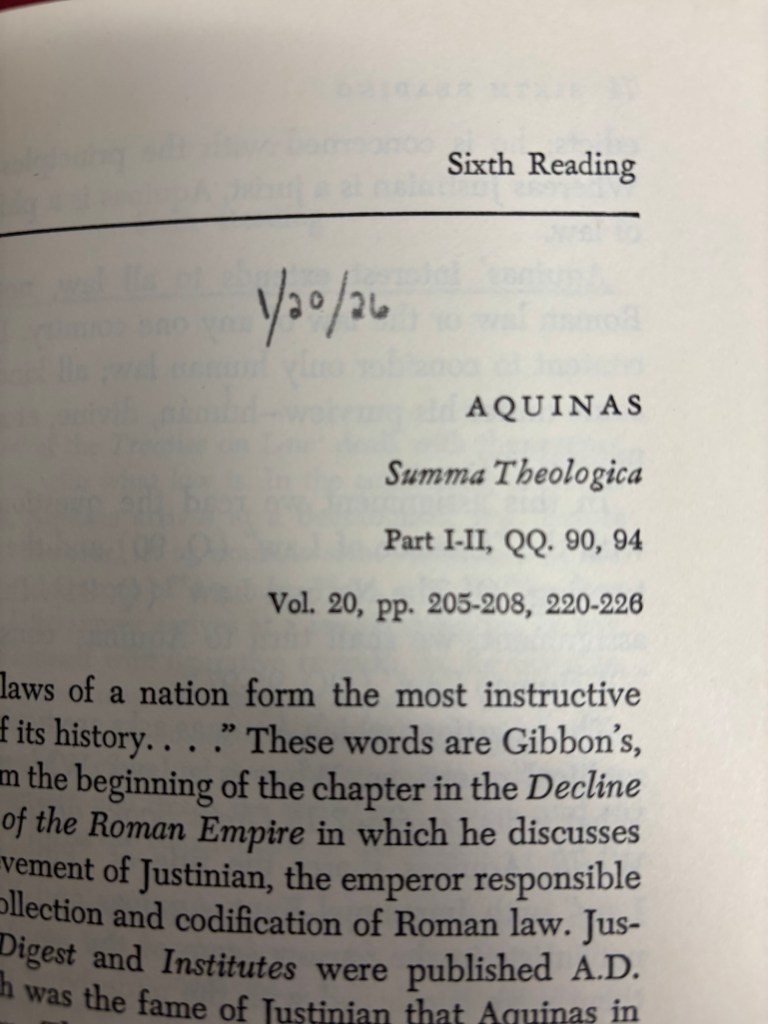
Isaac Newton leads the way for humans—overall. But Aquinas leads the way for methodical writing. This man’s rigid adherence to a method is otherworldly. I won’t say it is commendable, because I am too interested in creative writing. But when I hear people talk and it is utter unfocused confusion, the easy fix is to show them Aquinas.
****
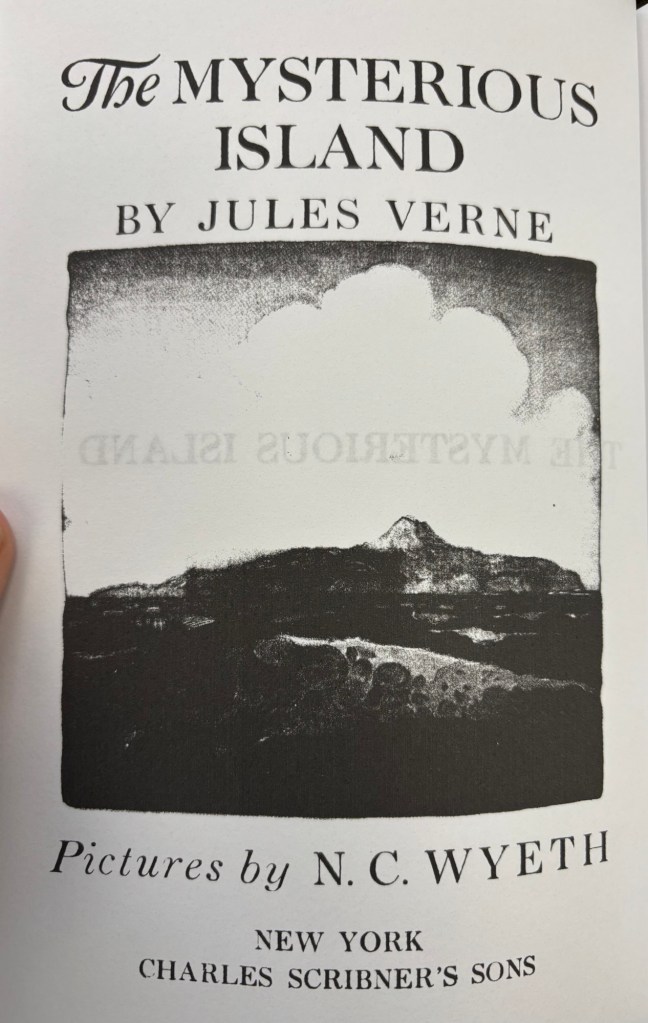
I knew Twenty Thousand Leagues Under the Sea. (Read it too.) I did not know about The Mysterious Island. It is fun. A few chapters in and I found myself thinking, “Wait a minute! This is just a genre-establishing sci-fi version of Robinson Crusoe and Swiss Family Robinson.” Then it seemed like it was literally in the next chapter’s opening that Verne, or the narrator, detailed as much and offered a decide-for-yourself-whether-it’s-a meaningful distinction. In any case, compelling start, second act slowed a bit, but the third finished strong. It isn’t a must read. But if you have interest, it won’t disappoint.
 Captain’s Log