Tagged: faith
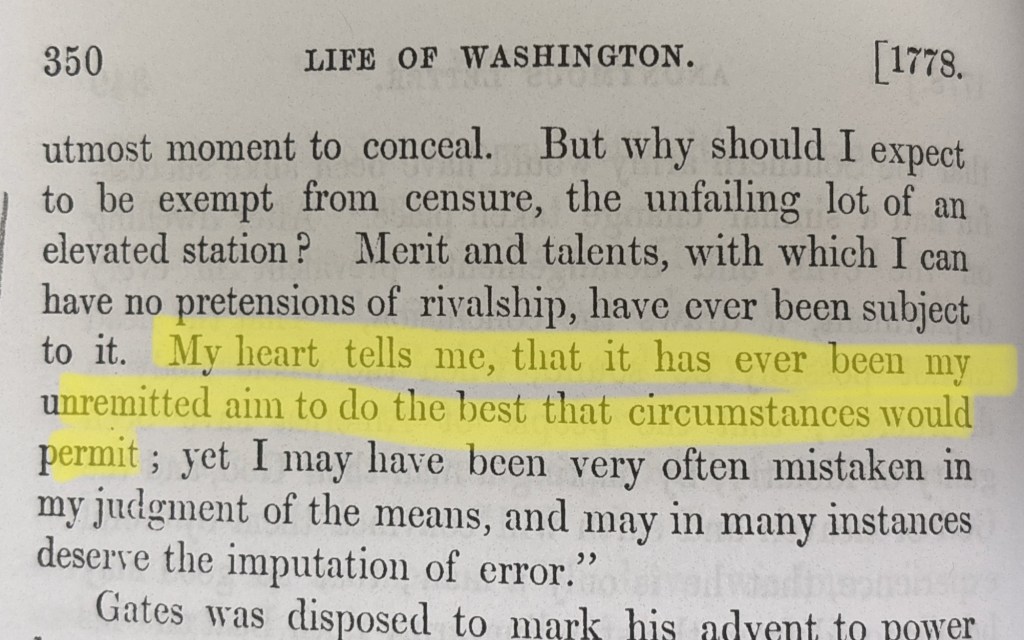
GW Quote From Which To Draw Motivation
Words Are Not the Issue
When Jesus resurrected, many things changed. One such change is this: Words stopped being the issue.
Turn with me to Matthew 21:15 and notice how the adults are described as indignant about what essentially mindless children are uttering or repeating.
Have you ever heard a child say a bad word in innocence?
The other day, before I knew what happened, five year old A- started running through the consonants matched to “-ucky”.
“Bucky”
“Ducky”
“Mucky”
“Sucky”
“Tucky”
Wait for it…
“Fucky”
Now when this happened, redeemed by the blood sinner that I am, I did not worry that my child just communicated with darkness or the nether realms or evil spirits. I did not worry that her soul somehow switched from innocent to ruined. No. And why not?
Because Christians do not believe that words actually matter. Is this stance of us Christian’s supernatural? I think so. But I am not certain. It seems to me that anyone can understand my point, and yet very few do.
We live in a world where all sides seem to want to dictate specific phrasing and word use. The examples are too numerous to state.
The point is: you’re all wrong.
You’re all like the adults in Matthew who were indignant that some children joined in the shouting as Jesus road into town. Get some self control, I say! It isn’t the words, like, it isn’t the actual English (or any language) utterance that matters. It is the meaning and understanding that matters.
A quantifiable moron saying, “Make America Great Again” or “Black Lives Matter” does not somehow raise their intelligence or wisdom level as a result of joining a chorus. Give me a break!
The Word (And Idea) “Incompatible” Is Impotent. Please Stop Using It.
The single most important political issue of our day is removing Islam from the USA and the West in general (if not removing it from the face of the earth, vis-a-vis all the gods and religions that currently make up the “myth” section of libraries and bookstores, Zeus, Ares etc).
I freely confess that it is difficult to tell how things are going. Once the algorithm knows what you’re interested in, the entire world seems to revolve around that content. But I have been paying close attention to Islam’s spread since 2015ish and recently even the major players have been echoing the above position of mine.
The trending strategy, which I believe is totally uncoordinated, seems to be, “We use the word ‘incompatible’ because it is neutral.”
That is a powerless strategy. Don’t get me wrong, any strategy that works is fine by me. But there is something to be said for truly stating the case.
The case against Islam: Islam is stupid.
Many other religions, not all, are likewise stupid. But the obvious difference in their adherent’s twin categories of (1) assimilation and (2) non-calls for jihad make these other religions relatively harmless.
Just the same, the problem is not that Islam is incompatible with the West or the USA. The problem is, at face value, Islam is stupid. The god of the Bible, not Yahweh, not Jesus, not the Holy Spirit, did not show up to anyone in a cave and issue a new law that canceled the current law.
How do I know? Because it’s a stupid idea!
Did the Israelite god have a grand plan to send his son as a man-god to die? And if so, is that good news? Yes and yes.
How do I know? Because it is a brilliant idea!
Do you see how you feel right now? Even when I write it, I find this description of “Christianity is brilliant” to be repulsive. For some reason, to admit that something we want to believe (I can have eternal life in the best sense of the word “life”) is something brilliant just doesn’t land. As if there is something inherently stupid about “life” and something inherently bad about “brilliant” ideas.
And yet, to be clear: to admit biblical Christianity (originalist/orthodox/not-Talirico-progressive-style) is brilliant does not mean it was invented. Brilliant just means brilliant. And stupid means stupid.
And Islam is stupid. America, on the other hand, is on the leading edge of the most brilliant civilization mankind has developed to date. And brilliant civilizations do not welcome stupid ideas, especially one as stupid as Islam.
On the Ignorant’s Religion
I’m going to keep this short for today. But I need to jot down some thoughts for future reference.
For a long time now the question, “What precisely does the general claim, ‘religion is accepted and believed more readily by ignorant people’ mean?” has plagued me. My approach to answering the question has been to study the history, chronologically and conceptually, of math with an eye for what are the non-math-ers (“I’m not good at math” adherents) actually doing with their mind throughout life. Simultaneously, I have also been digging deep into what the more ignorant “Christians” believe.
Two conclusions:
Firstly, I now define math as the unbounded study of absolute obedience.
Secondly, the ignorant “believers” can hardly be called such. Part of the very definition of “ignorance”, I am convinced, is an absolute freedom of word use. For the ignorant, there is no truth. There is no consistency. There is no coherence. There is no alignment, no integrity. The ignorant cannot possibly be labeled as religious or even holding a worldview at all. The ignorant are quite literally sheep, being led astray by who knows what, for who knows how long, before another thoughtless route is taken.
In short, the problem of religion is not that it somehow exists as some inherent trait or behavior of the ignorant. The problem of religion is ignorance. Put inversely, if you find yourself to be religious, your main task is education. And, similar to math, education requires consistency, coherence, and obedience. Most of all, education requires truth.
One Beautiful Truth: Kamikazes Are Dumbfounding
Letting my eyes linger on the cover of latest Alien vs. Captain America (#3), I likewise allowed my thoughts freedom to roam. My conclusion? While the images are too “dark” for my early elementary age kids’ still-clear eyes, and while I am not in love with my kids being aware that their Bible-heavy dad reads dark comics, I am certain that I want my kids to be surrounded with “good guys defeating bad guys”. The other option, ELE or Everybody Love Everybody, is too frightening.
Back in 2021ish, I was going on two years without seeing my, then, pre-teen daughter. A failed divorce was the reason. She and I had barely been chatting over Facetime and we sent a few texts, here and there. When she was about 9 years old, I took her to Metallica, which I mention to establish that music had been an available minor touch point.
So she’s around 12 and I asked her what she listened to.
“Billie Eilish songs like ‘Listen Before I Go’.”
I immediately did what needed to be done to see her again. I wouldn’t say I was worried about her committing suicide, as if she was some super-prone-to-suggestion sheep, but I was shaken, just the same.
5 years later and this Billie Eilish is still making the news.
The reason?
“No one is illegal on stolen land.”
Please recall, communication requires sender, message, receiver. And communication is verbal, tonal, and body language. In other words, please remember that the meaning of what she said is not any ol’ thang that we want it to mean.
So we know what words she sent and how they sounded and looked, but what did she mean?
Well, the word “illegal” in 2026, spoken at the Grammy’s by an award winner means, “those BIPOC people over there who, somehow normie, white surpremists want out of America because they are not white.”
And “stolen land” in 2026, spoken at the Grammy’s by an award winner means, “land that is anywhere but where I live and stand.”
So if we re-word what she said in order to represent her claim fairly, one way it might go is,
“No BIPOC people need to leave America.”
With me?
Another way to say the same thing, Billie Eilish said,
“Those brown people over there, they can stay over there.”
(This is the point where you stop reading if you disagree. This post is not about persuading you. It is about giving like-minded readers winning vocabulary and perspective with which to discuss the issues they find themselves wanting additional and creative approaches.)
To recap: I first learned of Billie Eilish because of my pre-teen daughter who was listening to Eilish’s suicide songs. Years later, Billie Eilish says something stupid and anti-American* and many people are wishing her ill as a result. As beloved Mark Twain said, “But I repeat myself.”
My point: You, faithful reader, must take people at their word. Billie is self-diagnosed as depressed and suicidal. She literally cannot care less. If all the bad things, eviction, unending lawsuits etc. were to befall her, she would not care. If America burns and she loses everything—even her precious ability to create art—she would not care.
This is dumbfounding.
And that acknowledgement is beautiful.
It is beautiful that you and I are dumbfounded by a suicidal person and perspective. If we were not dumbfounded, if we agreed with Billie et al, we would, ourselves, be suicidal and ugly.
Same point put inversely: It is not shocking that kamikazes like Billie Eilish and friends are dumbfounding.
****
*Anti-American because Americans don’t care what ‘color’ someone is.
Everyone Is Christian
Did you know? I had no idea.
But, apparently, it took the enforcement arm of the Law’s killing only two people for the entire world to assert Jesus Christ as all-powerful being and ruler of the time-space universe.
I’m also not sure if I should welcome them or they should welcome me.
“Let him take your garment also.”
A tip for the communists: your favorite verse for the current scene in Minnesota is “And if anyone wants to sue you and take your tunic, let him have your garment also.”
That’s much more difficult teaching for the White Christian Nationalists to deal with than the temple cleansing incident.
You’re welcome.
How to End A Pity Party
“Okay, LORD, I guess you’re my conversational partner then.”
Yeah. This makes sense. Talking to someone invisible. The greatest person ever.
Agent K vs The Protagonist, A Joint Review of Men in Black and Tenet
I’m kinda loving my life right now. I recently rewatched Men in Black and just now finished Tenet. What do these two Science Fiction thrillers have in common, you ask? And is it true, Pete?
They both repeatedly make the point that the general mass of humanity doesn’t want to know how close the total mass of humanity is to annihilation at any given moment.
Who tells us this? And on whose authority?
Agent K and The Protagonist. Because they are the engines of hope.
Finally, are they right? Is it true? Is the world on the brink of annihilation and do people, generally, not want to know it?
Yes, with the caveat that “the brink of annihilation” can be taken to mean the whole enterprise OR simply one person’s death.
In other words, from the perspective set forth by Jesus’ Good Samaritan story, which includes the claim: “I am neighbor”, it doesn’t matter what happens to the world’s occupants once I am dead. What matters is that my ability to contribute to the world died. Here I mean to enlarge the defense of the concept of “not wanting to know” to include “because people, generally, also are not wanting to neighbor”.
Full-circle: Agent K and The Protagonist are certainly engines of hope for life, just as is the Good Samaritan. The key behavior among all three is proper action despite desperate circumstances.
The new question is, “Is there any reason to believe life extends beyond death?” And, if so, should we act according to that belief?
The Natural Response to Seeing Clearly: Thankfulness
Sight has aways been important in my life. For whatever reason, from the youngest age, whenever I took a vision test and had 20/20, people told me I could be a pilot.
These days, as a pilot who often flys with night vision goggles, I can’t help but wonder how different life would be if the ancients had NVGs available as they searched the sky.
Of course, the fact that they didn’t is because of their own ridiculous beliefs about motion and rest and circles and spheres.
I remember a childhood friend who had recently got a better prescription telling us how different the world looked. She said something like, “It’s like the trees now have individual leaves.”
How did she react? Obviously she was thankful and happy about her new glasses.
Why, then, is this not the case when we use telescopes and microscopes to see more than before?
Why would seeing more somehow make us angry?
Why would seeing more somehow make us give up beliefs, like Christianity? It’s not like Christianity said, “There are three hundred stars, and the smallest unit of material is a grain of sand.”
If we can see more, I think the appropriate response should always be the same—and limited. We should be happy and thankful.
It says more about your heart, or more broadly “you”, than it does about the “data” (what is now seen) when you react otherwise.
 Captain’s Log