Tagged: books
One Thought While At The Greatest Book Store In America
The checkout clerk soiled the entire experience when he directed me and a pair of crackheads to line up behind the “line starts here” sign that was to my left.
What I thought, but did not say, was, “If you, sir, can paint your fingernails black, then I don’t have to follow any rules, thank you very much.”
The crackheads were more prompt in their obeisance, and also dirty, so I spaced myself appropriately, which landed me in the right direction, but in front of the aforementioned sign.
I told them, “I’ll stand in front of the sign.”
They didn’t seem to appreciate my defiance.
The Game of Telephone: Why You Need To Read More
The game of “Telephone” among famous scientists does not start and stop with Newton and the apple that he never wrote about.
Check this out.
Bertrand Russell was born in 1872. In 1897 he would have been 25 years old. In 1897 he published a fellowship-winning thesis. It was entitled, “An Essay on the Foundations of Geometry.”
Read this.

Those words were published in 1897 (same year as Russell’s first book) by William James. (See highlighted parts.)
Now read this.
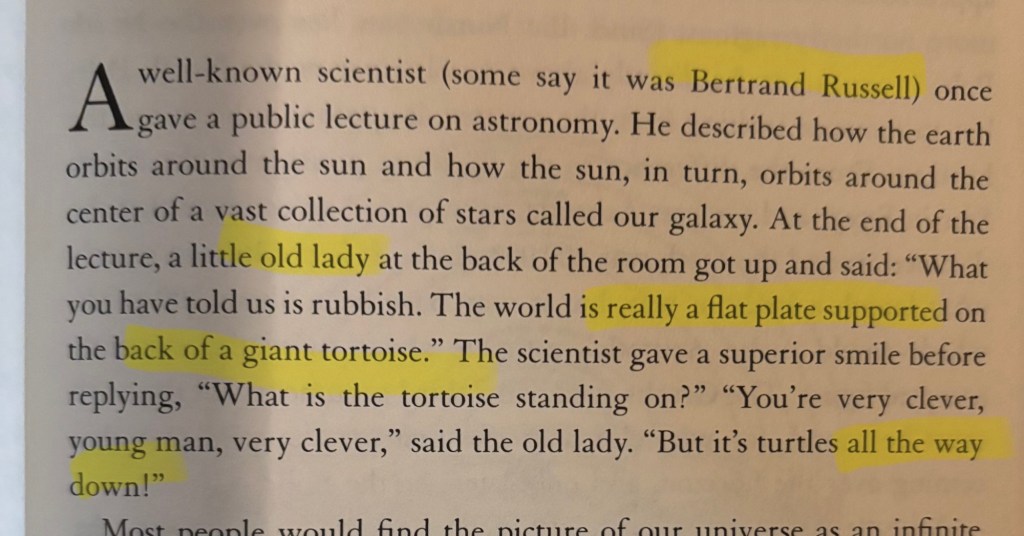
Those words were published by Stephen Hawking in 1988. (91 years after Russell was 25 years old and published his thesis; 91 years after James’ words were published.)
Sure. I grant you that it is possible that Russell gave lectures to little old ladies in 1897, despite his being 25 years old and having only published a thesis on geometry that no little old lady would ever be interested in (or aware of). But that only solves the lesser problem. How does “rock” become “turtle”?
Seriously.
Obviously the nature of the situation is Hawking placed the importance of “truth” well below standards when deciding how to open his best-ever-selling book (that is seriously flawed for more than this reason).
****
This is why you need to read, and read, and read, and read, and read. The solution is more reading.
Shaking My Head/Nerd Alert!, A Review of A Brief History of Time, By Stephen Hawking
The Spiderman of physicists, Stephen Hawking, introduces the second edition of his book with, “The success of A Brief History indicates that there is widespread interest in the big questions like: Where do we come from? And why is the universe the way it is?”
Just past halfway through the book, in his chapter titled, “The Origin and Fate of the Universe”, he suggests, “The whole history of science has been the gradual realization that events do not happen in an arbitrary manner, but that they reflect a certain underlying order, which may or may not be divinely inspired.”
In the final chapter (before the Conclusion), he writes, “We would then be able to have some understanding of the laws that govern the universe and are responsible for our existence.”
In the final paragraph of the book (excluding three brief and meaningless portraits of Einstein, Galileo, and Newton) he suggests, “However, if we do discover a complete theory, it should in time be understandable in broad principle by everyone, not just a few scientists. Then we should all, philosophers, scientists, and just ordinary people, be able to take part in the discussion of the question of why it is that we and the universe exist.”
Firstly, for context, the second bestselling book in that chart is—self-help/dating/pop-psychology. Third is a cookbook. In other words, while I love that Metallica’s Black album is the bestselling album since certain record-keeping data began, while I think they deserve all possible head-banging praise from us mortals, the number two is Shania Twain. Put another way, Mr. Hawking got his 15 min of fame, surely. But his staying power is yet to be seen—and I wouldn’t bet on it. Additionally, “pity” is a very real motivator. My money says give mobility of limb back, and the Brit’s wouldn’t have paid to see the five foot man-eating-chicken carnival act.
Next, close as you look, you will find no written record of a belief that life unfolds arbitrarily. Instead, you will find people have always believed in order—but they got the order wrong. Pointedly, then, Hawking and contemporary physicists are in nowise special. They’re just doing their best like everyone before them.
Thirdly, “govern” and “responsible for” are not synonyms. You want to tell me that the sensation when an elevator starts up and the sensation of being stuck to the ground are indistinguishable? Great. But the idea that the aforementioned sensation(s) are responsible for my being is laughable. Get outta here!
Lastly, no, thank you. This idea that I have to wait upon “my betters” (or anyone) to finish their navel-gazing before I can opine as regards the nature of existence is just silly. Telescopes and microscopes are cool. But truth is not some distant or small object.
Previous authors, like Einstein, Jeans, and Eddington, among many, many others, wrote in order to explain what they were doing. Hawking, conversely, writes to announce his conclusions. The effect of their books could not be more striking.
It reminds me of the time I met an unmarried Major while I, too, was single (though a lowly First Lieutenant) in the Air Force. He was such a loser. He did precisely what he wanted all the time—and loved every minute of his life. Nobody liked him. He had no friends. To add one dollop of paint to the portrait, I’ll share this. When we drove around the base in Iraq in the big van, he would lie down on a bench seat for fear of the enemy targeting him because he was a Major. The point is not his earnestness, the point is the unhinged-ness. Anyhow, I recall thinking, immediately after meeting him, “I must get married.”
Likewise, had I read Hawking before Einstein, Eddington, and Jeans, and their predecessors, I would have never picked up another popular physics book. As it stands, my foundation is unshaken (thankfully) and the topic still interests me. But Hawking does not.
Should you read this best-seller? Nope. Life is too short. Start with Einstein’s The Evolution of Physics.
Reading Log 2.21


Seems like I’ve been saying it for so long that everyone should know, but ICYMI, Last of the Mohicans is actually one of five (5) books Cooper wrote starring Natty Bumpoo/Hawkeye/Deerslayer/Pathfinder, or more commonly, Daniel Day-Lewis. The Pathfinder is 3 of 5, taking place after LOTM events—and without reference to them.
It is just great. I have read three now and plan to pace the remaining two Leatherstocking Tales so that I don’t peak too soon before death. Nothing makes me want to go camp and hike and scout and track like Cooper’s tales.
The Aliens epic collection was alright. Nothing great. But it did have some interesting storylines and the art was beautiful. One thing that that volume unexpectedly contained was a sort of short story, written in prose. And that story was graphic as anything I have come across. I have previously been made acquainted with the works of an author named Neil Gaiman and these cause one to blush. This story was along those lines. Most Alien stories have the lead as female, and this time she is only able to perform her heroine duties because of the abuse she suffered as a little girl. Bluntly, parallels are made in the story between her waiting on the monsters, and her waiting on the monster. Sick stuff.
Oh. And like the comment I made about how reading too many comics in a row kinda highlights the undeveloped-ness/infantile-ness of these stories, I now more clearly see that every Alien story ends with the main character learning that despite the recent total victory (extermination), one xenomorph embryo still exists and is poised to makes its way to another human settlement. I hadn’t really noticed that just from the movies. Oh well.
Relativity.
Here’s what I’ll do. These are the few summative statements Eddington offers. Comment below if you find them useful.
“A gravitational field of force is precisely equivalent to an artificial field of force, so that in any small region, it is impossible by any conceivable experiment to distinguish between them. In other words, force is relative.”
Actually, that is the only one that makes sense for a blog post. The big analogy that Einstein developed was the elevator (or “lift” if you’re reading in the mother country). Newton, you’ll recall, realized that if “bodies in motion tend to stay in motion unless acted upon etc”, then the Moon would have long ago kept going right past Earth, as Earth would have kept right on going past the Sun etc. The force that keeps the orbits is called gravity. Einstein, then, realized that artificial “gravity”, literally the kind you feel at the beginning of an elevator ride, is experimentally no different than “real” gravity.
Okay. Relativity is interesting but I prefer the universe stuff. (And am scheduled to read more on that next.)
Lastly, I want to conclude with probably the most fun takeaway from the book. It is from the chapter “Weighing Light”.
“It is legitimate to speak of a pound of light as we speak of a pound of any other substance. The mass of ordinary qualities of light is however extremely small, and I have calculated that at the low charge of 3d. a unit, an Electric Light Company would have to sell light at the rate of £140 million a pound. All the sunlight falling on the Earth amounts to 160 tons daily.”
The Pathetic Way To Go
They were all in his bedroom.
His brother was the family’s steady anchor, permanently tarred to the deep floor of the ocean of unknown outcomes. He had flown in four years ago, without stopping—without even thinking—to even pack a carry-on. He had stayed bedside throughout the recent wars, throughout the fires, throughout the droughts, throughout the pestilence, throughout the famine. Nothing had moved him; nothing could move him. Nothing would move him. In the four years that had passed, he aged ten. He was worn threadbare. He was balding. He was broke. His wife had left him after the first year. His children hardly knew him. But he was there. And there he seemed destined to remain.
But it was his sister, whose lightest smile always seemed to be returned as though seen through the closed eyes, that wove the siblings together. It was his sister who fed both brothers, his sister who changed the sheets, his sister who replenished the water and flowers of well-wishers, his sister who put on a happy face—indeed never once betrayed an awareness that today wasn’t the best day.
And today, this day of days, was about to be the best day.
His mother and father had arrived last night, cutting short their long-delayed vacation to some distant paradise without hesitation. He was their son. They had only ever left his side, for the first time in years, after finding in his Bible a single page of scripture with a note indicating that “their happiness” was his “heaven”.
All his cousins and aunts and uncles had rushed to be there as soon as word had spread. It had not mattered to any how many planes, trains, boats, or cars it took. No matter the skyways and byways, no matter the cost, they were there.
His wife sobbed and sobbed. Her life was miserable before him and had been perfect with him. She did not know, she could not imagine how she would ever carry on after. So she wept, she cried, she sobbed, she cried, and finally she wept some more. Everyone who knew him and knew of him understood her pain.
The room went silent as his eldest daughter appeared in the doorway. No one could remember the last time he had heard, let alone seen, her. But somehow she knew. Somehow she came. The dim, flickering candlelight revealed the jewelry that had first confused her identity. But when she turned and tossed her backpack aside, the sweet jingle of countless keychains she had affixed, along with the rustle of laminated letters that hung from every zipper confirmed what all were hoping—after so many years away, she came.
His other children were still on their way. The current project that engaged the pair, the world’s two greatest, most creative, most motivated, and most delightful members, had necessitated their delay. In fact, it wasn’t until the world heard and fed the wildfire rumor of the gathering in that room—and for whom and wherefore—that the people pleaded, risking their own detriment by forestalling the work, for the siblings to now travel to where all knew their hearts already lay.
“He’s awake.”
The barely audible whisper was first heard by his sister, as she was handing a fresh coffee to its speaker, her weary, ever so weary, brother—one that never did arrive.
The porcelain mug’s landing on the plush carpet pronounced a soft sound at which his wife, the ever inconsolable and fairest of all to assume that noble title watchman, raised her tear-streaked face. When her fingers rose to wipe all evidence of unhappiness away, the visitors communicated the only news that such action could betray throughout the room as quick as light, yet as soft as feathers.
Right when his brother turned to repeat the announcement, his eyes landed on them. They had just arrived.
“Come! He’s awake!” He repeated as he motioned the children to come and directed the crowd to open a path.
“My dad!” his daughter said, her cheeks uncontrollably wetted with tears of joy.
“Father!” his son declared. Revealing a relationship that transcended time and space—indeed one that could not be rocked by consciousness itself—he added, “We did it! The world is saved.”
Seeing him seeming to make an attempt to raise his head, his brother said, “Rest. It’s no time to exert yourself, good brother.”
“As always, good brother,” our hero began, acknowledging their secret greeting, courageously and with a knowing smirk, one long-since absent and missed, “You’re wrong. It is time; for time is short.” His breathing was burdened with immeasurable truth.
In the history of time, the tides of all oceans had not swelled so much as to fill what all present saw pour forth from this dearest, this loyalist of companion’s eyes. Turning to the room, he cried with exuberance so far only matched by the warming Sun, “He’s right!” he declared. “He’s always right. It’s why I love him.” The very walls joyfully echoed the contagious rapture spread unto all. And then feeling along the bed until his hand touched the familiar, strong, able, and trustworthy hand of childhood, he squeezed with a tenderness not unnoticed by our hero and turned back and said, “You’re right. What would you have us do?”
“Bring her to me.”
At once his oldest now became the focus of the room.
“Help me up, brother. One final time.”
The room gasped as they watched. His mother fainted.
At last he was sitting at the head of the bed. And she was there.
“Da-”
“Shh—” he interrupted, eyes earnestly declaring the sad truth that all were too kind to admit. “Don’t speak. Know that in all these years, wherever your travels took you, I was there too.”
“Oh, daddy,” she cried. “I knew you never abandoned me. I always knew. I just didn’t know how to come home.”
“There, there, my beautiful girl,” he said, bravely keeping his tears at bay.
“I kept everything,” she added suddenly. “It’s all there. Every gift. Every letter. Every book. All the socks. It’s all in the bag. I wanted you to see it.”
As his eyes followed her gesture to the bag she had worn in, the answer to Earth’s oldest question, “Is there anything this man can’t do?” was finally answered. The levy broke. The man couldn’t hide his joy.
(To be continued…)
Goldilocks and the Three Americans
Once upon a time, there was a family of the smallest of sizes, but perfectly intentioned, who lived in a neighborhood-
“That’s not how it goes, Dad!”
“I’m not telling the story we read, A-; I am answering your question about the noises the cameras make.”
“Oh.”
-Whenever these smallest of sizes, but perfectly intentioned, families went out from their house—whether to school or stores or restaurants—they worried about yellow-haired girls who they had heard about when they were children-
“Goldilocks has yellow hair!”
“That’s right, A-. That’s who the noises are supposed to scare aware. You see, Goldilocks is supposed to think, ‘I don’t want to deal with whatever those bears are up to. So I’ll find a house without cameras.’”
“This house doesn’t have cameras!”
“Good eyes, A-. That’s right. If I were Goldilocks, I’d try that house first.”
“You’re not Goldilocks!”
“I know. I’m just answering your question.”
“Oh.”
“You know, A-. I don’t mind sharing with you that besides adding talking cameras to the cornucopian display of my opulent wealth, that story is why I don’t trust any Yellow-Haired women.”
“Look, Daddy!”
“Okay! What? I see a truck.”
“Goldilocks is in that truck!”
“That’s right. I didn’t finish the story.”
-And no one ever saw Goldilocks ever again. But sometimes, when the light is just right, you can see Yellow-Haired women driving white trucks. So if ever on your camera screen you see a white truck in your driveway…hide your porridge!
The Right Kind of Start to the Day
Santa brought my daughter a prism for Christmas this year. Where’d he get the idea, I wonder?
If you guessed, “Who is Isaac Newton?”, then you guessed right! Of course, it wasn’t the legendary Isaac Newton who noticed apples, but the historical person Isaac Newton who recorded his thoughts and experiments for posterity, who painstakingly measured the wavelengths of colors with a prism and analogized gravity to a slingshot.
This morning my four year old daughter, A-, ran from the sunny window of my bedroom and promptly returned with the prism to try to make rainbows.
Naturally, no one needs to make rainbows with a prism anymore. This is because (despite morons abounding) to all important parties, color measurements—and even light measurements—are as solved as shoe sizes.
But the ability to see? That is truly rare. But my daughter has it. And who gave it to her? That’s right. Her very own Santa Claus, otherwise known as Dad.
It was the right kind of start to the day.
****
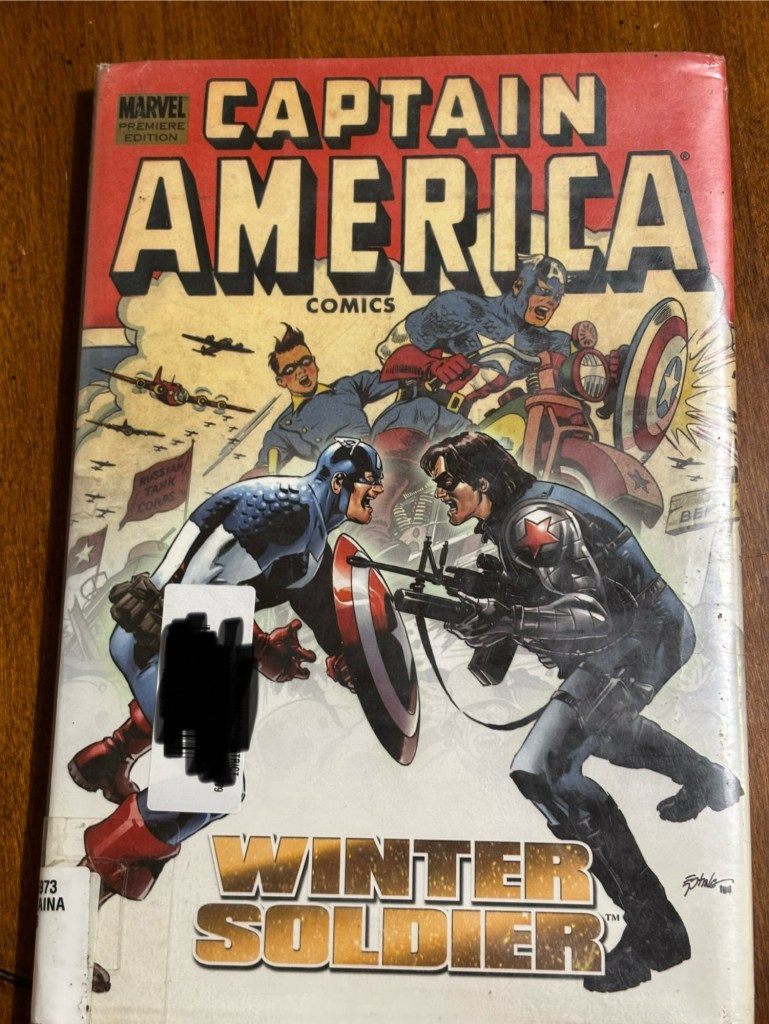
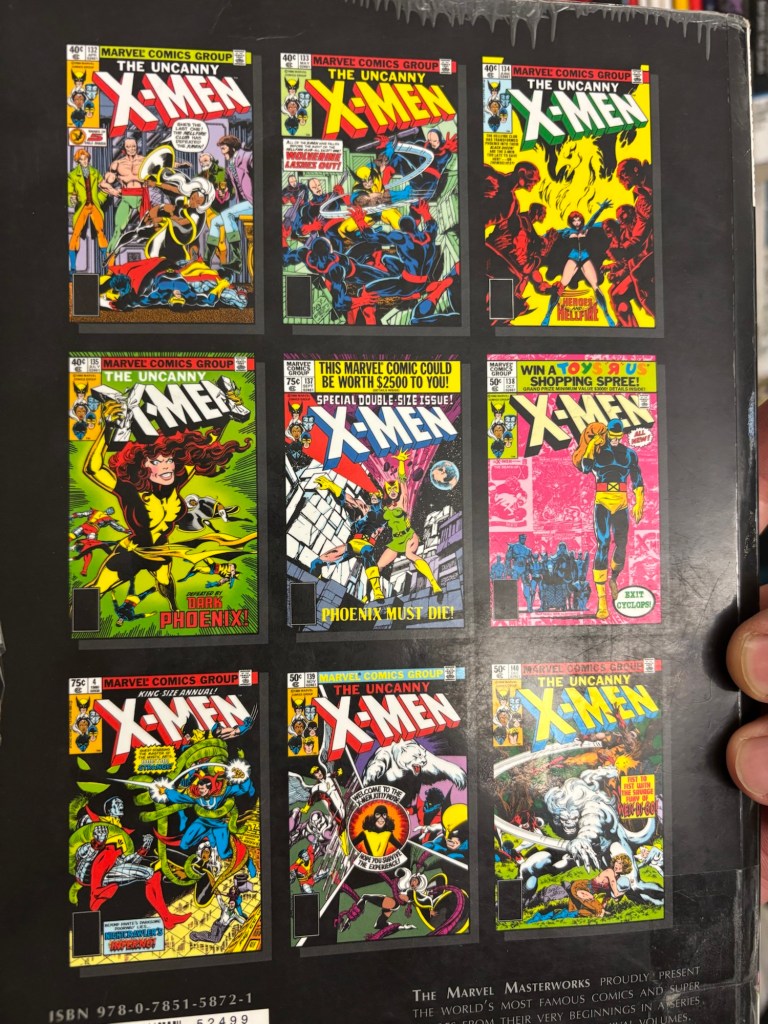
Oh, and I finished that other EPIC COLLECTION(!!!) of X-Men I mentioned.
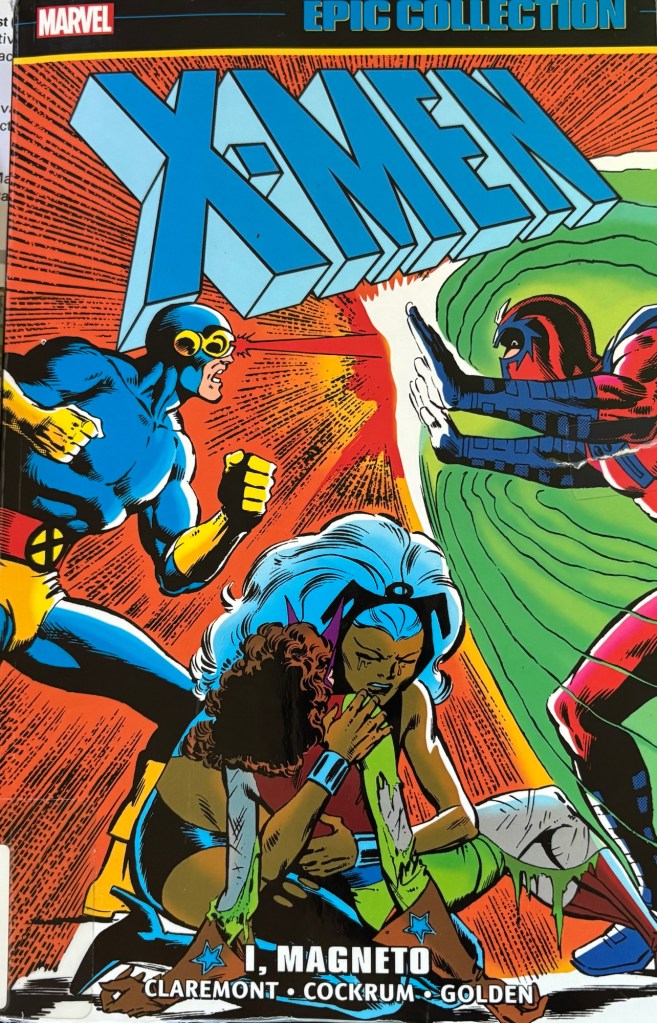
For posterity, one effect that occurred while reading these 450+ pages of comics was the ability to see the rather finite amount of “types” these stories can have. IE, after you exhaust good vs evil in the plain sense, you have to move on to plot devices like making a good guy character seem evil, but lo and behold it wasn’t really the good guy, but the bad guy all along through some obvious and ingenious use of their powers! And then they also introduced the concept of using an entire comic(!) for a character in the story to tell a (in this case bedtime) tale involving slightly altered characters etc. Is that called meta, but inward; instead of breaking the fourth wall? In any case, time for a break from the Uncanny X-Men! (Don’t worry, Strangest Super Heroes of All, I still love you guys.)
I Like My Life
Not halfway through January and here is what I have been able to knock out.
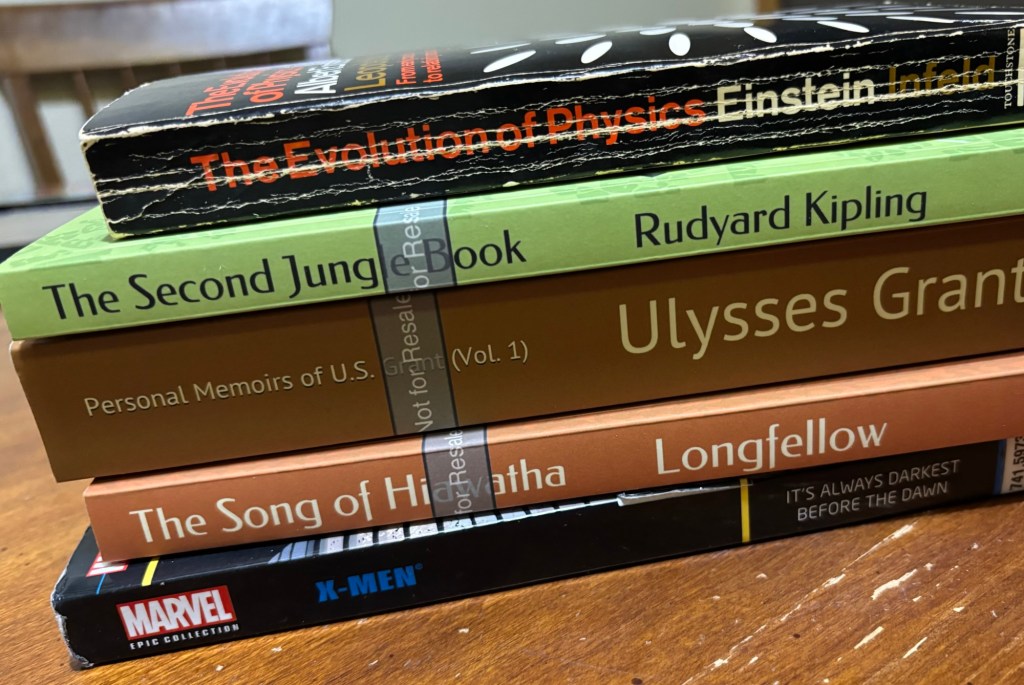

Let me be for the first to say I read way too many comics in the last two weeks. That X-Men “Epic Collection” was 500 pages. I am over halfway finished with another, not pictured. I only started reading comics recently because of trying to completely cut movies. But I can fully admit that they are or can be a bit juvenile and unsatisfying when read at the pace I have been conquering them. If you’ve ever tried to binge watch X-Files, then you know what I am talking about.
Grant’s memoir was amazing and astounding on nearly every level. What a time to have been alive.
Einstein, as I have said, was life changing.
The Second Jungle Book was, on the whole, better than the first. I will probably read only the first Mowgli story of the First and then jump to the Second with my kids when they are a ready. (Ricki-Ticki-Tavi is in the Second.)
Hiawatha can be skipped if you can call to mind any of Hollywood’s best Indian monologues from the 90s—I’m thinking specifically of the Last of the Mohicans’ “at the birth of the Sun and his brother the moon” moment when Hawkeye is wooing Cora. But it clearly was deeply influential and is therefore a must-read classic if you’ve got the time. (It’s a poem, but can basically be read as if a novel.)
Leviathon is unlike anything you have heard about it. I have to rank it tops—just clearing Einstein—as far as what you absolutely must read if you have always been interested and merely await a kick in the pants for motivation. Einstein is life changing for the reason that afterwards you will join me and an exceedingly few others in feeling good because “now you know”. But what you now know kinda reinforces the fact that you aren’t that interested in keeping up with quantum physics and beyond.
But Hobbes! Hobbes is life changing regarding its implications for your daily decisions—especially in the political part of life. I’m suggesting that, especially for Christians, a careful reading of Hobbes will more likely inspire you to pursue righteousness for the right reasons than any sermon you’ve heard or any other book you’ve read—ever.
Two Ideas For Books
Whether all experience it, or just certain personalities out of those who get the idea to write, I have learned that in the beginning of the career of unsuccessful writers there is a strong desire to not “let the cat out of the bag” too early. There is a belief that “I have a good idea and it is so good that someone else might profit if I share it before it’s for sale by me.”
But I have been blogging for over a decade now, and helped a few others with their books, and I am convinced that all that is hogwash. Life is just too complicated for a single idea, unaccompanied by the innumerable trappings of fate, to succeed.
To prove this, I share that recently I have had two ideas for books. These are prompted by a desire to somehow manifest that reading the classics has tangible results at a level somewhere below “advance of our civilization”. (Implied- civilization definitionally cannot advance if it is built on lies or ignorance of itself—so read the classics! It’s all at stake!)
Firstly, I want to write a book called “Union” that has a chapter for each, of what I have to believe would be at least twenty, type of artificial union between materials that man has developed. Knots, screws, nails, velcro, glue, epoxy etc. When I write it, the descriptions would be quick reads and informative. But the result would be the perfect contemplative admixture of “so what?” with “if we can figure out mating materials, why can’t we figure out relationships?” I have to believe—contrary to all evidence in my life—that we can figure out human relationship/union.
Secondly, I want to write a book—which may be uber short—which highlights a theme which I have seen in the bios of all the authors in my Great Books of the Western World and companion set Gateway to the Great Books. The theme being, the fact that the authors spent the entirety of their lives learning (as opposed to our deeply unreflective “go to college” mindset) coupled with often epic intellectually-based struggles well into old age. Each chapter may just be one page, often only one sentence. IE Hobbes – Forbid from publishing in his mother country from 70 yrs old to 91 yrs old when he died (don’t quote me, this is from memory and may be wrong on all points). The trick to this book is creating knockout punch sentences without getting repetitive.
****
“Go to college.” Ha. What a joke.
If you want to run with this, do it. I dare ya.
A Year of Reading in Review
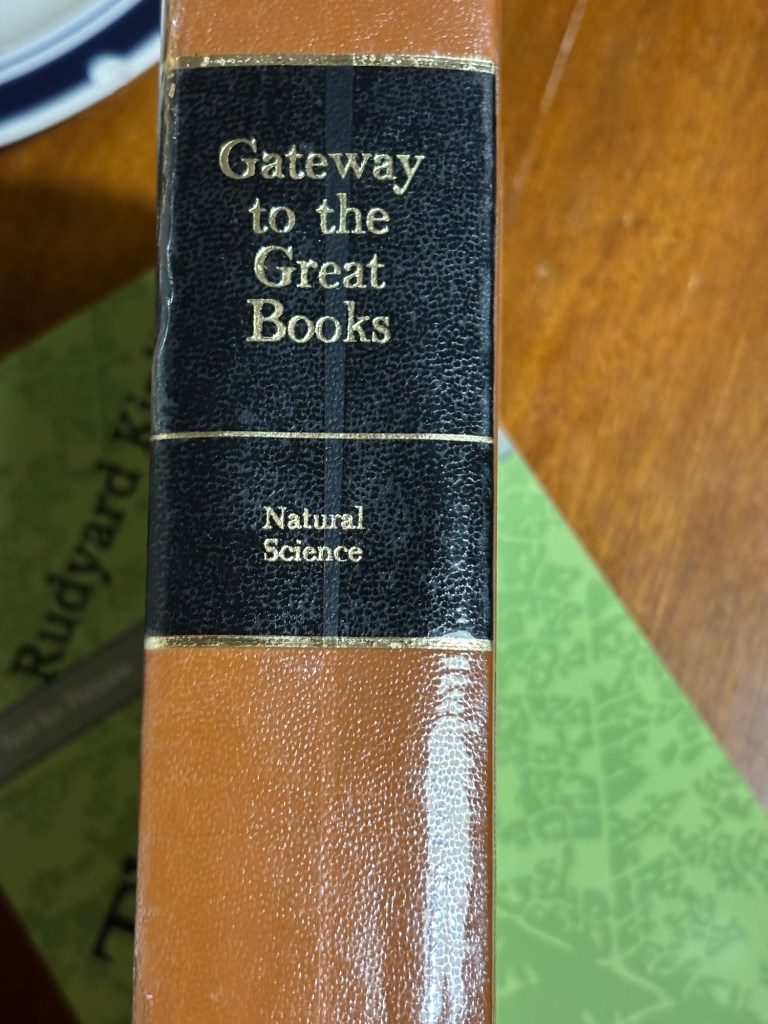
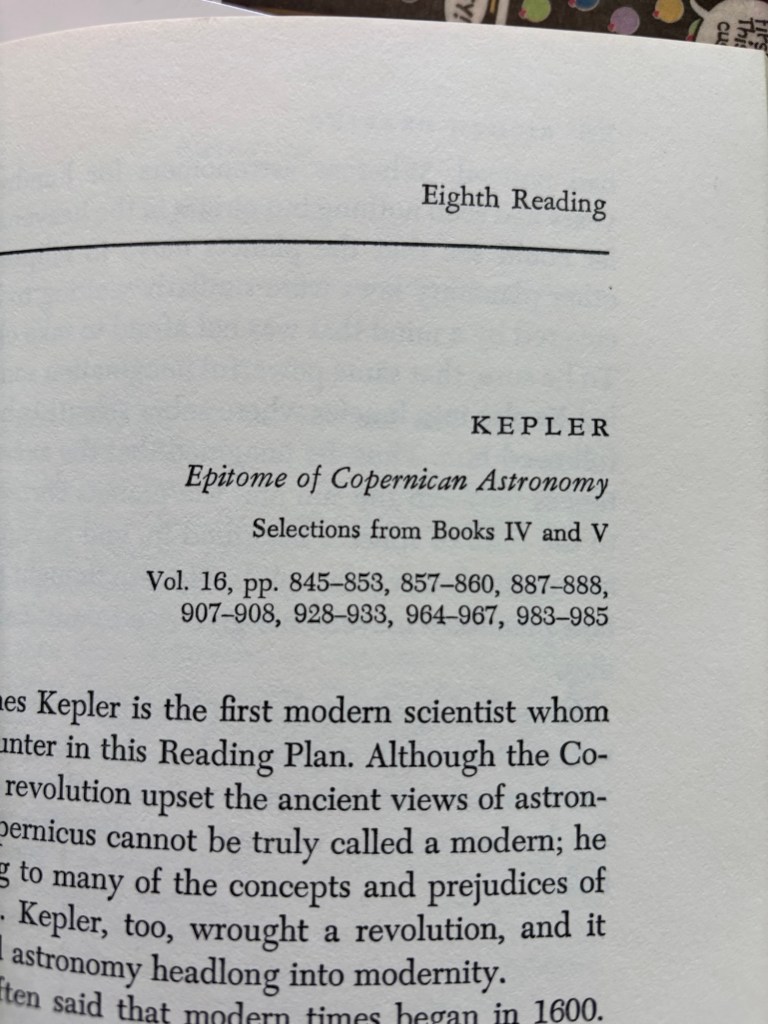
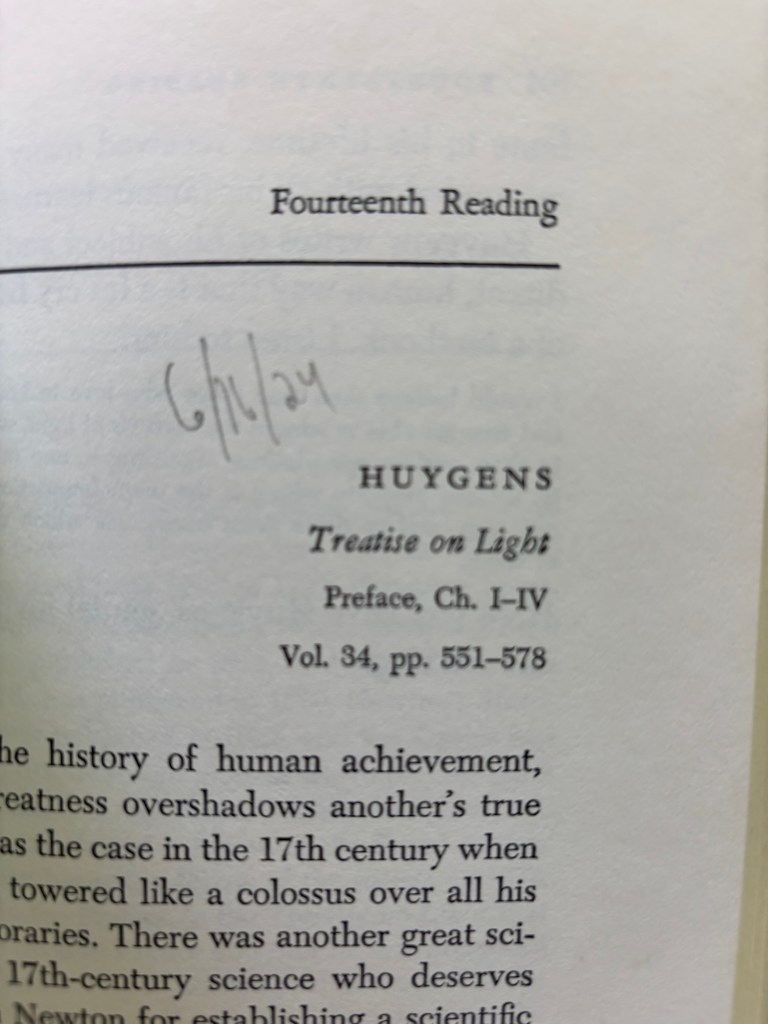
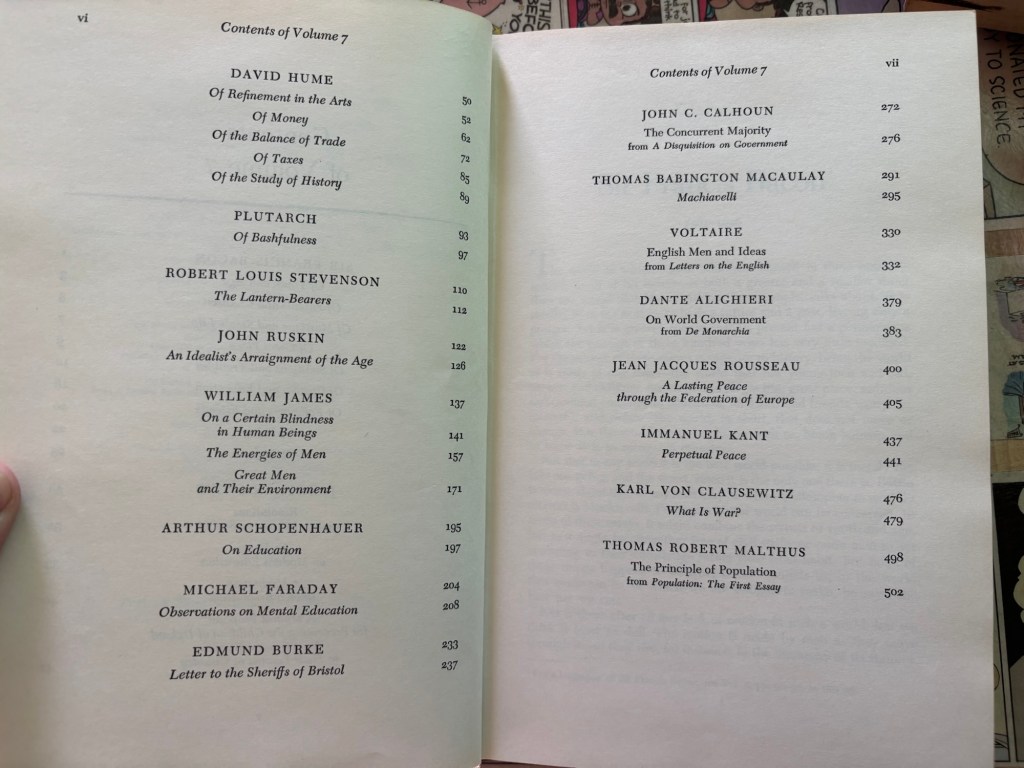
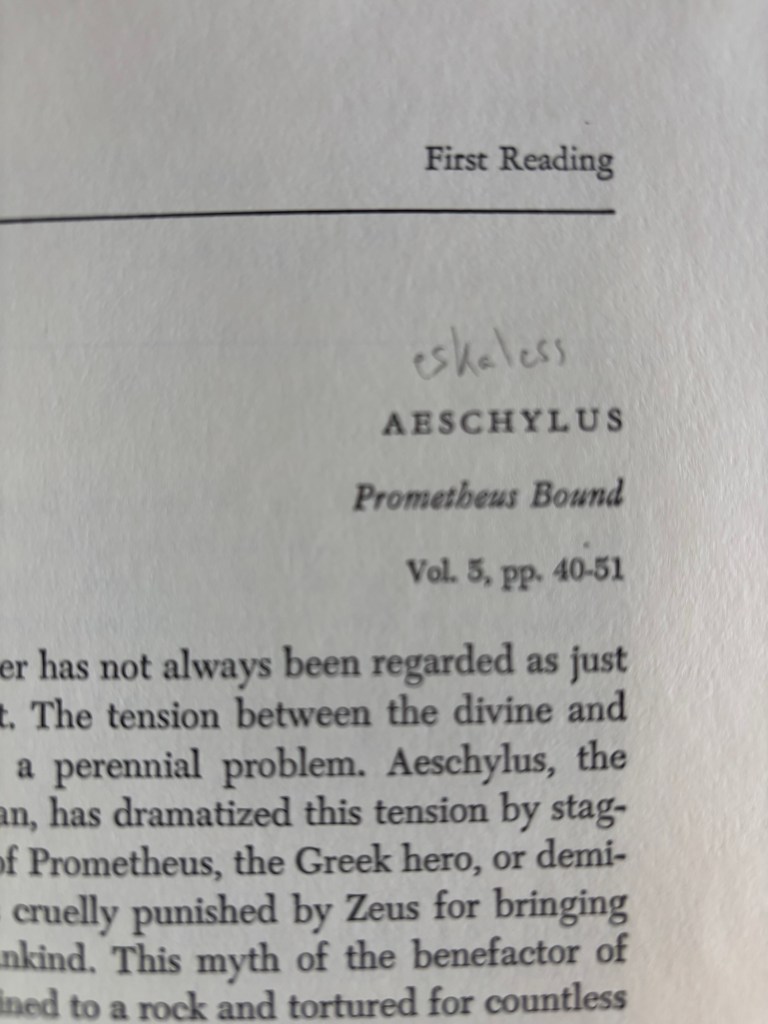
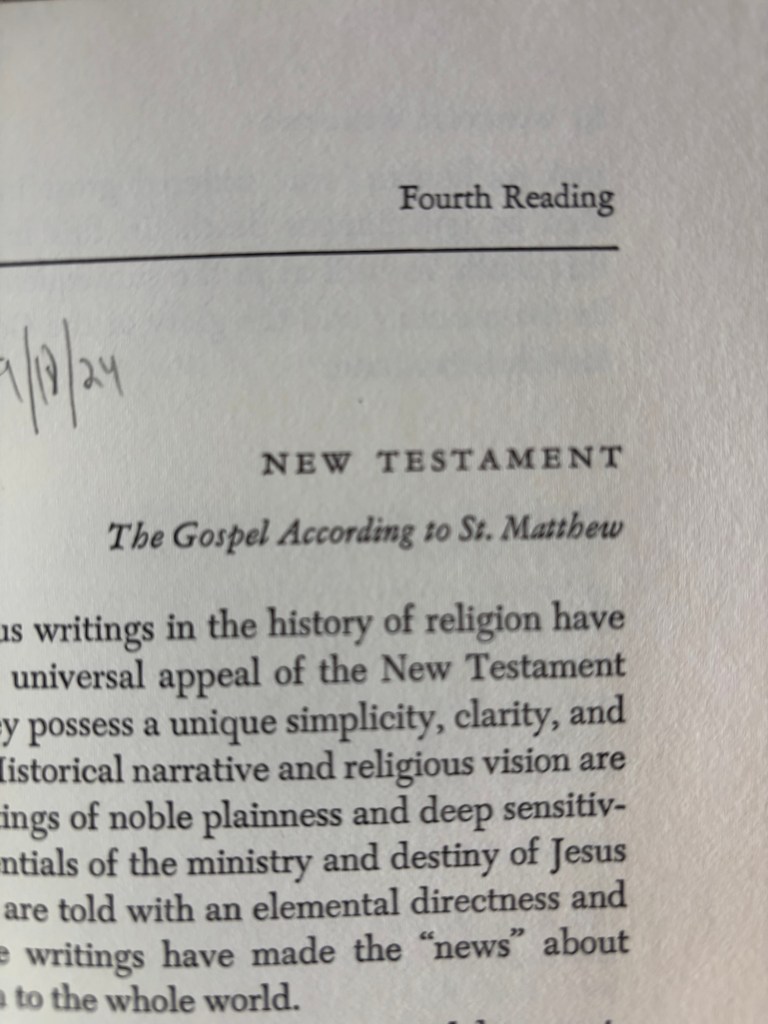
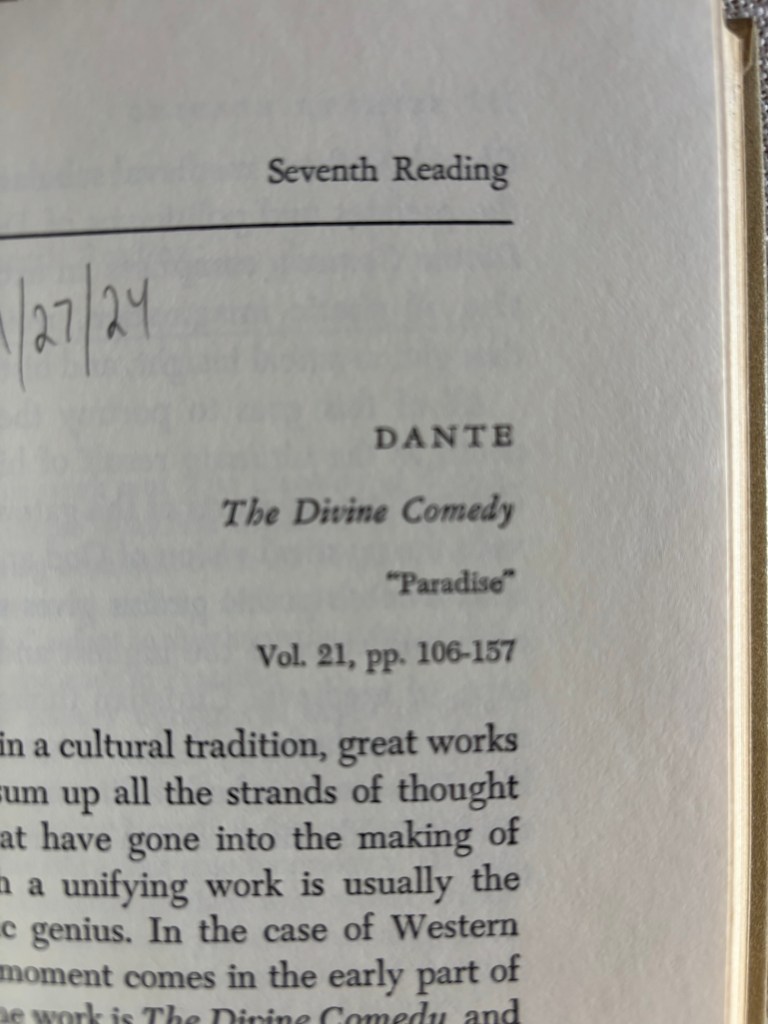
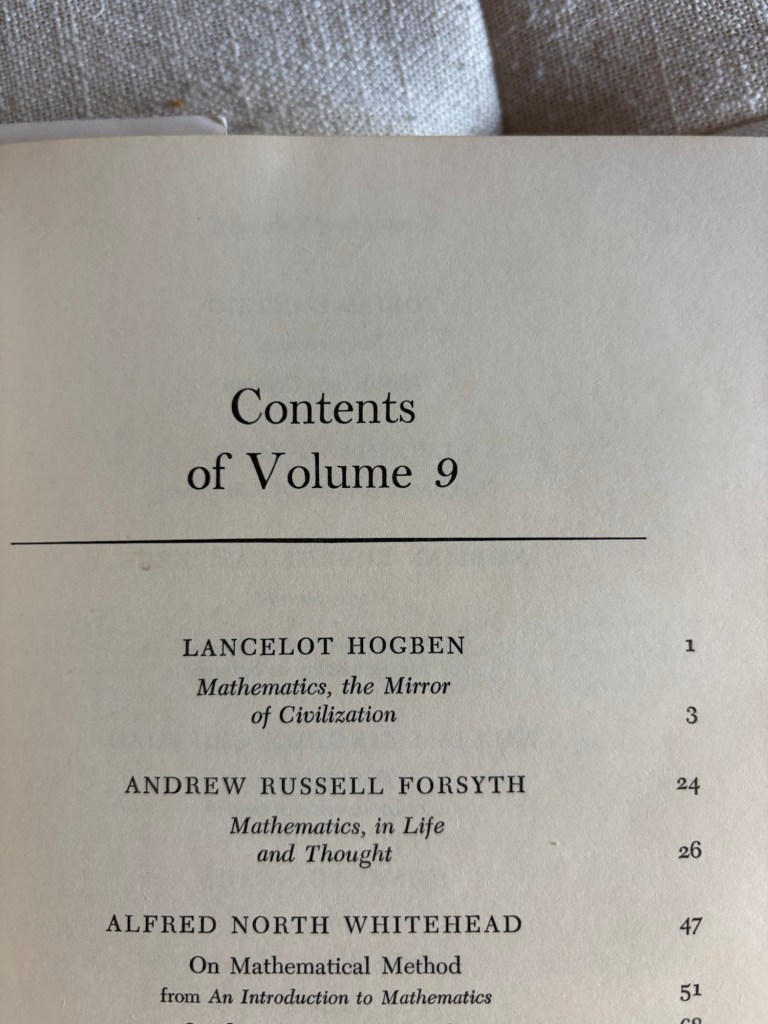
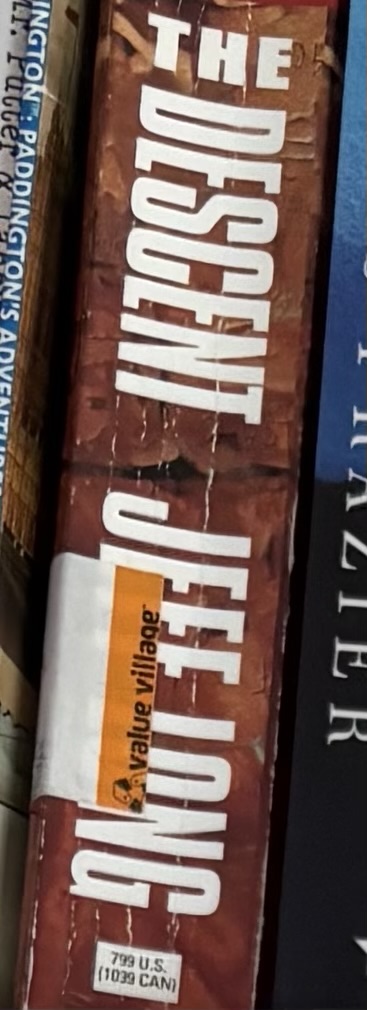
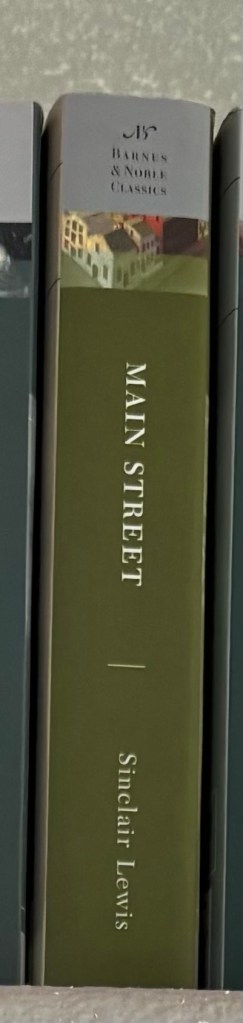
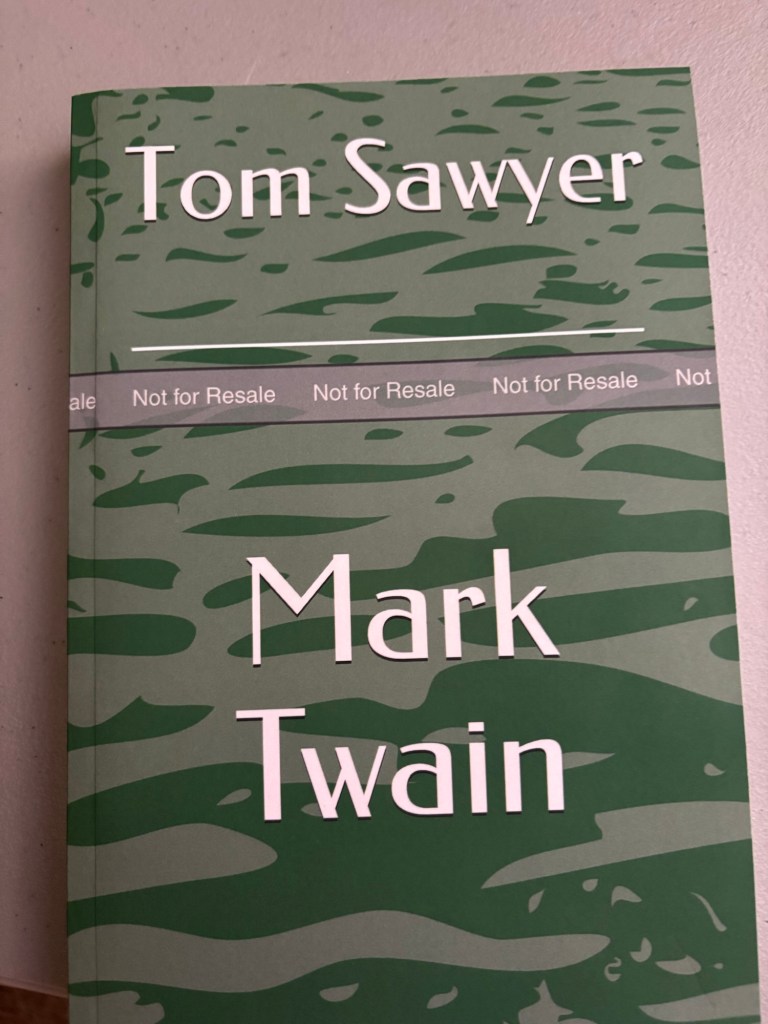
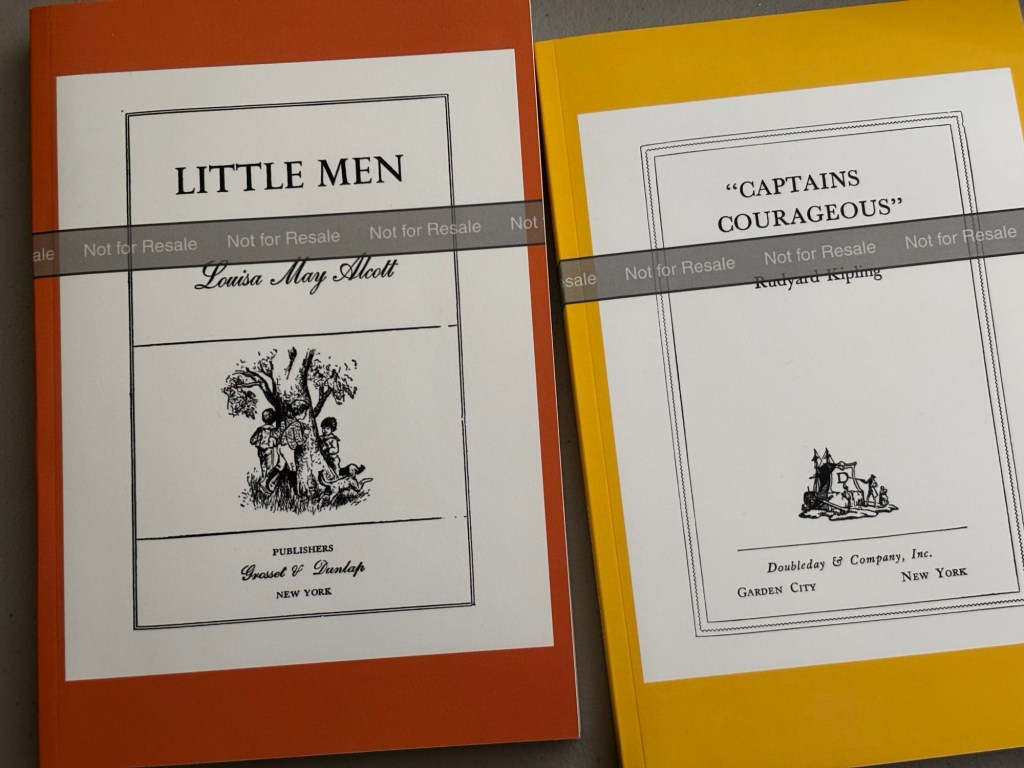
As promised, so far as I remember and/or marked, here’s what I read in 2024. The colorful books with the banner “not for resale” really were just since October—I’ve been on a tear of late. Same with the comic books; when I cut movies (for the most part), I had to find something light and so chose comics that I always wanted to read. You don’t see a few others from a “Predator vs. Black Panther” series and an “Alien vs Avengers” series. A collection of Jack London is the two-page table of contents pic that starts with “The Yukon” and ends with “White Fang.” The individual “First Reading” etc are from the Great Ideas Program. And the table of contents of essays are from Gateways to the Great Books companion set to the GBWW.
I may post again with an answer to the question, “So what did all this reading do for you insofar as tangible results, Captain?” For today, I want to share an infamous quote by Faraday. When he was asked, “What is the point of this discovery of yours?”, he responded, “What is the point of a child?”
Happy New Year!