Tagged: reviews
It’s Not “Happy Veterans Day” Anymore
I say this because of two reasons. First, I saw a headline about a British, 100 yr old Vet who said plainly that his brother’s-in-arms sacrifices (WWII) were not worth it, looking back. I’m only 44 and I agree.
I didn’t see anything I would classify as true combat. I only knew about a few AF pilots and crew from my squadron that lost their lives or were injured while in OIF/OEF. But, if they ever were sound in theory, the whole “fight them now rather than later” or “fight them over there rather than back at home” concepts have been blown to shit now. I see now that the only defensible reason to fight and sacrifice has to be in the framework and timeline of “now”. “These people must be killed now.” “These buildings and capabilities must be destroyed now.” Put another way, the main feeling I had when I got back from Iraq remains: While I was over there trying to stop them, y’all let them in the back door here? WTF, Over?
Secondly, over the past couple of years, as covid restrictions and pandemic mentality lifted, my Ethiopian wife has seen more instances than she ever did between 2011 and now (met me in 2018) of me standing and receiving applause (and me applauding) upon being asked to stand at certain events which take a moment to honor Veterans or First Responders. As I learn more about my wife, which includes learning more and more about how little she knows or understands about America*, I can’t help but wonder (I will laugh in your face if you think there is value in me asking her directly) what goes on in her mind when she sees this exercise of up-and-down, wack-a-mole. If I was to give it my best shot, I’ll be damned if her thoughts go beyond, “Oh look! People are happy and clapping!” while her face uncontrollably forms a smile to match the group’s mood. I ask you to likewise look around America at the first-generation immigrants’ faces during these moments and see if they have a clue.
What to do? Who knows.
——
*Keep in mind, this is despite being married to yours truly. It is a significant feature of the uneducated to hold strongly to their uninformed beliefs through the barrage of all contrary experience.
How Did the Left Miss the Movie ‘Animal House’?
All this new talk of theirs, “Trump is actually enacting more Democrat policies and positions than…” sounds to my ears the exact same as, “Thank you, sir! May I have another?”
Democrats Need A Hunger Strike
During these best and worst of times, I’ve been reading Life of George Washington by Washington Irving in Three Volumes, Vol. 1. I’m near the end, having just finished chapter XXXIV of XLII. Like any Gen X or older lay readers, I have most of the broad strokes down, but have been pleasantly surprised to learn more details about our nation’s founder and founding.
Of particular note in the last chapter were Washington’s new roles both within the American colonies and between the colonies and England. For example, in extant letters, we read that GW himself maintained the logic that there needn’t be more (second, third, fourth etc.) appeals for relief to the King, as “from our sovereign there can be but one appeal.” (Plain meaning: one monarchical rejection means war, assuming there exists the will to achieve the appeal’s purpose.)
Moreover, I found the following description of the colonists resolve concerning their boycott of British goods rather provocative, “The rich were growing poor, and the poor were without employ; yet the spirit of the people was unbroken.” Actually making sacrifices to achieve political ends seems confined to some romantic past, no?
Always a fan of the underdog (I truly believe people should declare what they want and work to obtain it), I can’t help but see in this observation of sacrifice a path forward for Democrats. The “given” of what I am here proposing is that Democrats are city-folk, and MAGA is rural. (Or at least that is what the map shows.) Furthermore, rural means food-producers, and city means food-consumers.
Do Democrats truly want to make a dent against MAGA as social meeja would have us believe? Then I say Democrats need a hunger strike. Bring rural MAGA and their orange-Jesus savior to their knees! Make MAGA’s grain silos reek with the odor of unwanted produce! Wrap MAGA in the stench that guns and bibles cannot release! Democrats, now is your time! The path is proven! The choice is clear! Hunger Strike! Hunger Strike! Hunger Strike!
It’s Pilot vs. System, and I Hope Pilot
I try to make things simple for my mom (not because of anything other than her desire to cut through the crap) after any aircraft crashes—especially if they are of the kind of aircraft or type of flying that I do. As most of you would know, this simplified rationale was again needed due to some recent crashes out west.
My effort was, “As dark as it sounds, if you want to know my thoughts, I hope we learn that ‘pilot error’ was the cause. That’s far easier to live with than the idea that one day the helicopter is just going to kill me.” The reader can see in this dichotomy the split that every pilot learns from the start of pilot training. Crashes are either pilot error or mechanical. And 80% of crashes are pilot error according to the data. It also makes sense. And it also keeps aviation functioning. Why would anyone want to hop into or fly an aircraft that cannot perform its function reliably?
After chatting with a couple mechanics recently, I was reminded that they bear the heavy cross of “I sure hope it wasn’t mechanical”. This coheres with other offhand comments aircraft mechanics have uttered over my career, being, “That’s what I lose sleep over.” These mechanics do not want to find that some unfinished or inept work of theirs got people killed.
There is a sense which the pilot and mechanic can be said to be “of a kind” on crashes then. They (we) both want flawless aircraft and flawed (if only very infrequently) pilots. But this is not what I meant when I simplified things to my mom.
The reason for the post, the complex version of my thoughts on the matter, is as follows. It isn’t simply man vs. machine. Or even man and machine. It is man and system. Or man vs. system. I mean to draw out that if the aircraft had a mechanical problem which the pilot was unable to handle, the “problem” that now needs to be addressed is enormous and multi-tiered. It’s a question of quality of engineers, quality of materials, quality of parts, quality of QC, quality of maintenance program, quality of individual mechanic who performed the work, and quality of pilot who preflighted (which also includes his or her training and all of the people and processes involved there). Depending on the mechanical failure, there is also a possible new data set regarding deficient training for the pilot regarding Emergency Procedures. A, “I didn’t know what to do because we never saw that fail before.” So all that is what I mean by “system” in my “pilot vs. system” framing. This is to say, no, it’s not just “mechanical”. It’s actually a ding against the whole aviation system.
On the other hand, if the pilot caused the crash, then there is just one pilot who didn’t perform his simple task of perform the same number of landings as takeoffs. And that can happen to any pilot for a variety of reasons—though, being the best pilot ever (best of the best to be more clear), it naturally won’t happen to me.
In the end, the result is the same. I believe in the aviation system. And I believe that I should be the pilot which demonstrates how the system is truly remarkable. This is why, when considering pilot’s who crash have families and are possibly injuring passengers who have families etc, I can admit that it would *feel* good to attribute the crash to, essentially, “fate” or anyone else’s fault, the simple fact is and will always be that part of the motivation to be a pilot is the consequential nature of the job. If I didn’t believe in the system and my ability to lead it, I wouldn’t strap the aircraft on time and time again.
PS – Even the Huntington Beach one which YouTube seems to show was a pure part failure (‘system’ according to my point) can’t yet be chalked up to “system”. We do not yet know if the system failed or the pilot didn’t perform an adequate preflight and forms review etc.
Just Finishing Up At Freddy’s
I eat here probably twice a month. And I can assure you that on the day I die, if I have any inclination that it is that day, I will regret that I didn’t eat here more often before I go.
Reading Log 9.20.2025

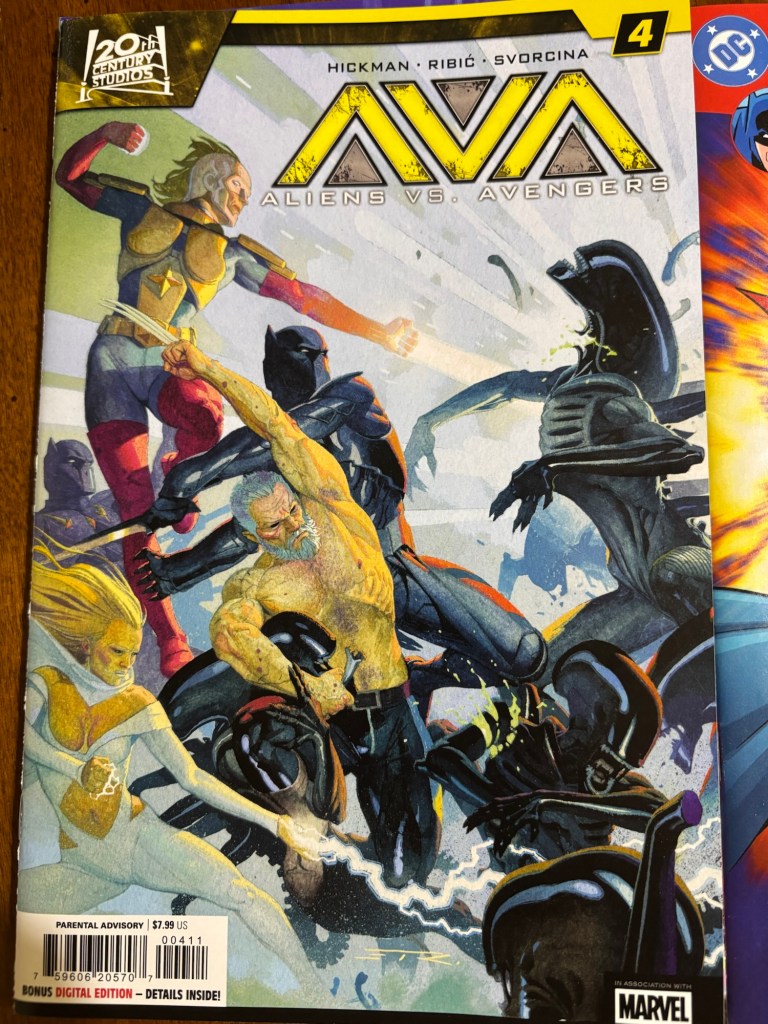

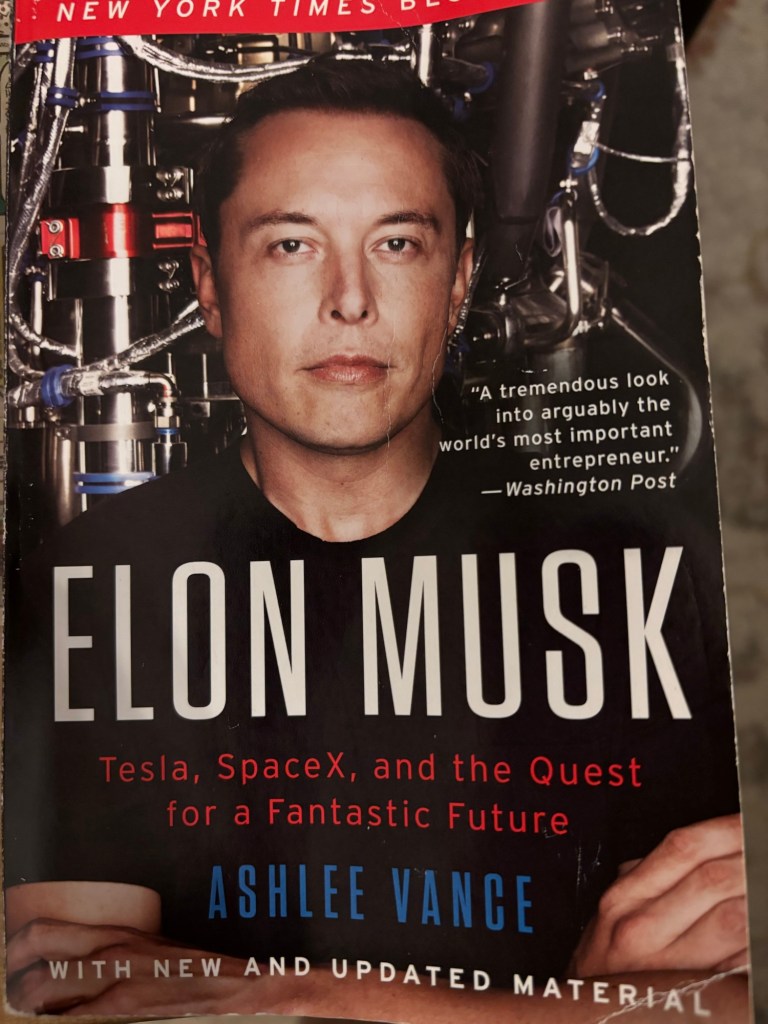


The Aliens vs Avengers are better than Alien: Paradiso, but both are tremendously better than this random Batman comic.
Not sure what to say about Musk. Fascinating on every level. I guess main takeaways are he has a habit (from the beginning) of using all his money always—ie re-investing profits into new ideas/products. That appeals to me. And it is eye-opening to read about so many individuals who seek out money. I have never really thought about life like that. But Musk has money and is willing to use it to pay for what he wants to build.
Oh, and the part about flying home from Russia without a rocket and his data-based decision to build it himself for cheaper anyhow is the stuff of legends. Archimedes, you wild man of naked street running, watch out!
Plato is always a treat. Apology and Crito are a delight to read, at times laugh out loud funny, and also terrifically on point. For example, Socrates is on trial for his life. The charge: corrupting the youth. (Sound familiar yet?) His defense: the god (not biblical Yahweh, just some general concept) told him (Socrates, not Kirk) he was the wisest man—which he couldn’t believe. So he then decided to roam the country trying to find someone wiser. (Note: Plato wrote this about Socrates over two thousand years ago. Do not think about Charlie Kirk!) But no matter to whom he inquired, he always left disappointed because while they, in fact, weren’t wiser than him (Socrates), they thought they were wise. Socrates considered this as a worse state than his own, because where he wasn’t wise, he knew he wasn’t wise. Anyhow, in the end, he loses the case and was essentially forced to commit suicide. What can you do? It begs the question: What is an uncorrupted youth?
This final volume from Father Meier is excellent for the same reason the previous four are excellent. Meier states his destination and the rules of the road, and then works steadily towards it. This strategy allows the reader to do something even the Bible itself doesn’t: we get to assess his work. Put another way, Meier gives you everything you need to disagree with him. The only real criticism, then, is to discount his destination (an acceptable-to-all historical Jesus) or his rules of the road. (And feel free to do so.) But I love his destination and even if I didn’t agree with his road rules, I agree with the concept and so his portrait of the historical Jesus is fine by me.
To be sure: upon completion of these five volumes, you will never again believe Jesus was hippie-like. You will never again believe Jesus was some wise sage, like Confucius etc. But more importantly, for every stupid thing that you hear non-believers say about Jesus, you will have excellent evidence of where they are wrong. Never forget, the goal with these folks is not some stunning delivery of “you are wrong”, but “I bet you’d reconsider if you had better information. Do you have a second to chat?”
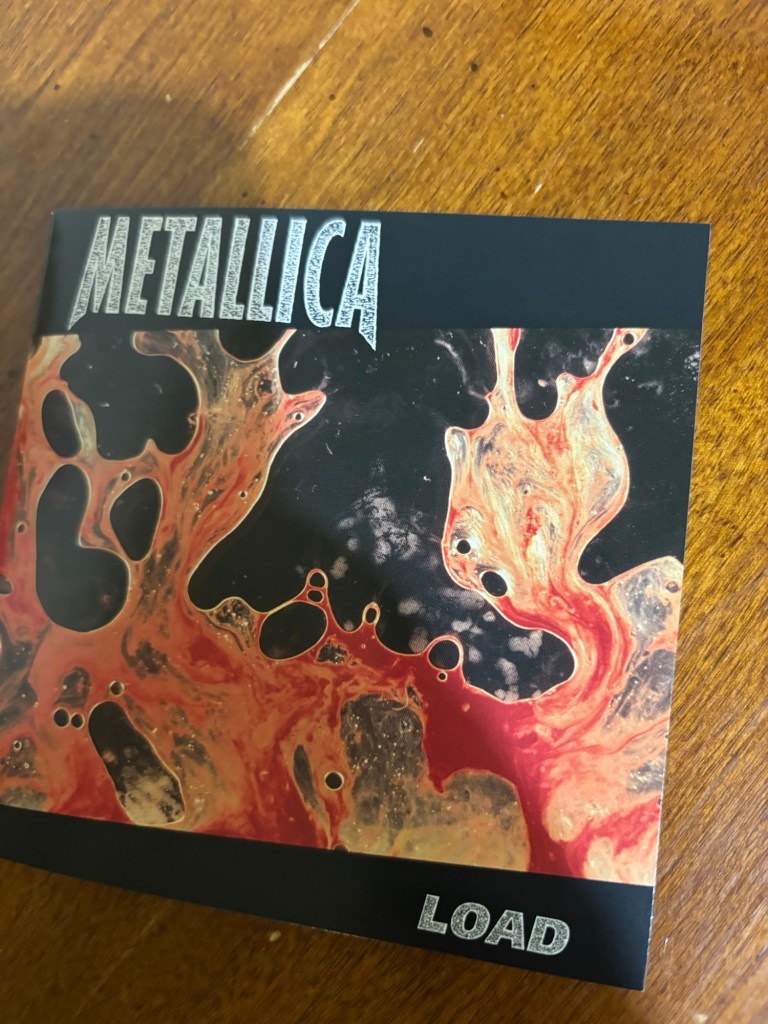
I threw in Metallica’s Load Album book for kicks because (1) I did read it. And (2) it has some pictures that were tremendously nostalgic. (Metallica re-released Load remastered recently.) “Hero of the Day” is far richer, more “Simple Man”, than I ever remember noticing. You will not be disappointed to reinvestigate both.
One Friday Lunch Thought
Did anyone else notice how fast Crumbl pivoted? They storm into the nicest parts of town (or sides of the street) with some of the best cookies ever—but it turns out you have to take a lunch break while eating them. So now they have mini-cookies.
And these are cookie-sized.
New questions which are fascinating to consider include:
- How did they not know about the size issue?
- Did they have any data that suggested they would have been unsuccessful starting with normal size cookie?
- Would they change their initial strategy if they had to do it all over again?
Whatever the answers, I need to say: “Please don’t ever pivot on flavor! They’re wonderful!”
Reading Log 8.6.25



I used to have a several t-shirts which had authors’ faces on them. James Fenimore Cooper was one of them. I just like his books. They feel historical, even though I know they are fiction. If you are open to testing the waters, I’d start with Last of the Mohicans, but eventually Afloat and Ashore should be read.
I will write a proper book review of Suleyman’s The Coming Wave soon. (It’s about AI.) Just know that he opens by expressly saying that he means to call to mind Noah with the word “wave”. Oooo. Scary.
Poems are what they are. Some are fun. Some are painful to get through. Holmes obviously wrote with great ability. But that didn’t mean his poems are all tier one.
Volume 1 of Reporting Vietnam (and what I have read of Vol 2) will change your life. These should be required reading for all American highschoolers. In short, Ho Chi Minh first entered the political scene in a big way in WWII by insisting Vietnam should be independent. Then in an interview in 1962 he said it will take maybe 10 years for America to give up. In 1973, before a full 10 years, America withdrew. Consider these facts. Ask: Why did America oppose Ho? I am of the firm opinion that in the future, it will be common knowledge among American History buffs that Vietnam was the true turning point in American History. Everything occurring today (in politics) goes back to that war. To be clear: The lesson I will distill to my own progeny is the following. “Ho wanted something and achieved it. Why did America even try to stop him? Oh, I know. Communism. Well, ‘F$&* Communism’. Communism makes people lose their minds. Why? It’s not to be feared. No idea is. And hug any Vietnam veterans that you meet. Also, America has no duty to help any country out of some sort of compassion. We now have Vietnam, Iraq, and Afghanistan (hopefully not Ukraine) as proof that the task of “helping” is impossible. People have to help themselves. America should do what we want precisely because we want to do it. Period.”
Aeschylus’ poems are fantastic. They are timeless too. Read and re-read.
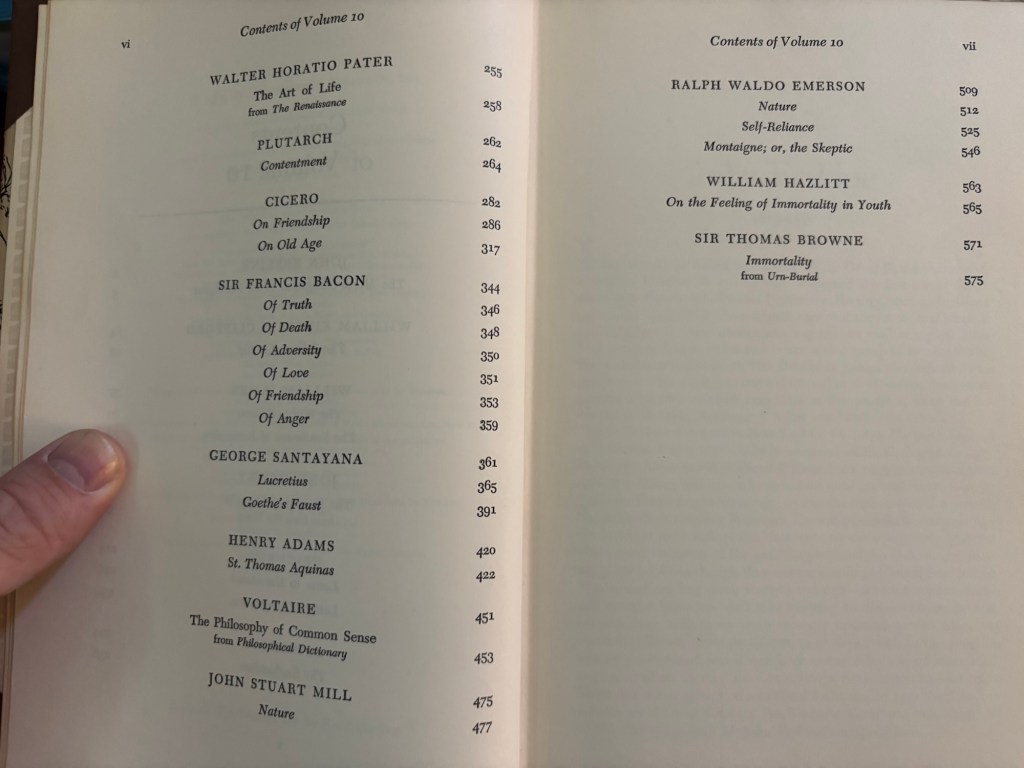
Those essays in Volume 10 (final volume) of Gateway to the Great Books are exceedingly worthy. Of special note is JS Mill and Voltaire. Emerson is a great contrast to Mill. John Dewey is a must-read for anyone in Education—but unfortunately he will never be read by the uneducated. Sad.
Finally, the Vicar of Wakefield. This is a book that “moralizes”. Do you even know what that means? It means to use a story to teach how to act. Our culture, nearly every member, regardless of gender ;), does not believe in teaching morality. So you will not likely see the value of this book. I even doubt that my kids will understand it. But we’ll find out together when they’re old enough. Not the best book. But a good one on how to find happiness during unhappy circumstances.
Rapid Fire Movie Reviews, The Order, 65, 28 Weeks Later
The Order with Jude Law, on Hulu, is pretty fantastic. But turn it off before you start seeing the black screen “wrap up facts”. Trust me.
65, with the new Star Wars bad guy, is not about only him on a violent planet. I hate when they mess up the previews. I’m talking from the opening scene you‘re struck by the fact that the movie is not what the previews made it out to be. On the whole, the very idea of people marooned on killer, dinosaur infested planet Earth while the dinosaur-killing asteroid is visibly on its way is kinda a cool story. Add in some language barrier stuff and other family interest moments and it really isn’t a bad sci-fi flick. Just very poorly marketed.
28 Weeks Later is old, but it is still fantastic. The best part—and now I am really looking forward to the newest one—is the speed which the virus infects the new zombie. It is nearly instantaneous. This got me thinking though.
Is the novel speed concept an analogy for the times we live in? I’m not saying the writers intentionally meant to make an analogy. I mean more like in the sense that it was inescapable. Like how 80s movies had muscular military men instead of breathy and broken women saving the day.
I am talking about politics and education.
We seem to be living in a time when everyone makes up their mind instantly, and then attacks incessantly. And no one ever changes their mind.
TDS strikes and BOOM! You won’t talk to your parents.
MAGA hits and BAM! No more chatting with your brother.
Follow me?
Compare this rage virus zombie tale to, say, any movie which portrays leprosy, or other old and slow moving diseases and what is the difference? The time period. No rapid rage virus zombie conversions in the dark ages or period pieces. And no slow leper death scenes in air conditioned rooms with laptops and Twinkies.
Just something for your consideration as the winter and family meals approach.
In the end, there are three lessons to be learned from these movies.
Number 1. Do not read The Turner Diaries.
Number 2. Do not become a pilot if the reason you are doing so is to save your daughter’s life.
Number 3. Do not make out with your long lost wife whom you thought you saw die from a zombie attack—at least not until the military doctors clear her.
I Have No Friends with Whom to Lament Ozzy’s Passing
My pizza place boss, Joe, was the man who introduced me to Ozzy. I was 16. I knew of Metallica, but was scared of Ozzy still. Then I heard his music and had the epiphany that we all did—all of us Baptist kids who were taught (why?) that he was singing satanic songs. Satanic or not, all I knew was his songs and his voice were epic.
Joe had a funny story from his younger days of pissing in the landscaped bushes while in line for Ozzy’s autograph so as to not lose his place. And whether it was the same event or not, when he handed Ozzy the CD, Ozzy signed it and then passed it to the next band member, but not before Joe ripped it out of his hands and declared he only wanted Ozzy’s signature! (Naturally, Joe was drunk, and this accounts for both parts of the story.)
I remember going to Ozzfest at Sandstone Amphitheater in 1998. Over two weeks I saw Van Halen, Ozzy (Limp Bizkit, Megadeth, Tool, too), and Metallica. Talk about a phenomenal two weeks of live music. Life changing.
I remember this same Joe called in to the pizza place when he was in Chicago at a Black Sabbath concert. This would’ve been around the turn of the millennium too. He was, oddly, again in the bathroom. Why he ever thought to check in with us “kids from work” is beyond me.
I think, but can’t say for sure, that I saw another Ozzfest, but whatever the concert was billed as, Black Sabbath was the headliner. That was also a powerful experience. Toni Iommi standing in all black with that cross chain he always wears was just an incredible sight to see. Metallica is the definitive “band”, but Toni is the definitive lead guitarist. So cool.
I remember that all these concerts were years after the farewell tour “Live and Loud” two CD concert set I listened to all the time—my only solo Ozzy CDs. I also had Paranoid. But that was it. At some point I borrowed for an extended period of time Ozzmosis and fell in love with Perry Mason and I Just Want You.
Think of it. The superhuman man writes “I’m sick and tired of being sick and tired” and suburbanite kids like me feel like he knew exactly what we were going through. Ha.
Some fun trivia. Limp Bizkit just opened for Metallica. And Zakk Wylde, of solo Ozzy days (whom I saw—I think) and is definitely on the double CD album, was there with Pantera too. And if you haven’t watched any of the (fairly abysmal) final performance from July 5th, Zakk has a truly heartwarming moment where he, playing for Ozzy, understands that Ozzy is not going to sound as good as the old days and so starts to sing with him, but like, in an all cool-like and as if it was planned etc way. But there was no plan. See 20 sec mark and how Zakk “covered down”, as the Army pukes say. I think he’ll be welcomed into rockstar heaven for that one move alone.
I want to end by reminding the reader that I have often thought and implied and directly spoken the desire that Metallica NOT take the stage when they are too old to do it justice. I still pray fervently that they honor my wish. But as we are almost 30 days after the pair of Metallica shows and I still feel like my voice isn’t fully recovered, the thought, purely speculative, that Ozzy essentially gave everything to that last (admittedly pitiful) stage show gives me great peace.
“Rage, rage against the dying of the light.”
You did it, Ozzy. You embodied rock’n’roll, not just for a season, but with your entire life. Rest in peace.

