Tagged: philosophy
“Decide”, A Review of Mothers’ Instinct by Benoit Delhomme
If you’ve somehow hesitated on this one, rest assured that it is worth watching. It isn’t perfect. But compared to all the other trash that is being proffered as “movies” these days, it is a return to the classic definition. (You don’t even want to know what my co-workers were about to watch when I came to the rescue.)
The tone was perfectly subdued, precisely unpronounced. No one holds your hand and points out what to notice. You either get it (and are disturbed in the titillating manner you found appealing) or you probably are bored and never really wanted to watch it.
As far as the leading ladies, Hathaway performs her role better than Chastain. But she also has the easier task.
The best part of the film is how the immediate fallout from the boy’s death is so natural. By way of comparison, consider the tragic mid-air. People’s reactions have centered on personal responsibility (pilot error) vs. systemic failure (FAA/ATC). And that debate is crazy to me. It’s actually why I choose to fly. I have ultimate authority for the safety of the flight. Not many jobs offer that.
As a recap, the helicopter pilot said, “Traffic in sight.” And then we all learned that he did not have the traffic in sight.
In this movie, the tragic death is more purely accidental. The trick, or hinge, to it is that one mother happened to see it coming but couldn’t get there in time, and the other mother should have been watching. But, different than the pilot, the boy never said, “I know I might die if I am wrong, but I am not wrong.”
I say all this to bring to the forefront that the post-tragedy questions “how to respond” and “how to interpret with and deal with others’ responses” are totally distinct from the mid-air’s “how to prevent this from ever happening again” question.
Moreover, the truly fascinating aspect of the plot is how powerfully the story debunks utopian notions of how good life could become if only. Life is great, people. But death is a part of life.
Death is a part of life. You don’t want life to be worse because of death. So talk about it. Think about it. Prepare for it. As a topic, death should be no different than meals or clothes or relationships.
Ultimately, I want to say this. If you feel death approaching, say, at the hands of an unstable woman, flee! It’s best not to hesitate on that one.
Quit Complaining About the Eggs
Quit complaining about the price of eggs.
How, you ask? Easy. Eat steak.
Now that the prices are comparable, I have been eating 1/2 petite sirloin steaks—perfecting a cast iron pan fry—for breakfast as the rest of the country questions themselves into lunacy.
And I like it! Who wants eggs, when you can eat steak?
Urge is Returning
I haven’t felt like writing much of late. It wasn’t writer’s block that stopped me. I always have plenty to say. It was the fact that you’re not supposed/allowed to share patient data and so I couldn’t say much more than I did about my last work week. And then, while I often like myself better because I indulge in providing the forever internet precise examples of the terrible realities of marriage, sometimes I just can’t keep sharing them, which, yes, implies last week was doubly rough. So those two things kept me quiet.
But.
I just clicked on a video of Kamala stumping to some thespians and the way she gets to her point is to say, “Nature abhors a vacuum.”
I mentioned in earlier posts that I would someday give my reasons for reading the Great Books of the Western World (and classics in general). Immediately, then, fulfilling my vow came to mind. After all, Pascal is the “great” who singlehandedly took down this claim that “nature abhors a vacuum.” How? By treating it earnestly. He merely asked, “How can nature have a feeling?” (It is totally appropriate to think, “That’s it?” Yes. That’s it. We, all of us, have a duty to call out confusing assertions—though giving the benefit of the doubt to the author is always the best until you are certain they mean what you initially thought.)
See how that works?
But then (getting back to me and my desire to make a small contribution to this world) I thought, “So what are you trying to say? That the Great Books are necessary to know she is a moron?” To which I answered, “Good point.”
I don’t know how any knowledge of Pascal is needed to recognize how stupid Kamala Harris is. However, if pressed, I could admit that knowing Pascal and how that particular phrase really did motivate him to end one strain of stupidity may be valuable when talking to an educated (at least a proper Bachelor’s) Harris supporter. The tactic being, “You know Pascal destroyed that notion which was previously holding science back, right? Nature doesn’t love or hate. It doesn’t emote or have purpose. You do know that, right?”
But on the whole, I can admit I just get excited when I see morons more clearly than before. It’s like the clarity is exciting, not the ugly picture.
Anyhow. The urge to write is returning. Not quite back. But this is feeling good.
As a parting gift, here is some Pascal.

Rougher Work Week
In Heat, the cop played by Pacino returns late to the ritzy bar his wife lingered at and she starts in with, “And I bought into sharing. But this isn’t sharing. This is leftovers.” (Or what is the same.)
Pacino responds, “Oh I get it. You want me to come home and tell you that some junkie just put his baby in the microwave because it was crying too much. And somehow this will…” and on and on. (Or similar.)
Later in the movie while desperately trying to keep someone he knows alive, he says, “Not you, baby.”
Suffice it to say, these scenes, not the particulars but the emotions and complications, come straight from real life—which I would say is exactly why I love that movie and have always loved that movie.
In real life, as I have written before, my own reaction is a sudden and unaccounted for need to cry. I didn’t this time. But all the necessary variables were in play.
There is a great desire to ask, “What can fix the scene(s)?” Or “How can we help people?”
But I have come to believe, “This is the scene. You don’t fix it. You don’t help. You just play your role. And you hope that your society has good roles.”
From the earliest age I knew my role was “anonymous, systematized, called-in relief”.
It’s mostly rewarding.
The Left’s Only Sound Play
Like how comedians must stick to particulars to be funny, the Left must stick to generalities to regain power.
The Left’s only sound play is to claim as a baseline, “Well, whichever Republican was elected after Biden would be perceived as doing well, comparatively.”
This is sound because it is essentially true, it concedes reality, and, importantly, it provides the currently missing foundation for the future. It also undercuts the “cult of Trump” with exacting precision, no small desire of the Left, though not essential to the cause. For readers with the ability to see nuance, it also offers a distracting element. No one is talking anymore about whether Trump is even a Republican. But the Left should want that debate to resume because any interruption of focus counts in the quest for power.
Will the Left use such sage advice? Of course not. Why not? Because they, as we all saw for four years, are not of sound mind.
****
Why share such sage advice? Why spend time considering it? Because I desire the history books (which will draw heavily from this blog…) to show how even the meekest of those with common sense knew what the Left needed to do, but the Left was intrinsically weak.
Examples of Good Obituary Lines (Fiction)
He could go weeks without eating a vegetable or piece of fruit, and I don’t believe he ever ate more than two whole apples, bananas, or any other fruit in a single day for his entire life.
When she was four, she developed a habit of interrupting every member of her family—and most strangers—whenever she felt like it.
He could read the comments on YouTube for hours without ever finding motivation to give more than a thumbs up.
After graduating college and getting a job, he found it impossible to order from Subway without getting cookies.
Sometimes, when reading a book by himself, he would laugh out loud at an irrelevant idea that came to mind.
He never wore a hat in the sanctuary.
She often got irrationally angry the moment someone started talking—and sometimes just at the sight of certain people.
He could not leave a campground without uttering, “How can you tell the Boy Scouts have been here? You can’t!”
She hated being reminded of anything she ever said.
Nobody who had received a gift from her would have guessed it, but she was never taught how to wrap presents.
Not long after hearing a good idea, he routinely could be found sharing it, along with an original—and untrue—story behind how he thought of it, with others.
He started his habit of daily exercise the same week that he ended it—and was happier for it.
****
Do you see? The obituaries or eulogies need to be filled with love. When you say something that is A. Untrue and B. General (like, “He loved life” or “He was loved by all”) you merely show that you didn’t even know the deceased, that you didn’t ever notice them even.
Do better. We all deserve it.
Reading Log and a Note on the Most Important Part of an Immigrant’s Education
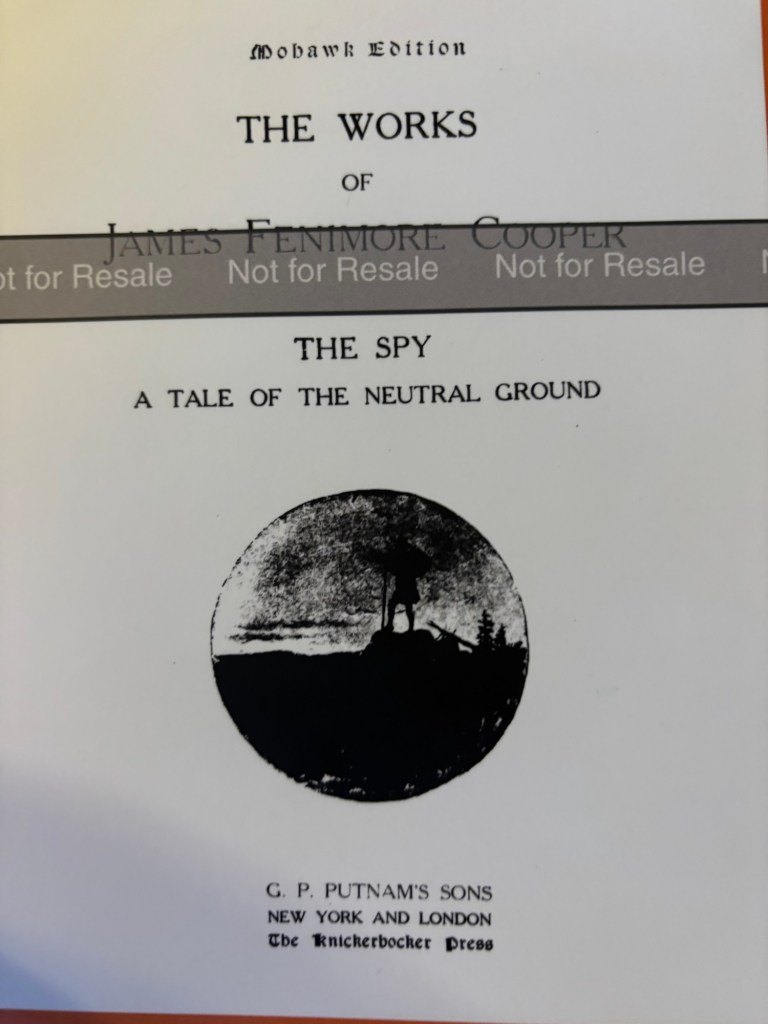


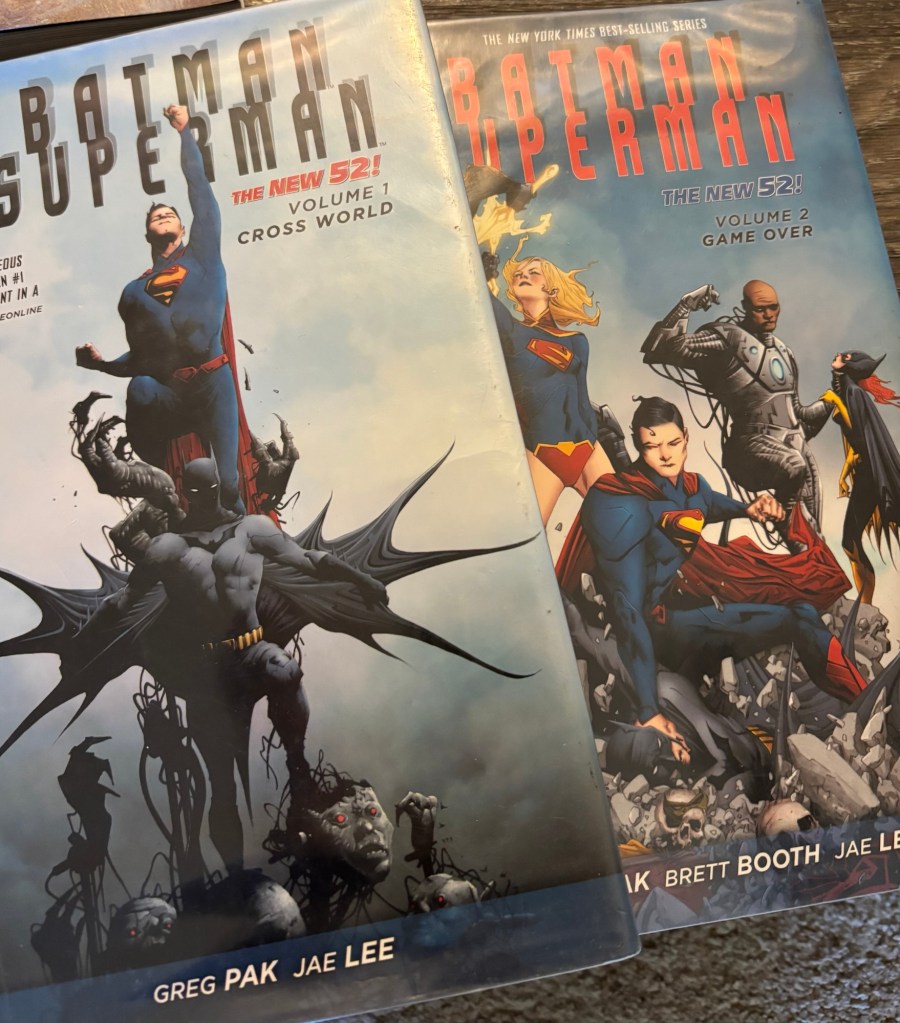

I’ve completed these since the last group, but also have been reading math essays and have begun Milton’s Paradise Lost (which so far is much more palatable than Dante’s Divine Comedy).
****
As to the education of immigrants, I can’t help but think as I read American history (mostly pre-20th century), “I have literally no connection to these events that stir my feelings so.”
And that’s when it hits me. As I, like you, am constantly bombarded with all this “immigrant immigrant immigrant” news, as I, very different from you, have married an immigrant and have an immigrant step-son, I cannot but conclude that the most important part of their training must be American history. Stop filling someone’s life with the nonsense about “you’re not from here” or “you should be proud of whichever country you left”. Instead, fill it with American History in a, “This is who you are,” mindset. America is unique. They need to know what that means—and it isn’t obvious or intuitive.
Naturally, a marketable skill should be taught as well, but even then, I cannot place this skill above learning who you are—an American.
Stuck On Trump’s Instinctive DEI Claim
It felt forced to me when Trump first claimed “DEI” was behind the mid-air collision. Something like, “Yeah, yeah. We know you want to conclusively put DEI to bed. But these investigations take time and this is too soon.”
Soon after, however, I began to wonder, “Crap. Was it a woman pilot? Or a minority? Sucks to be them.” Then we learned, in as terrible a display of thoughtless PR as ever, that it was a woman, and that she was a lesbian who clearly had not been inspired to be a military pilot after watching Top Gun or Top Gun:Maverick.
Now, a day after the facts came out, I can’t help but admit that Trump has some sort of Boss Level instincts. I know, I know. Fanboys and he have made this claim for years. But for years, I had been assuming he had someone filtering him or prodding him etc. My mistake. The precise moment I realized my mistake was when I saw that footage of him reacting to Harris’ DNC speech in real-time with a room full of his cabinet/staff. There was no filter, there was no prod. He actually operates on his instincts—seemingly constantly.
This “DEI” claim was more of the same, then. But this time it is remarkable to me because of the speed. Mid-air collisions should never happen. And they don’t happen very often. So when, presumably, he was informed it was a lesbian, low-hour pilot and put together that DEI could be smashed onto the mid-air in a way that literally saves future lives, he ran with it—no need to run it through a “steel man” exercise or anything.
The Golden Age of America started with the last mid-air collision, itself the last aircraft piloted by a DEI hire (hopefully).
The point is not, “Did I persuade you Trump is right?” The point is, “Do you see the instincts on this guy?” As a pilot who does, from time to time, base my decision solely on instinct, I can admit that Trump’s use of instinct is remarkable. And I hope that, as a result, all pilots see-and-avoid from now on.
We Must Do Better at Describing the Dead
Anyone else absolutely annoyed at the statements about the recently deceased pilots?
I have posted on this topic many times and my dander is up again, naturally.
There is a paradox. We seem afraid of telling a lie about a dead person, presumably because it would be unfair, and at precisely the same time, we have no sense of fairness.
“He was young.” Wow!
“He was an amazing person.” By golly!
“She was a bright star.” No shit!
“No one dreamed bigger or worked harder.” Truly!
Here’s my ask: please talk with people who may feel like describing you after you die. Give them some boundaries. I am not kidding. I have written out something and given it to my mom.
I refuse to believe this paradox and other difficulties are based on the whiny, “It’s uncomfortable to talk about.” No, it’s not. You’re just out of touch in the main and think you are somehow exempt from the only sure thing—another paradox.
In short, we mortals, all of us, live in a world where Michael Jackson and a lesbo DEI nut that crashed into an enormous and well-lit plane (located where every swinging dick on the earth would be right to always expect a plane to be ((final approach to a runway))) are both described as celestial matter. How ‘bout, no.
Pumbaa’s Error
“Oh. I always thought they were balls of gas burning billions of miles away.”
How does Disney create the idea that Simba’s animism (the stars are spirits of the dead) is the right astronomical view?
Timon and Pumbaa laugh his notion off, and yet every movie watcher walks out of the theater happy that Simba believed his dad and the subsequent delusional interpretation of one bright night’s dynamic weather.
It all starts with Pumbaa’s error.
Imagine with me if the writer had an ounce of astronomy training.
****
Pumbaa: Hey, Timon, ever wonder what those sparkly dots are up there?
Timon: Pumbaa, I don’t wonder; I know.
Pumbaa: Oh. What are they?
Timon: They’re fireflies. Fireflies that, uh… got stuck up on that big bluish-black thing.
Pumbaa: Oh, gee. I always thought, when their light was analyzed with prisms, they were determined to be ever-changing balls of the very same elements that make up our world, acting, in fact, under the same forces and for the same reasons which carry both the sound of my voice to you but not much farther and the heat of this desert sand to our feet but not up our legs—but were like really far away and surrounded by LOTS of empty space.
****
Can you even imagine the ludicrous family tradition of past kings looking down following such a silly guess by the warthog?
No, no you cannot.
It’s not merely a killjoy, either. Plenty of ways to make the movie still work. Mufasa can talk about how his tribe had overcome great difficulties and that it took ridding themselves of envy and sabotage—and learning from whoever had something obviously better to contribute. And then Simba can simply remember this confirmable truth after a rebellious and disastrous few years of life with the poor—I mean—the wild animals.
 Captain’s Log