Tagged: history
Reading Log and a Note on the Most Important Part of an Immigrant’s Education
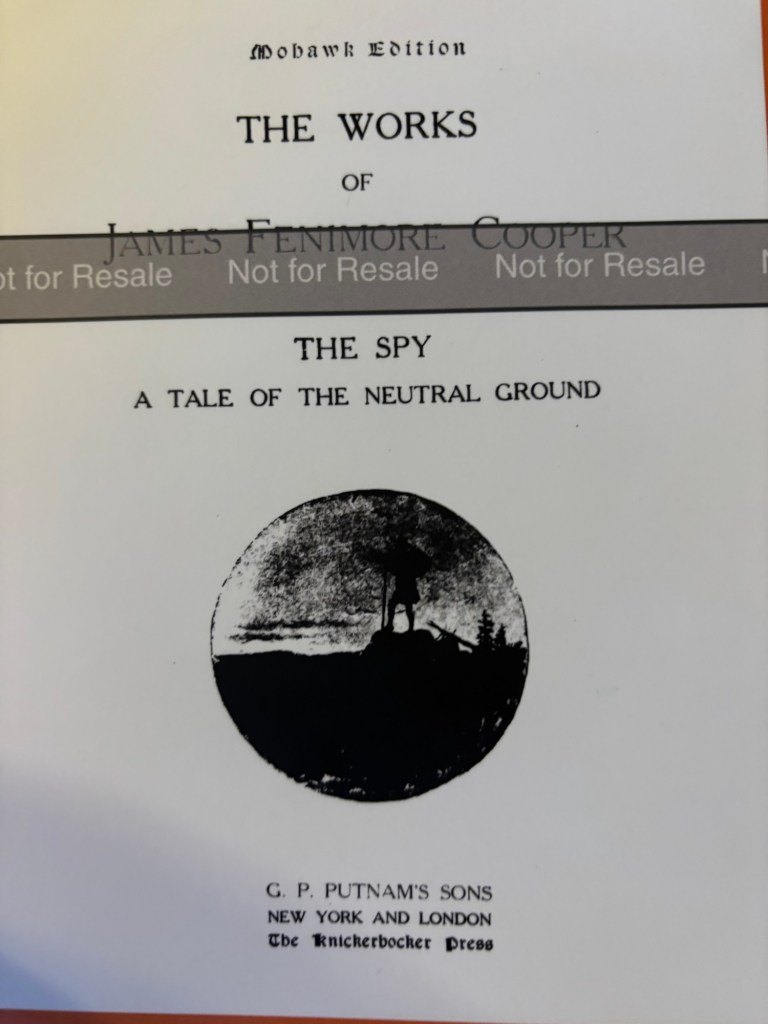


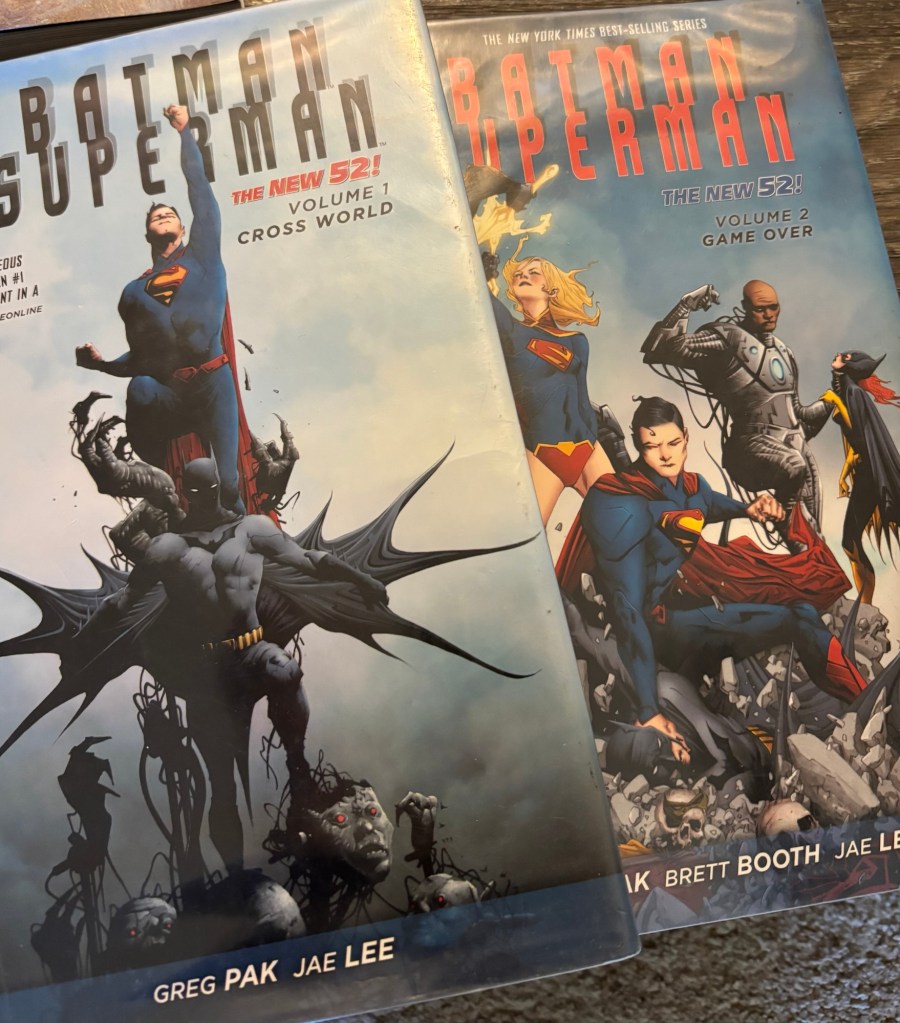

I’ve completed these since the last group, but also have been reading math essays and have begun Milton’s Paradise Lost (which so far is much more palatable than Dante’s Divine Comedy).
****
As to the education of immigrants, I can’t help but think as I read American history (mostly pre-20th century), “I have literally no connection to these events that stir my feelings so.”
And that’s when it hits me. As I, like you, am constantly bombarded with all this “immigrant immigrant immigrant” news, as I, very different from you, have married an immigrant and have an immigrant step-son, I cannot but conclude that the most important part of their training must be American history. Stop filling someone’s life with the nonsense about “you’re not from here” or “you should be proud of whichever country you left”. Instead, fill it with American History in a, “This is who you are,” mindset. America is unique. They need to know what that means—and it isn’t obvious or intuitive.
Naturally, a marketable skill should be taught as well, but even then, I cannot place this skill above learning who you are—an American.
The Element Peggy Noonan Missed and Why The Dems Will Never Embrace Chaos
Risk.
That’s it. Miss Noonan doesn’t address how “risk averse” or “safety first and at all costs” our society has become.
A better analogy to the Dem’s problem is Hollywood’s problem.
Movies have become so costly to make that the easy/obvious/safe choice is prequels and sequels of winners (or even mere known quantities) rather than tell a new story that might bomb.
So, no, Miss Noonan, the same people who brought us safety (the government) will not act with daring.
The LORD’s Air Traffic Control
This morning I found myself wondering an uncommon question.
“Just when is the sun coming up?”
I left the house at 5:30 with the aim to arrive in Wisconsin around 8. The “wintry mix” that had fallen all night proved to be more ice than mix, and traffic was slow. I figured I’d be safe because I’d only be in the dark for the first hour of my ride as surely BMNT (beginning of morning nautical twilight) would happen around 0630.
“My calculations must be off,” I finally conceded.
It hit me that BMCT is what matters when driving (civil twilight—sun at 6 degrees below horizon, not the 12 of nautical twilight).
No problem. But even at 7am, there was still no sign of our nearest star, and quite a bit more roadway to go than I could squeeze into one hour.
Then it happened as it always does—suddenly.
Suddenly, dawn made her appearance.
A few minutes later, the true miracles occurred.
Miracle Number 1: I saw a headless bird eating road kill.
“Wait-a-minute!! That’s no headless bird, that’s a BALD EAGLE! And it’s so close!”
Zoom. I passed within feet of him.
“And to think I saw him in Wisconsin USA,” I further thought to myself.
I mean, seeing a bald eagle is one thing, but seeing one in the great state of Wisconsin, USA elevates the experience well into the clouds, if not all the way to the heavens.
Next, it happened again.
Miracle Number 2: I looked and saw a bald eagle on the tippy top of a leafless tree. His chest was as broad as the Rocky Mountains.
Unlike last sighting from a few posts back, we’ll call that one The Sentinel, this treetop eagle had the pleasure of directing traffic.
Upon entering Wisconsin, I observed that the wintry mix had stopped at the state line and now there were only enormous snow flakes. Enormous snow flakes in need of some direction. And I was staring at the divinely appointed tower controller as he was directing traffic.
“Cleared for landing, Uniform Sierra Foxtrot.”
“Yes, sir. Come on down.”
“Wonderful flare, way to go!”
“Last calling, you’re number two for that branch on your right, keep your speed up, I’ve got two more behind ya.”
“Sierra Foxtrot Heavy, I’ve got a spot for you on the virgin mantle two hundred yards from centerline.”
And on and on he went. It was like listening to the soothing crackle of George Washington’s torch as it illuminated the unimaginable freedom just on the other side of the darkness.
They Chose To Be Slaves
You haven’t ever and won’t ever read Thomas Hobbes’ Leviathan. I just read a portion of it, being guided by the VOL 2 of the Great Ideas Program, my copy being from the Great Books of the Western World set.
Having read some of it, I want to use this post to offer one way in which to respond to BLM and all the other nonsense being spouted by BIPOC disciples. There are many ways to respond, though this may be the strongest.
I want to start with Paul. Concurrent to my reading of Leviathan, I had been reading Ephesians, and was shocked, like jaw-on-the-floor shocked, at what Paul said to the slaves he addressed. If you haven’t read it in a while, here’s the relevant part:
“Slaves, be obedient to those who are your masters according to the flesh, with fear and trembling, in the sincerity of your heart, as to Christ; not by way of eyeservice, as men-pleasers, but as slaves of Christ, doing the will of God from the heart.”
By relevant, I mean related to the question that I’ve heard for years now, “Why didn’t Jesus end slavery?”
As I read this part of Ephesians, I thought, “This is horrible. It’s way worse than just not ending slavery, it’s actually, in a weird way, defining slavery and basically validating it.”
At the seminary, professors and their unthinking adherents repeated something like, “We need to look at the biblical trajectory…” when discussing slavery and women preachers etc. That rings clear initially, but upon examination is just meaningless, multi-syllabic euphemism. Jesus didn’t end slavery. Fact. And here, in this passage, Paul addresses slaves directly, gives them a very real instruction, and, oh by the way, defines what a slave is–in case there was any doubt who he had in mind when he used the word.
Working backwards, according to Paul, slavery is forsaking your own will for another’s will. It’s not suicide. It’s living according to the will of another. And in this case, Paul teaches those whose will has been replaced (slaves) by another human’s will (the slave master), to get through their situation/life by treating the situation as if they were simply following the will of god, or the will of Christ. His reasoning? God/Christ is impartial. The slave-master who abuses this teaching will get his in the end. (Hell.)
On the off chance that there is any muddiness to this point, Paul also juxtaposes superficial obedience against true obedience, by the use of the wonderfully concrete language: “eyeservice”. All of us know the difference between looking like we’re working and working. And so did Paul. And, apparently, Paul thought the slaves did too. Why say it if slaves are just stupid, biologically determined humanoids of some kind? No, Paul spoke to the slaves in a dignified manner. No kid gloves here.
Main point for today’s post: Paul defines slavery as having to do with a replacement of will. This is to be regarded as an understanding without value-judgement on the situation. Is slavery wrong? Paul might answer, “It depends. Slavery to Christ is absolutely right. Slavery to some human may be right, but it may not be right.” But that’s just my speculation that helps make my bigger point.
Thomas Hobbes picks up this definition of slavery as he explains the origins of government. To begin, he says that there are two ways men end up being under a government: choice and conquest. One, men can either choose to place themselves under the leadership of one or a few other men. Or two, men can be conquered and be compelled to live under that government. Hobbes says that both ways are based on fear. In the choice way, men would choose government because men are afraid of each other and mutually want the security this outside agent would provide. In the conquest way, men end up under a government because they fear the government that conquered them.
Here’s where Hobbes really says something. Hobbes says that the captives, or conquered people, are captives so long as they are chained and in prison or under guard. And while in the status of “captives” the people are justified in returning violence to their captors, ie killing the guards and running away. But, but! Hobbes continues to describe that once the captives agree to not run away, to not attack the captors, they have now consented to slavery, defined as Paul does. The will of the government that conquered them replaces their will, just like the will of Christ, god, or the master of Paul’s letter might. Hobbes goes further and explicitly states that the conquering government has ultimate power over the slaves property, possessions, and children. Hear me, though. Hobbes says this all happens under the “fear of government” (conquered) reason for being ruled. Hobbes says, if you want to free yourself, you can try, but you’ll probably die. If you want to at least walk around and work etc, then you can live a life that is not your own. But at no point, Hobbes says, does the captive-turned-slave have the option of choice-based government.
I constantly tell one of my good friends, “Man, there is no way you or I would ever have allowed ourselves to become a slave. No way. It just wouldn’t happen. You couldn’t convince me it is even possible. No way. We’d fight. We’d die, rather than be a slave.”
And I mean it. Every time.
But I’m not the only human on the earth. And many other men and women have chosen to be slaves rather than fight and die.
Here’s the crux of the post: There is no systematic racism in America. America wasn’t founded on slavery. Whether within the jungles of Africa, or just on the coast, some people were conquered. Whether they knew they were conquered, whether there was an outright war that was lost, or whether they were just kidnapped, they were conquered. Beginning at that precise moment, the conquered people had a choice: fight/die or live for another’s will. Some chose to fight and die. However, it would seem that most chose to live according to another’s will, or what is the same, become slaves.
Two concluding thoughts then:
Jesus couldn’t have ended “slavery” anymore than he could’ve ended “hunger pangs” or “thirst”. Or “satiation” or “quench”, for that matter.
The African tribes who were conquered were conquered. It’s a tragedy. But afterwards, they chose to be slaves.
And now you know one response to all the race-related nonsense that has been leading headlines for our entire lives.
The African tribes who were conquered were conquered. It’s a tragedy. But afterwards, they chose to be slaves.
****
PS – I can feel my dad asking, “I don’t get how this response works?” Maybe you’re like him. Here goes, get ready to experience the inner-workings of my mind: The “they” are not alive anymore. Boo-ya! BLMers and BIPOC disciples can be mad as hell that “they chose to be slaves”. But they can’t deny the fact that they haven’t chosen to be slaves. What have they chosen then?
“They chose to be slaves.”
What do you choose?
And Another Thing
The other day, I read the same type of argument I have been hearing for many years now. In this case, it was Rich Lowry who did the writing. He wrote, “A key difference between the Greeks and Romans and the rest was that their writers critiqued and lampooned their own societies. This willingness to engage in self-criticism became one of the hallmarks, and strengths, of Western culture.” He wrote this within a piece which lamented the removal of the “Classics” from curriculums around the country.
At first blush, anyone who makes the same lamentations as Mr. Lowry might find his statement to be true. But ultimately it is not true. A key difference is not that the Greeks and Romans lampooned and critiqued their own societies (though other societies may, no doubt, have accomplished less of this). The key difference is that we, the West, conversed with our own societies.
Make no mistake, the Left believes it is carrying out the staunch and noble tradition of “criticizing and lampooning its own society” that Mr. Lowry mentions. But they, the Left, were never the West.
The West is something you choose to become, not something you’re born into. You’re not the West because you’re white. Or because you’re an American. Just like you’re not a man because you’re male. Or a woman because you’re female. Do you see? The West is built of men and women of a certain quality. But the Left never learned this. (This, too, can help explain why they behave like children.)
Regarding the activity of criticism and lampooning, the Left believes that when they remove the classics, they are doing what Copernicus and Galileo did to the geocentric model of the universe when that pair introduced the heliocentric model. The Left believes that when they revise history, they are continuing the tradition of replacing superstitious falsehood like Darwin. Don’t miss this point: Mr. Lowry would have us think that the West’s great tradition and singular tradition is to “critique and lampoon” itself. If that was accurate, the Left is surely in the right. But it’s not accurate.
The tradition is to converse, to discuss, to ask each other uncomfortable questions. And this is certainly not what the Left is doing.
So stop. Stop pretending that there is any other reality unfolding than shaming, that there is any other fix than violence—and most don’t seem to care to take it that far.
If the Left was the West, they’d talk to us. They’d debate us. That they don’t, even as they believe they are continuing the progress begun by the West, simply teaches us that we need to elevate our strategy.
To conclude, the question is not, “Are the Classics Racist?” as Mr. Lowry and his ilk like to express. The question is, “Should the Left be stopped?”
I’m Over Conservative Pundits. Off Button, Please.
Two days ago, I looked at the world through the eyes of Bill Gates. What I saw was not quite that he wanted to turn humans into batteries—Matrix-style—but that he (as an inventor of a powered tool) valued perpetual energy over human liberty. Today, I want to look at the conservative pundits through the eyes of a marketer. Why? Because my YouTube “feed” makes me feel shame before my maker.
Whether Shapiro, Prager, Tucker, or Elder (not to mention Knowles who I click on most for some unknown reason), when viewed from a marketing perspective, they all contribute more to the Left’s publicity than anything pushed by the Left. If ratings are to be trusted, this observation is even more damning.
I would never know that “chestfeeding” is a term or that the “classics” are being banned if I didn’t read and listen to the conservatives. Why wouldn’t I know? Because the Left doesn’t market themselves. Instead, the Left marches along, shaming any dissenters. The Left doesn’t shout, “We’re changing the language!” Instead, they change the language and shame dissenters. The Left doesn’t shout, “we’re banning the classics!” Instead, the Left bans the classics and shames the dissenters.
I’ve already written that if conservatives are not writing to incite war, then they’re wasting their time. Here again, I’m writing that if you’re calling attention to the Left’s actions, you’re simply acting as their marketing team. There’s no such thing as bad publicity. I’m saying here that I now believe that the conservative pundits help the Left, or, in other words, I’m arguing that conservative pundits are out of alignment with their own goals. You don’t put McDonald’s out of business by creating ads that tell people how cheap (in price or quality) their burgers are.
If the Left (or pure evil) understands anything better than the conservatives, it is that we do not live in a world of ideas. We live in a concrete world, a world where action matters most. “Raising awareness” is not action. And the Left, despite its claims to the contrary, never raises awareness. Instead, they shame dissenters. Shame is not an idea. Shame is the targeted illumination of specific actions for the purpose of conformity. Ben Shapiro revealing that the Left just passed another evil law does nothing but advertise that the Left is winning.
In any case, I’m done with conservative pundits. I own too many unread good books to waste time reading and listening to conservative pundits, now known to me as the Left’s marketing team.
Good day, Sir!
Trump 2024
Seriously. He should announce his campaign this very second.
I don’t care one bit for the man. But it’s time to fight 😉 such unadulterated groupthink. Not one democrat broke rank? Give me a break. Cowards one and all.
I Don’t Know Why It Evokes Such Emotion
Yesterday as I listened, I kept thinking, “If you’re not careful, you may end up highlighting who really incited the demonstration…yourselves,” as the Left made its case.
Today, when I watched the opening statement and the barrage of montage highlighting the utter hypocrisy of the Left, I cried.
Apparently I can take the dose from the Left when offered daily.
Apparently I am overwhelmed by the administration of many of the Left’s daily doses into one five minute period.
Oh. And the rest of the “very fine people” response now seems like the most sensible sentiment he ever uttered. Anyone else find that to be true? Separation makes the heart grow fonder, I guess.
My Last Attempt At Running For Office
Four votes were guaranteed—my own and my three closest friends’. That’s how many votes I was certain that I would receive regardless of how my speech for president of my college fraternity went.
It was a good speech. I lost. Because we knew each other, I asked my fraternity brother who counted the votes how many votes I got.
Four.
Oh well.
That was it though. That was my last attempt in politics. Why? Because I lost? Nope. Because I only got the four votes that I knew I would. I, apparently, have an intuition about these kind of things.
This impeachment, like my election speech, is a waste of breath.
Even the most casual news watcher knows they don’t have the votes. Done deal.
Oh. And no one and no ink on paper (decision or vote) can prevent a riot. This is no different than the fact that neither theft nor murder can be prevented. (Nor disease.)
Full Transcript of My Silent Prayer During Biden’s Moment of Silent Prayer Inauguration Speech Pivot
Lord! Oh, Lord!
Help me to remember that four hundred thousand people died from COVID. As it stands, I’m only reminded of the four hundred thousand COVID deaths every six hours. I’m begging you to remind me more frequently.
Specifically, I want to have alerts about the four hundred thousand COVID deaths sent to my phone every three minutes. And as the minutes go on, naturally, I don’t want you to unthinkingly keep the number at four hundred thousand, but increase the total in real-time.
Lord, I’m on my hands and knees for this request to show you that I understand that in antiquity, maybe as early as the Iron Age even, people thought this posture increased their chances at being heard.
Okay, Lord. Biden is talking again. Got to go. Love you. Bye.
 Captain’s Log