Tagged: book reviews
Democrats Need A Hunger Strike
During these best and worst of times, I’ve been reading Life of George Washington by Washington Irving in Three Volumes, Vol. 1. I’m near the end, having just finished chapter XXXIV of XLII. Like any Gen X or older lay readers, I have most of the broad strokes down, but have been pleasantly surprised to learn more details about our nation’s founder and founding.
Of particular note in the last chapter were Washington’s new roles both within the American colonies and between the colonies and England. For example, in extant letters, we read that GW himself maintained the logic that there needn’t be more (second, third, fourth etc.) appeals for relief to the King, as “from our sovereign there can be but one appeal.” (Plain meaning: one monarchical rejection means war, assuming there exists the will to achieve the appeal’s purpose.)
Moreover, I found the following description of the colonists resolve concerning their boycott of British goods rather provocative, “The rich were growing poor, and the poor were without employ; yet the spirit of the people was unbroken.” Actually making sacrifices to achieve political ends seems confined to some romantic past, no?
Always a fan of the underdog (I truly believe people should declare what they want and work to obtain it), I can’t help but see in this observation of sacrifice a path forward for Democrats. The “given” of what I am here proposing is that Democrats are city-folk, and MAGA is rural. (Or at least that is what the map shows.) Furthermore, rural means food-producers, and city means food-consumers.
Do Democrats truly want to make a dent against MAGA as social meeja would have us believe? Then I say Democrats need a hunger strike. Bring rural MAGA and their orange-Jesus savior to their knees! Make MAGA’s grain silos reek with the odor of unwanted produce! Wrap MAGA in the stench that guns and bibles cannot release! Democrats, now is your time! The path is proven! The choice is clear! Hunger Strike! Hunger Strike! Hunger Strike!
The Proper Way to Speak To Your Father
From George MacDonald’s Heather and Snow.

“Am I not your own blood daughter? Where would I be with a father that didn’t keep his word? And what less could I do than help any man to keep his word? If a breach for something other than the family’s truth opened through me, my life would flee from me. What would you have me tell the boy’s mother? I don’t want to expose the folly of him, but if you think it’s necessary, I’ll go to her this morning.”
Reading Log 9.20.2025
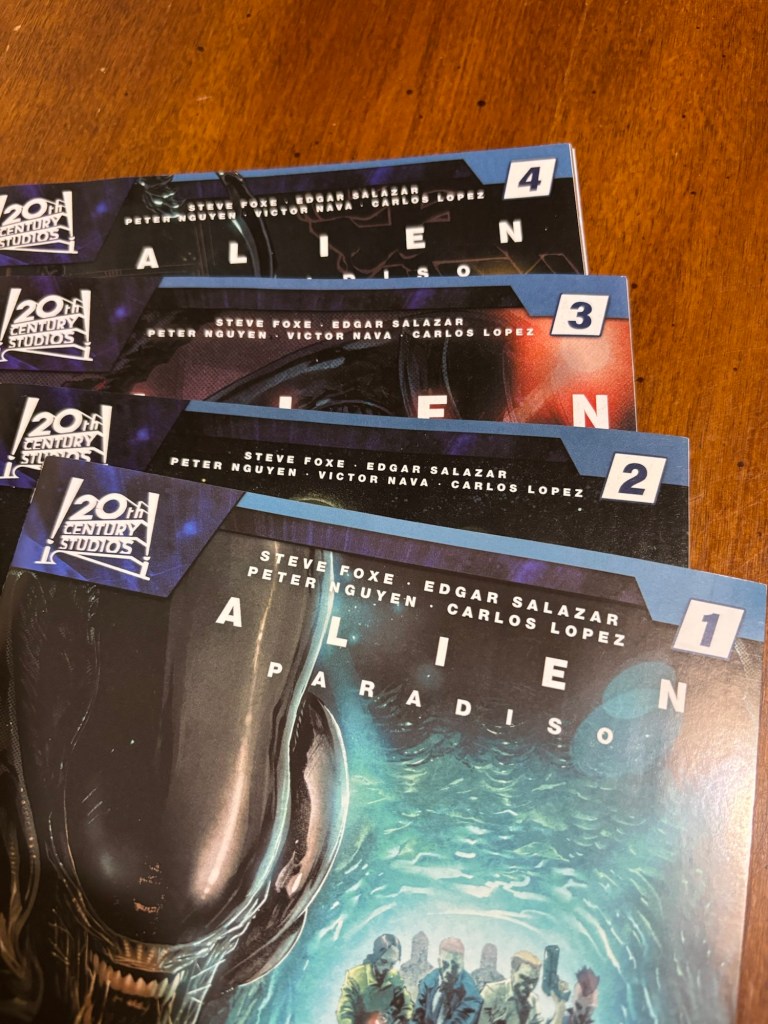
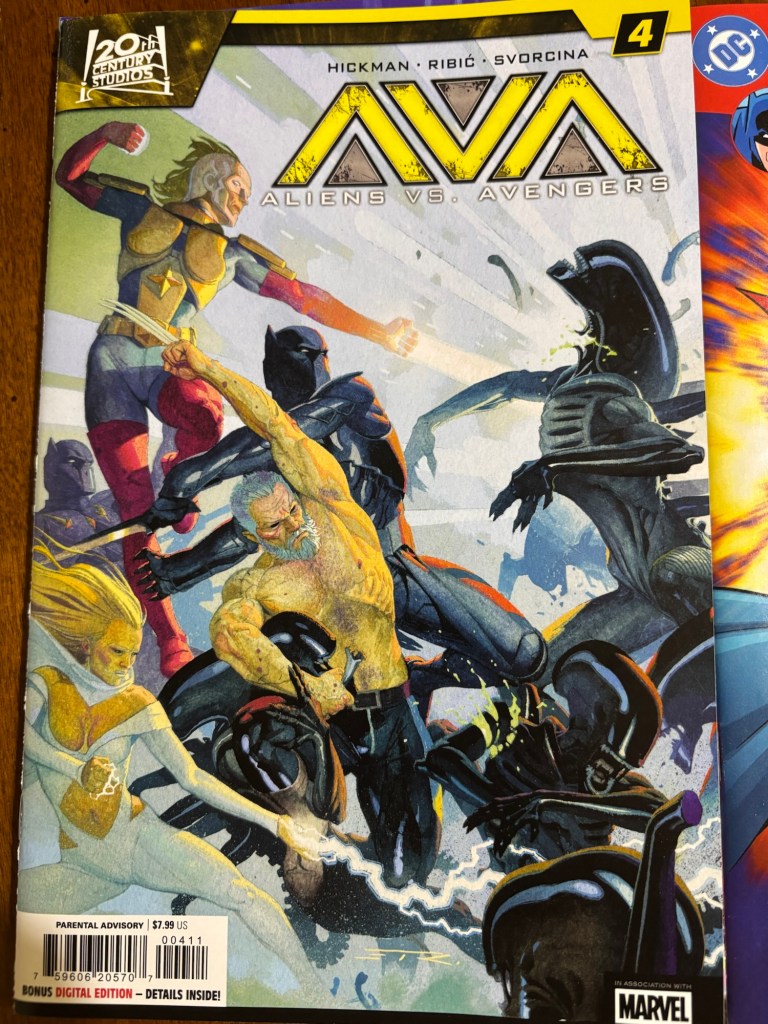
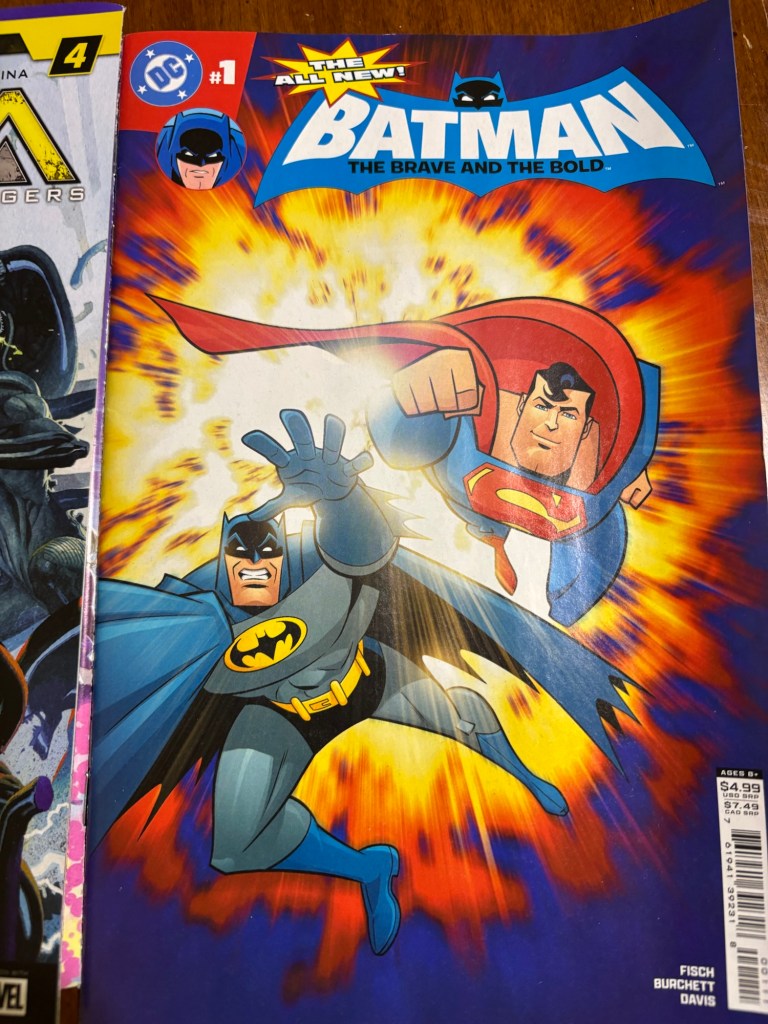

The Aliens vs Avengers are better than Alien: Paradiso, but both are tremendously better than this random Batman comic.
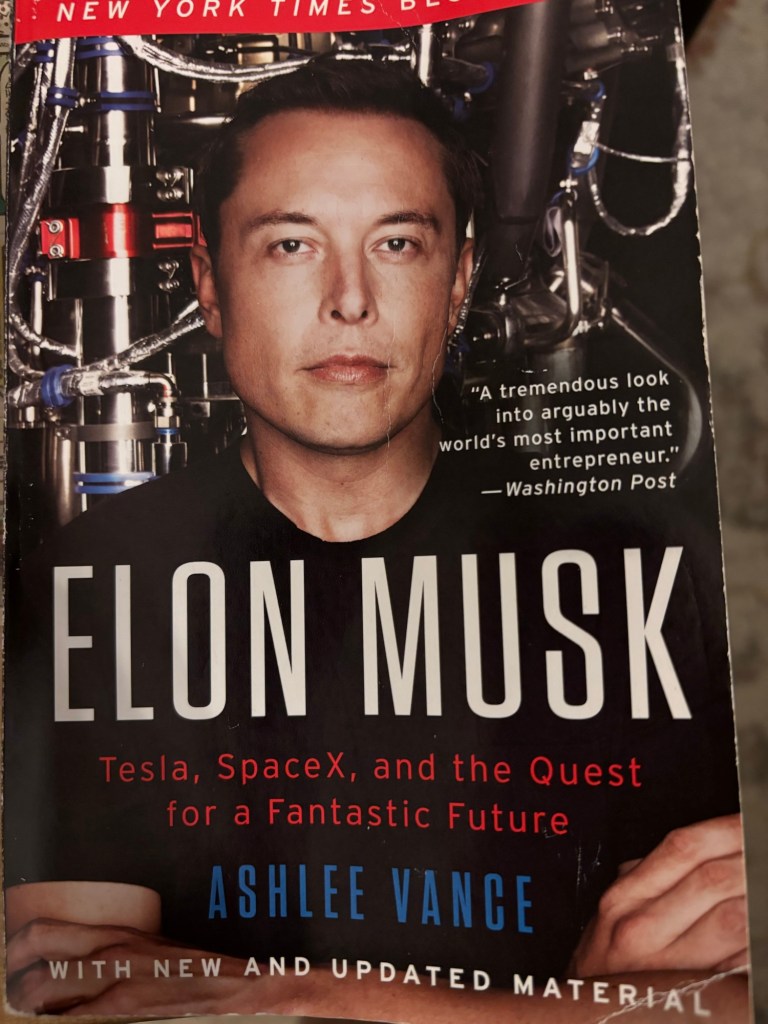
Not sure what to say about Musk. Fascinating on every level. I guess main takeaways are he has a habit (from the beginning) of using all his money always—ie re-investing profits into new ideas/products. That appeals to me. And it is eye-opening to read about so many individuals who seek out money. I have never really thought about life like that. But Musk has money and is willing to use it to pay for what he wants to build.
Oh, and the part about flying home from Russia without a rocket and his data-based decision to build it himself for cheaper anyhow is the stuff of legends. Archimedes, you wild man of naked street running, watch out!
Plato is always a treat. Apology and Crito are a delight to read, at times laugh out loud funny, and also terrifically on point. For example, Socrates is on trial for his life. The charge: corrupting the youth. (Sound familiar yet?) His defense: the god (not biblical Yahweh, just some general concept) told him (Socrates, not Kirk) he was the wisest man—which he couldn’t believe. So he then decided to roam the country trying to find someone wiser. (Note: Plato wrote this about Socrates over two thousand years ago. Do not think about Charlie Kirk!) But no matter to whom he inquired, he always left disappointed because while they, in fact, weren’t wiser than him (Socrates), they thought they were wise. Socrates considered this as a worse state than his own, because where he wasn’t wise, he knew he wasn’t wise. Anyhow, in the end, he loses the case and was essentially forced to commit suicide. What can you do? It begs the question: What is an uncorrupted youth?
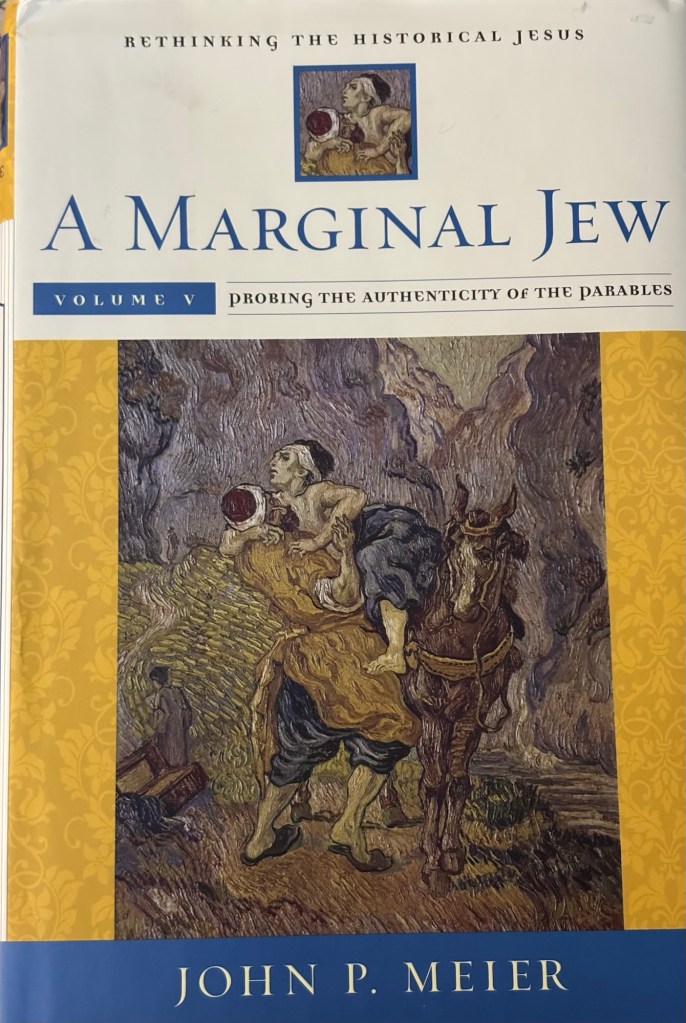
This final volume from Father Meier is excellent for the same reason the previous four are excellent. Meier states his destination and the rules of the road, and then works steadily towards it. This strategy allows the reader to do something even the Bible itself doesn’t: we get to assess his work. Put another way, Meier gives you everything you need to disagree with him. The only real criticism, then, is to discount his destination (an acceptable-to-all historical Jesus) or his rules of the road. (And feel free to do so.) But I love his destination and even if I didn’t agree with his road rules, I agree with the concept and so his portrait of the historical Jesus is fine by me.
To be sure: upon completion of these five volumes, you will never again believe Jesus was hippie-like. You will never again believe Jesus was some wise sage, like Confucius etc. But more importantly, for every stupid thing that you hear non-believers say about Jesus, you will have excellent evidence of where they are wrong. Never forget, the goal with these folks is not some stunning delivery of “you are wrong”, but “I bet you’d reconsider if you had better information. Do you have a second to chat?”
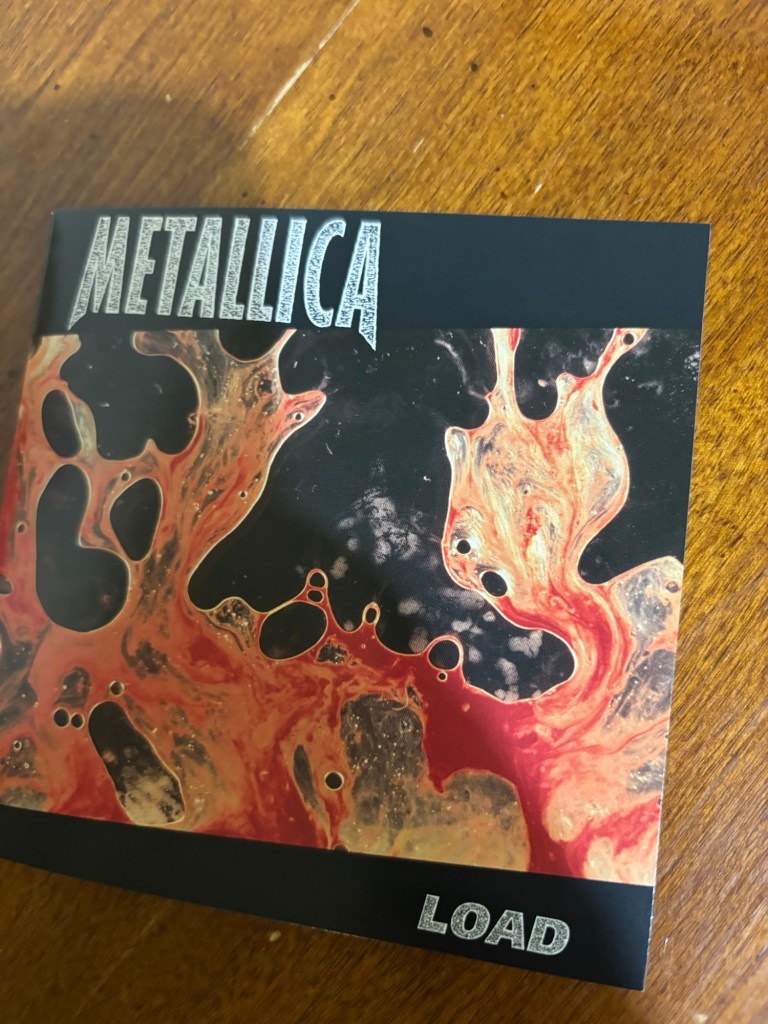
I threw in Metallica’s Load Album book for kicks because (1) I did read it. And (2) it has some pictures that were tremendously nostalgic. (Metallica re-released Load remastered recently.) “Hero of the Day” is far richer, more “Simple Man”, than I ever remember noticing. You will not be disappointed to reinvestigate both.
On Higher Education
I read and I read and I read.
It’s lovely.
But even I have doubts as to what exactly to do with all the knowledge. I am not interested in being a college professor. There was a time when I could almost imagine working hard and becoming an Indiana Jones-style biblical archaeologist (yes, kids, there are archeologists and they really do have dangerous/exciting experiences depending on the types of finds).
But that mood passed.
I ate with an old professor and we briefly discussed the pros and cons of re-engaging formal education. I wasn’t sold that the pros outweighed the cons. Specifically, every part of actual biblical training and academics is losing ground to the soft skills of Christian counseling and other versions of underwater basket weaving. Why join a dying breed? There simply is no demand from the public for an educated pastor. So the degree has to be for teaching or research, and the field is near exhaustion.
This brings me to the catalyst for this post. Check this endnote out. It is from Fr. John P. Meier’s A Marginal Jew: Rethinking the Historical Jesus, Volume 5 “Probing the Authenticity of the Parables”. I have been reading his Marginal Jew books since 2001 (24+ years). I think in the beginning I used them against Christianity as I questioned the Faith, but over time they actually have become some of my favorite books on Christianity-ish, outside of the inspired canon.


All of those listed titles, articles, books etc. are about just one (1) parable. I have been in churches for probably 25+ years and I don’t think I could list that many individuals who have commented (informedly or free-association style) on any one (1) parable. Fr. Meier, on the other hand, read three pages’ worth of scholarly commentary. (And in at least two languages.) Talk about putting me in my place.
I take it all back. I do not read. I do not read. I do not read. And I have no business ever lofting an opinion about anything into the air.
In the end, Fr. Meier and his impossible bibliographies (1) arms me for rhetorical battle with the loudmouth ‘educated’ nonbelievers that I sometimes run into and (2) keeps Christianity larger than life.
I think my favorite title from those listed is, “Excuses, Excuses: The Parable of the Banquet (Luke 14:15-24) within the Larger Context of Luke.” Funny guy.
Also, not that Meier loves its conclusions, but he did reference it enough that it sounded kinda like a definitive work so I did pickup a used copy of Snodgrass’s Stories With Intent—a 900+ page comprehensive look at the generally eloquent parables. I have to admit I haven’t been this excited to read such a book in many years. So add that to Meier’s effects: inspirational.
The Less Committed Noah, A Review of “The Coming Wave” by Mustafa Suleyman
To recap, I admitted to myself some months ago that I knew nothing about AI. I also doubted that anyone uttering the sounds, “A-I” (“It’s an acronym”, taught Kamala), knew much more than me. This belief was bolstered and informed by my nearly-techie brother’s share that his bosses advocated the use of the phrase wherever possible during meetings with clients as it perked people up. In other words, AI is trending. (There is nothing new in this confession of mine.)
The first book I decided to read was Melanie Mitchell’s Artificial Intelligence: A Guide for Thinking Humans.
I then asked a friend for any recommendation he might have, and that is how I ended up reading Suleyman’s book.
To be clear: there is no need to read this book. It is not earth shattering. It will not change your life. It truly does not have much by way of content. A Toastmaster friend once told excitable me, in an effort to dissuade me from buying his book, that these days books are little different than business cards. That is about right for Coming Wave.
But I did read it and consider it and this is my blog so I am going to share my thoughts.
Maybe because I have been reading a bunch of ‘evolution of physics’ books, I read “wave” in the title and pictured (and was intrigued by) the wave in lightwave. Maybe it was because I have already asserted that AI is merely man’s newfound ability to sense electricity with greater refinement than ever before that I didn’t see “water” wave. Whatever the reason, I was totally taken aback by Suleyman’s opening alignment with Noah. It’s actually shocking. Seriously, consider it. There is a man, who by all accounts is ‘successful’, and he chose to warn the world of cataclysmic disaster.
What?
Perhaps it was my background in Biblical Studies that clouded my thinking. But the end of the Deluge account in Genesis includes the Rainbow and the promise to never flood “the world” again. This leaves two choices available to authors. First, believe the Bible story and live a peace-filled life. Second, totally miss the conclusion of the Bible story and with astounding boldness, still identify yourself with the main character in some bastardized version of the story.
But what do I know? I’m often told it is better to not throw the baby out with the bathwater.
So I read on.
Suleyman opens the book with a Glossary, much like post-graduate work requires. But unlike post-graduate work, no editors or friends told him that his definitions are nebulous. Take “Waves” for example.
“The global diffusion or proliferation of a generation of technology anchored in a new general-purpose technology.”
Global, generation of technology, anchored, and general-purpose technology all need to now be defined.
Another term (pessimism aversion) includes the word elites. What exactly is an elite? My best guess is the intro-extro couple from Susan Cain’s Quiet who can’t decide on how to seat guests at their parties. (Throw pillows and a bar with top chairs was the solution, if I recall.)
All this might seem too detailed and in the weeds, but I assure you of my earnestness. What exactly is the threat? Why don’t I feel it? How come when I hear “pessimism aversion” I think, “Does he mean hope?”
I’ve talked about how unappealing it is for politicians to constantly hedge their positions elsewhere on this blog. Well, Suleyman cannot but hedge. His warning, so laughable, is always immediately followed by, “But it is also possible that it only rains the exactly perfect amount.”
Fourteen chapters, two hundred eighty-eight pages worth of Noahic warning, immediately hedged.
Again, Noah didn’t hedge. This commitment is one major reason Noah is timeless. Suleyman, on the other hand, will not be remembered. His wave will not form—regardless of his book’s grand clarion call for containment (and central planning at a level red blooded Americans will never tolerate).
Moving on to “new to me”.
I have to admit that Suleyman did introduce a few topics that Mitchell left out of her more focused general audience primer. Synthetic Biology, according to Suleyman, is a hand-in-hand technological advancement. Think Arnold building Arnold.
Suleyman also introduces the concept that, running with the Terminator theme, Arnold won’t care about nation-state boundaries (which Suleyman defines, abhorrently, as “collective fiction resting on the belief of everyone concerned”). The example of this coming hellscape (the “warning” before the hedge) being, ta da, Hamas. Or, maybe a good analogy are the fringe groups in the NW part of America which seem to always be trying to separate statutorily from anyone who can say “sanctuary city” with a straight face.
Then again, it is possible that AI actually ushers in more rainbows and the first ever unicorns. You just never know.
To be honest, and this is the end, Suleyman’s main problem is he cannot (nor can anyone it seems) meaningfully define AI. Melanie Mitchell essentially teaches us how AI works, but Suleyman doesn’t mean that AI. His warning is about the coming AI. You know, the one that really is going to put an end to the Anthropocene and all the blood-pumping bipedal organisms with opposable thumbs and large frontal cortexes.
My final takeaway, the one I sent to the recommending friend, is: Either (A) AI programmers like Suleyman are trying to suggest the coming AI is concretely analogous to handing nuclear bombs to the homeless or (B) they don’t mean that.
If (A), then right now we must immediately issue a call to arms and begin a first of its kind unceasing kinetic war against them. If (B), then there is no coming wave.
Reading Log 8.6.25



I used to have a several t-shirts which had authors’ faces on them. James Fenimore Cooper was one of them. I just like his books. They feel historical, even though I know they are fiction. If you are open to testing the waters, I’d start with Last of the Mohicans, but eventually Afloat and Ashore should be read.
I will write a proper book review of Suleyman’s The Coming Wave soon. (It’s about AI.) Just know that he opens by expressly saying that he means to call to mind Noah with the word “wave”. Oooo. Scary.
Poems are what they are. Some are fun. Some are painful to get through. Holmes obviously wrote with great ability. But that didn’t mean his poems are all tier one.
Volume 1 of Reporting Vietnam (and what I have read of Vol 2) will change your life. These should be required reading for all American highschoolers. In short, Ho Chi Minh first entered the political scene in a big way in WWII by insisting Vietnam should be independent. Then in an interview in 1962 he said it will take maybe 10 years for America to give up. In 1973, before a full 10 years, America withdrew. Consider these facts. Ask: Why did America oppose Ho? I am of the firm opinion that in the future, it will be common knowledge among American History buffs that Vietnam was the true turning point in American History. Everything occurring today (in politics) goes back to that war. To be clear: The lesson I will distill to my own progeny is the following. “Ho wanted something and achieved it. Why did America even try to stop him? Oh, I know. Communism. Well, ‘F$&* Communism’. Communism makes people lose their minds. Why? It’s not to be feared. No idea is. And hug any Vietnam veterans that you meet. Also, America has no duty to help any country out of some sort of compassion. We now have Vietnam, Iraq, and Afghanistan (hopefully not Ukraine) as proof that the task of “helping” is impossible. People have to help themselves. America should do what we want precisely because we want to do it. Period.”
Aeschylus’ poems are fantastic. They are timeless too. Read and re-read.
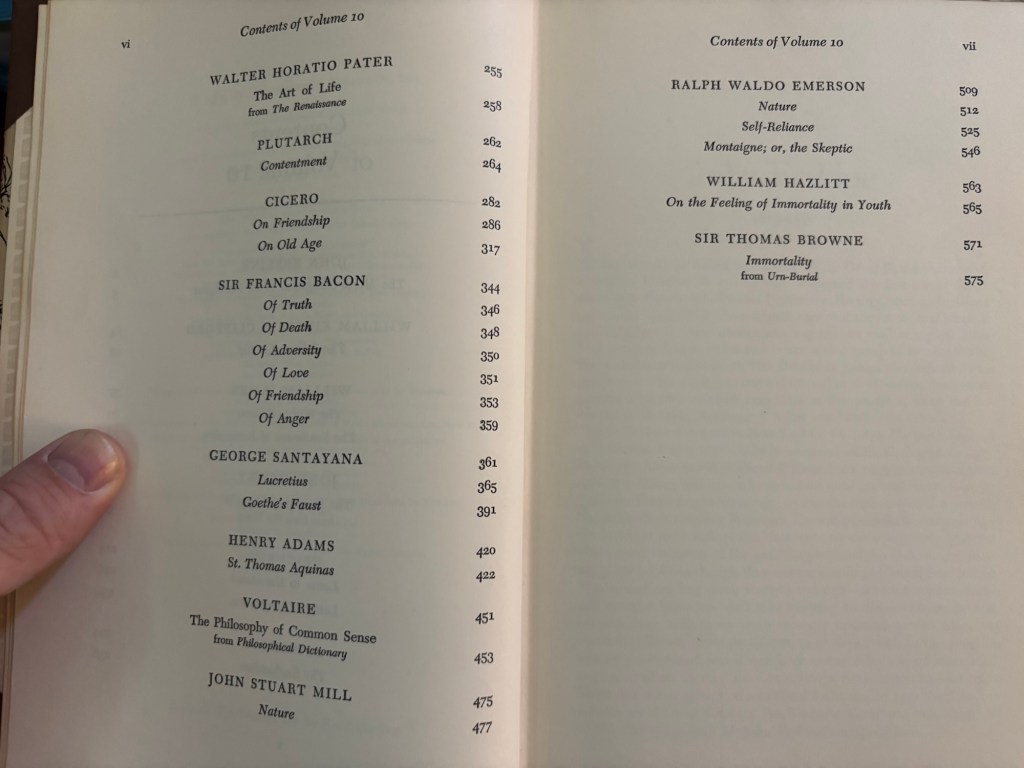
Those essays in Volume 10 (final volume) of Gateway to the Great Books are exceedingly worthy. Of special note is JS Mill and Voltaire. Emerson is a great contrast to Mill. John Dewey is a must-read for anyone in Education—but unfortunately he will never be read by the uneducated. Sad.
Finally, the Vicar of Wakefield. This is a book that “moralizes”. Do you even know what that means? It means to use a story to teach how to act. Our culture, nearly every member, regardless of gender ;), does not believe in teaching morality. So you will not likely see the value of this book. I even doubt that my kids will understand it. But we’ll find out together when they’re old enough. Not the best book. But a good one on how to find happiness during unhappy circumstances.
Reading Log 6.9.2025



Heart of Darkness was a spur of the moment addition to what I had lined up. I stepped out of my car in my sister’s neighborhood and the neighbor whose yard I was parking in front of, and of whom I inquired if the parking spot was okay, became chatty and mentioned he’d read the book 10 times. He mentioned many other things about it too. I hadn’t read it in years (there’s a review on here from a decade or so ago). So I figured I’d give it a re-read. It is scary. Definitely not for kids. And yet it is a must read. Also, the film adaptation Apocalypse Now is probably the best adaptation of any book/story ever.
****
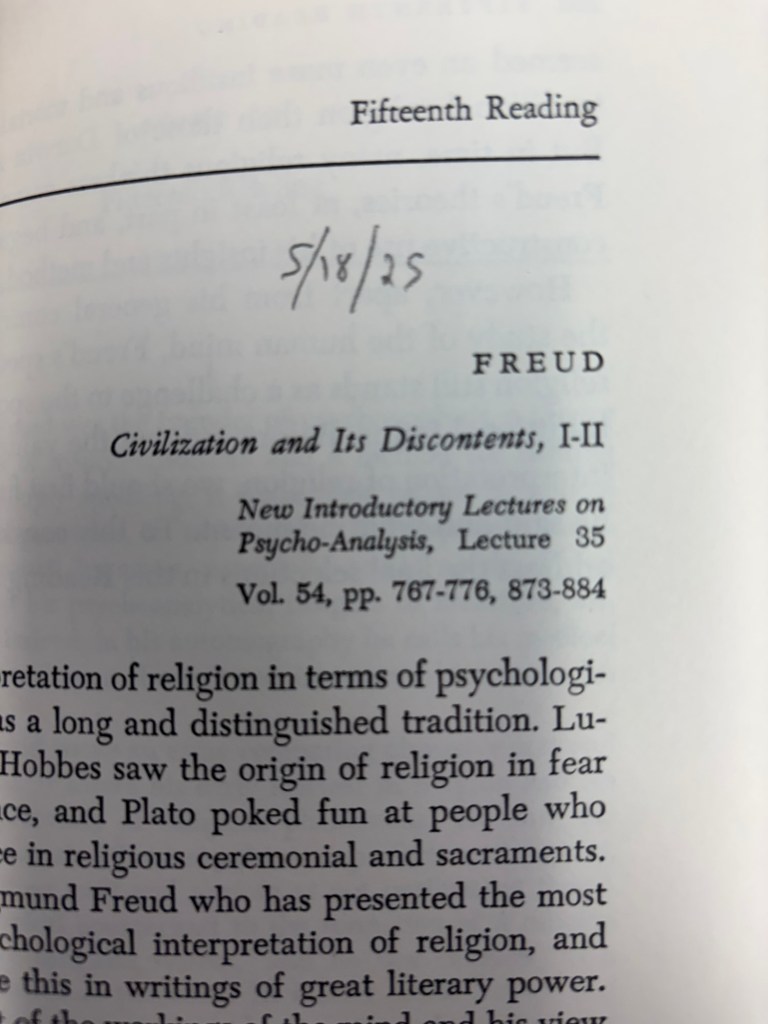
Freud is someone I kinda disdain with all my heart. What a waste.
So everyone is living on the planet, all hunky-dory, and then one man says, “You know that feeling in your belly, the one you get when you haven’t filled your belly in a while? Well, we get hungry and have needs in our minds too, don’t ya know? Oh, and this means we invented religion.”
I enjoy reading people who I disagree with—I like trying to imagine arguing with them. So there’s that. But Freud is someone whose influence I could live without. I will say this, though. Rather, I’ll let him say it.
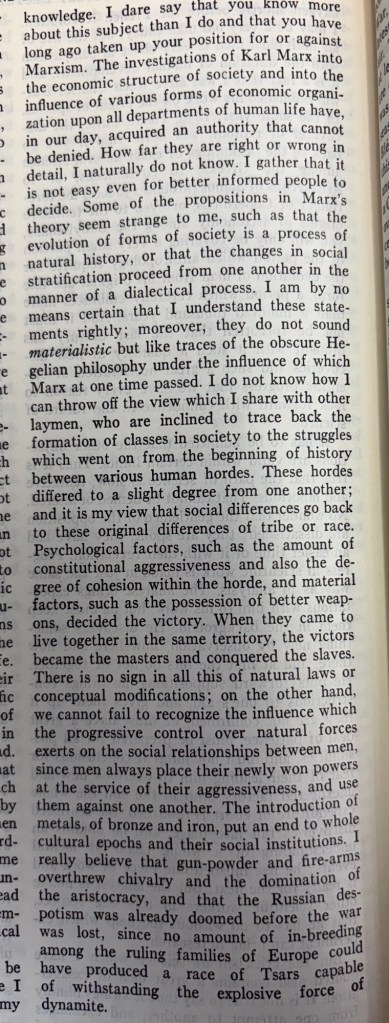
Freud went on to declare that Marxism and its “suffer now, be rewarded later” propaganda was, to him, no different than religion—and needs to go, too. So with that I say, Freud, ol’ buddy ol’ pal, pull up a chair. Let’s get you another round.
****
I had been reading that Eddington for far too long. I am happy to be finished with it. He is exactly my style and we see the same world. The main takeaway that an honest man like Sir Eddington gives is the truth about the speed of light. He very clearly explains that the speed of light is, in fact, not unsurpassable. Instead, what the physicists mean is the speed of light is universal. His analogy is that it is the “wood grain” of the (wood)universe. Even while he was alive they had experimentally collided electrons or whatever together and gone “faster” than the speed of light. But that doesn’t affect the fact that nothing is faster than the speed of light. This is because the speed of light is the separation of time from space. So if you were to go “faster”, you’d be combining time and space, which is clearly unimaginable.
****
I picked up this book on AI for obvious reasons. And guess what? My instincts were right again. There is nothing to fear. AI does not learn. It does not read. It does not understand.
In short, the computer nerds learned from the brain nerds that between 1. a conscious decision to move the body, and 3. the brain-activity that moves the body are 2. many other brain-activities whose purpose is unknown. So the computer nerds built (2.-like) delays between “do this” commands and “do this NOW” action. And then, the computer nerds programmed the “do this NOW” action to respond to “you failed” responses with (actual jargon alert) back-propagation. It is this back-propagation that is “mysterious” and where the nerds say the AI is “learning”. But again, the AI is not learning, it is following commands and making exceedingly subtle adjustments. The trouble for the nerds is the time it would take to map out all the exceedingly subtle adjustments of back propagation is considerable—and even if they took the time, they’d simply have a ton of data points and not really any necessary reason to draw one conclusion instead of another as to why the program executed either 1. that many actions or 2. those actions in particular in order to not “fail” again.
Talk about navel-gazing.
Regarding handling and “seeing” images, the computer nerds, this time, learned from the eyeball-nerds. In short, the eyeball nerds have learned that there is a distinct method to how we see, which essentially goes from big to small. Like, outside, blue sky, green earth, forest, tree, tree branch, tree leaf, leaf veins etc.
So on an image, the computer nerds tell a program to find edges first, and then go from there. Again, AI does not see anything. It just is really good at the game of “memory” (unless humans screw with images in certain, invisible to naked eye, ways.)
One final comment of recommendation for this book. (You really should admit ignorance and read it.) The author describes the phrases “AI Spring” and “AI Winter”. And she proceeds to use them throughout her description of AI’s history. In short, AI “astounds” someone (Computer beats Chess Champion), and money shows up in large amounts. The computer nerds take the money and promise everlasting life. This is AI Spring. Then the computer nerds fail to deliver. The money dries up. This is AI Winter. The cycle repeats. ICYMI, we are currently in AI Spring, more like AI Monsoon. But winter is coming. It always does and always will. Withstand the hype! You can do it!
“Had I Known”, The Game
I have all sorts of analogies for why I read—current favorite is, “Books are the map of life; find yourself.” But when I read something totally new—Vietnam War history in this case—I find myself continually considering, “Wow. Had I known this earlier in life, I would’ve…” and then a fun imagination game plays out.
How about you? What information have you read which forced you to play the game, “Had I known…”?
I just ordered a “F%#* Communism” flag, probably for ceiling of garage, because of my reading. (The one created by Paul Krassner and John Francis Putnam in ‘63.) I share this so y’all won’t think I only read for its mental fitness.
It was mentioned (as a sign, not a flag) in an article about the “defoliation” AF squadron whose classically AF Pilot wit-filled motto was, “Only YOU Can Prevent Forests.”
I can hear you now. “Why?” And, “Don’t you have toddlers?”
Because as much delight as this game provides, I don’t want my kids to play it regarding such a pivotal war.
Seriously though, do comment below with any instances that have initiated the “Had I Known” game in your mind.
“Bare All” vs. “For All”, A Joint Review of The Return by Uberto Pasolini and Mission Impossible: The Final Reckoning by Christopher McQuarrie
I have always longed to be absolutely open-minded when it came to art. At an early age I was aware there were art critics who could find and explain beauty and power and relevance in art that I generally found unappealing. “What do they see?” was my question. This was followed closely by, “Will I ever see it?”
Ralph Fiennes has a full frontal nude shot in Mr. Pasolini’s telling of “The Odyssey.” I really want to understand why. My guess and how I understood it was it provides fodder for reviews like this one. He gave me the line, “Like Ralph Fiennes’ bold nude scene, Pasolini’s film presents Homer’s epic as nakedly as ever. It’s a ‘Just the facts, ma’am’ retelling.”
Then I would add, “Unfortunately, whatever he was aiming for, it hits more like a Cliff’s Notes summary of the definitive epic than a masterful adaptation. The poem is more than the naked delivery of facts because beauty, power, and relevance demand more.”
Tom Cruise, on the other hand—while still baring much epidermis—does not bare all in Mr. McQuarrie’s latest and final(?) Mission Impossible installment. Why not? There are probably many reasons. Surely near the top is his desire to make a movie which will entertain every living human on Planet Earth, now and forevermore.
We all already knew China was important to him (ref: Taiwan flag removal on leather jacket in TG2). He released this one in Tokyo, I gather. So there’s that. But we’d be fooling ourselves if we thought only in terms of round eye and slant eye. He wants all of us.
For me, there is a blandness that necessarily accompanies this approach to universal art. It is best captured by how jokes, to be funny, must remain particular. “A priest, a nun, and a monk walk into a bar” works. “One religious man, one religious woman, another variation of a religious man walk into a workspace” does not work.
So when art is made, for me, the same applies. There is a requirement for creating something that ensures there is some level of audience guaranteed to understand it, but if you worry too much about this and try to be certain that everyone will understand and not be offended etc, then you lose the point.
To this I will add and conclude that what TC and McQ made is beyond this attempt at universality. They aimed so high and are such capable men that they achieved something truly remarkable. I mean that I believe they fulfilled their goal. It’s not a perfect movie. But it is a movie that every living human being on Planet Earth will enjoy, now and forevermore.
Reading Log 5.18.25


****
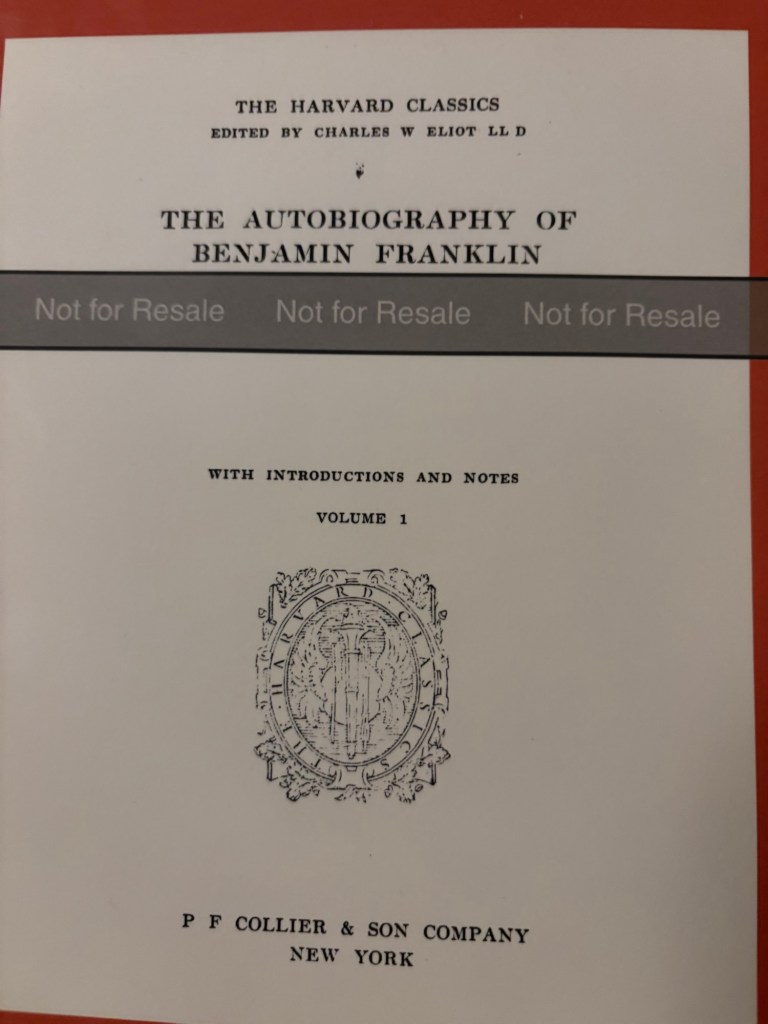
Ben Franklin is a remarkable man. Plenty of little nuggets throughout, but the overall sense is probably no one was adapted to his time better than BF.
****
Too much of my life has included the cultural icons, “The X-Men”. So it only made sense to get their original comics. They do not disappoint. The main, concrete benefit is the movies are more enjoyable. Coming in close second—the first comics can be rough around the edges and highly “experimental” or very “willing to take chances and then adjust”. So besides the inherent story that resonates so well with coming-of-age, we find an example of how to pursue your passion.
****
Locke and Hume are worth reading, but I can confess that their ideas are so foundational for our society that they only pack a punch if you have the uncommon ability to imagine what life was like before them.
****
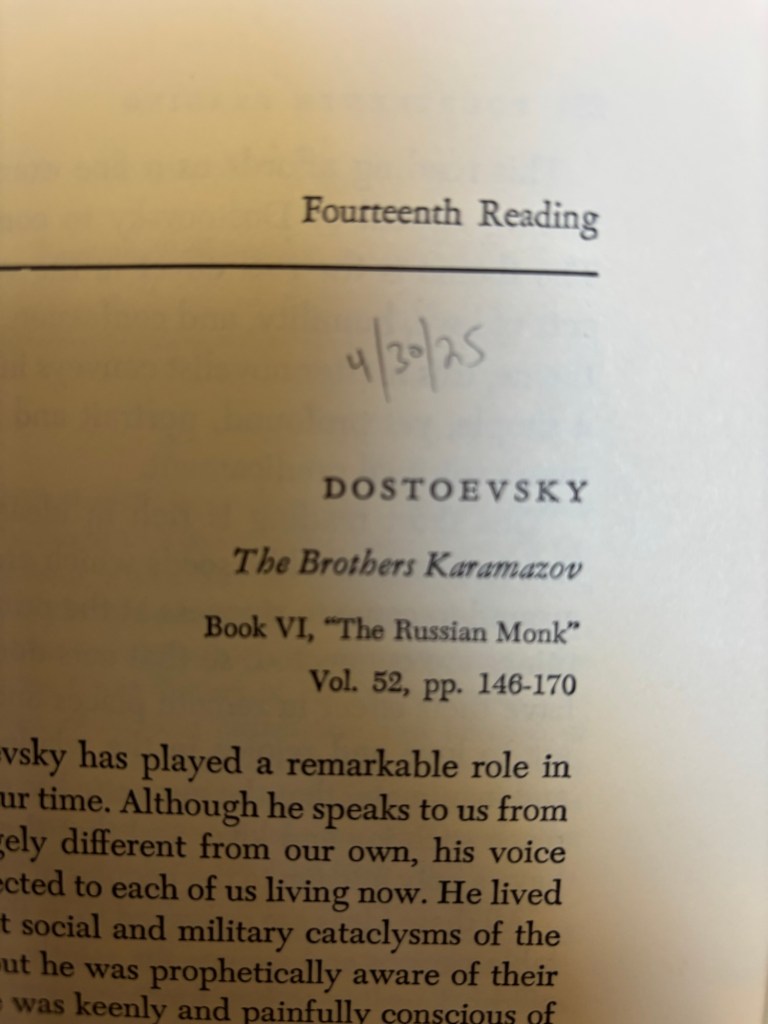
Jordan Peterson loves Brothers Karamazov. Ooh. So sexy sounding, no? It’s one of those “tells you more about him than the book” claims. I mention it because I read this book years ago precisely because it was one of the greats. So don’t take this as a bash of JP. Instead, take it as a DUH! THE BOOK IS GREAT! YOU NEED TO READ IT! shameless promotion.

