Reading Log 8.31.2026
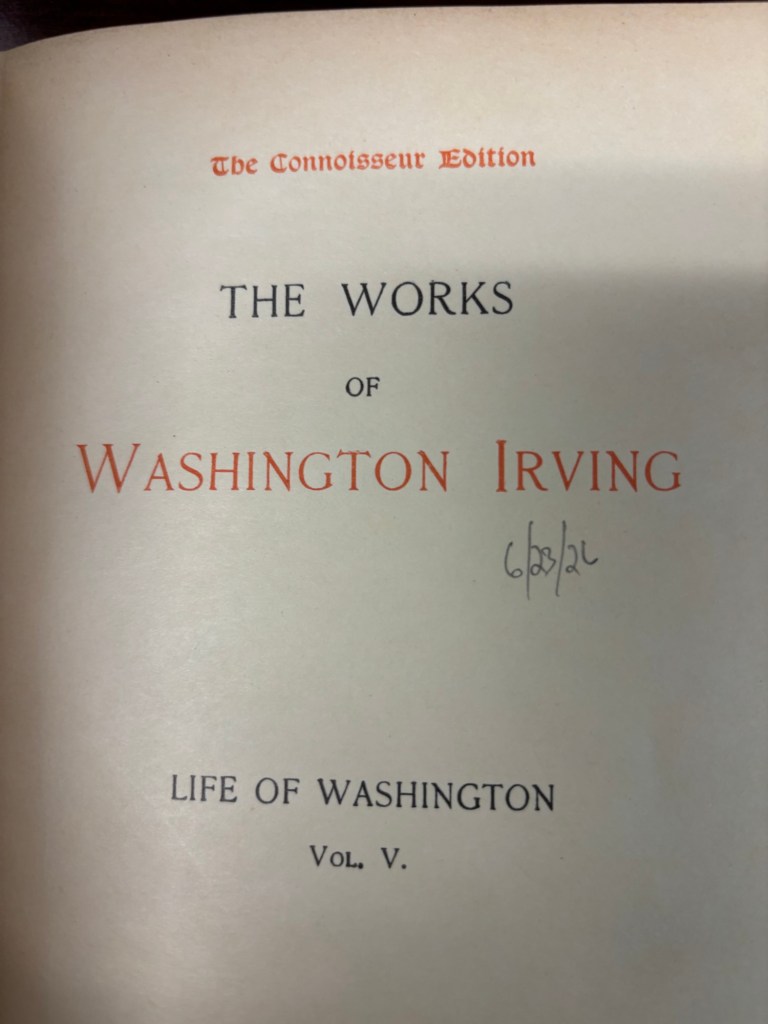
Washington Irving wrote a five-volume biography of George Washington, so this was the final volume. As you guessed, he dies. And it is sad. It is sad because he died for reasons that probably didn’t have to result in death, and it is also sad because he genuinely seems to have longed for a peaceful, leisurely life on Mt Vernon. The most interesting detail in this volume was that after his presidency, after he had made clear that his days as a public servant were over, war seemed inevitable again; and the powers that be were calling him to service once more—and he agreed to saddle the war horse once again.
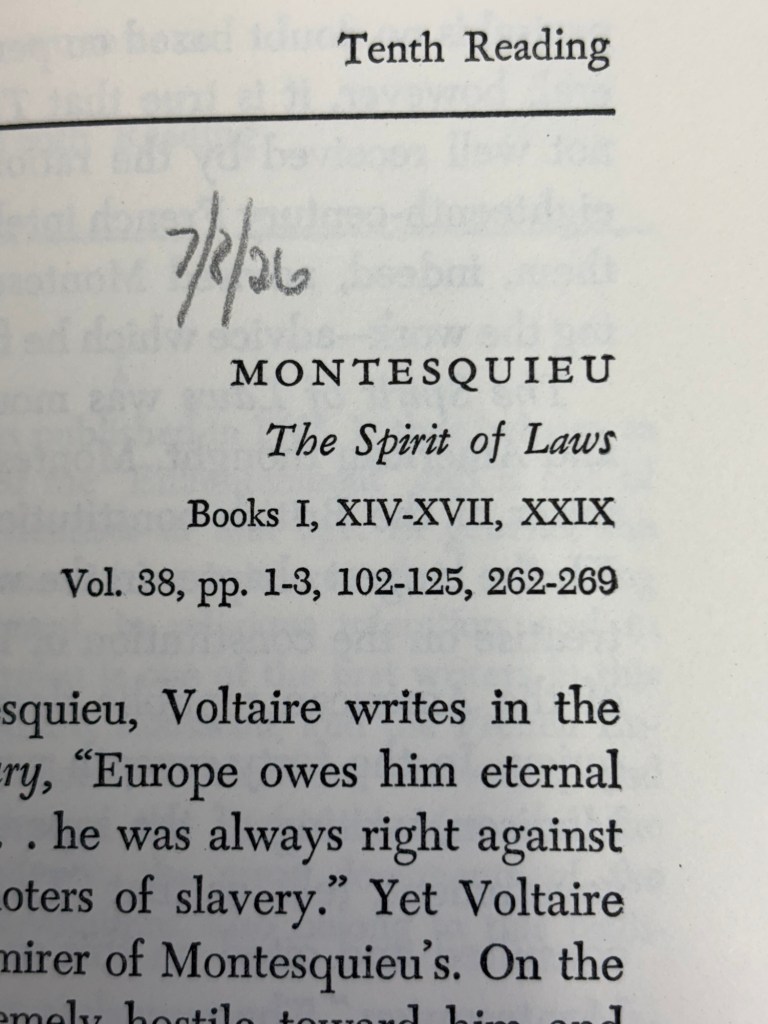
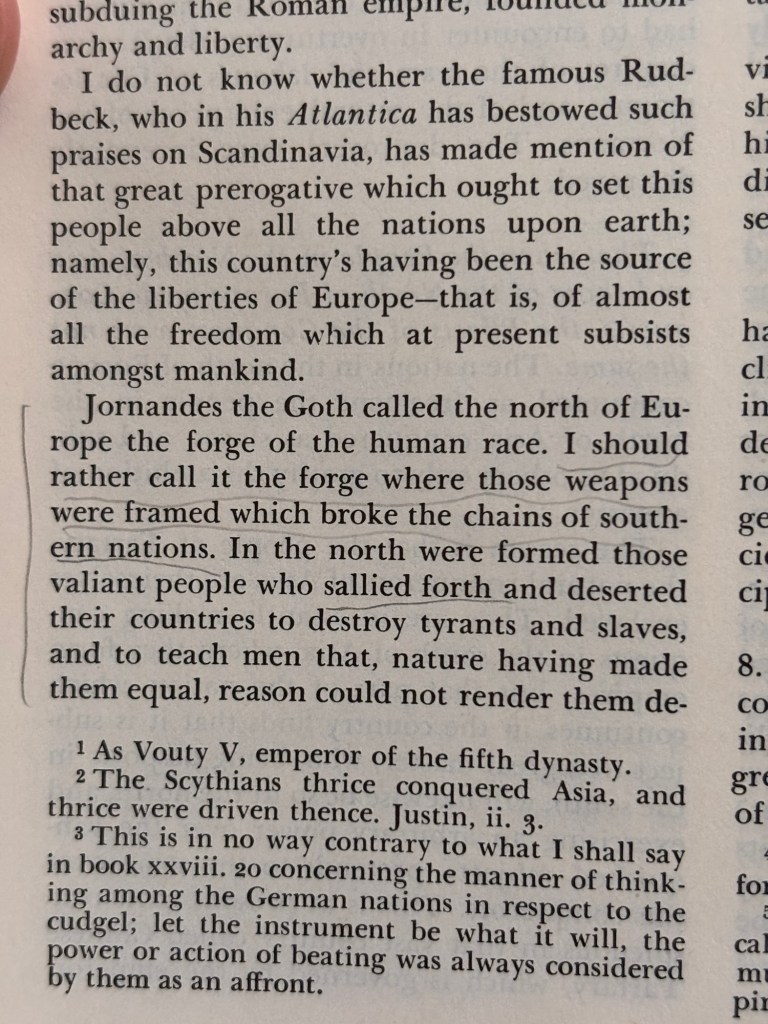
Montesquieu is always engaging. This time a main angle of his approach to Law (capital L) was climate. I don’t know if I’m merely super open to suggestion, or if he makes some genuinely interesting observations, but at the level of ‘the broad strokes’, it seemed to me that as much as I loathed the idea that climate does and should dictate the laws of a country/people, I came to understand that there is merit to the idea. I must also call attention to the particular way in which he framed slavery—via climate again. We hear a lot today about Whites ending worldwide slavery (as opposed to BIPOC folk having any major role in ending worldwide slavery). But that seems to fall on deaf ears, i.e. no one that is ignorant of history wants to hear anything good about Whites. But Montesquieu doesn’t care about white or BIPOC (such a silly division, isn’t it?). Instead he puts it this way:
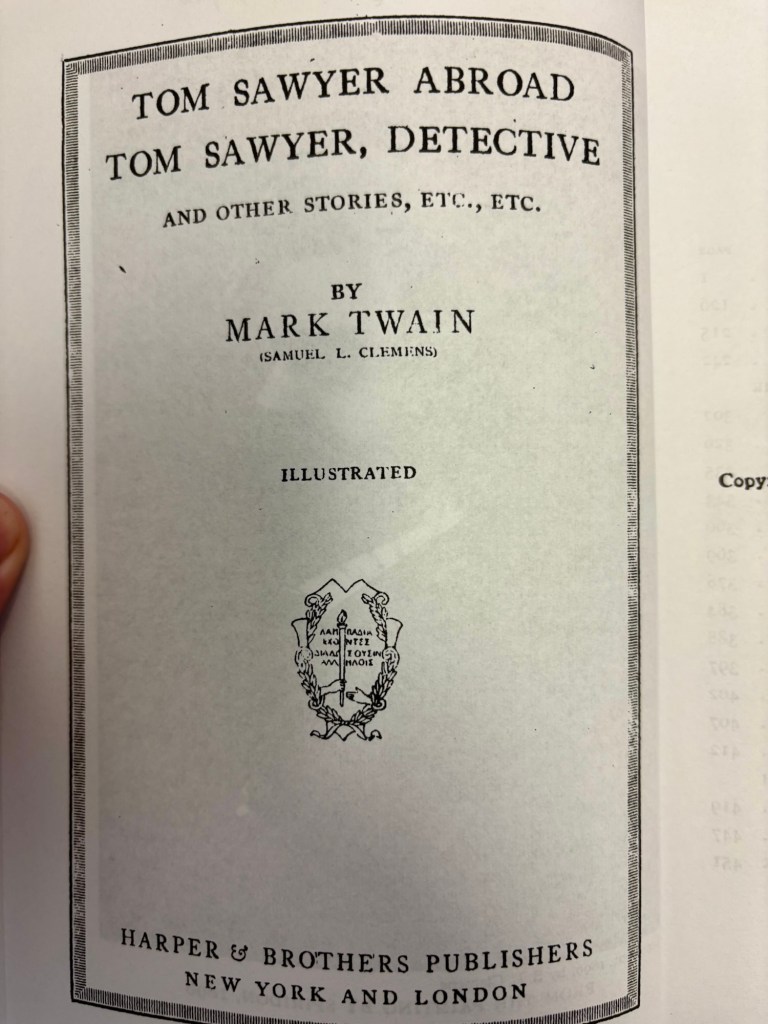
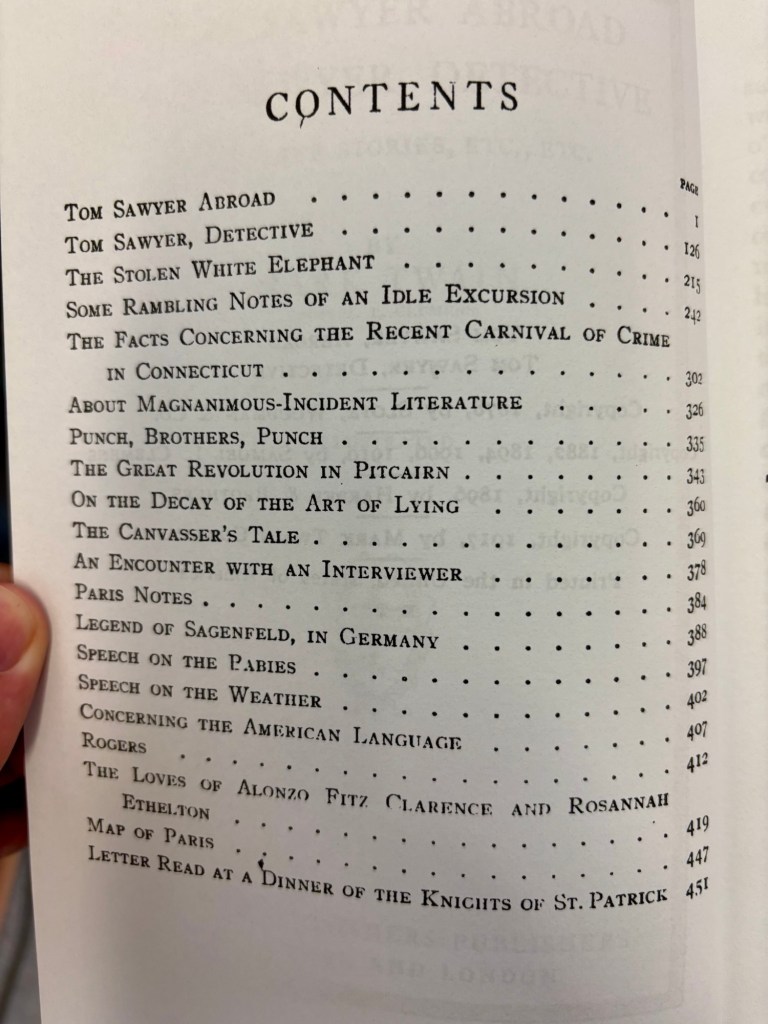
A new biography of Twain has hit the bookstores, as you no doubt are aware. As expected, it highlights all the ways he was Woke and had TDS. A friend even shared with me an article about how Huck Finn is being taught by the few schools that will still touch it, and that article used right-wing censorship to invigorate itself to life. In other words, the article’s author claimed that one of the reasons the book is worthy is the bigoted MAGA or worse Right doesn’t want it taught. What a joke. I mention all this because of one simple fact: Mark Twain is a premier author. Without his writing, not his plain opinions, we would not know or care who he was. So this book and the collection of short stories that follow the main feature, are definitely worth reading. Of special note to those who want a good laugh is On the Decay of the Art of Lying.
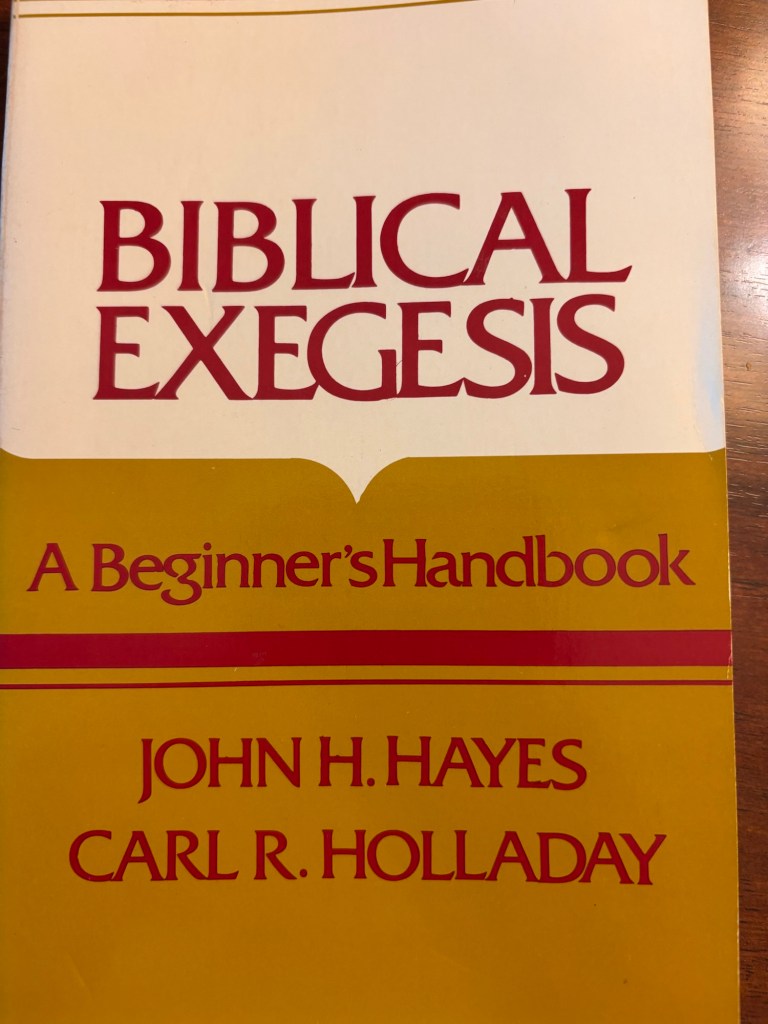
I picked up Biblical Exegesis: A Beginner’s Handbook because I have been reading through the Anchor Bible commentary set. The authors therein casually mention “literary criticism” or “structural criticism” and despite spending three years in seminary, I just wasn’t comfortable with what they meant by these distinctions. Similar to the Five Love Languages, which can be stated in five sentences, this short book could have been monumentally shorter. Here goes. Textual Criticism is the quest for the original wording. We’re talking ancient documents and super in-the-weeds nuances that do not have earth shattering consequences. But it is fun to criticize or look with a critical eye at all there is to see. Historical Criticism is the attempt to accurately place the passage in the context of recorded history. This is in contrast to allegorizing everything in the Bible like is so popular now—-and has been in the past. (“It says, ‘He stooped down.’ Do you hear me? If He ‘stooped down’ back then, He’ll ‘stoop down’ for you today!”) This would be where we discover forgivable discrepancies between the biblical account and other historical accounts of the same events. To be sure, KJV-only types get around these discrepancies by declaring the Bible writer’s to be the accurate accounting–in face of all others. But this is the least of their errors, so don’t lose any sleep on them. Grammatical Criticism is the quest to determine “sense units” after original wording is determined. Easy analogy is “raining cats and dogs”. We can find some people who say, “it is raining dogs and cats” and others might say it correctly, “cats and dogs” but even after we determine the most original wording to the phrase, we need to determine what the heck the sense unit “it is raining cats and dogs” means. Next is Literary Criticism. This is the careful look at the life of the text itself. It has been 2000+ years of these texts passing through time. Consistency is the rule, but not without exception. So scrutinizing the contents of the writing, apart from the historical time period, the grammar, or even the original wording, sometimes provides interesting results. For example, the Anchor Bible book that I am currently reading is called “Haggai Zechariah 1-8”. At first it seemed like maybe the publisher just ran out of time or space, but upon reading the volume, we soon discover that the author believed Haggai-Zechariah 1-8 should be one “bible book” and then “Zechariah 9-14” should be another one. And Literary Criticism is the reason for this opinion. Form Criticism is when we read the Bible with an eye on the “form” we are presented with, such as how we understand a deed to house is going to read completely different than a classified ad about that same house. Tradition Criticism is simply the idea that the story or law or teaching within the passage of scripture was developed. Easy example is the teaching on divorce in the Gospels. In Mark there are no exceptions–divorce is always sin. But in Matthew we find the adultery exception. What did Jesus teach??? Can we ever know? What does it mean that two different authors recorded Jesus differently on the same issue? This is often limited to unverifiable hypothetical-land. The final criticism covered, a course correction to the Tradition Criticism that is concerned with the written passages is Redaction Criticism. Similar to Tradition Criticism, Redaction Criticism scrutinizes the actual written text as it is presented to us. It tries to determine if one text is more original or definitely developed off of a more original source. This would be the source of the well-known idea that Matthew and Luke both had Mark to work from as they wrote their Gospels.
Now you know. And I have easy reference if I get lost again.
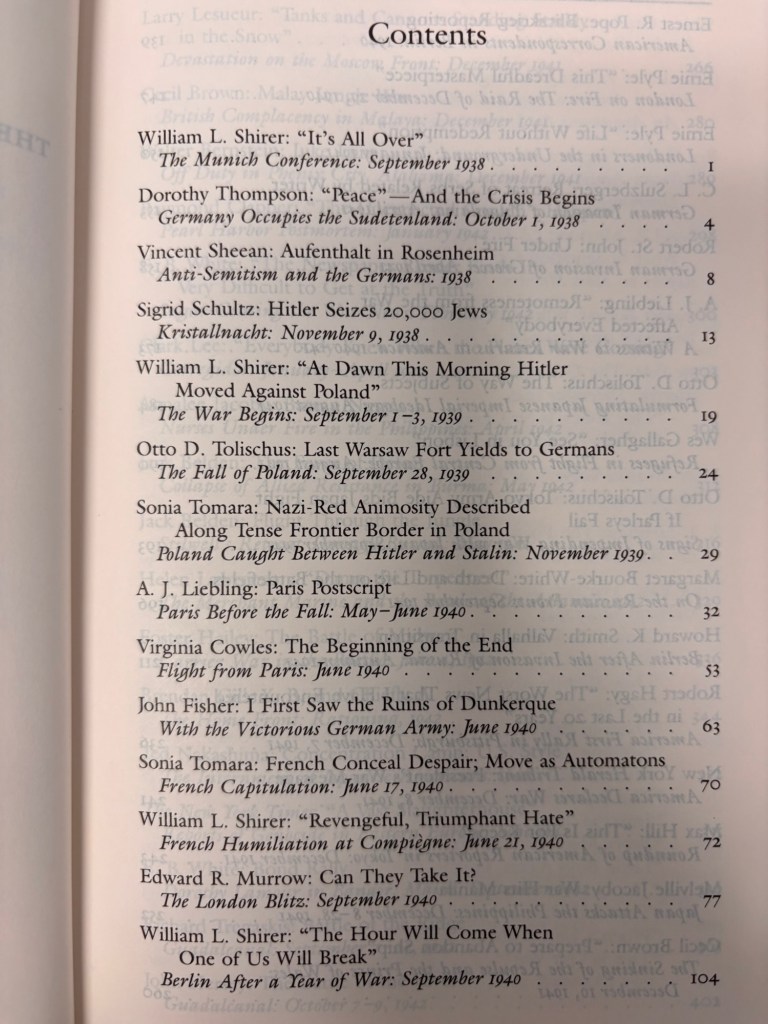
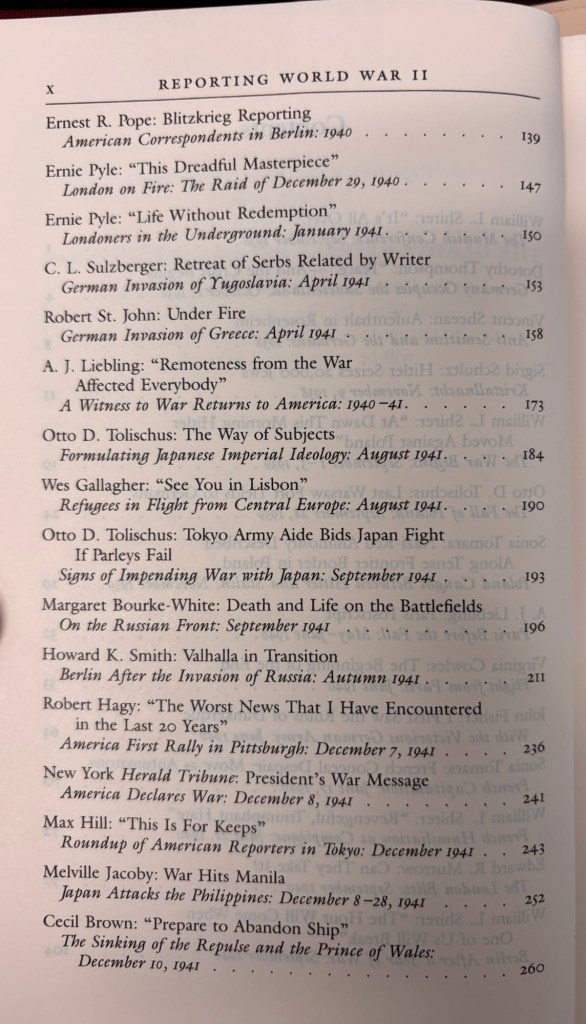
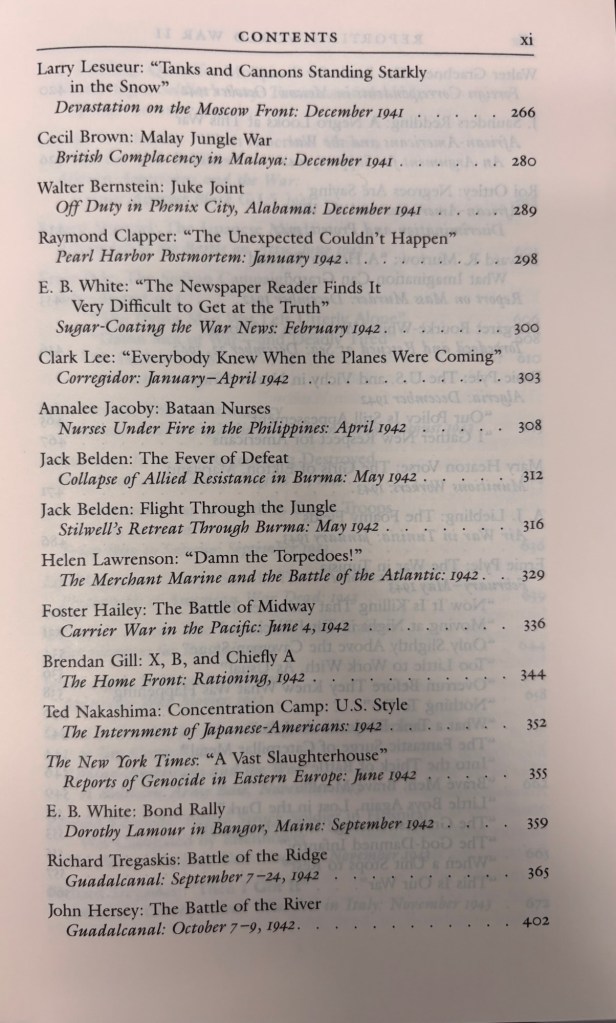
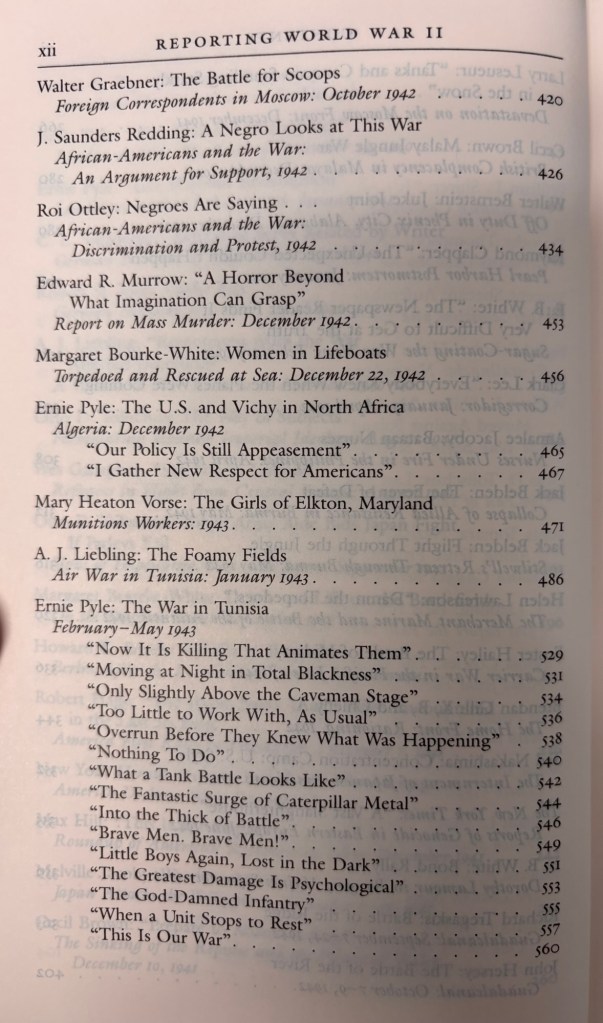
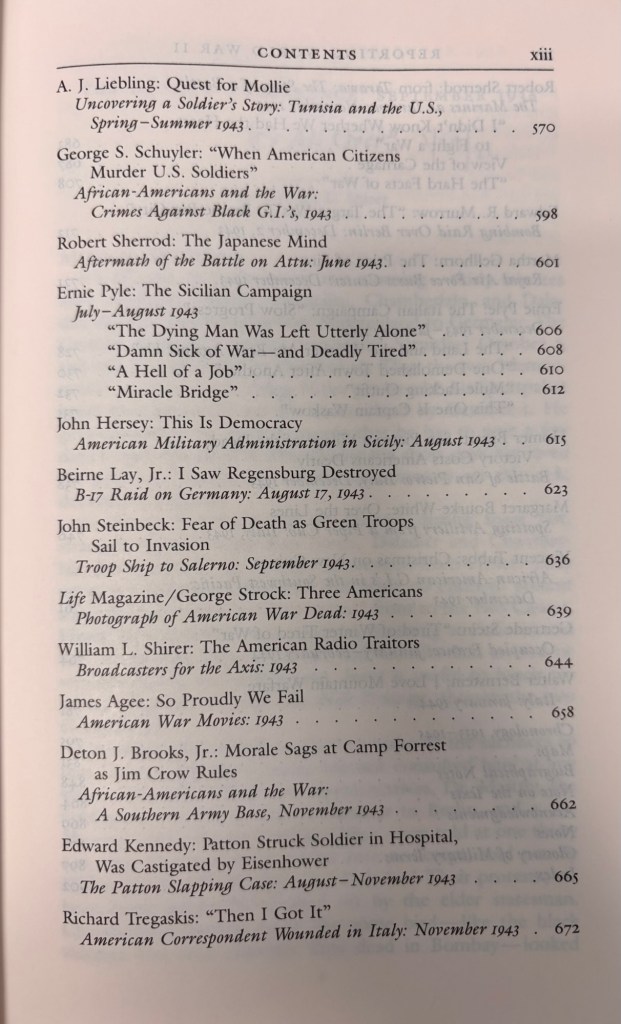
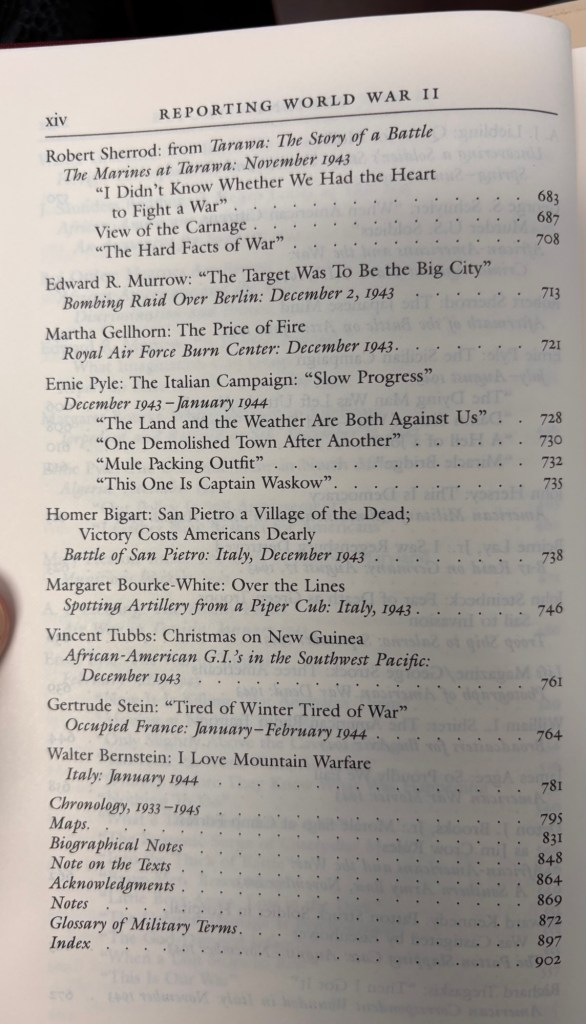
Like Reporting Vietnam before, Library of America’s Reporting World War 2 is definitely “must read” for every American. Just scan all those article titles and ask yourself how many you even knew were perspectives on people’s mind during the war.
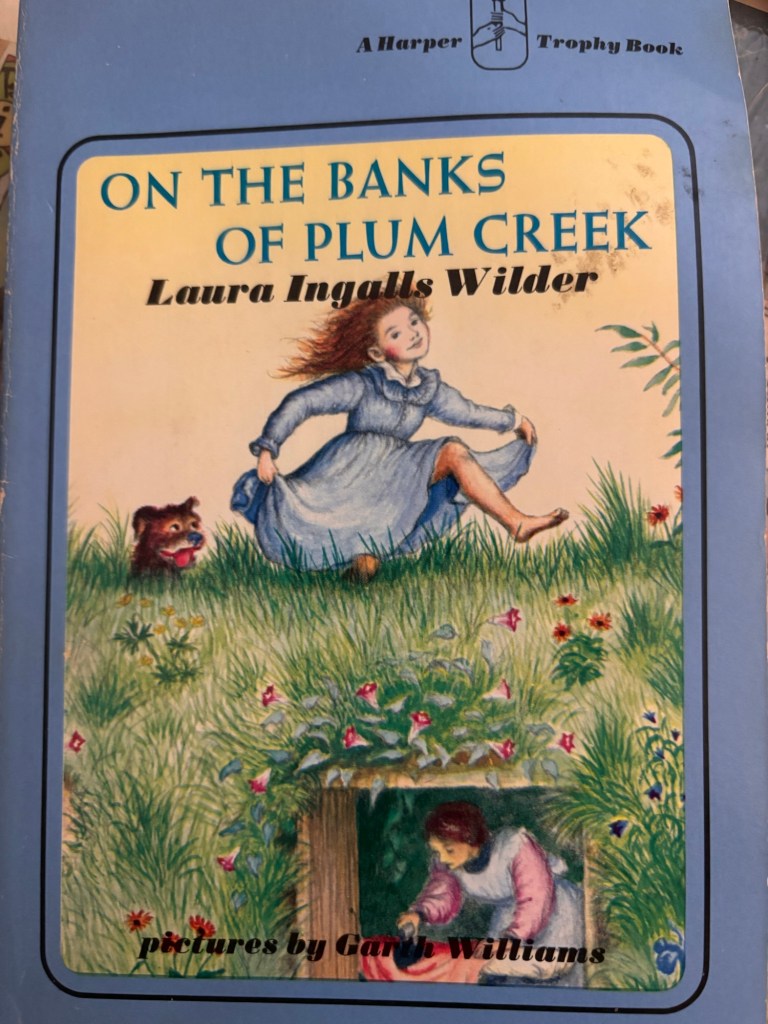
Finally, the kids and I finished this 3rd volume of the Little House series. On the Banks of Plum Creek is different that the first three in that by now we understand the plan Mrs. Wilder has in mind. Each book will take place in a fairly unique setting and be describing just about one year of life in that location. The pace, then, is more regular, pleasant, and at times more detailed. These are all beneficial qualities. About the only comment I have for the events of Plum Creek is that I have always, I mean always, thought life would be better when the ups and downs were more immediate in time and place. No concern with the mohammedan destruction of Europe or Dearborn. No toilet paper runs affecting rest areas along I-35. Just do the crops grow, or do the grasshoppers come. If we have to up and move, we up and move. And Plum Creek is necessarily rife with this fantasy life.

