Tagged: editorial
Reading Log 9.20.26
I published one of these reading log’s one year ago to the day (does any app not push these vain notifications on us anymore?) and so figured I should go ahead and update you all with another.
****
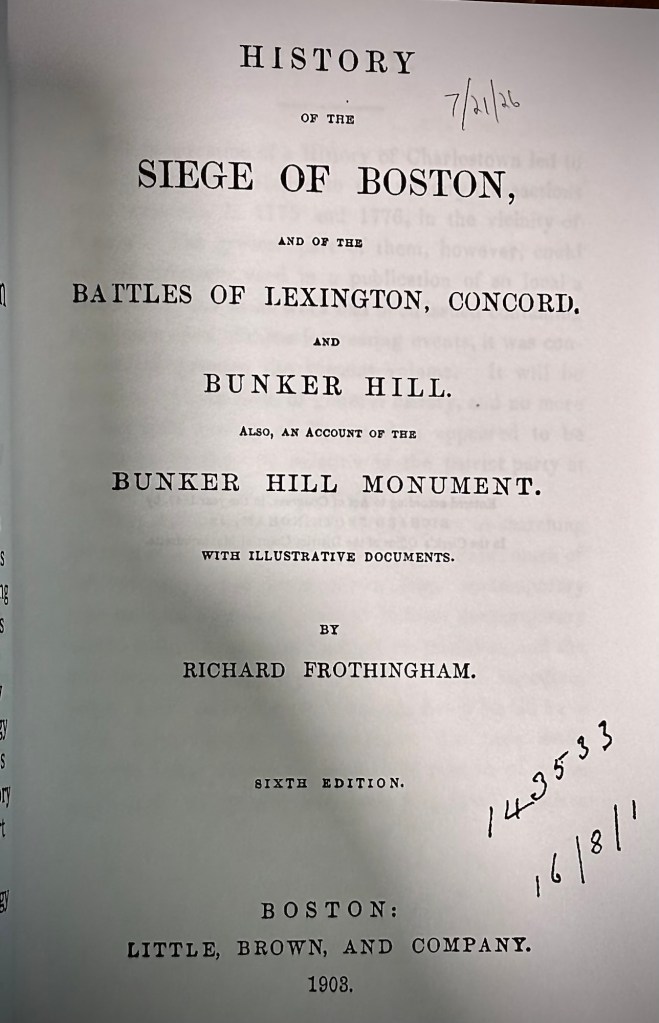
I learned of History of the Siege of Boston… while reading the 5 volume GW biography by Washington Irving that I have mentioned so many times in the last year or so. It did not disappoint. Of special note are the summative statements of the labor behind the ability for the Minute Men to react, and the reporting of eternally interesting minor details of such pivotal events from so long ago. In short, you (a living citizen in these seemingly uniquely polarizing times) will literally be changed after reading this book.
I also want to share another book (set) that I learned of and purchased while reading GW’s biography.

If the format you’re reading this post in doesn’t allow to pinch-zoom, that entire-book-shelf-filling book set is a 39-volume Writings of George Washington collection. Only 3,000 copies were ever printed, not counting upload to the internet. (Ha.) I discovered the set after following the footnote rabbit hole which opened because I was forever curious where Irving got his lengthy quotes of Washington’s correspondence. He, Irving, didn’t even have such a set as this—merely precursors. But I do. And I couldn’t be more proud. I am 30+ pages into volume one and if it takes me 37 years, at the pace of one volume per year (vol 38 and 39 are indexes), it will be the best thing I do for the next 37 years. Just a remarkable set of books.
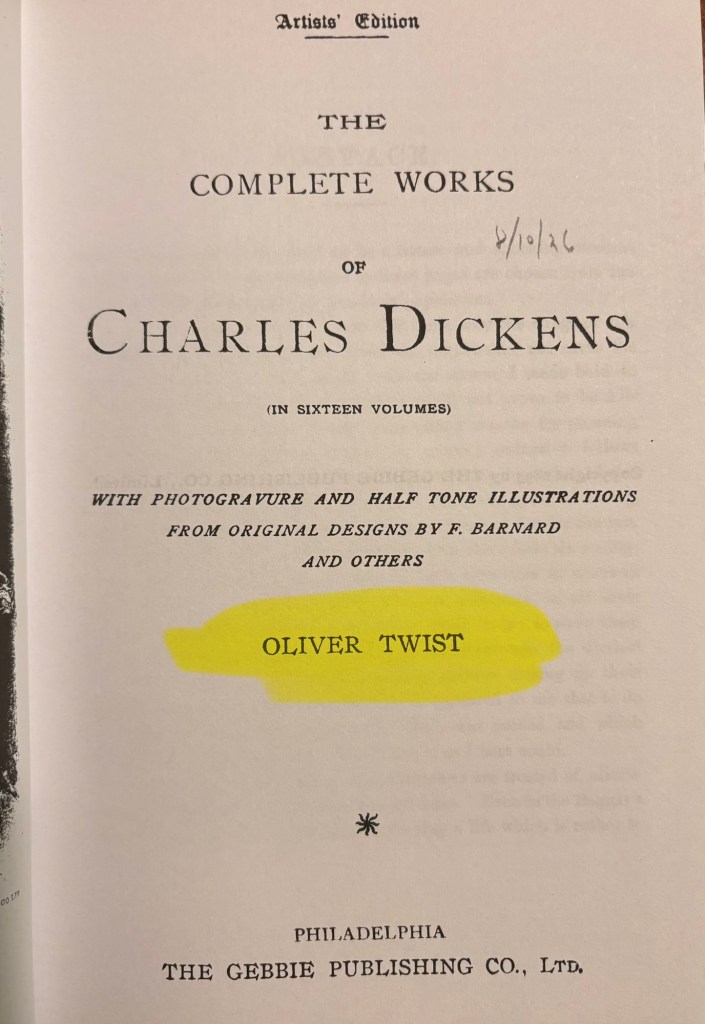
Before Oliver Twist, if you would have asked me about Dickens, I would have said, “Coolest thing is that Dark Knight Rises is essentially a retelling of his Tale of Two Cities.” But now, with Christmas Carol, Tale of Two Cities, Great Expectations, and Oliver Twist under my belt, I have an obviously more well-rounded understanding of him. Oliver is an odd duck, in that Dickens chooses to give the reader the nasty, brutish side of the criminal life, with the hope of deterring young Mark Twains from the dream of the pirate’s life. One basic and nearly insurmountable flaw—in my opinion a constant flaw that educated people reveal—is that the criminal element is portrayed as cunning, strategic, and capable of great perseverance in accomplishing long-term goals. Aside from this flaw, it surely accomplishes its aim. But I ask you, dear reader, when is an educated person (in the true sense of the word) going to tell the plain truth? The truth that criminals are stupid, short-sighted, and incapable of self-control and generally all the virtues? There is more (or less, rather) to criminal action than just willingness to prey on people.
One interesting line from the story that I want to record here for ease-of-retrieval is the following quote about tears, “But tears were not the things to find their way to Mr. Bumble’s soul; his heart was waterproof.”
Compare that to Tolstoy’s similarly remarkable characterization of tears from Anna Karenina (from memory), “As if tears were the lubrication for the machine of human communication…”
Just great writing—both of them. Keep it up!
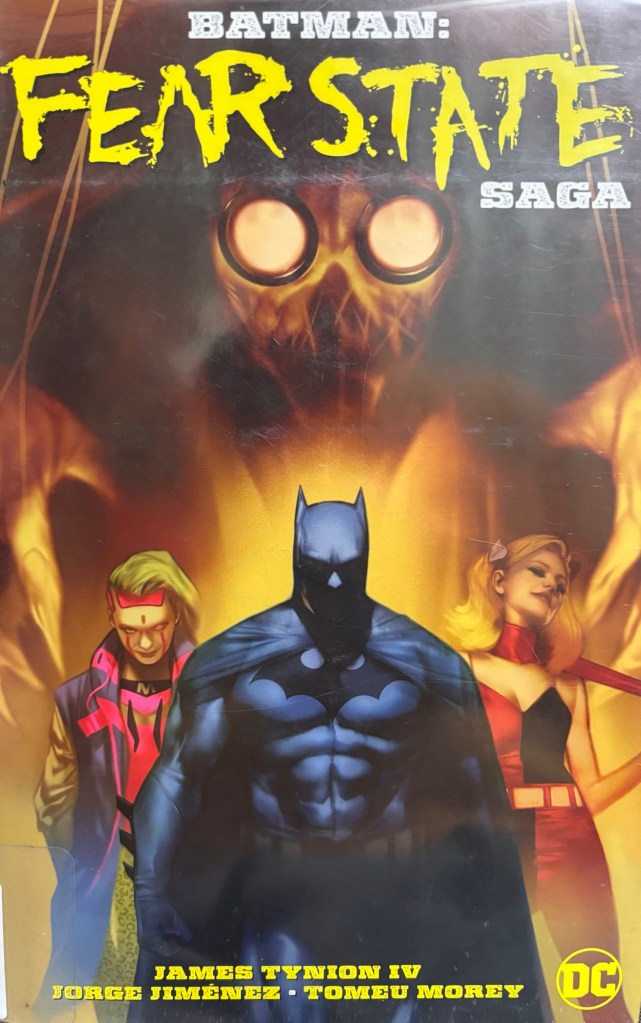
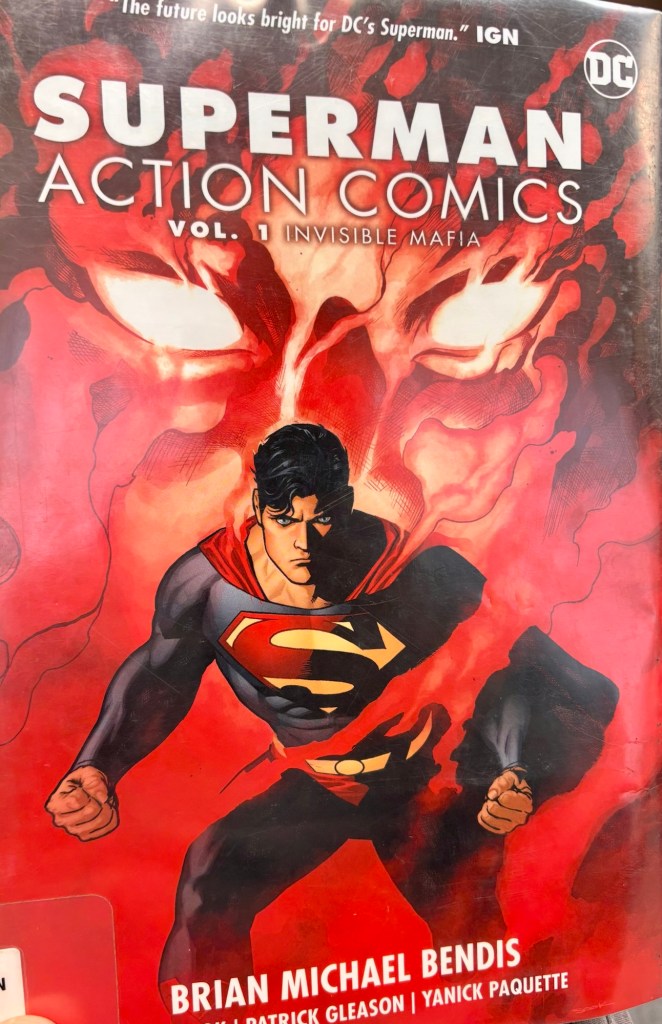
In one of the Deadpool films, the joke is made about the classic superheroes all being virgins. The same criticism has been gravely lobbed at the Avengers/Marvel sagas that have enraptured movie-goers for over a decade now. Suffice it to say that post-2020 comics have completely swung the other way. Now superheroes have sex, and the sidekick women especially, are homosexuals. Great. Just what the world needs. Why does everyone seem to think that all literature was always and only aimed at pushing boundaries? Early comics could have intentionally drawn attention and specifically rebuked social mores of the 50s but this doesn’t mean that every established social boundary is arbitrary. I know, I know. The covers alone should indicate these “aren’t your grandpa’s comic books” but it is disappointing that I have to work so hard to find non-Woke superhero material for my future teenagers to ingest.
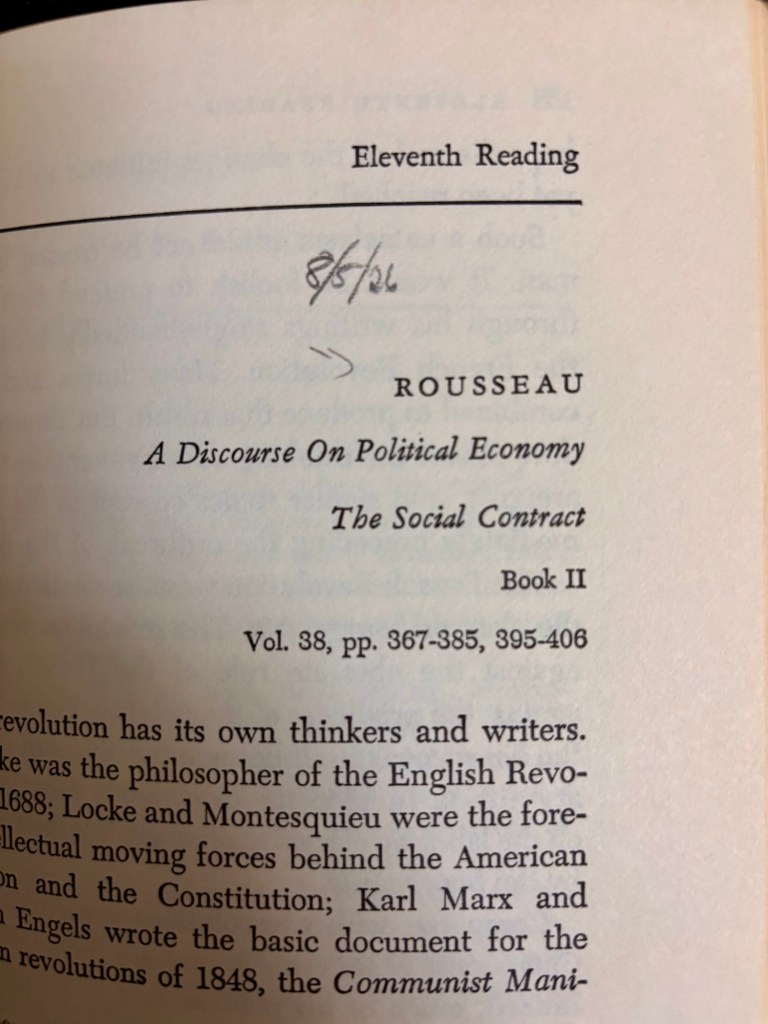
Rousseau is Rousseau. The more I read him, the more times I read him, the more I see the extremes of his philosophy. He is certainly spot on about some things and certainly completely wrong about others. The main trouble is he explicitly states over and over again how he is being entirely consistent but as he can’t state everything at once we need to give him the benefit of the doubt when apparent inconsistencies emerge. Okay, Boomer. On the “should read him” side of the coin, he absolutely destroys the notion of analogously comparing government to a family. This hits home for me because a certain non-Westerner in my life, when questioned, likened her support of a certain thought-to-be autocrat to the way a father leads his family. In other words, it is compelling that Rousseau understood that this particular mistaken analogy is hard-wired in the hearts of men. But I assure you, faithful reader, that my reading Rousseau and the subsequent effect of renewed confidence in the idea that elected officials are facing at a totally different problem than that which confronts fathers, has absolutely no effect whatsoever on the people who want to make that analogy. Want another false analogy? Here it is. Unread books are not analogous to the lasers used in gene-editing.
I Won’t Believe in “Narratives”
The N-word of the past had a characteristic that rendered it far more powerful than the one I call to your attention in this post. Unlike the bygone racial slur, the word-of-our-day, ‘narrative’ only finds usage among the over-educated and self-indulgent. Once the word is spoken aloud, however, the conversation usually cannot draw to a close without hearing its utterance many more times. This is the natural course of such buzzwords and catchphrases.
Not the repetitive feature, but rather the earnestness of the speaker or writer is what has drawn me out from my place of silent repose. These redundant commentators seem to believe that if they can simply make everyone see that the liberals, whether lead by AOC or Jussie Smollet, all have one narrative, and that they stick to it closer than stink to a pig, then, “POOF!” the world changes for the better.
Conversely, professed fanboy Michael Cohen’s opening statement caused me to wonder if I had fallen off the mobster-movie-watching wagon. Would his testimony have even been coherent without the resounding success of The Godfather? Put another way, does the snowflake generation even understand what a fixer is?
Will I admit that there does seem to be several different and conflicting scripts or “narratives” running through our voices currently? Sure. Will I admit that people like Ben Shapiro know more than I do from first-hand experience within meeting rooms that the media bosses have intentional “narratives” that they use to sell more advertisements than others? Yes. But I still won’t believe in “narratives” or what’s worse, try to advance my own.
Instead, I will believe in words. Check these words out. I had finished up the Bible’s book Jeremiah the other day, had felt totally unsure of how he got started, and so I decided to begin it again. Here are some of the words I found powerful, in no particular order. Serve. Whore. Green. High. Every. You.
Yeah. Those are some powerful words.
Ordered as the Living God so willed, and spoken through Jeremiah, they go, “But you said, ‘I will not serve!’ For on every high hill and under every green tree you have bowed down like a whore.”
No “Poof!” here. More like, “uh, is this still safe for work?” Probably not. But I believe that the same thing Jeremiah called attention to way-back-when happens today. And we cannot soften it or call the guilty to account by merely suggesting that they are mouthpieces for some distant, conspiratorially-crafted narrative.
There are many words from which to choose and in which to believe.
I won’t believe in “narratives.”
What Would President Obama Think About Me Not Liking Him?
I don’t like President Obama. Can I still admit that even though in doing so I might offend a “sizable group of people?”
Here in the purple state of Colorado, expressing this opinion–my opinion–gives me pause. It can be difficult to tell if I am speaking to someone who agrees or vehemently disagrees. Discovering the answer is always an adventure.
Here’s why I don’t like the president: The president pretends to not know his own influence.
From the moment he took office, it was made known that he would be a very accessible president. “Ask him anything and he’ll tell you,” they said. The unthinking American loved his openness. His openness surely attracted positive popular sentiment. But make no mistake, it is a very calculated move on the president’s part. Think about it. What would happen if your boss started voicing that he or she really liked a particular camera…right around Christmas time? What would happen if your boss started describing how much he or she disliked the color blue? In my experience, in the first situation the boss would likely be given that camera as a gift at the company party; in the second, the color blue would be avoided in the office where possible.
The credible boss, the boss with high character understands the economics of his or her language. He or she understands that there are only so many hours in a day and many things have to be attended to. The boss knows, therefore, that he or she cannot afford to communicate for forever. They have to offer their guiding leadership eloquently, and rely on an able-bodied workforce to carry out the plan. This happens every day. Even the most micro-managing boss has limited time–thankfully–to communicate all that he or she wants to.
Likewise, when a president offers his opinion on something, it starts a chain reaction. Decisions are made based on the opinion. Take this together with the way our country’s political sphere has unfolded–the president being viewed as newsworthy celebrity rather than public servant–and there is a problem.
Bob Costas attempted to use his power to persuade the Washington Redskins owner to act. So far, it has been ineffective. Bob Costas is a virtual nobody. He is a talking head. Generally a pleasant to listen to talking head, but he is as effectually powerless over another man’s actions as the next man. The same is not true for the president. No matter what he’d like us to believe, it is not just “his opinion.” And he knows it. But he pretends not to. He pretends like he really is one of us. He isn’t. It’s categorically impossible. The us he is attempting to fit in with know their place.
For example, I know that this blog will have no appreciable effect beyond providing momentary pleasure for no more than 10 people. It’ll receive 1-2 ‘likes’, if that. More likely, it will irritate some people and be a stumbling block to my professional possibilities as I’m publishing it on LinkedIn.
Don’t buy this argument? Just wait. History will prove my point. Like the boss receiving a camera for Christmas, the Redskins will change their name. When they do, to deny the president’s influence will strain even American credulity.
In the end, I really don’t wonder what President Obama thinks about me. I just want him to stop pretending that his opinions are inconsequential. I want him to stop using his limited time to weigh-in on ridiculously un-presidential matters. I want “more work, less talk.” Is that too much to ask for?

